Kirjojen hintavertailu. Mukana 11 244 527 kirjaa ja 12 kauppaa.

Kirjahaku

Etsi kirjoja tekijän nimen, kirjan nimen tai ISBN:n perusteella.

1000 tulosta hakusanalla Iwan Rhys Edgar

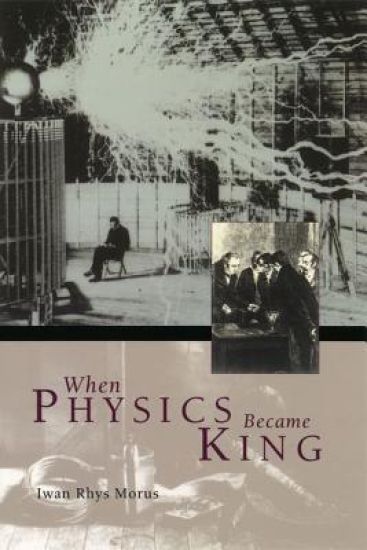
When Physics Became King

When Physics Became King

Iwan Rhys Morus

University of Chicago Press
2005
sidottu
As recently as two hundred years ago, physics as we know it today did not exist. Born in the early nineteenth century during the second scientific revolution, physics struggled at first to achieve legitimacy in the scientific community and culture at large. In fact, the term "physicist" did not appear in English until the 1830s.When Physics Became King traces the emergence of this revolutionary science, demonstrating how a discipline that barely existed in 1800 came to be regarded a century later as the ultimate key to unlocking nature's secrets. A cultural history designed to provide a big-picture view, the book ably ties advances in the field to the efforts of physicists who worked to win social acceptance for their research.Beginning his tale with the rise of physics from natural philosophy, Iwan Morus chronicles the emergence of mathematical physics in France and its later export to England and Germany. He then elucidates the links between physics and industrialism, the technology of statistical mechanics, and the establishment of astronomical laboratories and precision measurement tools. His tale ends on the eve of the First World War, when physics had firmly established itself in both science and society.Scholars of both history and physics will enjoy this fascinating and studied look at the emergence of a major scientific discipline.
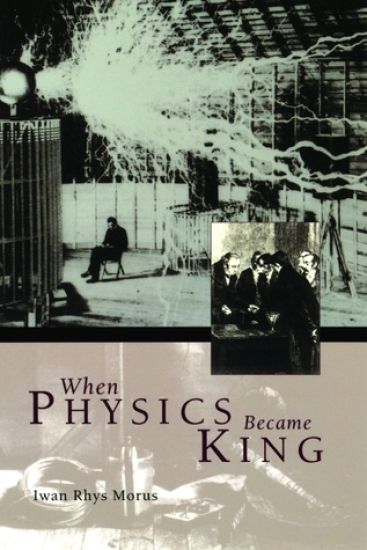
When Physics Became King

When Physics Became King

Iwan Rhys Morus

University of Chicago Press
2005
nidottu
As recently as two hundred years ago, physics as we know it today did not exist. Born in the early nineteenth century during the second scientific revolution, physics struggled at first to achieve legitimacy in the scientific community and culture at large. In fact, the term "physicist" did not appear in English until the 1830s.When Physics Became King traces the emergence of this revolutionary science, demonstrating how a discipline that barely existed in 1800 came to be regarded a century later as the ultimate key to unlocking nature's secrets. A cultural history designed to provide a big-picture view, the book ably ties advances in the field to the efforts of physicists who worked to win social acceptance for their research.Beginning his tale with the rise of physics from natural philosophy, Iwan Morus chronicles the emergence of mathematical physics in France and its later export to England and Germany. He then elucidates the links between physics and industrialism, the technology of statistical mechanics, and the establishment of astronomical laboratories and precision measurement tools. His tale ends on the eve of the First World War, when physics had firmly established itself in both science and society.Scholars of both history and physics will enjoy this fascinating and studied look at the emergence of a major scientific discipline.
Frankenstein's Children

Frankenstein's Children

Iwan Rhys Morus

Princeton University Press
2014
pokkari
During the second quarter of the nineteenth century, Londoners were enthralled by a strange fluid called electricity. In examining this period, Iwan Morus moves beyond the conventional focus on the celebrated Michael Faraday to discuss other electrical experimenters, who aspired to spectacular public displays of their discoveries. Revealing connections among such diverse fields as scientific lecturing, laboratory research, telegraphic communication, industrial electroplating, patent conventions, and innovative medical therapies, Morus also shows how electrical culture was integrated into a new machine-dominated, consumer society. He sees the history of science as part of the history of production, and emphasizes the labor and material resources needed to make electricity work. Frankenstein's Children explains that Faraday, with his colleagues at the Royal Society and the Royal Institution, looked at science as the province of a highly trained elite, who presented their abstract picture of nature only to select groups. The book contrasts Faraday's views with those of other practitioners, to whom science was a practical, skill-based activity open to all. In venues such as the Galleries of Practical Science, electrical phenomena were presented to a public less distinguished but no less enthusiastic and curious than Faraday's audiences. William Sturgeon, for instance, emphasized building apparatus and exhibiting electrical phenomena, while chemists, instrument-makers, and popular lecturers supported the London Electrical Society. These previously little studied "electricians" contributed much to the birth of "Frankenstein's children"--the not completely benign effects of electricity on a new consumer world. Originally published in 1998. The Princeton Legacy Library uses the latest print-on-demand technology to again make available previously out-of-print books from the distinguished backlist of Princeton University Press. These editions preserve the original texts of these important books while presenting them in durable paperback and hardcover editions. The goal of the Princeton Legacy Library is to vastly increase access to the rich scholarly heritage found in the thousands of books published by Princeton University Press since its founding in 1905.
Frankenstein's Children

Frankenstein's Children

Iwan Rhys Morus

Princeton University Press
2016
sidottu
During the second quarter of the nineteenth century, Londoners were enthralled by a strange fluid called electricity. In examining this period, Iwan Morus moves beyond the conventional focus on the celebrated Michael Faraday to discuss other electrical experimenters, who aspired to spectacular public displays of their discoveries. Revealing connections among such diverse fields as scientific lecturing, laboratory research, telegraphic communication, industrial electroplating, patent conventions, and innovative medical therapies, Morus also shows how electrical culture was integrated into a new machine-dominated, consumer society. He sees the history of science as part of the history of production, and emphasizes the labor and material resources needed to make electricity work. Frankenstein's Children explains that Faraday, with his colleagues at the Royal Society and the Royal Institution, looked at science as the province of a highly trained elite, who presented their abstract picture of nature only to select groups. The book contrasts Faraday's views with those of other practitioners, to whom science was a practical, skill-based activity open to all. In venues such as the Galleries of Practical Science, electrical phenomena were presented to a public less distinguished but no less enthusiastic and curious than Faraday's audiences. William Sturgeon, for instance, emphasized building apparatus and exhibiting electrical phenomena, while chemists, instrument-makers, and popular lecturers supported the London Electrical Society. These previously little studied "electricians" contributed much to the birth of "Frankenstein's children"--the not completely benign effects of electricity on a new consumer world. Originally published in 1998. The Princeton Legacy Library uses the latest print-on-demand technology to again make available previously out-of-print books from the distinguished backlist of Princeton University Press. These editions preserve the original texts of these important books while presenting them in durable paperback and hardcover editions. The goal of the Princeton Legacy Library is to vastly increase access to the rich scholarly heritage found in the thousands of books published by Princeton University Press since its founding in 1905.
Shocking Bodies

Shocking Bodies

Iwan Rhys Morus

The History Press Ltd
2011
nidottu
For the Victorians, electricity was the science of spectacle and of wonder. It provided them with new ways of probing the nature of reality and understanding themselves. Luigi Galvani’s discovery of ‘animal electricity’ at the end of the eighteenth century opened up a whole new world of possibilities, in which electricity could cure sickness, restore sexual potency and even raise the dead. In Shocking Bodies, Iwan Rhys Morus explores how the Victorians thought about electricity, and how they tried to use its intimate and corporeal force to answer fundamental questions about life and death. Some even believed that electricity was life, which brought into question the existence of the soul, and of God, and provided arguments in favour of political radicalism. This is the story of how electricity emerged as a powerful new tool for making sense of our bodies and the world around us.
How the Victorians Took Us to the Moon: The Story of the 19th-Century Innovators Who Forged Our Future
The rich and fascinating history of the scientific revolution of the Victorian Era, leading to transformative advances in the twentieth and twenty-first centuries. The Victorians invented the idea of the future. They saw it as an undiscovered country, one ripe for exploration and colonization. And to get us there, they created a new way of ordering and transforming nature, built on grand designs and the mass-mobilization of the resources of the British Empire. With their expert culture of accuracy and precision, they created telegraphs and telephones, electric trams and railways, built machines that could think, and devised engines that could reach for the skies. When Cyrus Field's audacious plan to lay a telegraph cable across the Atlantic finally succeeded in 1866, it showed how science, properly disciplined, could make new worlds. As crowds flocked to the Great Exhibition of 1851 and the exhibitions its success inaugurated, they came to see the future made fact--to see the future being built before their eyes. In this rich and absorbing book, a distinguished historian of science tells the story of how this future was made. From Charles Babbage's dream of mechanizing mathematics to Isambard Kingdom Brunel's tunnel beneath the Thames to George's Cayley's fantasies of powered flight and Nikola Tesla's visions of an electrical world, it is a story of towering personalities, clashing ambitions, furious rivalries and conflicting cultures--a rich tapestry of remarkable lives that transformed the world beyond recognition and ultimately took mankind to the Moon.
Joel & Obadiah: Disaster And Deliverance

Joel & Obadiah: Disaster And Deliverance

Iwan Rhys Jones

Christian Focus Publications Ltd
2015
pokkari
Disaster and Deliverance, these two words sum up something of the message of both Joel and Obadiah. In Joel, the prophet begins by announcing a disaster in terms of a locust invasion, which has affected Judah. This, however, is but the pretext for warning of an even greater disaster on the horizon for Judah. Nevertheless, the prophet holds out the prospect of deliverance. In the case of Obadiah, the focus is on Edom. Edom's pride and longstanding hostility against the people of God has led her to be party to an attack upon them, and as a result, she is threatened with disaster. The people of God, meanwhile, are assured of better things at the hand of the LORD.These two prophets and their message of disaster and deliverance will both challenge and reassure all who have ears to hear.
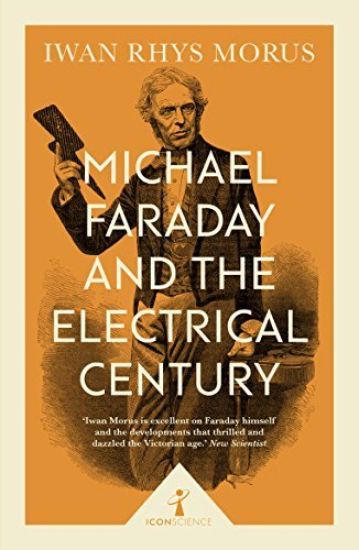
Michael Faraday and the Electrical Century (Icon Science)
The only scientist to ever appear on the British twenty pound note, Michael Faraday is one of the most recognisable names in the history of science.Faraday's forte was electricity, a revolutionary force in nineteenth-century society. The electric telegraph had made mass-communication possible and inventors looked forward to the day when electricity would control all aspects of life. By the end of the century, this dream was well on its way to being realised. But what was Faraday's role in all this? How did his science come to have such an impact on the lives of the Victorians (and ultimately on us)?Iwan Morus tells the story of Faraday's upbringing in London and his apprenticeship at the Royal Institution under the supervision of the flamboyant chemist, Sir Humphry Davy, all set against the backdrop of a vibrant scientific culture and an empire near the peak of its power.
Nikola Tesla and the Electrical Future

Nikola Tesla and the Electrical Future

Iwan Rhys Morus

Icon Books Ltd
2019
sidottu
'[This] crisply succinct, beautifully synthesized study brings to life Tesla, his achievements and failures...and the hopeful thrum of an era before world wars.' - NatureNikola Tesla is one of the most enigmatic, curious and controversial figures in the history of science. An electrical pioneer as influential in his own way as Thomas Edison, he embodied the aspirations and paradoxes of an age of innovation that seemed to have the future firmly in its grasp. In an era that saw the spread of power networks and wireless telegraphy, the discovery of X-rays, and the birth of powered flight, Tesla made himself synonymous with the electrical future under construction but opinion was often divided as to whether he was a visionary, a charlatan, or a fool. Iwan Rhys Morus examines Tesla's life in the context of the extraordinary times in which he lived and worked, colourfully evoking an age in which anything seemed possible, from capturing the full energy of Niagara to communicating with Mars.Shattering the myth of the 'man out of time', Morus demonstrates that Tesla was in all ways a product of his era, and shows how the popular image of the inventor-as-maverick-outsider was deliberately crafted by Tesla - establishing an archetype that still resonates today.
Nikola Tesla and the Electrical Future

Nikola Tesla and the Electrical Future

Iwan Rhys Morus

Icon Books Ltd
2020
pokkari
'[This] crisply succinct, beautifully synthesized study brings to life Tesla, his achievements and failures...and the hopeful thrum of an era before world wars.' - NatureNikola Tesla is one of the most enigmatic, curious and controversial figures in the history of science. An electrical pioneer as influential in his own way as Thomas Edison, he embodied the aspirations and paradoxes of an age of innovation that seemed to have the future firmly in its grasp. In an era that saw the spread of power networks and wireless telegraphy, the discovery of X-rays, and the birth of powered flight, Tesla made himself synonymous with the electrical future under construction but opinion was often divided as to whether he was a visionary, a charlatan, or a fool. Iwan Rhys Morus examines Tesla's life in the context of the extraordinary times in which he lived and worked, colourfully evoking an age in which anything seemed possible, from capturing the full energy of Niagara to communicating with Mars.Shattering the myth of the 'man out of time', Morus demonstrates that Tesla was in all ways a product of his era, and shows how the popular image of the inventor-as-maverick-outsider was deliberately crafted by Tesla - establishing an archetype that still resonates today.
William Robert Grove

William Robert Grove

Iwan Rhys Morus

University of Wales Press
2017
nidottu
This book provides an accessible and authoritative biography of the Welsh man of science, William Robert Grove. Grove was an important and highly influential figure in Victorian science. His career as both man of science and leading barrister and judge spanned the Victorian age, and he also played a vital role in the movement to reform the Royal Society. This biography will set Grove’s career and contributions in context, paying particular attention to the important role of Welsh industrial culture in forming his scientific outlook. The place of science in culture changed radically during the course of the nineteenth century, and Grove himself played a key role in some of those transformations. Looking at his life in science can, however, do more than illuminate an individual scientific career – it can offer a way of gaining new insights into the changing face of Victorian science.
William Robert Grove

William Robert Grove

Iwan Rhys Morus

University of Wales Press
2017
sidottu
This book provides an accessible and authoritative biography of the Welsh man of science, William Robert Grove. Grove was an important and highly influential figure in Victorian science. His career as both man of science and leading barrister and judge spanned the Victorian age, and he also played a vital role in the movement to reform the Royal Society. This biography will set Grove’s career and contributions in context, paying particular attention to the important role of Welsh industrial culture in forming his scientific outlook. The place of science in culture changed radically during the course of the nineteenth century, and Grove himself played a key role in some of those transformations. Looking at his life in science can, however, do more than illuminate an individual scientific career – it can offer a way of gaining new insights into the changing face of Victorian science.
How the Victorians Took Us to the Moon

How the Victorians Took Us to the Moon

Iwan Rhys Morus

ICON BOOKS
2023
pokkari
'[An] insightful analysis of 19th-century futurism ... Morus's account is as much a cautionary tale as a flag-waving celebration.' - DUNCAN BELL, NEW STATESMAN'[How the Victorians Took Us to the Moon] rattles thrillingly through such developments as the Transatlantic telegraph cable, the steam locomotive and electric power and recalls the excitable predictions of the fiction of the time.' KATY GUEST, THE GUARDIAN'Excellent ... A terrific insight into why the Victorian era was a golden age of engineering.' - NICK SMITH, ENGINEERING AND TECHNOLOGY MAGAZINEBy the end of the Victorian era, the world had changed irrevocably. The speed of the technological development brought about between 1800 and 1900 was completely unprecedented in human history. And as the Victorians looked to the skies and beyond as the next frontier to be explored and conquered, they were inventing, shaping and moulding the very idea of the future. To get us to this future, the Victorians created a new way of ordering and transforming nature, built on grand designs and the mass-mobilisation of the resources of Empire - and they revolutionised science in the process. In this rich and absorbing book, distinguished historian of science Iwan Rhys Morus tells the story of how this future was made. From Charles Babbage's dream of mechanising mathematics to Isambard Kingdom Brunel's tunnel beneath the Thames, from George Cayley's fantasies of powered flight to Nikola Tesla's visions of an electrical world, this is a story of towering personalities, clashing ambitions, furious rivalries and conflicting cultures - a vibrant tapestry of remarkable lives that transformed the world and ultimately took us to the Moon.
Making Modern Science, Second Edition

Making Modern Science, Second Edition

Peter J Bowler; Iwan Rhys Morus

University of Chicago Press
2020
pokkari
In this new edition of the top-selling coursebook, seasoned historians Peter J. Bowler and Iwan Rhys Morus expand on their authoritative survey of how the development of science has shaped our world. Exploring both the history of science and its influence on modern thought, the authors chronicle the major developments in scientific thinking, from the revolutionary ideas of the seventeenth century to contemporary issues in genetics, physics, and more. Designed for entry-level college courses and as a single-volume introduction for the general reader, Bowler and Morus present the history of science not as a series of names and dates but as an interconnected and complex web of relationships joining science and society. Thoroughly revised and expanded, the second edition draws on the latest research and scholarship. It also contains two entirely new chapters: one that explores the impact of computing on the development of science and another that surveys the complex interaction of Western science with the cultures of the rest of the world.