Kirjojen hintavertailu. Mukana 11 244 527 kirjaa ja 12 kauppaa.

Kirjahaku

Etsi kirjoja tekijän nimen, kirjan nimen tai ISBN:n perusteella.

1000 tulosta hakusanalla J -B Robert

Society in a Garrison Town. a Novel ... by the Author of "Myself and My Relatives," Etc. [Miss Anne J. Robertson.] Vol. I
Title: Society in a Garrison Town. A novel ... By the author of "Myself and My Relatives," etc. Miss Anne J. Robertson.]Publisher: British Library, Historical Print EditionsThe British Library is the national library of the United Kingdom. It is one of the world's largest research libraries holding over 150 million items in all known languages and formats: books, journals, newspapers, sound recordings, patents, maps, stamps, prints and much more. Its collections include around 14 million books, along with substantial additional collections of manuscripts and historical items dating back as far as 300 BC.The FICTION & PROSE LITERATURE collection includes books from the British Library digitised by Microsoft. The collection provides readers with a perspective of the world from some of the 18th and 19th century's most talented writers. Written for a range of audiences, these works are a treasure for any curious reader looking to see the world through the eyes of ages past. Beyond the main body of works the collection also includes song-books, comedy, and works of satire. ++++The below data was compiled from various identification fields in the bibliographic record of this title. This data is provided as an additional tool in helping to insure edition identification: ++++ British Library Anonymous; Robertson, Anne J.; 1869. 3 vol.; 8 . 12629.f.14.
Society in a Garrison Town. a Novel ... by the Author of "Myself and My Relatives," Etc. [Miss Anne J. Robertson.]
Title: Society in a Garrison Town. A novel ... By the author of "Myself and My Relatives," etc. Miss Anne J. Robertson.]Publisher: British Library, Historical Print EditionsThe British Library is the national library of the United Kingdom. It is one of the world's largest research libraries holding over 150 million items in all known languages and formats: books, journals, newspapers, sound recordings, patents, maps, stamps, prints and much more. Its collections include around 14 million books, along with substantial additional collections of manuscripts and historical items dating back as far as 300 BC.The FICTION & PROSE LITERATURE collection includes books from the British Library digitised by Microsoft. The collection provides readers with a perspective of the world from some of the 18th and 19th century's most talented writers. Written for a range of audiences, these works are a treasure for any curious reader looking to see the world through the eyes of ages past. Beyond the main body of works the collection also includes song-books, comedy, and works of satire. ++++The below data was compiled from various identification fields in the bibliographic record of this title. This data is provided as an additional tool in helping to insure edition identification: ++++ British Library Anonymous; Robertson, Anne J.; 1869. 3 vol.; 8 . 12629.f.14.
Society in a Garrison Town. a Novel ... by the Author of "Myself and My Relatives," Etc. [Miss Anne J. Robertson.]
Title: Society in a Garrison Town. A novel ... By the author of "Myself and My Relatives," etc. Miss Anne J. Robertson.]Publisher: British Library, Historical Print EditionsThe British Library is the national library of the United Kingdom. It is one of the world's largest research libraries holding over 150 million items in all known languages and formats: books, journals, newspapers, sound recordings, patents, maps, stamps, prints and much more. Its collections include around 14 million books, along with substantial additional collections of manuscripts and historical items dating back as far as 300 BC.The FICTION & PROSE LITERATURE collection includes books from the British Library digitised by Microsoft. The collection provides readers with a perspective of the world from some of the 18th and 19th century's most talented writers. Written for a range of audiences, these works are a treasure for any curious reader looking to see the world through the eyes of ages past. Beyond the main body of works the collection also includes song-books, comedy, and works of satire. ++++The below data was compiled from various identification fields in the bibliographic record of this title. This data is provided as an additional tool in helping to insure edition identification: ++++ British Library Anonymous; Robertson, Anne J.; 1869. 3 vol.; 8 . 12629.f.14.
The Elements of Navigation; Containing the Theory and Practice. With all the Necessary Tables. To Which is Added, A Treatise of Marine Fortification. ... In two Volumes. By J. Robertson, ... of 2; Volume 1
The 18th century was a wealth of knowledge, exploration and rapidly growing technology and expanding record-keeping made possible by advances in the printing press. In its determination to preserve the century of revolution, Gale initiated a revolution of its own: digitization of epic proportions to preserve these invaluable works in the largest archive of its kind. Now for the first time these high-quality digital copies of original 18th century manuscripts are available in print, making them highly accessible to libraries, undergraduate students, and independent scholars.Medical theory and practice of the 1700s developed rapidly, as is evidenced by the extensive collection, which includes descriptions of diseases, their conditions, and treatments. Books on science and technology, agriculture, military technology, natural philosophy, even cookbooks, are all contained here.++++The below data was compiled from various identification fields in the bibliographic record of this title. This data is provided as an additional tool in helping to insure edition identification: ++++John Rylands University Library of ManchesterN031641London: printed for J. Nourse, 1754. 2v.( 16],672p.), plates: ill., maps; 8
The Robert J. Wickenheiser Collection of John Milton at the University of South Carolina
This is a descriptive catalog of one of the world's largest collections of Milton and Miltoniana.Housed at USC's Thomas Cooper Library, the Wickenheiser Collection contains more than six thousand volumes, including more than sixty seventeenth-century editions of Milton's writings and significant holdings of seventeenth-century Miltoniana. The special focus on illustrated editions makes this perhaps the most comprehensive collection of Milton illustration in existence - from the first illustrated edition of ""Paradise Lost"" (1688) through all the major illustrators that follow, particularly John Martin (1789-1854) and Gustave Dore (1832-1883), and with original drawings by several of the artists. The collection's eighteenth-, nineteenth-, and twentieth-century editions record Milton's continuing impact, while expansive holdings of Milton biography, scholarship, and criticism document the evolution of knowledge of the poet's writings and influence.Augmented by nearly 300 color illustrations, this comprehensive descriptive account of the Wickenheiser Collection is being published in 2008 to honor Milton's birth four hundred years ago. The book includes descriptions of nearly twenty-eight hundred editions in the collection, with a large number of the eighteenth-and nineteenth-century editions described for the first time. Detailed listings are provided for all seventeenth-and eighteenth-century Miltoniana as well as select later works. In addition to the listings, ""Wickenheiser"" provides a section devoted to original drawings, illustrations, engravings, prints, portraits, manuscripts, illuminated texts, ephemera, memorial medals, and other artifacts to show responses to Milton through the centuries.
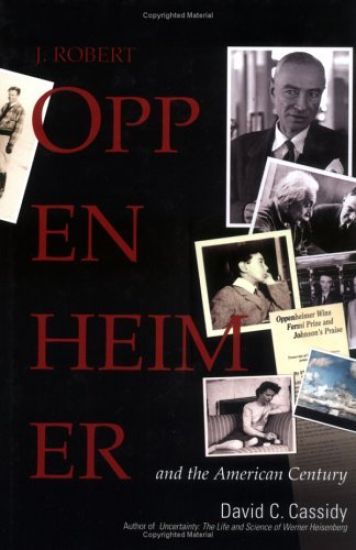
J. Robert Oppenheimer

J. Robert Oppenheimer

David C. Cassidy

Pi Pr
2004
sidottu
How did a gentle liberal humanist become responsible for the creation of the first real weapon of mass destruction? How could a brilliant mind like his virtually found "scientific militarism" and then let it destroy him? Cassidy opens up a life story that is emblematic of the transformation of America over the last three generations.
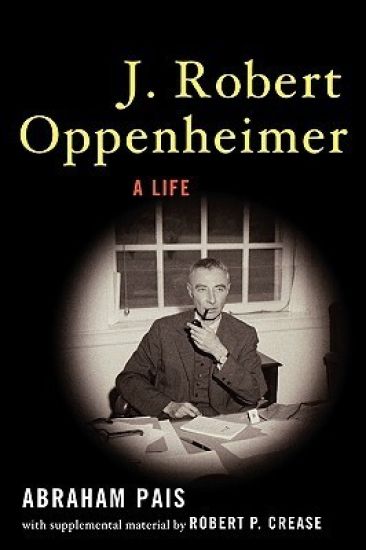
J. Robert Oppenheimer

J. Robert Oppenheimer

Pais

Oxford University Press Inc
2007
nidottu
The late Abraham Pais wrote the definitive biography of Albert Einstein, "Subtle is the Lord" which won an American Book Award. As a distinguished physicist and Einstein's colleague, Pais combined a sophisticated understanding of physics with first-hand knowledge of this notoriously private individual, offering rare insights into both. It is his unique double perspective that makes his work so valuable. Now Abraham Pais offers an illuminating portrait of another eminent colleague, J. Robert Oppenheimer, one of the most charismatic and enigmatic figures of modern physics. Pais introduces us to a precocious youth who sped through Harvard in three years, made signal contributions to quantum mechanics while in his twenties, and was instrumental in the growth of American physics in the decade before the Second World War, almost single-handedly putting American physics on the map. Pais paints a revealing portrait of Oppenheimer's life in Los Alamos, where in twenty remarkable, feverish months, under his inspired leadership, the first atomic bomb was designed and built, a success that made Oppenheimer America's most famous scientist. Pais, who was his next-door neighbor for many years, describes Oppenheimer's long tenure as Director of the Institute of Advanced Study at Princeton, but also shows how Oppenheimer's intensity and arrogance won him powerful enemies, who would ultimately make him one of the principal victims of the Red Scare of the 1950s. Told with compassion and deep insight, J. Robert Oppenheimer is the most comprehensive biography of the great physicist available. It is Abraham Pais's final work, completed after his death by Robert P. Crease, an acclaimed historian of science in his own right.
J. Robert Oppenheimer and the American Century

J. Robert Oppenheimer and the American Century

David C. Cassidy

Johns Hopkins University Press
2009
pokkari
David C. Cassidy's celebrated biography is more than the life story of J. Robert Oppenheimer, the brilliant physicist who served as scientific director for the Manhattan Project. It also tells the hidden story of the political and social forces that shaped the world in the 20th century, when the rise of American science contributed mightily to the country's emergence as a dominant power in world affairs. Cassidy explores that strong relationship in the captivating story of the rise and fall of one of America's greatest scientists. As head of the Manhattan Project, Oppenheimer led the country's successful effort to build the first atom bomb during World War II. In 1954 the government-with the United States embroiled in the Cold War-stripped him of his security clearance amid allegations that he consorted with communists. In rich detail Cassidy places this personal story of public disgrace within the larger narrative of the rise of science in America.
J. Robert Oppenheimer, the Cold War, and the Atomic West

J. Robert Oppenheimer, the Cold War, and the Atomic West

Jon Hunner

University of Oklahoma Press
2009
sidottu
In 1922, the teenage son of a Jewish immigrant ventured from Manhattan to New Mexico for his health. It was the first of many trips to the Sangre de Cristo Mountains, a western retreat where J. Robert Oppenheimer would eventually hold pathbreaking discussions with world-renowned scientists about atomic physics. Oppenheimer came to feel at home in the American West, and while extensive studies have been made of the man, this is the first book to explicitly link him with the region. J. Robert Oppenheimer, the Cold War, and the Atomic West explores how the West influenced Oppenheimer as a scientist and as a person - and the role he played in influencing it.Jon Hunner's concise account of Oppenheimer's life and the emergence of an Atomic West distills a vast literature for students and general readers. In this brisk, engaging biography, the author recounts how Oppenheimer helped locate the atomic weapons research lab at Los Alamos, New Mexico, and helped establish leading physics departments at the University of California-Berkeley and Caltech. By taking part in moving atomic physics west of the Mississippi, Oppenheimer bolstered the establishment of research labs, uranium mines, nuclear reactors, and more, bringing talented people - and billions of dollars in federal contracts - to the region.Interwoven into this atomic tale are insights into the physicist's troubled growing-up years, his marriage and family life, the bombing of Hiroshima and Nagasaki, and Oppenheimer's eventual downfall. After the first atomic bomb burst over the New Mexican desert in 1945 and as the Cold War developed, the American myth of the Wild West expanded to encompass atomic sheriffs saving the world for democracy - even as powerful opponents began questioning Oppenheimer's place in that story. Against the backdrop of the physicist's life twining with the region's history, Hunner explores the promise and peril of the Atomic Age.
J. Robert Oppenheimer, the Cold War, and the Atomic West

J. Robert Oppenheimer, the Cold War, and the Atomic West

Jon Hunner

University of Oklahoma Press
2019
nidottu
In 1922, the teenage son of a Jewish immigrant ventured from Manhattan to New Mexico for his health. It was the first of many trips to the Sangre de Cristo Mountains, a western retreat where J. Robert Oppenheimer would eventually hold pathbreaking discussions with world-renowned scientists about atomic physics. Oppenheimer came to feel at home in the American West, and while extensive studies have been made of the man, this is the first book to explicitly link him with the region. J. Robert Oppenheimer, the Cold War, and the Atomic West explores how the West influenced Oppenheimer as a scientist and as a person - and the role he played in influencing it.Jon Hunner's concise account of Oppenheimer's life and the emergence of an Atomic West distills a vast literature for students and general readers. In this brisk, engaging biography, the author recounts how Oppenheimer helped locate the atomic weapons research lab at Los Alamos, New Mexico, and helped establish leading physics departments at the University of California-Berkeley and Caltech. By taking part in moving atomic physics west of the Mississippi, Oppenheimer bolstered the establishment of research labs, uranium mines, nuclear reactors, and more, bringing talented people - and billions of dollars in federal contracts - to the region.Interwoven into this atomic tale are insights into the physicist's troubled growing-up years, his marriage and family life, the bombing of Hiroshima and Nagasaki, and Oppenheimer's eventual downfall. After the first atomic bomb burst over the New Mexican desert in 1945 and as the Cold War developed, the American myth of the Wild West expanded to encompass atomic sheriffs saving the world for democracy - even as powerful opponents began questioning Oppenheimer's place in that story. Against the backdrop of the physicist's life twining with the region's history, Hunner explores the promise and peril of the Atomic Age.
Robert J. Flaherty

Robert J. Flaherty

Paul Rotha

University of Pennsylvania Press
1984
sidottu
Producer of Nanook of the North, Moana, Man of Aran, and other pioneering documentaries between 1920 and 1940, Robert J. Flaherty was America's first independent film artist. Popular conceptions of Flaherty have led many either to worship his work and regard him in mythical terms or to debunk him as a fraud and castigate him for lack of a social consciousness. Rarely has the attempt been made to understand him in the context of his times. This captivating study presents Flaherty through the eyes of someone who knew him personally-the brilliant British filmmaker and scholar Paul Rotha. A colleague and close friend of Flaherty, Rotha gives us s a powerfully written biography that is a balanced and intimate look at the life and work of an American genius. Editor Jay Ruby has restored the Rotha biography, including a wealth of anecdotes, letters, and memoirs that begin to bring Robert Flaherty the man into focus. An especially valuable dimension of this work is the appraisal of Flaherty the filmmaker from the viewpoint of a major figure of the British industry. He summarizes in detail the critical response to Flaherty of his contemporaries, about which only sketchy information has previously been available. Flaherty regarded himself as an explorer as well as a filmmaker. The exciting story of this biography takes us from the Arctic, where Flaherty spent years filming Nanook, to the South Pacific, England, the Aran Islands, and finally the United States. his courage and overarching vision resulted in an unprecedented recording of the human struggle and in documentary films that reached a wider audience than ever before.
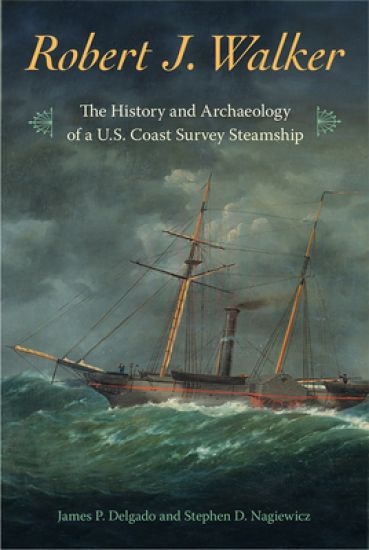
Robert J. Walker

Robert J. Walker

James P. Delgado; Steve Nagiewicz

University Press of Florida
2020
sidottu
This book tells the story of the steamship Robert J. Walker, an early coastal survey ship for the agency that would later become the National Oceanic and Atmospheric Administration (NOAA), that sank with loss of 21 crew off the coast of New Jersey in 1860. The wreck was a frequent stop for divers and anglers before it was identified by a team of researchers in 2013. Here, leaders in the documentation efforts describe the history of the ship and the archaeology of the shipwreck, emphasizing the collaborative community participation that made the project successful.James Delgado and Stephen Nagiewicz highlight the contributions of government archaeologists from NOAA as well as local divers from varying backgrounds. Although such groups are not typically known for working together, they united to achieve the shared goal of mapping and interpreting this historically significant shipwreck. Delgado and Nagiewicz show how incorporating local knowledge both improves archaeological work and empowers community members as stakeholders, inspiring residents to promote their maritime heritage.With Contributions from Vincent J. Capone, Matthew S. Lawrence, Dan Lieb, Deborah E. Marx, Lisa J. Stansbury, Peter F. Straub, and Albert E. Theberge.