
Kirjahaku
Etsi kirjoja tekijän nimen, kirjan nimen tai ISBN:n perusteella.
1000 tulosta hakusanalla J Ashworth



Ashworth, J: Walks in Canaan
Antigonos Verlag
2024
sidottu

Ashworth, J: Rathlynn
Antigonos Verlag
2025
sidottu

Ashworth, J: Rathlynn
Antigonos Verlag
2025
nidottu

Leonore. a Comic Opera in Three Acts. the Libretto and Music by J. H. E. Ashworth.
John H E Ashworth
British Library, Historical Print Editions
2011
pokkari
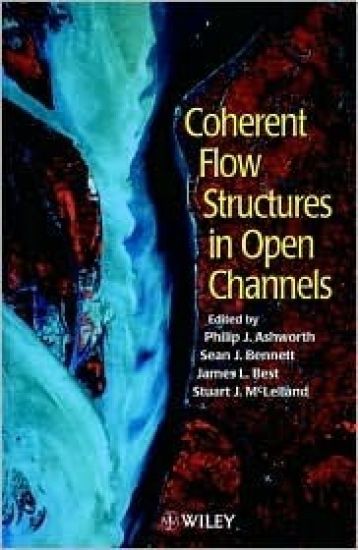
Coherent Flow Structures in Open Channels
Phil Ashworth; Sean J. Bennett; James L. Best; Stuart McLelland
John Wiley Sons Inc
1996
sidottu
Coherent Flow Structures in Open Channels presents the first integrated treatment, across a wide range of spatial and temporal scales, of the origins and characteristics of coherent fluid motions and their influence on sediment transport and bed morphology. This book contains contributions from an international and interdisciplinary authorship who are responsible for many of the recent advances in geophysical boundary layer research. Coherent flow structures are examined systematically across a range of scales from flat-bed boundary layers, grain and bedform roughness generated structures through to the largest scales, where structures may be associated with bars, meander bends and channel confluences. The book is broadly organized according to the spatial scales of coherent flow structures and presents a treatise on the study of these motions from theoretical, experimental and field-based approaches. These papers describe the origins, evolution and characteristics of coherent flow structures and the control which they may impart on sediment transport, both as a bed and suspended load, and ultimately on channel morphology. The book also highlights future research themes required to advance the interdisciplinary understanding of these complex, yet ubiquitous, natural flows. The research presented here will find applications within many fields, including geomorphology, sedimentology, the physical and numerical modelling of two-phase flows, environmental fluid and sediment dynamics and river engineering.
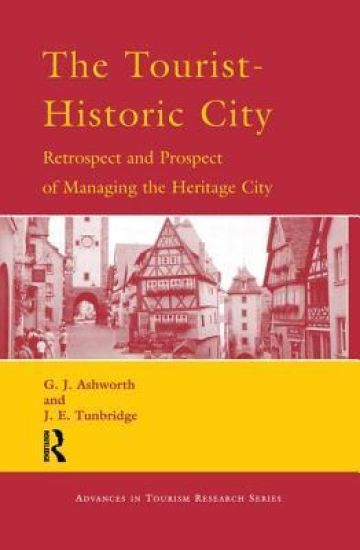
Reflects the importance of heritage to cities, and cities to the creation and marketing of heritage products, not least within tourism. This book presents a review of the state of urban heritage tourism at the turn of the twentieth and twenty-first centuries.
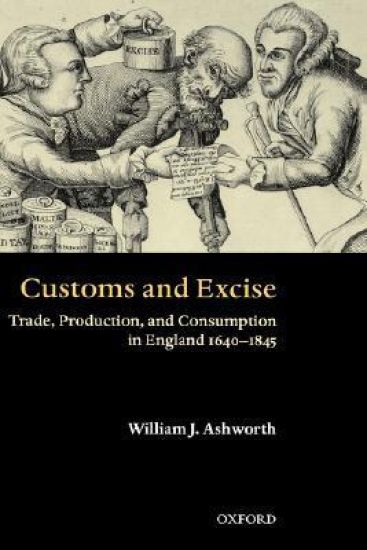
Asis book traces the growth of customs and excise, and their integral role in shaping the framework of industrial England; including state power, technical advance, and the evolution of a consumer society. Central to this structure was the development of two economies - one legal and one illicit. If there was a unique English pathway of industrialization, it was less a distinct entrepreneurial and techno-centric culture, than one predominantly defined within an institutional framework spearheaded by the excise and a wall of tariffs. This process reached its peak by the end of the 1770s. The structure then quickly started to crumble under the weight of the fiscal-military state, and Pitt's calculated policy of concentrating industrial policy around cotton, potteries, and iron - at the expense of other taxed industries. The breakthrough of the new political economy was the erosion of the illicit economy; the smugglers' free trade now became the state's most powerful weapon in the war against non-legal trade. If at the beginning of the period covered by this book state administration was predominantly deregulated and industry regulated, by the close the reverse was the case.
Cities have evolved from small urban systems designed to withstand attack from without. The demands of the modern city have shifted the focus to the dangers of internal violence. War and the City analyses the role of cities in war and the effects of war on cities.
Cities have evolved from small urban systems designed to withstand attack from without. The demands of the modern city have shifted the focus to the dangers of internal violence. War and the City analyses the role of cities in war and the effects of war on cities.
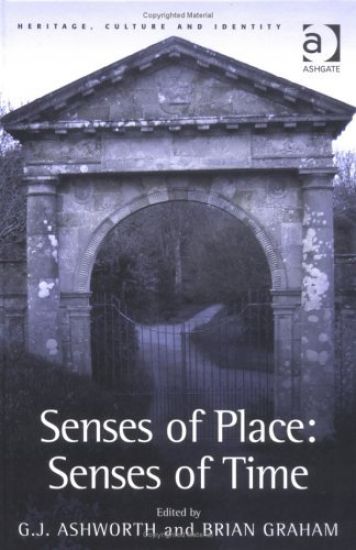
Bringing together case studies from Ireland, the Netherlands, Canada, Germany and Mexico, this book examines the link between senses of place and senses of time. It suggests that not only do place identities change through time, but imagined pasts also provide resources which the present selects and packages for its own contemporary purposes and for forwarding to imagined futures. The reasons behind the creation of place image are also explored, setting them within political and social contexts. In its three main sections - Heritage in the Creation of Senses of Place; Heritage and Conflicting Identities; and Heritage and the Creation of Senses of Place - the book examines the creation of place identities at the urban, rural, regional and international scales. It questions how senses of place interact with senses of ethnic/cultural identity, what the roles of government, media, residents and tourists are in creating senses of place, and how and why all these variables change through time.
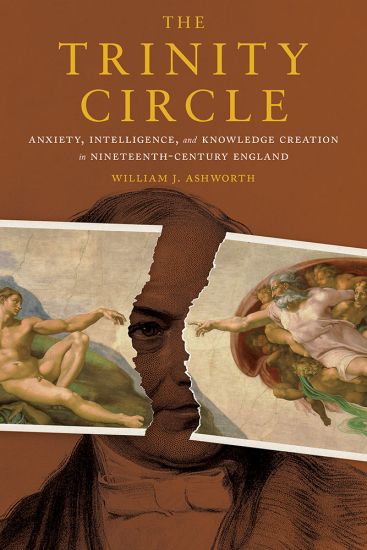
The Trinity Circle explores the creation of knowledge in nineteenth-century England, when any notion of a recognizably modern science was still nearly a century off, religion still infused all ways of elite knowing, and even those who denied its relevance had to work extremely hard to do so. The rise of capitalism during this period—embodied by secular faith, political radicalism, science, commerce, and industry—was, according to Anglican critics, undermining this spiritual world and challenging it with a superficial material one: a human-centric rationalist society hell-bent on measurable betterment via profit, consumption, and a prevalent notion of progress. Here, William J. Ashworth places the politics of science within a far more contested context. By focusing on the Trinity College circle, spearheaded from Cambridge by the polymath William Whewell, he details an ongoing struggle between the Established Church and a quest for change to the prevailing social hierarchy. His study presents a far from unified view toward science and religion at a time when new ways of thinking threatened to divide England and even the Trinity College itself.
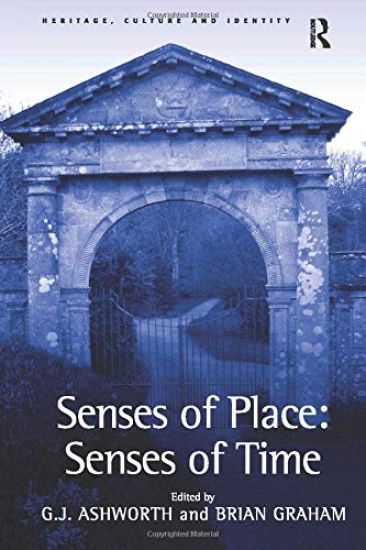
Bringing together case studies from Ireland, the Netherlands, Canada, Germany and Mexico, this book examines the link between senses of place and senses of time. It suggests that not only do place identities change through time, but imagined pasts also provide resources which the present selects and packages for its own contemporary purposes and for forwarding to imagined futures. The reasons behind the creation of place image are also explored, setting them within political and social contexts. In its three main sections - Heritage in the Creation of Senses of Place; Heritage and Conflicting Identities; and Heritage and the Creation of Senses of Place - the book examines the creation of place identities at the urban, rural, regional and international scales. It questions how senses of place interact with senses of ethnic/cultural identity, what the roles of government, media, residents and tourists are in creating senses of place, and how and why all these variables change through time.
This title was first published in 2002.Employing a range of case studies from three northern European countries - England, Sweden and The Netherlands - this captivating book explores the process of heritage conservation from theoretical initiation to practical expression. It traces the threads from the origination of conservation ideas by innovative individuals, their adoption by voluntary groups identified with particular conservation aims, to the inclusion of conservation policies in national legislation and international convention. A common cultural heritage underpins the diffusion of ideas across different systems within a similar time-scale. The ideas have been assimilated and adopted to differing degrees, providing the opportunity for questioning both the strength and purpose in heritage conservation, and the influence of the social and political context. This will be a stimulating read for an international audience of conservationists, heritage policy makers, conservation architects, planners and developers, urban design and planning scholars, and European and cultural studies academics.
This title was first published in 2002.Employing a range of case studies from three northern European countries - England, Sweden and The Netherlands - this captivating book explores the process of heritage conservation from theoretical initiation to practical expression. It traces the threads from the origination of conservation ideas by innovative individuals, their adoption by voluntary groups identified with particular conservation aims, to the inclusion of conservation policies in national legislation and international convention. A common cultural heritage underpins the diffusion of ideas across different systems within a similar time-scale. The ideas have been assimilated and adopted to differing degrees, providing the opportunity for questioning both the strength and purpose in heritage conservation, and the influence of the social and political context. This will be a stimulating read for an international audience of conservationists, heritage policy makers, conservation architects, planners and developers, urban design and planning scholars, and European and cultural studies academics.
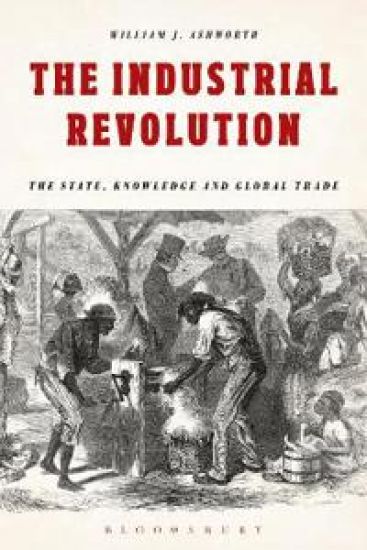
The British Industrial Revolution has long been seen as the spark for modern, global industrialization and sustained economic growth. Indeed the origins of economic history, as a discipline, lie in 19th-century European and North American attempts to understand the foundation of this process.In this book, William J. Ashworth questions some of the orthodoxies concerning the history of the industrial revolution and offers a deep and detailed reassessment of the subject that focuses on the State and its role in the development of key British manufactures. In particular, he explores the role of State regulation and protectionism in nurturing Britain’s negligible early manufacturing base. Taking a long view, from the mid 17th century through to the 19th century, the analysis weaves together a vast range of factors to provide one of the fullest analyses of the industrial revolution, and one that places it firmly within a global context, showing that the Industrial Revolution was merely a short moment within a much larger and longer global trajectory. This book is an important intervention in the debates surrounding modern industrial history will be essential reading for anyone interested in global and comparative economic history and the history of globalization.

The British Industrial Revolution has long been seen as the spark for modern, global industrialization and sustained economic growth. Indeed the origins of economic history, as a discipline, lie in 19th-century European and North American attempts to understand the foundation of this process.In this book, William J. Ashworth questions some of the orthodoxies concerning the history of the industrial revolution and offers a deep and detailed reassessment of the subject that focuses on the State and its role in the development of key British manufactures. In particular, he explores the role of State regulation and protectionism in nurturing Britain’s negligible early manufacturing base. Taking a long view, from the mid 17th century through to the 19th century, the analysis weaves together a vast range of factors to provide one of the fullest analyses of the industrial revolution, and one that places it firmly within a global context, showing that the Industrial Revolution was merely a short moment within a much larger and longer global trajectory. This book is an important intervention in the debates surrounding modern industrial history will be essential reading for anyone interested in global and comparative economic history and the history of globalization.

Language and Logic in the Post-Medieval Period
E.J. Ashworth
Kluwer Academic Publishers
1974
sidottu
Keckermann remarked of the sixteenth century, "never from the begin ning of the world was there a period so keen on logic, or in which more books on logic were produced and studies oflogic flourished more abun dantly than the period-in which we live. " 1 But despite the great profusion of books to which he refers, and despite the dominant position occupied by logic in the educational system of the fifteenth, sixteenth and seven teenth centuries, very little work has been done on the logic of the post medieval period. The only complete study is that of Risse, whose account, while historically exhaustive, pays little attention to the actual logical 2 doctrines discussed. Otherwise, one can tum to Vasoli for a study of humanism, to Munoz Delgado for scholastic logic in Spain, and to Gilbert and Randall for scientific method, but this still leaves vast areas untouched. In this book I cannot hope to remedy all the deficiencies of previous studies, for to survey the literature alone would take a life-time. As a result I have limited myself in various ways. In the first place, I con centrate only on those matters which are of particular interest to me, namely theories of meaning and reference, and formal logic.