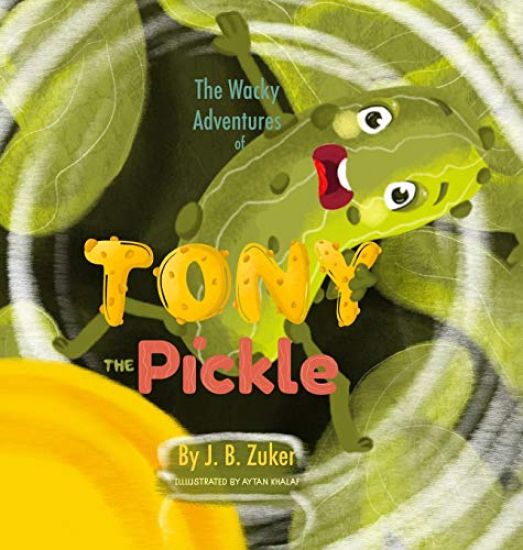
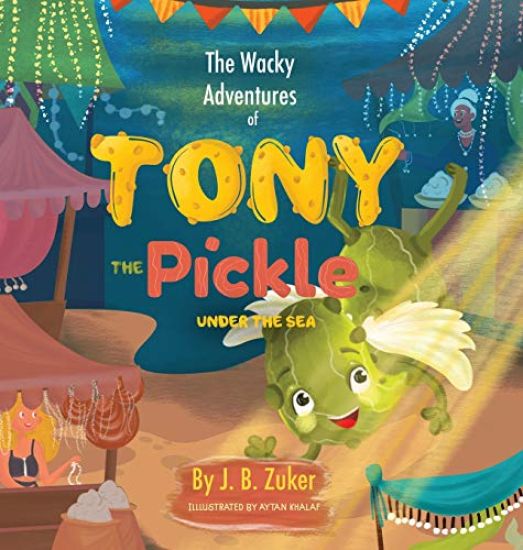
All children confront different challenges as they grow up and Tony The Pickle is no different. Tony is about to experience something he never imagined possible. His communication skills will be put to the test. What will happen when he gets trapped inside a pickle jar and can't get out without the help of others?Read along with your child and let them dive into action with Tony's imaginative approaches.At the end of the story, you and your child will be able to play along three special games designed by Tony himself.
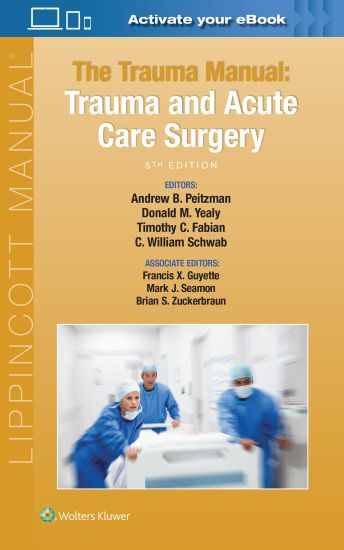
Selected as a Doody’s Essential Title for 2025?! Covering all areas of trauma, critical care, and emergency surgery, The Trauma Manual: Trauma and Acute Care Surgery, 5th Edition, brings you fully up to date with recent changes in the field. This pocket manual is an indispensable resource for everyone on the trauma/acute care team, with practical, easy-to-read coverage of the wide range of patients seen daily with urgent presentation – whether from injury, emergency general surgical disease, or a major complication. This user-friendly manual is one that every trauma surgeon, surgical resident, surgical critical care specialist, emergency medicine physician, and emergency or trauma nurse will want to keep close at hand for daily use. Up-to-date coverage of trauma, critical care, and emergency general surgery from a newly expanded group of national and international experts in the field. Organized in a chronological fashion following the usual events and phases of care after injury or acute surgical illness. Many new and revised chapters throughout the book, plus an entirely new section on surgical rescue and management of frequent complications. Evidence-based recommendations backed by extensive clinical experience, presented in a quick-reference format for ease of use. Enrich Your eBook Reading ExperienceRead directly on your preferred device(s), such as computer, tablet, or smartphone. Easily convert to audiobook, powering your content with natural language text-to-speech.
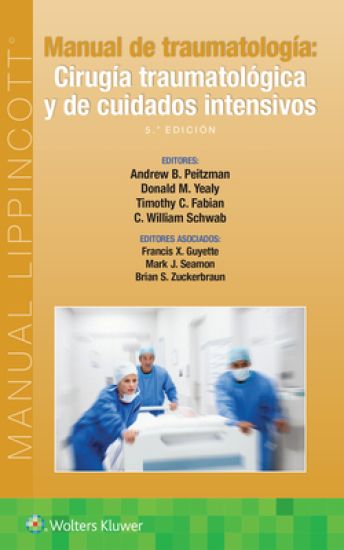
Manual de traumatología. Cirugía traumatológica y de cuidados intensivos es una de las guías más exitosas y buscadas por cirujanos de traumatología y profesionales de urgencias quirúrgicas y de atención al paciente en estado crítico. Su contenido presenta los avances más recientes en la materia y es un recurso de gran utilidad para los miembros del equipo de atención traumatológica con su contenido práctico y amigable sobre la amplia variedad de pacientes que se atienden por lesiones traumatológicas o en condiciones críticas. Esta 5. ª edición refleja la maduración y evolución contemporáneas de la disciplina. Se ha ampliado para incluir rescate quirúrgico y manejo de complicaciones frecuentes como reflejo de la expansión de la cirugía de urgencia. Incorpora fisiopatología y procedimientos que los profesionales realizan a diario, con capítulos organizados y basados en la cronología de la atención al paciente. Al igual que en ediciones previas, todos los capítulos están escritos por expertos e incluyen recomendaciones respaldadas por la evidencia y la amplia experiencia clínica de sus autores.
Jörn Donnerin ja Bitte Westerlundin liiton tiesi koko Suomi. Mutta tunsiko Bitte omaa miestään? Kun Bitte käy läpi miehensä jäämistöä, hän käsittää, ettei tuntenut tätä kovinkaan hyvin - huolimatta liki 40 vuoden yhteiselämästä ja yhteisistä lapsista. Alkaa tutkimusmatka erääseen avioliittoon. Donner tunnettiin paitsi räväkkyydestään myös naissuhteistaan. Kuinka paljon niitä oikeasti oli? Bitte lukee kirjoja, kirjeitä, käy arkistoissa ja ottaa yhteyttä Jörnin tunteneisiin. Samalla hän muistelee lapsuuttaan maalla, opiskeluvuosia, aikaa Los Angelesissa, elämää Bromarvissa, kompostia jota Jörn inhosi.Philip Teir on haastatellut kirjaa varten sekä Bitteä että sukulaisia ja lähipiiriä.
Jörn Donnerin ja Bitte Westerlundin liiton tiesi koko Suomi. Mutta tunsiko Bitte omaa miestään? Kun Bitte käy läpi miehensä jäämistöä, hän käsittää, ettei tuntenut tätä kovinkaan hyvin - huolimatta liki 40 vuoden yhteiselämästä ja yhteisistä lapsista. Alkaa tutkimusmatka erääseen avioliittoon. Donner tunnettiin paitsi räväkkyydestään myös naissuhteistaan. Kuinka paljon niitä oikeasti oli? Bitte lukee kirjoja, kirjeitä, käy arkistoissa ja ottaa yhteyttä Jörnin tunteneisiin. Samalla hän muistelee lapsuuttaan maalla, opiskeluvuosia, aikaa Los Angelesissa, elämää Bromarvissa, kompostia jota Jörn inhosi.Philip Teir on haastatellut kirjaa varten sekä Bitteä että sukulaisia ja lähipiiriä.
Bitte öppnar Jörns dator för att leta upp hans utländska kontakter. I hans mejlkorg hittar hon 520 mejl som Jörn och H skrivit till varandra. Hon läser dem alla; hon kan inte låta bli.Hela Finland kände till Jörn Donners och Bitte Westerlunds förhållande. Men kände Bitte sin man?Bitte, som är nästan 30 år yngre än Jörn, ställs inför hans många hemligheter först efter hans död. Hon inleder en utforskning av den nästan 40 år långa relationen. Jörn var känd inte bara för sin kaxighet utan också för sina relationer med kvinnor. Hur många var de egentligen? För första gången drabbas Bitte av svartsjuka och besatthet. Vad var det för ett äktenskap hon levde i?Bitte läser böcker, brev, besöker arkiv och kontaktar folk som kände Jörn. Samtidigt minns hon barndomen på landet, studieåren, tiden i Los Angeles, livet i Bromarv och komposten som Jörn hatade.För boken har Philip Teir intervjuat Westerlund, och hennes söner och vänner.
J. B. Priestley is the first book to provide a detailed and up to date analysis of the enormous contribution made by this playwright, novelist, journalist and critic to twentieth century British theatre. Priestley was often criticised for being either too populist or too experimental and this study unpicks the contradictions of a playwright and theatre theorist popular with audiences but too often dismissed by critics; describing and analysing in detail not only his plays but also their specific historical and contemporary productions.Using a combination of archive, review and critical materials, the book re-locates Priestley as a theatre theorist of substance as well as a playwright who challenged theatre conventions and assumptions about audience expectations, at a time when theatre was considered both conservative and lacking in innovation.
J. B. Priestley is the first book to provide a detailed and up to date analysis of the enormous contribution made by this playwright, novelist, journalist and critic to twentieth century British theatre. Priestley was often criticised for being either too populist or too experimental and this study unpicks the contradictions of a playwright and theatre theorist popular with audiences but too often dismissed by critics; describing and analysing in detail not only his plays but also their specific historical and contemporary productions.Using a combination of archive, review and critical materials, the book re-locates Priestley as a theatre theorist of substance as well as a playwright who challenged theatre conventions and assumptions about audience expectations, at a time when theatre was considered both conservative and lacking in innovation.
This is a biography of J.B. Priestley, covering his relationships with his three wives, children and other women and friendships with figures such as H.G. Wells, Clement Attlee, Harold Wilson, Charlie Chaplin and Groucho Marx.
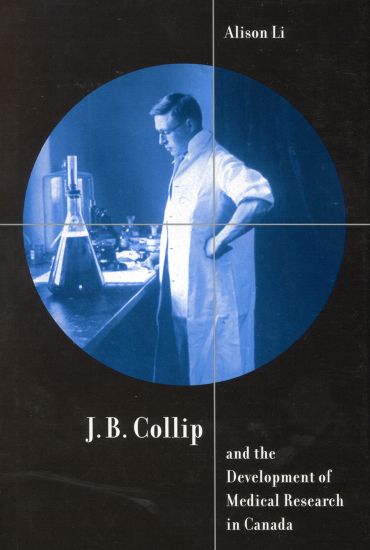
In the early years of the twentieth century medical research in Canada was the job of a select few. By mid-century it had grown into a systematic, large-scale venture that involved teams of professional scientists and dozens of laboratories in universities, government, and industry. J.B. Collip - skilled both as a bench scientist and an entrepreneur - played a leading role in this transformation. In J.B. Collip and the Development of Medical Research in Canada Alison Li details how Collip leapt into prominence in 1921-22 as part of the team at the University of Toronto that isolated insulin. When the Nobel Prize was awarded to Frederick Banting and J.J.R. Macleod in 1923, Banting announced he was sharing his award with Charles Best; Macleod in turn announced he was sharing his award with Collip. Collip was known for his remarkable skills in making hormone extracts, many of which proved to have therapeutic, and therefore commercial, value. At McGill University in the 1930s he headed a thriving research group that carried out investigations of the pituitary and sex hormones, including development of one of the first orally active estrogen products. Collip's story sheds light on early negotiations between academic science and the pharmaceutical industry and on the complexities of sustaining a research laboratory before the rise of government funding. As the head of the National Research Council's medical research division during its formative years, Collip helped shape the foundations of organized support for medical research in Canada.


![An Extract of a Dispatch Extraordinary, Intended for Insertion in the D****m C*******e [I.E. the Durham Chronicle]. with Parodies. Supposed to Have Been Written by Mr. J*** B***, Etc. [A Local Satire Directed Against the Methodists of Gateshead.]](/covers/9781241016609.jpg)
![The Pipits. by the Author of Caw! Caw! [I.E. R. M.] Illustrated by J. B. [I.E. Jane Blackburn.]](/covers/9781241194123.jpg)