Kirjojen hintavertailu. Mukana 11 213 693 kirjaa ja 11 kauppaa.

Kirjahaku

Etsi kirjoja tekijän nimen, kirjan nimen tai ISBN:n perusteella.

1000 tulosta hakusanalla J M Tronson

Personal Narrative of a Voyage to Japan, Kamtschatka, Siberia, Tartary, and various parts of the coast of China, in H.M.S. Barracouta ... With charts and views.
Title: Personal Narrative of a Voyage to Japan, Kamtschatka, Siberia, Tartary, and various parts of the coast of China, in H.M.S. Barracouta ... With charts and views.Publisher: British Library, Historical Print EditionsThe British Library is the national library of the United Kingdom. It is one of the world's largest research libraries holding over 150 million items in all known languages and formats: books, journals, newspapers, sound recordings, patents, maps, stamps, prints and much more. Its collections include around 14 million books, along with substantial additional collections of manuscripts and historical items dating back as far as 300 BC.The HISTORY OF TRAVEL collection includes books from the British Library digitised by Microsoft. This collection contains personal narratives, travel guides and documentary accounts by Victorian travelers, male and female. Also included are pamphlets, travel guides, and personal narratives of trips to and around the Americas, the Indies, Europe, Africa and the Middle East. ++++The below data was compiled from various identification fields in the bibliographic record of this title. This data is provided as an additional tool in helping to insure edition identification: ++++ British Library Tronson, J. M.; 1859. 8 . 10057.d.16.

Hints on Agriculture. by a Practical Farmer (J. M.).

Hints on Agriculture. by a Practical Farmer (J. M.).

J M

British Library, Historical Print Editions
2011
pokkari
Title: Hints on Agriculture. By a Practical Farmer (J. M.).Publisher: British Library, Historical Print EditionsThe British Library is the national library of the United Kingdom. It is one of the world's largest research libraries holding over 150 million items in all known languages and formats: books, journals, newspapers, sound recordings, patents, maps, stamps, prints and much more. Its collections include around 14 million books, along with substantial additional collections of manuscripts and historical items dating back as far as 300 BC.The GEOGRAPHY & TOPOGRAPHY collection includes books from the British Library digitised by Microsoft. Offering some insights into the study and mapping of the natural world, this collection includes texts on Babylon, the geographies of China, and the medieval Islamic world. Also included are regional geographies and volumes on environmental determinism, topographical analyses of England, China, ancient Jerusalem, and significant tracts of North America. ++++The below data was compiled from various identification fields in the bibliographic record of this title. This data is provided as an additional tool in helping to insure edition identification: ++++ British Library M., J; 1835. 39 p.; 8 . 10347.e.34.(12.)
J.M. Coetzee & the Life of Writing

J.M. Coetzee & the Life of Writing

David Attwell

Oxford University Press
2015
sidottu
J.M. Coetzee is one of the world's most intriguing authors. Compelling, razor-sharp, erudite: the adjectives pile up but the heart of the fiction remains elusive. Now, in J.M. Coetzee and the Life of Writing, David Attwell explores the extraordinary creative processes behind Coetzee's novels from Dusklands to The Childhood of Jesus. Using Coetzee's manuscripts, notebooks, and research papers--recently deposited at the Harry Ransom Center of the University of Texas at Austin--Attwell produces a fascinating story. He shows convincingly that Coetzee's work is strongly autobiographical, the memoirs being continuous with the fictions, and that his writing proceeds with never-ending self-reflection. Having worked closely with him on Doubling the Point: Essays and Interviews and given early access to Coetzee's archive, David Attwell is an engaging, authoritative source. J. M. Coetzee and the Life of Writing is a fresh, fascinating take on one of the most important and opaque literary figures of our time. This moving account will change the way Coetzee is read, by teachers, critics, and general readers.
J.M. Coetzee and Neoliberal Culture

J.M. Coetzee and Neoliberal Culture

Andrew Gibson

Oxford University Press
2022
sidottu
This book presents J. M. Coetzee's work as a complex, nuanced counterblast to contemporary, global, neoliberal economics and its societies. Not surprisingly, given his many years in South Africa and Australia, Coetzee writes from a `global-Southern' perspective. Drawing on a wealth of literature, philosophy, and theory, the book reads Coetzee's writings as a discreet, oblique but devastating engagement with neoliberal presumptions. It identifies and focuses on various key features of neoliberal culture: its obsession with self-enrichment, mastery, growth; its belief in plenitude, endless resources; its hubris and obsession with (self)-promotion; its desire for ease and easiness, `well-being', euphoria; its fetishization of managerial reason and the culture of security; its unrelenting positivity, its belief in illusory goods and trivial progressivisms. By contrast, Coetzee's writings explore the virtues of irony and self-reduction. He commits himself to difficulty, discomfort, patient and austere, if bleak, inquiry, rigorous questioning, and radical doubt. Destitution and failure come to look like a serious, dignified form of life and thought. The very tones of Coetzee's books run counter to those of our neoliberal democracies. They point in a different direction to an age that has gone astray.
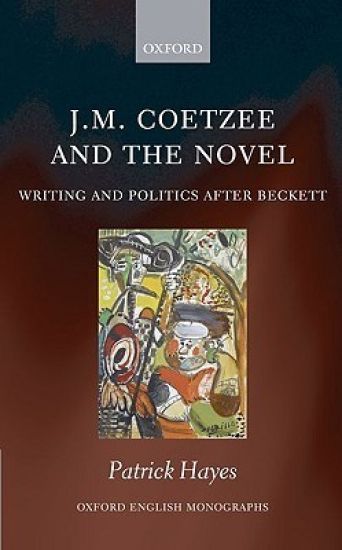
J.M. Coetzee and the Novel

J.M. Coetzee and the Novel

Patrick Hayes

Oxford University Press
2010
sidottu
'Anti-illusionism is, I suspect, only a marking of time, a phase of recuperation, in the history of the novel. The question is, what next?' (J.M. Coetzee) Patrick Hayes argues that the significance of Coetzees fiction lies in the acuity with which it both explores and develops the tradition of the novelranging from Cervantes, Defoe, and Richardson to Dostoevsky, Kafka, and Beckettas part of a sustained attempt to rethink the relationship between writing and politics. For Coetzee, questions about the future of the novel are closely related to what it means to write after Beckett, and J. M. Coetzee and the Novel examines the ways in which his fiction discerningly assimilates the techniques of literary modernism to engage with some of the most troubling aspects of late twentieth-century cultural and political life. While Coetzee is rightly known as an intensely serious writer, Hayes shows that the true seriousness of his writing is intimately bound up with comedyor, to use the word Coetzee borrows from Joyce, the jocoserious. Opening up a range of new approaches to this major contemporary author, J. M. Coetzee and the Novel argues that it is only by paying especially close attention to the experience of reading Coetzees finely-nuanced prose that his distinctive impact on longstanding questions about identity, community, and the nature of political modernity can be appreciated.
J.M. Barrie and the Lost Boys

J.M. Barrie and the Lost Boys

Andrew Birkin

Yale University Press
2003
pokkari
An enchanting biography of J. M. Barrie, the man who created Peter Pan and his Lost Boys “For an insightful exploration of Barrie and the boys who inspired him, nothing rivals [this book].”—Norman Allen, Smithsonian Magazine J. M. Barrie, Victorian novelist, playwright, and author of Peter Pan, or The Boy Who Wouldn’t Grow Up, led a life almost as magical and interesting as as his famous creation. Childless in his marriage, Barrie grew close to the five young boys of the Llewelyn Davies family, ultimately becoming their guardian and devoted surrogate father when they were orphaned. Andrew Birkin draws extensively on a vast range of material by and about Barrie, including notebooks, memoirs, and hours of recorded interviews with the family and their circle, to describe Barrie’s life and the wonderful world he created for the boys. Originally published in 1979, this enchanting and richly illustrated account is reissued with a new preface to mark the release of Neverland, the film of Barrie’s life, and the upcoming centenary of Peter Pan. “A psychological thriller . . . one of the year’s most complex and absorbing biographies.”—Gerald Clarke, Time “A terrible and fascinating story.”—Eve Auchincloss, Washington Post
J.M. Coetzee: Fictions of the Real
J.M. Coetzee has new things to say about this relation between the ‘real’ and ‘fictions of the real’, and while much has already been written about him, these questions need to be more fully explored. The contributions to this volume are drawn together by the idea of the hinge between the world (whether understood in ontological, bio-ethical, personal and interpersonal, or socio-political terms) and fictional representations of it (whether understood in epistemological, ficto-biographical, formal, or stylistic terms). In this collection, the question of understanding itself — how we understand or imagine our place in the world — is shown to be central to our conception of that world. That is, rather than beginning with forms developed in socio-political understandings, Coetzee’s works ask us to consider what role fiction might play in relation to politics, in relation to history, in relation to ethics and our understanding of human agency and responsibility. Coetzee has a profound interest in the methods through which we make sense of the contemporary world and our place in it, and his approach appeals to readers of fiction, critics and philosophers alike. The central problems he deals with in his fiction are of the kind that confront people everywhere and so involve a "translatability" that allow the works to maintain relevance across cultures. Added to this, though, his fiction makes us question the nature of understanding itself. This book was originally published as a special issue of Textual Practice.
J.M. Coetzee

J.M. Coetzee

David Attwell

University of California Press
1993
pokkari
David Attwell defends the literary and political integrity of South African novelist J.M. Coetzee by arguing that Coetzee has absorbed the textual turn of postmodern culture while still addressing the ethical tensions of the South African crisis. As a form of "situational metafiction," Coetzee's writing reconstructs and critiques some of the key discourses in the history of colonialism and apartheid from the eighteenth century to the present. While self-conscious about fiction-making, it takes seriously the condition of the society in which it is produced. Attwell begins by describing the intellectual and political contexts surrounding Coetzee's fiction and then provides a developmental analysis of his six novels, drawing on Coetzee's other writings in stylistics, literary criticism, translation, political journalism and popular culture. Elegantly written, Attwell's analysis deals with both Coetzee's subversion of the dominant culture around him and his ability to see the complexities of giving voice to the anguish of South Africa.
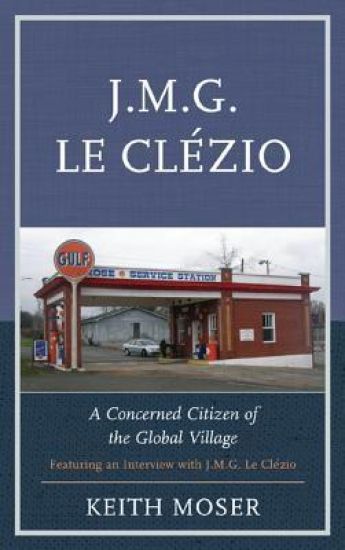
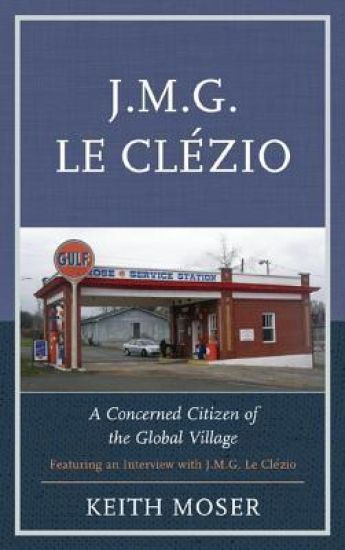
J.M.G. Le Clézio

J.M.G. Le Clézio

Keith Moser

Lexington Books
2012
sidottu
This monograph represents the first comprehensive study of the multifaceted representations of the complex phenomenon of globalization in the diverse repertoire of the 2008 Nobel Laureate in Literature. This interdisciplinary investigation explores the initial euphoria related to the ambivalent concept of the ‘global village’ and how this evaporated dream can perhaps be reappropriated to create a better global society for both the human and Cosmic Other through the lens of Le Clézio’s fiction. Chapter one offers a conceptual framework for understanding the Franco-Mauritian author’s nuanced ideas concerning globalization. It also probes the original ambivalence of McLuhan’s celebrated notion of a global village in addition to its euphoric reception. Chapter two explores the current state of the interconnected, interdependent modern world in which many disenfranchised and marginalized individuals are living a recurring nightmare. Chapter three examines Le Clézio’s deconstruction of the simplistic ideology of consumerism that is indicative of contemporary consumer republics. This section also underscores the intricate systems of hegemonic domination, such as the media, created by the transnational corporations that dominate the global economic landscape to sustain their supremacy. Chapter four delves into Le Clézio’s ecocentric humanism that extends to all other living creatures by debunking Manichean dualities that separate human beings from elemental matter and the rest of the universe. The final chapter examines recent texts, such as Raga, Ourania, and Histoire du pied et autres fantaisies, which encourage the reader to envision what a more just and egalitarian global village might encompass. These works dismiss neoliberal fantasies and consumerist ideology that have justified the systematic exploitation of everyone and everything in the name of progress, but they also urge the modern subject to be resilient in the face of tremendous adversity. Instead of accepting the imposition of a monolithic, socioeconomic model that is riddled with inequality and injustice and which serves the interests of the Happy Few, Le Clézio suggests that the first step is to resist integration into the global village by stoically confronting reality and having the necessary courage to propose another vision which counterpoints McLuhan’s misguided one.
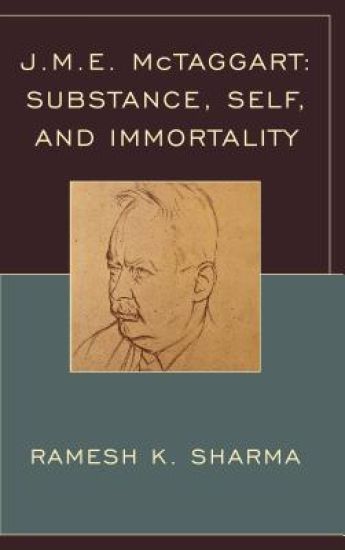
J.M.E. McTaggart

J.M.E. McTaggart

Ramesh K. Sharma

Lexington Books
2015
sidottu
J.M.E. McTaggart seeks to critically expound and appraise the British philosopher’s thought with respect to three principal themes of his philosophy: substance, self, and immortality. Ramesh Kumar Sharma guides the reader through the labyrinths of McTaggart’s intricate arguments and defends many of McTaggart’s highly unorthodox doctrines and conclusions. While doing this, Sharma draws on the works of, among others, Berkeley, Hegel, and Leibniz, and at the same time attacks numerous modern-day physicalist theories that propound mind-brain identity as against the presumed reality of the self and consciousness. This work is thus recommended both for philosophers and researchers interested in: (1) such perennial metaphysical subjects as reality, existence, possibility, the basic ontological categories of substance, qualities, and relations (universals); (2) the question of the reality of the self; (3) McTaggart’s overall vision of the universe or Absolute, and his rejection of the more or less predominant view that the Absolute is God; (4) McTaggart’s unique doctrine, after Plato, of the immortality of the self combined with (the self ’s) pre-existence, post-existence, and plurality of lives; and (5) his extraordinary, but important, views on perception.
J.M.G. Le Clézio

J.M.G. Le Clézio

Keith Moser

Lexington Books
2014
nidottu
This monograph represents the first comprehensive study of the multifaceted representations of the complex phenomenon of globalization in the diverse repertoire of the 2008 Nobel Laureate in Literature. This interdisciplinary investigation explores the initial euphoria related to the ambivalent concept of the ‘global village’ and how this evaporated dream can perhaps be reappropriated to create a better global society for both the human and Cosmic Other through the lens of Le Clézio’s fiction. Chapter one offers a conceptual framework for understanding the Franco-Mauritian author’s nuanced ideas concerning globalization. It also probes the original ambivalence of McLuhan’s celebrated notion of a global village in addition to its euphoric reception. Chapter two explores the current state of the interconnected, interdependent modern world in which many disenfranchised and marginalized individuals are living a recurring nightmare. Chapter three examines Le Clézio’s deconstruction of the simplistic ideology of consumerism that is indicative of contemporary consumer republics. This section also underscores the intricate systems of hegemonic domination, such as the media, created by the transnational corporations that dominate the global economic landscape to sustain their supremacy. Chapter four delves into Le Clézio’s ecocentric humanism that extends to all other living creatures by debunking Manichean dualities that separate human beings from elemental matter and the rest of the universe. The final chapter examines recent texts, such as Raga, Ourania, and Histoire du pied et autres fantaisies, which encourage the reader to envision what a more just and egalitarian global village might encompass. These works dismiss neoliberal fantasies and consumerist ideology that have justified the systematic exploitation of everyone and everything in the name of progress, but they also urge the modern subject to be resilient in the face of tremendous adversity. Instead of accepting the imposition of a monolithic, socioeconomic model that is riddled with inequality and injustice and which serves the interests of the Happy Few, Le Clézio suggests that the first step is to resist integration into the global village by stoically confronting reality and having the necessary courage to propose another vision which counterpoints McLuhan’s misguided one.
J.M. Coetzee and the Paradox of Postcolonial Authorship

J.M. Coetzee and the Paradox of Postcolonial Authorship

Jane Poyner

Ashgate Publishing Limited
2009
sidottu
In her analysis of the South African novelist J. M. Coetzee's literary and intellectual career, Jane Poyner illuminates the author's abiding preoccupation with what Poyner calls the "paradox of postcolonial authorship". Writers of conscience or conscience-stricken writers of the kind Coetzee portrays, whilst striving symbolically to bring the stories of the marginal and the oppressed to light, always risk reimposing the very authority they seek to challenge. From Dusklands to Diary of a Bad Year, Poyner traces how Coetzee rehearses and revises his understanding of the ethics of intellectualism in parallel with the emergence of the "new South Africa". She contends that Coetzee's modernist aesthetics facilitate a more exacting critique of the problems that encumber postcolonial authorship, including the authority it necessarily engenders. Poyner is attentive to the ways Coetzee's writing addresses the writer's proper role with respect to the changing ethical demands of contemporary political life. Theoretically sophisticated and accessible, her book is a major contribution to our understanding of the Nobel Laureate and to postcolonial studies.
J.M. Coetzee's Austerities

J.M. Coetzee's Austerities

Ashgate Publishing Limited
2010
sidottu
Representing a wide range of critical and theoretical perspectives, this volume examines J.M. Coetzee's novels from Dusklands to Diary of a Bad Year. The choice of essays reflects three broad goals: aligning the South African dimension of Coetzee's writing with his "late modernist" aesthetic; exploring the relationship between Coetzee's novels and his essays on linguistics; and paying particular attention to his more recent fictional experiments. These objectives are realized in essays focusing on, among other matters, the function of names and etymology in Coetzee's fiction, the vexed relationship between art and politics in apartheid South Africa, the importance of film in Coetzee's literary sensibility, Coetzee's reworkings of Defoe, the paradoxes inherent in confessional narratives, ethics and the controversial politics of reading Disgrace, intertextuality and the fictional self-consciousness of Slow Man. Through its pronounced emphasis on the novelist's later work, the collection points towards a narrato-political and linguistic reassessment of the Coetzee canon.
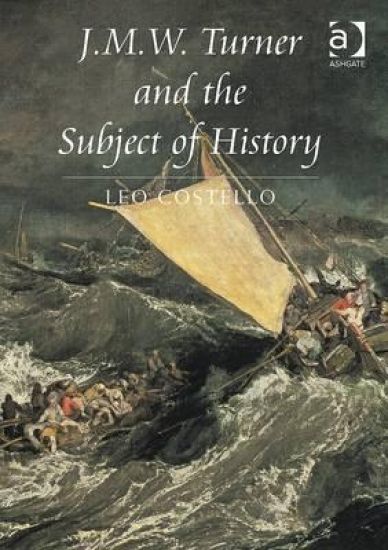
J.M.W. Turner and the Subject of History

J.M.W. Turner and the Subject of History

Leo Costello

Ashgate Publishing Limited
2012
sidottu
J.M.W. Turner and the Subject of History is an in-depth consideration of the artist's complex response to the challenge of creating history paintings in the early nineteenth century. Structured around the linked themes of making and unmaking, of creation and destruction, this book examines how Turner's history paintings reveal changing notions of individual and collective identity at a time when the British Empire was simultaneously developing and fragmenting. Turner similarly emerges as a conflicted subject, one whose artistic modernism emerged out of a desire to both continue and exceed his eighteenth-century aesthetic background by responding to the altered political and historical circumstances of the nineteenth century.
J.M. Coetzee's Disgrace

J.M. Coetzee's Disgrace

Andrew van der Vlies

Continuum International Publishing Group Ltd.
2010
nidottu
This book presents a clearly written introduction to the novel's themes and form, inspired by the author's practical experience of several years of teaching the novel at university level in Britain, as well as his background as a South African-born and educated academic. One of the most widely read novels by a South African-born writer or 'about' South Africa, Nobel Laureate J.M. Coetzee's (second) Booker Prize-winning novel, "Disgrace" (1999), is a firm favourite with reading groups and a fixture on many university-level courses on postcolonial or international literatures in English. Sometimes regarded as offering a bleak picture of post-apartheid South Africa, "Disgrace" has also been read as an ultimately hopeful novel about renunciation and redemption. This introduction offers an indispensable guide to the historical contexts and critical ideas necessary for an informed and rewarding engagement with one of the most significant novels of the last quarter century. Offering an overview of the author's career, informed discussion of the novel's setting and references, this guide considers such issues as the representation of race, gender, the land, and animals, and its concern with language, power, music, confession, and allegory. It provides a discussion of the novel's critical and popular reception, a comprehensive guide to further reading, and questions for discussion.
J.M. Synge and Lady Gregory

J.M. Synge and Lady Gregory

Elizabeth 1909- Coxhead

Hassell Street Press
2021
sidottu
This work has been selected by scholars as being culturally important and is part of the knowledge base of civilization as we know it.This work is in the public domain in the United States of America, and possibly other nations. Within the United States, you may freely copy and distribute this work, as no entity (individual or corporate) has a copyright on the body of the work.Scholars believe, and we concur, that this work is important enough to be preserved, reproduced, and made generally available to the public. To ensure a quality reading experience, this work has been proofread and republished using a format that seamlessly blends the original graphical elements with text in an easy-to-read typeface.We appreciate your support of the preservation process, and thank you for being an important part of keeping this knowledge alive and relevant.