Tails from the B Side is a dog's-eyed view of life from our narrator, Beowulf, a lovable and hilarious canine, who give readers his everyday observations of living with an anxious human in a quirky world. As a therapy dog and "reading tutor," Beowulf has insights into humans, both large and small, and his furry friends keep him on his toes, getting him into all manner of comical situations Written in short story format, we travel alongside Beowulf from the beginning of his unexpected cancer treatment to beyond the rainbow bridge, as his human companion clearly needs some help navigating the world. Along the way, we meet the characters who make up the stuff of everyday life, and end up being unexpected teachers and guides. Tails from the B Side is incredibly funny, heartfelt, and offers a rare insight into us humans from the viewpoint of a dog.
Tails from the B Side is a dog's-eyed view of life from our narrator, Beowulf, a lovable and hilarious canine, who give readers his everyday observations of living with an anxious human in a quirky world. As a therapy dog and "reading tutor," Beowulf has insights into humans, both large and small, and his furry friends keep him on his toes, getting him into all manner of comical situations Written in short story format, we travel alongside Beowulf from the beginning of his unexpected cancer treatment to beyond the rainbow bridge, as his human companion clearly needs some help navigating the world. Along the way, we meet the characters who make up the stuff of everyday life, and end up being unexpected teachers and guides. Tails from the B Side is incredibly funny, heartfelt, and offers a rare insight into us humans from the viewpoint of a dog.
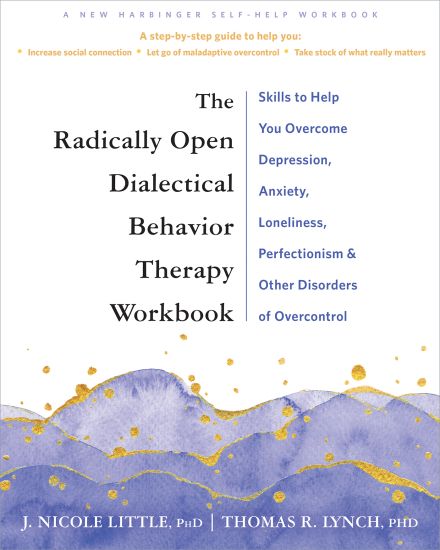
A powerful, breakthrough approach to help you heal from loneliness, depression, anxiety, perfectionism, and other disorders of overcontrol.If I'm working so hard, why don't more people like me?If I'm so well-connected, how come I'm so lonely?I try to do things perfectly, but no one appreciates it. I'm successful, but still feel depressed and anxious. What is wrong with me?Does this sound like you? If so, you should know that you aren't alone, and there is nothing wrong with you. You likely have an incredible sense of responsibility, attention to detail, and strong work ethic--all of which have led you to great success in your life. But did you know that the characteristics that make you so successful can also make you lonely, anxious, or depressed?If you struggle to express vulnerability and build emotional connection in relationships, you may have a disorder of overcontrol (OC). Excessive overcontrol--characterized by high risk aversion, compulsiveness, emotion inhibition, and social deficits--has been directly linked to depression, anxiety, perfectionism, and more. Luckily, there is help. Radically open dialectical behavior therapy (RO DBT) is a breakthrough, evidence-based treatment supported by twenty years of clinical research, and targets a spectrum of disorders characterized by excessive self-control. This workbook offers skills based in RO DBT to help you find a balance between your successful traits and your mental well-being.The Radically Open Dialectical Behavior Therapy Workbook tackles the loneliness that lies at the heart of disorders of overcontrol, and encourages strong social connections as a powerful tool for recovery. In this step-by-step workbook, you'll learn to identify where you are on the OC spectrum, find practical exercises for self-reflection and self-enquiry, and discover tools to help you connect with others on a deeper, more meaningful level. You'll also find strategies to help you deal with criticism, improve your ability to read complex social signals, and approach others with more trust and an open mind and heart.If you're tired of being at the mercy of your need for control and the impact it has on your life and relationships, this compassionate and groundbreaking workbook can help you, every step of the way.
""I used to call myself a poet and a girl I haven't been either in many many years and yet I've started this endeavor. I just want to tell my story...to myself...to my child...to the world They haven't heard me in a while and I think I have something to say. Ex-Devoted cult member...Jesus Freak Ex-Devoted daughter... Ex-Pushover Friend... Half-White Half-Black Half-Alive at 33 years old My Jesus Year Woah...that never occurred to me until now, I think I still thought I was 32 I am recognizing my age Recognizing my body and mind changes And recognizing the loss Do you know how lonely it is to grow up thinking you have a mother only to learn that you did not?""
This book investigates the options, the debates and the ensuing policies of the fledgling Russian government. It examines the evolution of policy from the collapse of the Soviet Union in December 1991 until the Presidential elections in June 1996. Analysing Russia's actions in the context of contemporary foreign policy theory, Nicole J. Jackson discusses and compares three key conflicts: the separatist war between Moldova and Transdniestria; the separatist war between Georgia and Abkhazia and the civil war in Tajikistan. It will be of interest to students and researchers of international relations, security, foreign policy analysis and Russian studies.
The Mind of the Slave untangles the double nature of slaves as property and as human beings under the law in the Roman world. As human beings, slaves had free will and legally recognized autonomy while acting for their owner. Although their autonomy was fundamental to the Roman economy, it had the potential to lead to insecurity in the day-to-day experiences of the owner and enslaved person. Will an enslaved agent decide to act in the best interest of their owner? To sell their secrets? To run away? These moments of insecurity are the subject of this book; they reveal an owner’s struggle to know the mind of the slave and to reconcile ownership over a reasoning, emotional, and purposive human being. Nicole J. Giannella argues that this reliance on the mind of the slave reveals fault lines in the ownership of the enslaved. This is where we can glimpse beyond the trappings of law and see the need for negotiation, incentives, and ultimately, the trust that the owner puts in their slave. In order to place Roman jurists in conversation with both technical and literary sources, Giannella grounds this study in philology and argues that conceptions of the mind of the slave were at the heart of legal and cultural debates about the nature of slavery and ownership. It also contributes to a wider debate about selfhood and autonomy, since philosophers often used the figure of the slave as a representation of humanity as its limits.
This book examines the Hebrew Bible's numerous laws about sacrificial procedure to understand the significance of gender in sacrificial rituals and the reasons that gender distinctions are so vital in these acts. Gender selection of both victims and participants is an intrinsic aspect of the nature and purpose of each rite, affecting its form and function, as well as its legitimacy. Sacrifice and Gender in Biblical Law considers the laws of the firstborn, the rite of the red cow, laws of slaughter, rituals of purification, and other offerings. It shows that these laws regulate material wealth and contribute to the construction of social roles.
When Nicole Georges was sixteen she adopted Beija, a dysfunctional shar-pei/corgi mix - a troublesome combination of tiny and attack, just like teenaged Nicole herself. For the next fifteen years, Beija would be the one constant in her life. Through depression, relationships gone awry, and an unmoored young adulthood played out against the backdrop of the Portland punk scene, Beija was there, wearing her 'Don't Pet Me1 bandana. Georges's gorgeous graphic novel Fetch chronicles their symbiotic, codependent relationship and probes what it means to care for and be responsible to another living thing - a living thing that occasionally lunges at toddlers. Nicole turns to vets, dog whisperers, and even a pet psychic for help, but it is the moments of accommodation, adaption, and compassion that sustain them. Nicole never successfully taught Beija 'sit,' but in the end, Beija taught Nicole how to stay.
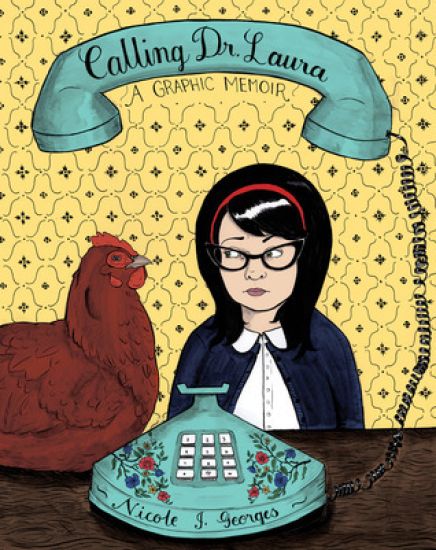
The acclaimed debut graphic memoir by the author of Fetch: "a beautiful and innovative portrait" of young adulthood and confronting family secrets (NPR).When Nicole Georges was two years old, her mother told her that her father was dead. When she was twenty-three, a psychic told her he was alive. Her half-sister, saddled with guilt, admits that the psychic is right and that the whole family has conspired to keep him a secret. Sent into a tailspin about her identity, Nicole turns to radio talk-show host Dr. Laura Schlessinger for advice.Packed cover-to-cover with heartfelt and disarming black-and-white illustrations, Calling Dr. Laura tells the story of what happens to you when you are raised in a family of secrets, and what happens to your brain--and heart--when you learn the truth from an unlikely source. Part coming-of-age and part coming-out story, Calling Dr. Laura is "a tragicomic graphic memoir with a stunning indie aesthetic" (Bookslut).
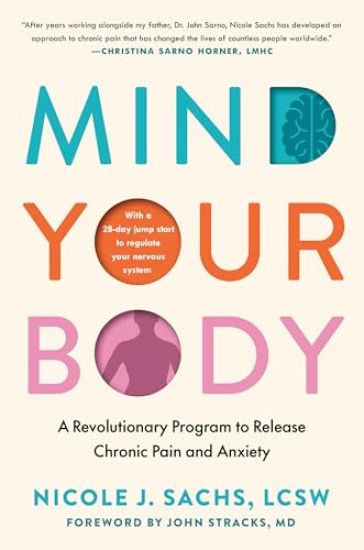
Learn how to free yourself from chronic pain, anxiety, fatigue, and myriad debilitating conditions through the transformative process of nervous system regulation in this accessible guide from psychotherapist and leading Mindbody clinician Nicole Sachs. At a time when chronic pain and other conditions have reached epidemic proportions, and the medical model is coming up short for so many of us, Mind Your Body shares the evidence-based practices that can help deliver readers from hopelessness to freedom. Most people who come to Nicole Sachs have exhausted all other paths to cope with their chronic back and bodily pain, IBS, sciatica, pelvic pain, long COVID, migraines, fibromyalgia, nerve inflammation, skin conditions, anxiety and panic disorders, and many more health conditions. Maybe they're considering surgery or other interventions, with no real promise of a cure, or maybe the surgeries and treatments they've already attempted have proved disappointing and they are desperate for relief. Sachs knows that these kinds of syndromes often don't originate from a physical source. Rather, they are fueled by trauma responses associated with deeply rooted psychological and emotional triggers that send the brain and the nervous system into fight or flight. In Mind Your Body, Sachs teaches readers about Mindbody medicine--which helped her overcome her own debilitating pain and dark prognosis. She explains the essential practice of turning inward, using her revolutionary JournalSpeak method, which has enabled countless people to achieve striking mental, emotional, and physical healing. Mind Your Body takes chronic pain recovery into its next stage, for a new generation of readers who have been so underserved by our medical system.
When Adamson Henry's family strands him in America during his final semester of high school, he must navigate a strange land. A young Englishman, Adamson faces dating, a cross-country adventure, Woodstock, antiwar protests, college, tragedy, and more, all while avoiding the draft. Welcome to Adamson's 1969.