

Kirjahaku
Etsi kirjoja tekijän nimen, kirjan nimen tai ISBN:n perusteella.
1000 tulosta hakusanalla J Olsen

In the 1990s, Julia Honeychurch moves to Canberra with her new husband Brian to take up a position at a school for troubled children. When the marriage sours, Julia learns that, in Canberra, it's difficult to keep secrets. She's fallen in love with Kate Selby, a university lecturer and consultant at Julia's school. Kate and Julia's clandestine meetings take her away from the family and arouse Brian's suspicions. When twelve-year-old Rose Cavanaugh joins her special unit, Julia clashes with Rose's abusive stepfather Lee over his treatment of Rose and Rose's mother. Animosity spirals into dangerous territory, imperils Kate and Julia's secret life, and brings a night of murder to the city.



Orienteringsliste Til Skolekaart Over Europa, Med S?rligt Hensyn Paa H?ideforholdene, Efter Esquisse Orographique de l'Europe Par J. H. Bredsdorft & O. N. Olsen
Olaf Nikolas Olsen
Gale and the British Library
1863
pokkari

"An admirable and thought-provoking consideration of the underlying themes of The Hobbit, following the there-and-back-again progress from its famous first line on through to Bilbo's return home at the story's end." -- Douglas A. Anderson, author of The Annotated Hobbit The Hobbit is one of the most widely read and best-loved books of the twentieth century. Now Corey Olsen takes readers deep within the text to uncover its secrets and delights.Exploring J.R.R. Tolkien’s “The Hobbit” is a fun, thoughtful, and insightful companion volume designed to bring a thorough and original new reading of this great work to a general audience. Professor Corey Olsen takes readers on an in-depth journey through The Hobbit chapter by chapter, revealing the stories within the story: the dark desires of dwarves and the sublime laughter of elves, the nature of evil and its hopelessness, the mystery of divine providence and human choice, and, most of all, the transformation within the life of Bilbo Baggins. Exploring J.R.R. Tolkien’s “The Hobbit” is a book that will make The Hobbit come alive for readers as never before.

Engineering Methods for Precipitation Under a Changing Climate
J. Rolf (EDT) Olsen; Kelcy Takahashi (EDT) Adamec
Amer Society of Civil Engineers
2020
pokkari
Codex Leidensis 339, 1 Euclidis Elementa Ex Interpretatione Al-hadschdschadschii Cum Commentarus Al-narizii
Rasmus Olsen Besthorn; J. L. Heiberg
Kessinger Pub
2009
pokkari

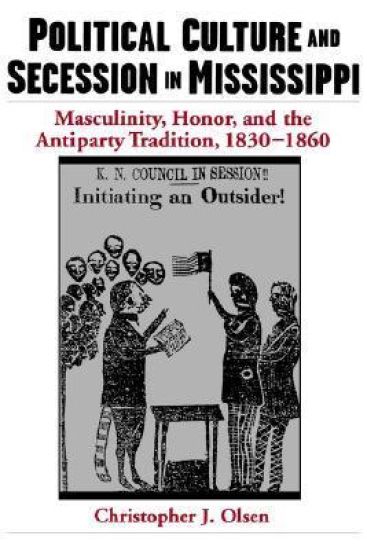
Political Culture and Secession in Mississippi
Christopher J. Olsen
Oxford University Press Inc
2000
sidottu
Political Culture and Secession in Mississippi explores the connections between gender, honour, and electoral politics, and argues that secession resulted from the demands and implications of masculinity within the state's antiparty political culture. Using evidence from local election returns, rural newspapers, manuscripts, and numerous county records, the work sketches a new picture of the varied and colourful world of local politics. It also advances a model of political culture that draws from several disciplines, mixing social science and traditional political history with anthropology and gender and ritual studies. Mississippi's political culture evolved as a system that relied on face-to-face relationships and personal reputation, organized around neighbourhood networks of friends and extended kin. The intimate, public nature of this local setting allowed voters to assess each candidate's individual status and fitness for public leadership. Above all other masculine virtues, men valued independence and physical courage, but also reliability and loyalty to community. The political culture offered numerous chances to demonstrate all of these (sometimes contradictory) qualities, and like duelling and other male rituals, voting and running for office helped set the boundaries of class and power. It mediated between the conflicting values of nineteenth-century American egalitarianism and democracy and the South's exaggerated patriarchal hierarchy, which was sustained by honour and slavery. But the political system functioned effectively only as long as it remained a personal exercise between individuals, divorced from the bureaucratic anonymity of institutional parties. Therefore, the state's dominant political culture was its local, fiercely loyal antiparty tradition that conflated the distinction between men as individuals and as public leaders or representatives. This turned all political conflict into a personal exchange, and explains why Mississippians assessed rhetoric in any public context as a real or potential insult. The political culture, then, dictated men's visceral reaction to the Republicans' anti-Southern free soil programme. Although Republicanism violated their sense of home, the exaggeration and violence of their reaction sprang from their non-institutional political culture. The sectional controversy engaged men where they measured themselves, in public, with and against their peers, and linked their understanding of masculinity with formal politics, through which the voters actually brought about secession.
Political Culture and Secession in Mississippi
Christopher J. Olsen
Oxford University Press Inc
2002
nidottu
This groundbreaking study of the politics of secession combines traditional political history with current work in anthropology and gender and ritual studies. Christopher J. Olsen has drawn on local election returns, rural newspapers, manuscripts, and numerous county records to sketch a new picture of the intricate and colorful world of local politics. In particular, he demonstrates how the move toward secession in Mississippi was deeply influenced by the demands of masculinity within the state's antiparty political culture. Face-to-face relationships and personal reputations, organized around neighborhood networks of friends and extended kin, were at the heart of antebellum Mississippi politics. The intimate, public nature of this tradition allowed voters to assess each candidate's individual status and fitness for public leadership. Key virtues were independence and physical courage, as well as reliability and loyalty to the community, and the political culture offered numerous chances to demonstrate all of these (sometimes contradictory) qualities. Like dueling and other male rituals, voting and running for office helped set the boundaries of class and power. They also helped mediate the conflicts between nineteenth-century American egalitarianism, democracy, and geographic mobility, and the South's exaggerated patriarchal hierarchy, sustained by honor and slavery. The political system, however, functioned effectively only as long as it remained a personal exercise between individuals, divorced from the anonymity of institutional parties. This antiparty tradition eliminated the distinction between men as individuals and as public representatives, which caused them to assess and interpret all political events and rhetoric in a personal manner. The election of 1860 and success of the Republicans' antisouthern, free soil program, therefore, presented an "insulting" challenge to personal, family, and community honor. As Olsen shows in detail, the sectional controversy engaged men where they measured themselves, in public, with and against their peers, and linked their understanding of masculinity with formal politics, through which the voters actually brought about secession. Political Culture and Secession in Mississippi provides a rich new perspective on the events leading up to the Civil War and will prove an invaluable tool for understanding the central crisis in American politics.
Taking the revival of civic republicanism as his point of departure, Erik Olsen examines the relationship between property, civic virtue, and democracy in post-socialist political thought. Olsen's "post-socialism" refers to virtue-centered forms of political theory that continue the socialist tradition of being critical of liberal capitalism while remaining critical of the materialist vision of progressive liberation that informs most modern expressions of left-socialist thought. With civic republicans, these concerns are expressed in the framework of a traditional problem of how to sustain the public liberty of self-governing citizens in the face of the corruptive power of commerce. Olsen argues that civic republicans have failed to develop a viable, virtue-centered alternative to the property arrangements of contemporary commercial republics. Olsen also shows that the outlines for such an alternative can be found in the civic republicans' hermeneutic perspective on the "situated self." By recasting the "situated self" as a concept pertaining to the relationship of the self to property arrangements, Olsen uncovers a "locational" dimension of property, a dimension of "placeness," alongside the more familiar dimension of rightful possession and ownership of things. The vision of democracy that emerges from Civic Republicanism and the Properties of Democracy is informed by liberal commitments to pluralism, equal rights, and oppositionist modes of civic agency. With this book, Olsen seeks to account for the paradox that civic virtue simultaneously supports and threatens democracy. However, he maintains that civic republicans give us reasons to be cautiously hopeful, not just by reminding us that self-government has a nobility of purpose, but also by providing conceptual tools with which to open up new spaces of property and citizenship, thereby providing a measure of pluralism with which to counter an rampant commercialism. A salient intervention into political theory, political science, and social and

Taking the revival of civic republicanism as his point of departure, Erik Olsen examines the relationship between property, civic virtue, and democracy in post-socialist political thought. Olsen's 'post-socialism' refers to virtue-centered forms of political theory that continue the socialist tradition of being critical of liberal capitalism while remaining critical of the materialist vision of progressive liberation that informs most modern expressions of left-socialist thought. With civic republicans, these concerns are expressed in the framework of a traditional problem of how to sustain the public liberty of self-governing citizens in the face of the corruptive power of commerce. Olsen argues that civic republicans have failed to develop a viable, virtue-centered alternative to the property arrangements of contemporary commercial republics. Olsen also shows that the outlines for such an alternative can be found in the civic republicans' hermeneutic perspective on the 'situated self.' By recasting the 'situated self' as a concept pertaining to the relationship of the self to property arrangements, Olsen uncovers a 'locational' dimension of property, a dimension of 'placeness,' alongside the more familiar dimension of rightful possession and ownership of things. The vision of democracy that emerges from Civic Republicanism and the Properties of Democracy is informed by liberal commitments to pluralism, equal rights, and oppositionist modes of civic agency. With this book, Olsen seeks to account for the paradox that civic virtue simultaneously supports and threatens democracy. However, he maintains that civic republicans give us reasons to be cautiously hopeful, not just by reminding us that self-government has a nobility of purpose, but also by providing conceptual tools with which to open up new spaces of property and citizenship, thereby providing a measure of pluralism with which to counter an rampant commercialism. A salient intervention into political theory, political science, and social and cultural theory.
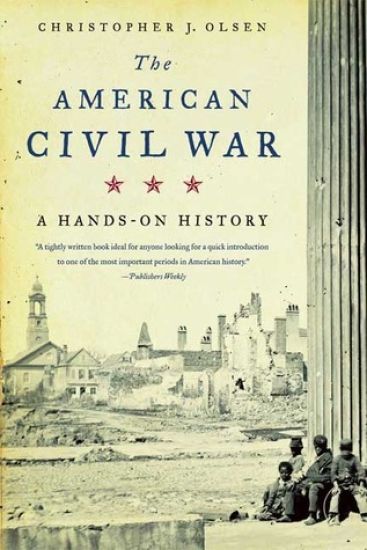
Succinct, with a brace of original documents following each chapter, Christopher J. Olsen's "The American Civil War "is the ideal introduction to American history's most famous, and infamous, chapter. Covering events from 1850 and the mounting political pressures to split the Union into opposing sections, through the four years of bloodshed and waning Confederate fortunes, to Lincoln's assassination and the advent of Reconstruction, "The" "American Civil War "covers the entire sectional conflict and at every juncture emphasizes the decisions and circumstances, large and small, that determined the course of events.

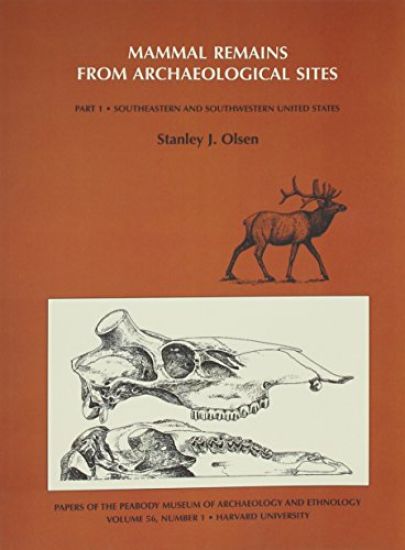
Mammal Remains from Archaeological Sites
Stanley J. Olsen
Peabody Museum of Archaeology Ethnology,U.S.
2004
nidottu
This classic work provides a guide to the identification of nonhuman animal bones. Olsen illustrates various diagnostic characteristics of rodents and dogs; jaguars and other members of the cat family; the domestic horse, pig, and goat; and other animals whose bones are commonly found in archaeological sites in the southeastern United States.
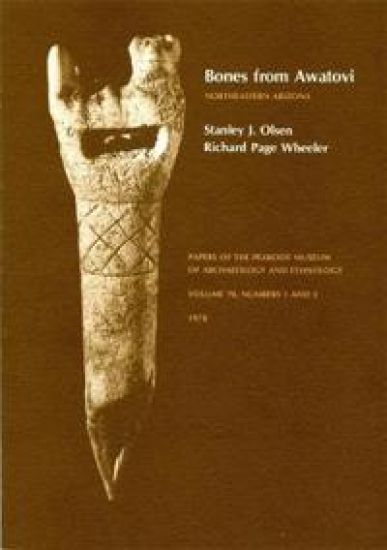
Bones from Awatovi, Northeastern Arizona
Stanley J. Olsen; Richard Page Wheeler
Peabody Museum of Archaeology Ethnology,U.S.
1978
nidottu
Bones from Awatovi contains a detailed analysis of the massive collection of both the faunal remains and the bone/antler artifacts recovered from the site of Awatovi. Unique in its size and degree of preservation, the Awatovi faunal collection provides rich ground for analysis and interpretation. Olsen and Wheeler deliver an in-depth examination which is of interest to archaeologists and faunal analysts alike.