Lunar Ryce is missing, she left a note to tell everyone not to look for her, she had no choice. Leaving Elias sleeping in her bed, she fled the house and her life to work for Charon in the Underworld. He threatened to kill everyone she loved, so she had do as he asked.Charon wants her to collect souls for him, he has used his manipulative powers to influence her decision and it fast becomes something she can't bear to live with.The realms are in chaos, with the most powerful collector missing, the balance is out of whack and all of the realms must work together to bring her home safely.Her prophesy is waiting, Sheol is waiting, Elias is waiting too, time is running out, losing her to the Underworld forever, is not an option
Airway management is a crucial skill to master and the first priority in the assessment of a critically ill or injured patient. Failure to secure an adequate airway can quickly lead to death or disability. Though primarily the remit of the anaesthesiologist, airway management also presents challenges to the surgeon, for example in obese patients or during surgery for thyroid cancer, particularly where reconstruction of the airway is involved. Management of the Difficult Airway: A Handbook for Surgeons is the first book designed to help surgeons with the issues they face maintaining a clear airway and preventing obstruction. It provides practical guidance not just on emergency situations, but also on complex, planned interventions where it is the surgeon who oversees the management of the airway, for example during surgery for congenital airway anomalies. Early chapters cover anatomy, imaging, indications and specific techniques; later ones cover airway situations in specific groups, for example patients requiring surgical reconstruction of the airway resulting from cancer. Management of the Difficult Airway provides a comprehensive, timely review of the core knowledge and clinical skills necessary for successful airway management in the surgical environment. Key Points Provides a ‘go-to’ skills manual for surgeons focussing on difficult airway management in surgical patientsCovers surgical airway management issues in adult and paediatric patientsMultidisciplinary author team combines the expertise of ENT and other surgeons, radiologists and anaesthesiologists
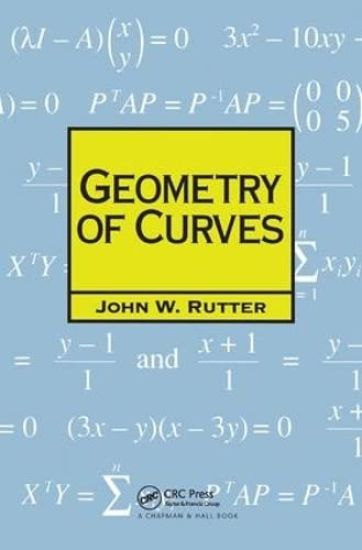
Interest in the study of geometry is currently enjoying a resurgence-understandably so, as the study of curves was once the playground of some very great mathematicians. However, many of the subject's more exciting aspects require a somewhat advanced mathematics background. For the "fun stuff" to be accessible, we need to offer students an introduction with modest prerequisites, one that stimulates their interest and focuses on problem solving. Integrating parametric, algebraic, and projective curves into a single text, Geometry of Curves offers students a unique approach that provides a mathematical structure for solving problems, not just a catalog of theorems. The author begins with the basics, then takes students on a fascinating journey from conics, higher algebraic and transcendental curves, through the properties of parametric curves, the classification of limaçons, envelopes, and finally to projective curves, their relationship to algebraic curves, and their application to asymptotes and boundedness. The uniqueness of this treatment lies in its integration of the different types of curves, its use of analytic methods, and its generous number of examples, exercises, and illustrations. The result is a practical text, almost entirely self-contained, that not only imparts a deeper understanding of the theory, but inspires a heightened appreciation of geometry and interest in more advanced studies.
Interest in the study of geometry is currently enjoying a resurgence-understandably so, as the study of curves was once the playground of some very great mathematicians. However, many of the subject's more exciting aspects require a somewhat advanced mathematics background. For the "fun stuff" to be accessible, we need to offer students an introduction with modest prerequisites, one that stimulates their interest and focuses on problem solving. Integrating parametric, algebraic, and projective curves into a single text, Geometry of Curves offers students a unique approach that provides a mathematical structure for solving problems, not just a catalog of theorems. The author begins with the basics, then takes students on a fascinating journey from conics, higher algebraic and transcendental curves, through the properties of parametric curves, the classification of limaçons, envelopes, and finally to projective curves, their relationship to algebraic curves, and their application to asymptotes and boundedness. The uniqueness of this treatment lies in its integration of the different types of curves, its use of analytic methods, and its generous number of examples, exercises, and illustrations. The result is a practical text, almost entirely self-contained, that not only imparts a deeper understanding of the theory, but inspires a heightened appreciation of geometry and interest in more advanced studies.
In this major new book, eminent scientist Professor Sir Michael Rutter gets behind the hype of the behavioral genetics debate to provide a balanced and authoritative overview of the genetic revolution and its implications for understanding human behavior. Written by one of the world's leading figures in child psychology and psychiatry, Professor Sir Michael RutterProvides non-technical explanation of genetics to diffuse the sensational debates surrounding the topicSets out in layman's terms what genes do, how much is nature and how much is nurtureArgues that nature and nurture are not truly separate and gives examples of how the two interactLooks at the implications of genetic findings for policy and practiceThe book will inform public debate about the implications of the Human Genome Project and, more broadly, the field of genetic science
Michael J. Rutter; Edmund J. Sonuga-Barke; Celia Beckett; Jennifer Castle; Jana Kreppner; Robert Kumsta; Wolff Schlotz; Suzanne Stevens; Christopher A. Bell
Wiley-Blackwell (an imprint of John Wiley Sons Ltd)
The English and Romanian Adoptees (ERA) study constituted an invaluable "natural experiment" in which there was a rapid, easily-timed transition from a profoundly depriving environment in Romanian institutions to generally well-functioning adoptive families in England. Multimodal methods of assessment were used throughout the assessments at 4, 6, 11, and 15 years of age. Four key findings were particularly striking. First, institutional deprivation was associated with an apparently deprivation-specific pattern of combinations of quasiautism, disinhibited attachment, cognitive impairment, and inattention/overactivity. Second, longitudinal growth curves showed a relative deceleration of growth between 11 and 15 years (possibly due to early puberty). Third, institutional deprivation without subnutrition was associated with a major impairment in head growth. Fourth, the effects of institutional deprivation were as strong at 15 years as they had been earlier in childhood.
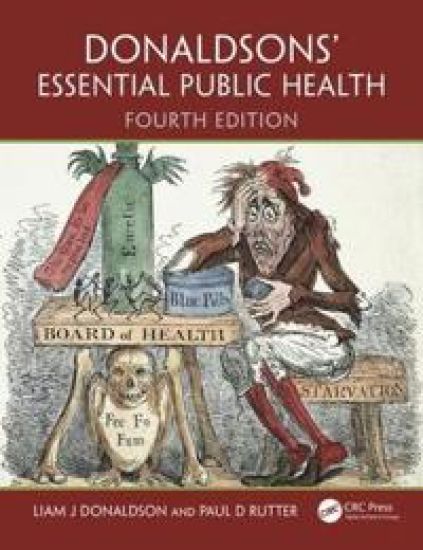
Donaldsons’ Essential Public Health has been in continuous print for 35 years, evolving through successive editions. This unrivalled record of success for a textbook of public health shows the enduring appeal of its content, style, and accessibility to generations of students and practitioners. For many of today’s national and global public health leaders, the book was their guide as they began their careers, their benchmark as they passed their examinations and professional accreditation, and remains their companion as a source of reference and refreshed knowledge for teaching and practice.The book brings together, in one volume, the main health problems experienced by populations and by the key groups within them, the strategies for promoting health and preventing disease, the principles and applications of epidemiology, the main themes of health policy, and a description of health service provision.This fourth edition marks the biggest change to the book in 20 years. For the first time it sets each key subject area in a global health context, whilst retaining its traditional strength in covering population health for the United Kingdom. New and revised chapters for this edition include: Health in a changing world Communicable diseases Non-communicable diseases Social determinants of health Quality and safety of healthcare Mental health Disability Health in later life Environment and health History of public healthThe content is wide-ranging and written in an accessible and engaging style. It covers topics as diverse as: the story of the 2014 Ebola virus outbreak in West Africa; the elements of tobacco control policy; the health impact of climate change; the global health organisational architecture; the concept of health; the new paradigm of public mental health; the biological pathways that link to the health effects of social deprivation; the ideal of universal health coverage; the essentials of immunisation; the basis of healthy ageing; the historical events that led to the germ theory of disease and the Victorian sanitary revolution.This new edition is essential reading for all undergraduate and postgraduate students of public health, medicine, nursing, health policy, social science, and public sector management. Those embarking on a career in public health will find it of great value throughout their professional life. The book is also an extremely useful resource for established practitioners in primary care, doctors, senior nurses, health system managers, healthcare policy makers, civil servants in ministries of health, and members of boards of health organisations.
Blogging has moved rapidly from being a craze to become a core feature of the Internet - from individuals sharing their thoughts with the world via online diaries, through fans talking about their favorite sports teams or music, right up to serious business minds discussing industry futures. And that includes you, right? If you haven't got a blog already, you want to start one, and want to find out how. If you have already got one, you want to know how to customize it, and make it look cooler than everybody else's. In either case, this is the ideal book for you. In this book, a team of renowned web designers take you through the ins and outs of putting together great blogs. They waste no time harking on about the philosophy of blogs, or the community behind them. Instead, they get straight to the practical details, showing how to set up a basic blog in some of the world's most popular blogging engines - Movable Type, ExpressionEngine, WordPress, and Textpattern. With your blog set up, they then show you how to build great looking, usable layouts for your blog. The last chapter even shows you how to build your very own PHP/MySQL-based blog engine! With this book in hand, you'll have found your way to blog heaven in no time!
Donaldsons’ Essential Public Health has been in continuous print for 35 years, evolving through successive editions. This unrivalled record of success for a textbook of public health shows the enduring appeal of its content, style, and accessibility to generations of students and practitioners. For many of today’s national and global public health leaders, the book was their guide as they began their careers, their benchmark as they passed their examinations and professional accreditation, and remains their companion as a source of reference and refreshed knowledge for teaching and practice.The book brings together, in one volume, the main health problems experienced by populations and by the key groups within them, the strategies for promoting health and preventing disease, the principles and applications of epidemiology, the main themes of health policy, and a description of health service provision.This fourth edition marks the biggest change to the book in 20 years. For the first time it sets each key subject area in a global health context, whilst retaining its traditional strength in covering population health for the United Kingdom. New and revised chapters for this edition include: Health in a changing world Communicable diseases Non-communicable diseases Social determinants of health Quality and safety of healthcare Mental health Disability Health in later life Environment and health History of public healthThe content is wide-ranging and written in an accessible and engaging style. It covers topics as diverse as: the story of the 2014 Ebola virus outbreak in West Africa; the elements of tobacco control policy; the health impact of climate change; the global health organisational architecture; the concept of health; the new paradigm of public mental health; the biological pathways that link to the health effects of social deprivation; the ideal of universal health coverage; the essentials of immunisation; the basis of healthy ageing; the historical events that led to the germ theory of disease and the Victorian sanitary revolution.This new edition is essential reading for all undergraduate and postgraduate students of public health, medicine, nursing, health policy, social science, and public sector management. Those embarking on a career in public health will find it of great value throughout their professional life. The book is also an extremely useful resource for established practitioners in primary care, doctors, senior nurses, health system managers, healthcare policy makers, civil servants in ministries of health, and members of boards of health organisations.
This textbook describes the approaches to phonology that are most relevant to communication disorders. It examines schools of thought in theoretical phonology, and their relevance to description, explanation and remediation in the clinical context.A recurring theme throughout the book is the distinction between phonological theories that attempt elegant, parsimonious descriptions of phonological data, and those that attempt to provide a psycholinguistic model of speech production and perception.This book introduces all the relevant areas of phonology to the students and practitioners of speech-language pathology and is a companion volume to the authors’ Phonetics for Communication Disorders.
This textbook describes the approaches to phonology that are most relevant to communication disorders. It examines schools of thought in theoretical phonology, and their relevance to description, explanation and remediation in the clinical context.A recurring theme throughout the book is the distinction between phonological theories that attempt elegant, parsimonious descriptions of phonological data, and those that attempt to provide a psycholinguistic model of speech production and perception.This book introduces all the relevant areas of phonology to the students and practitioners of speech-language pathology and is a companion volume to the authors’ Phonetics for Communication Disorders.
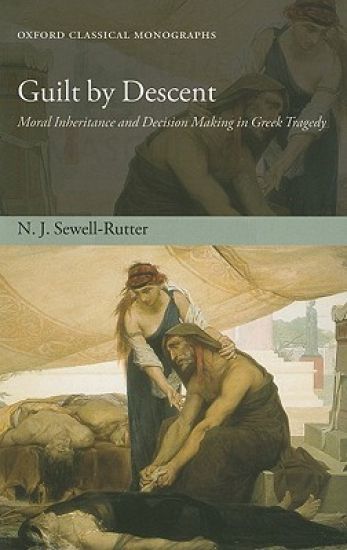
Blighted and accursed families are an inescapable feature of Greek tragedy, and many scholars have treated questions of inherited guilt, curses, and divine causation. N.J. Sewell-Rutter gives these familiar issues a fresh appraisal, arguing that tragedy is a medium that fuses the conceptual with the provoking and exciting of emotion, neither of which can be ignored if the texts are to be fully understood. He pays particular attention to Aeschylus' Seven against Thebes and the Phoenician Women of Euripides, both of which dramatize the sorrows of the later generations of the House of Oedipus, but in very different, and perhaps complementary, ways. All Greek quotations are translated, making his study thoroughly accessible to the non-specialist reader.
Blighted and accursed families are an inescapable feature of Greek tragedy, and many scholars have treated questions of inherited guilt, curses, and divine causation. N.J. Sewell-Rutter gives these familiar issues a fresh appraisal, arguing that tragedy is a medium that fuses the conceptual with the provoking and exciting of emotion, neither of which can be ignored if the texts are to be fully understood. He pays particular attention to Aeschylus' Seven against Thebes and the Phoenician Women of Euripides, both of which dramatize the sorrows of the later generations of the House of Oedipus, but in very different, and perhaps complementary, ways. All Greek quotations are translated, making his study thoroughly accessible to the non-specialist reader.