Kirjahaku
Etsi kirjoja tekijän nimen, kirjan nimen tai ISBN:n perusteella.
1000 tulosta hakusanalla J S Graham
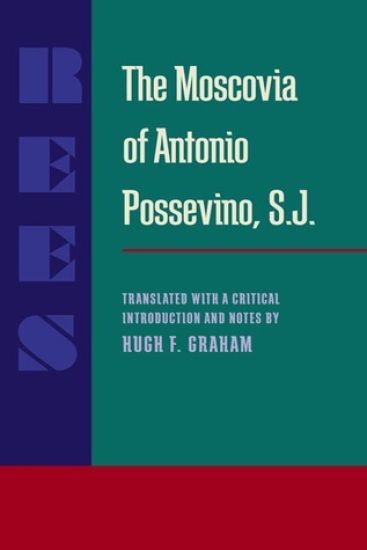
Moscovia of Antonio Possevino, S.J., The
Antonio Possevino; Hugh F. Graham
University of Pittsburgh Press
1977
nidottu
This translation provides a descriptive account of the court of Tsar Ivan IV, in sixteenth-century Moscow, as seen through the eyes of papal envoy and Jesuit Antonio Possevino S.J. , who was sent to negotiate a peace between Muscovy and the Polish-Lithuanian commonwealth.

Graham V. J D Spreckels & Bros Co U.S. Supreme Court Transcript of Record with Supporting Pleadings
Lindley M Garrison
Gale Ecco, U.S. Supreme Court Records
2011
pokkari

Symbol or Substance?: A Dialogue on the Eucharist with C. S. Lewis, Billy Graham and J. R. R. Tolkien
Peter Kreeft
IGNATIUS PRESS
2019
nidottu
In this engaging fictional conversation, Peter Kreeft gives credible voices to C. S. Lewis, J. R. R. Tolkien, and Billy Graham as they discuss one of the most contentious questions in the history of Christianity: Is Jesus symbolically or substantially present in the Eucharist?These widely respected modern Christian witnesses represent three important Western theological traditions. Graham, an ordained Southern Baptist minister who traversed the world and the airwaves to spread the good news of salvation, represents evangelical Protestantism. Lewis, an Oxford professor, a prolific Christian apologist, and the author of The Chronicles of Narnia, was a member of the Church of England. Also an Oxford don, Tolkien was a friend of Lewis, the author of The Lord of the Rings, and a Roman Catholic.While Lewis and Tolkien likely discussed the Eucharist during their long friendship, the conversation in this book never took place--but it could have, says Kreeft, who faithfully presents the views of these three impressive men.

A Full, Faithful, and Impartial Report of the Trials of Messrs. H. and M. Hanbidge, W. Graham, George Graham, J. Forbes, and W. Brownlow, on an ex Officio Information, Filed by the King's Attorney-General, in the Court of King's Bench, for an Alleged Cons
Hutson Street Press
2025
sidottu

A Full, Faithful, and Impartial Report of the Trials of Messrs. H. and M. Hanbidge, W. Graham, George Graham, J. Forbes, and W. Brownlow, on an ex Officio Information, Filed by the King's Attorney-General, in the Court of King's Bench, for an Alleged Cons
Hutson Street Press
2025
pokkari
Local Union No. 10, United Association of Journeymen Plumbers and Steamfitters, Etc., et al., Petitioners, v. O.J. Graham, et al., Partners, Trading as Graham Brothers. U.S. Supreme Court Transcript of Record with Supporting Pleadings
Beecher E Stallard; Richmond Moore
Gale Ecco, U.S. Supreme Court Records
2011
pokkari

J.D. Salinger’s The Catcher in the Rye (1951) is a twentieth-century classic. Despite being one of the most frequently banned books in America, generations of readers have identified with the narrator, Holden Caulfield, an angry young man who articulates the confusion, cynicism and vulnerability of adolescence with humour and sincerity.This guide to Salinger’s provocative novel offers:an accessible introduction to the text and contexts of The Catcher in the Rye a critical history, surveying the many interpretations of the text from publication to the presenta selection of new critical essays on the The Catcher in the Rye, by Sally Robinson, Renee R. Curry, Denis Jonnes, Livia Hekanaho and Clive Baldwin, providing a range of perspectives on the novel and extending the coverage of key critical approaches identified in the survey sectioncross-references between sections of the guide, in order to suggest links between texts, contexts and criticismsuggestions for further reading.Part of the Routledge Guides to Literature series, this volume is essential reading for all those beginning detailed study of The Catcher in the Rye and seeking not only a guide to the novel, but a way through the wealth of contextual and critical material that surrounds Salinger’s text.

J.D. Salinger’s The Catcher in the Rye (1951) is a twentieth-century classic. Despite being one of the most frequently banned books in America, generations of readers have identified with the narrator, Holden Caulfield, an angry young man who articulates the confusion, cynicism and vulnerability of adolescence with humour and sincerity.This guide to Salinger’s provocative novel offers:an accessible introduction to the text and contexts of The Catcher in the Rye a critical history, surveying the many interpretations of the text from publication to the presenta selection of new critical essays on the The Catcher in the Rye, by Sally Robinson, Renee R. Curry, Denis Jonnes, Livia Hekanaho and Clive Baldwin, providing a range of perspectives on the novel and extending the coverage of key critical approaches identified in the survey sectioncross-references between sections of the guide, in order to suggest links between texts, contexts and criticismsuggestions for further reading.Part of the Routledge Guides to Literature series, this volume is essential reading for all those beginning detailed study of The Catcher in the Rye and seeking not only a guide to the novel, but a way through the wealth of contextual and critical material that surrounds Salinger’s text.
James S. Graham, Appellant, V. March Fong Eu, Secretary of State of California, et al. U.S. Supreme Court Transcript of Record with Supporting Pleadings
James E Sheldon; James D Welch; Evelle J Younger
Gale Ecco, U.S. Supreme Court Records
2011
pokkari
This is the first new analysis of J. D. Salinger's short fiction to be published in twenty years and the most in-depth study yet produced. It gives full consideration to all the work published in magazines from 1940 onwards, which were never anthologized; the short stories collected in Nine Stories/For Esme-With Love and Squalor; Franny and Zooey; Raise High the Roof Beam, Carpenters and Seymour-An Introduction, and his final publication, 'Hapworth 16, 1924'.J. D. Salinger's Short Fiction questions the conventional view that Salinger was part of the literary counter-culture, proposing instead that he responds to post-war American society with an idealization of the past, especially in terms of childhood, family and the home. Sarah Graham, a recognized Salinger scholar, deals comprehensively with the author's central preoccupations and narrative strategies: his 'wise children' who embody a threatened innocence; war, loss and nostalgia; family relationships; the long-short story form, dialogue, and humour.
This is the first new analysis of J. D. Salinger's short fiction to be published in twenty years and the most in-depth study yet produced. It gives full consideration to all the work published in magazines from 1940 onwards, which were never anthologized; the short stories collected in Nine Stories/For Esme-With Love and Squalor; Franny and Zooey; Raise High the Roof Beam, Carpenters and Seymour-An Introduction, and his final publication, 'Hapworth 16, 1924'.J. D. Salinger's Short Fiction questions the conventional view that Salinger was part of the literary counter-culture, proposing instead that he responds to post-war American society with an idealization of the past, especially in terms of childhood, family and the home. Sarah Graham, a recognized Salinger scholar, deals comprehensively with the author's central preoccupations and narrative strategies: his 'wise children' who embody a threatened innocence; war, loss and nostalgia; family relationships; the long-short story form, dialogue, and humour.

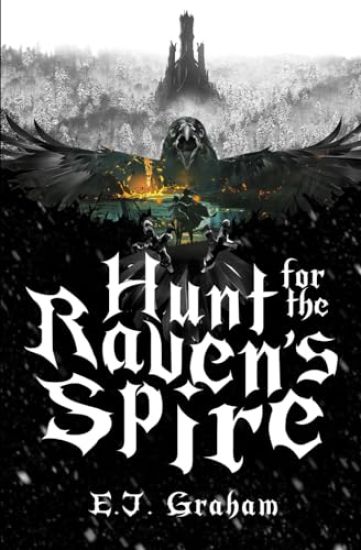
The ravens are coming... A young woman, losing blood rapidly and carrying an orphaned fairy, arrives at the gates of the newly rebuilt Shadowglen, where Clint co-leads the new alliance of humans and fairies. Before she can reveal who she is, she dies. He finds only one thing on her: a note with a name no fairy has come across in five hundred years. Sensing a mystery, Clint and his friends set out to discover where the fairy came from, unaware how deep the mystery truly is. But they are in a race. Forces, both human and fairy, are on the same quest, some with darker purposes than others. One of the greatest secrets of the fairy race is about to be revealed, whether they wish it or not. Clint must race to save the world, but in so doing will he set in motion events that cannot be stopped or undone? Is the world ready for what is about to be revealed?