

Kirjahaku
Etsi kirjoja tekijän nimen, kirjan nimen tai ISBN:n perusteella.
1000 tulosta hakusanalla J T Brown


A Study of the Ecological Distribution of Ants in Gregory Canyon, Boulder, Colorado
J T Browne
Palala Press
2018
pokkari
This work has been selected by scholars as being culturally important, and is part of the knowledge base of civilization as we know it. This work was reproduced from the original artifact, and remains as true to the original work as possible. Therefore, you will see the original copyright references, library stamps (as most of these works have been housed in our most important libraries around the world), and other notations in the work.This work is in the public domain in the United States of America, and possibly other nations. Within the United States, you may freely copy and distribute this work, as no entity (individual or corporate) has a copyright on the body of the work.As a reproduction of a historical artifact, this work may contain missing or blurred pages, poor pictures, errant marks, etc. Scholars believe, and we concur, that this work is important enough to be preserved, reproduced, and made generally available to the public. We appreciate your support of the preservation process, and thank you for being an important part of keeping this knowledge alive and relevant.
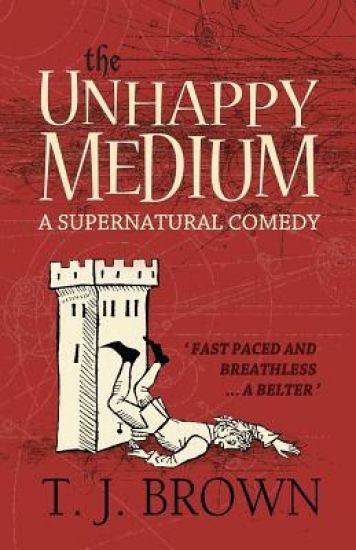
NEWTON BARLOW THOUGHT HE KNEW EVERYTHING. NOW... HE KNOWS BETTER.Meet the ultra-rational Dr. Newton Barlow. Cool, cynical, and scientific, he's the last man you'd want to be a bridge between the living and the dead. But with his academic reputation in tatters, and nothing to lose but his few remaining marbles, the great skeptic is about to discover that the past that haunts him will be nothing compared to his ghost-ridden future. Thrust into a rollicking struggle between good and evil, can Dr. Barlow forget everything he ever believed in to save this world...and the next?Thrilling, chilling, and utterly hilarious, The Unhappy Medium is a bone-dry British comedy in the great tradition of Douglas Adams and Terry Pratchett.'A very funny novel.' 'Hilariously smart and funny.' 'More fun than a barrel of monkeys.' Terry Pratchett readers, form an orderly queue.' 'Brian Cox meets Monty Python.' 'Unhappy Medium made me very happy.' 'Hilariously smart and funny.' 'Reminiscent of Terry Pratchett and Neil Gaiman's Good Omens... a rollicking finish.' 'As if the Sixth Sense had been written by Douglas Adams.' 'A great example of the genre from a new author to watch out for.' 'Rip-roaring adventure had me laughing out loud.'
The Yuchi (Euchee) Tribe of Indians and S. W. Brown, Legus Brown, et al., Petitioners, V. United States. U.S. Supreme Court Transcript of Record with Supporting Pleadings
J T Smith
Gale, U.S. Supreme Court Records
2011
pokkari

After Prudence's desperate marriage and move to Devonshire, sisters Rowena and Victoria fear they have lost their beloved friend forever. Guilt-ridden and remorseful, Rowena seeks comfort from a daring flyboy and finds it by embracing the most dangerous activity the world has ever seen and Victoria defies her family and her illness to make her own dream occupation as a botanist come true. As England and the world step closer to conflict, the two young women flout their family, their upbringing and their heritage to seize a modern future of their own making.
![Controversial Letters, in Rhyme, Between Two Country Schoolmasters in the County of Meath [P. Lowth and T. J. Browne].](/covers/9781241146177.jpg)
Controversial Letters, in Rhyme, Between Two Country Schoolmasters in the County of Meath [P. Lowth and T. J. Browne].
Patrick Lowth; Thomas J Browne
British Library, Historical Print Editions
2011
pokkari
Cheerful Words. from the Writings of George MacDonald. Selected by E. E. Brown. with an Introduction by J. T. Fields.
George MacDonald; Emma Brown
British Library, Historical Print Editions
2011
pokkari

With a blend of heartfelt storytelling and evocative illustrations, this short novel is a testament to the strength of the human spirit. Through the protagonist's eyes, we witness not only the pain and confusion of her experience but also the profound moments of healing and self-discovery that follow. A compelling and thought-provoking read, this book sheds light on a difficult subject with sensitivity and grace. It is a reminder that even in the darkest of times, there is hope and that with support and inner strength, one can emerge from the shadows into the light of a new day

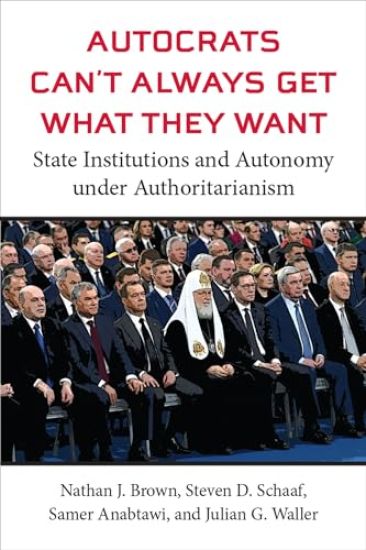
Autocrats Can't Always Get What They Want
Nathan J Brown; Steven D Schaaf; Samer Anabtawi; Julian G Waller
THE UNIVERSITY OF MICHIGAN PRESS
2024
nidottu
Authoritarianism seems to be everywhere in the political world—even the definition of authoritarianism as any form of non-democratic governance has grown very broad. Attempts to explain authoritarian rule as a function of the interests or needs of the ruler or regime can be misleading. Autocrats Can’t Always Get What They Want argues that to understand how authoritarian systems work we need to look not only at the interests and intentions of those at the top, but also at the inner workings of the various parts of the state. Courts, elections, security force structure, and intelligence gathering are seen as structured and geared toward helping maintain the regime. Yet authoritarian regimes do not all operate the same way in the day-to-day and year-to-year tumble of politics. In Autocrats Can’t Always Get What They Want, the authors find that when state bodies form strong institutional patterns and forge links with key allies both inside the state and outside of it, they can define interests and missions that are different from those at the top of the regime. By focusing on three such structures (parliaments, constitutional courts, and official religious institutions), the book shows that the degree of autonomy realized by a particular part of the state rests on how thoroughly it is institutionalized and how strong its links are with constituencies. Instead of viewing authoritarian governance as something that reduces politics to rulers’ whims and opposition movements, the authors show how it operates—and how much what we call “authoritarianism” varies.

Autocrats Can't Always Get What They Want
Nathan J Brown; Steven D Schaaf; Samer Anabtawi; Julian G Waller
THE UNIVERSITY OF MICHIGAN PRESS
2024
sidottu
Authoritarianism seems to be everywhere in the political world—even the definition of authoritarianism as any form of non-democratic governance has grown very broad. Attempts to explain authoritarian rule as a function of the interests or needs of the ruler or regime can be misleading. Autocrats Can’t Always Get What They Want argues that to understand how authoritarian systems work we need to look not only at the interests and intentions of those at the top, but also at the inner workings of the various parts of the state. Courts, elections, security force structure, and intelligence gathering are seen as structured and geared toward helping maintain the regime. Yet authoritarian regimes do not all operate the same way in the day-to-day and year-to-year tumble of politics. In Autocrats Can’t Always Get What They Want, the authors find that when state bodies form strong institutional patterns and forge links with key allies both inside the state and outside of it, they can define interests and missions that are different from those at the top of the regime. By focusing on three such structures (parliaments, constitutional courts, and official religious institutions), the book shows that the degree of autonomy realized by a particular part of the state rests on how thoroughly it is institutionalized and how strong its links are with constituencies. Instead of viewing authoritarian governance as something that reduces politics to rulers’ whims and opposition movements, the authors show how it operates—and how much what we call “authoritarianism” varies.

A magical, true story, Bob Brown's beguiling memoir takes readers behind the scenes of pivotal moments in recent history, where lessons learned at his grandmother's knee helped him shape America as we know it today. Called "a world-class power broker" by the Washington Post, Robert Brown has been a sought-after counsellor for an impressive array of the famous and powerful, including every American president since John F. Kennedy. But as a child born into poverty in the early twentieth century, Robert was raised by his grandmother to think differently about success. For example, "If you want to lead," she told him, "be invisible." And, "Before entering a room, let God in the room first." Fuelled by these lessons on humble, principled service, Brown went on to play a pivotal, mostly unseen role alongside the great and the powerful of our time: trailing the mob in 1950s Harlem with a young Robert F. Kennedy; helping the all-white corporate titans at Woolworth integrate their lunch counters; accompanying Coretta Scott King, at her request, to Memphis the day after her husband had been shot; advising Richard Nixon on how to defuse racially charged street demonstrations; becoming the only person allowed to visit Nelson Mandela in Pollsmoor prison in Cape Town. BECOMING MR. BROWN blends a heartwarming, historically fascinating account with memorable success principles that will speak to the Mr. Brown in all of us.

My name is Elizabeth Grace Payton. I just graduated high school and am looking forward to enjoying my last summer with Jayce before we go off to college together. Jayce isn't just my boyfriend, he's my everything. I've heard stories about people saying there can be one moment that changes their entire life. As if this moment flipped their entire life upside down. They said that once that moment happened things never went back to what could've been, what should've been. I always thought these people were being a little dramatic. I mean, how could one moment change everything? Change your entire life? Well, apparently I was na ve because that's exactly what happened to me and I never even saw it coming. One night changed everything. I ended up in the wrong place, at the wrong time. My dreams, my future, and my life were taken away from me. I can no longer be Elizabeth Grace Payton. I am now Riley Lynn Anderson.
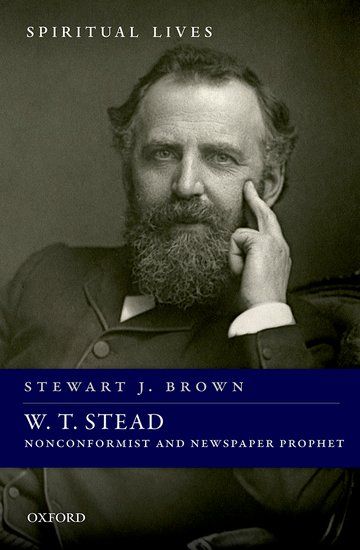
W. T. Stead (1849-1912) was a newspaper editor, author, social reformer, advocate for women rights, peace campaigner, spiritualist, and one of the best-known public figures in the late Victorian and Edwardian Britain. W. T. Stead: Nonconformist and Newspaper Prophet provides a compelling religious biography of Stead, offering particular attention to his conception of journalism--in an age of growing mass literacy--as a means to communicate religious truth and morality, and his view of the editor's desk as a modern pulpit. Leading scholar, Stewart J. Brown explores how his Nonconformist Conscience and sense of divine calling infused Stead's newspaper crusades-most famously his 'Maiden Tribute' campaign against child prostitution. The biography also examines Stead's growing interest in spiritualism and the occult, as he searched for the evidence of an afterlife that might draw people in a more secular age back to faith. It discusses his imperialism and his belief in the English-speaking peoples of the British Empire and American Republic as God's new chosen people for the spread of civilisation; and it highlights how his growing understanding of other faiths and cultures--but more especially his moral revulsion over the South African War of 1899-1902--brought him to question those beliefs. Finally, it assesses the influence of religious faith on his campaigns for world peace and the arbitration of international disputes.

The Overland Trail: Old Military Road and Pony Express Route in Its Relation to Atchison, Brown and Nemaha Counties in the 50's and 60's
J. T. Bristow
Literary Licensing, LLC
2013
nidottu

How to Shop for Shi(f)t: Why? Because we give a F / The Shopping guide for healthier fashion for any budget!
Taryn Hipwell; Karen Housel; Nicholas J. Brown
51995
2019
nidottu