Kirjojen hintavertailu. Mukana 11 342 296 kirjaa ja 12 kauppaa.

Kirjahaku

Etsi kirjoja tekijän nimen, kirjan nimen tai ISBN:n perusteella.

1000 tulosta hakusanalla J. David Hoeveler

Edmund J. James and the Making of the Modern University of Illinois, 1904-1920

Edmund J. James and the Making of the Modern University of Illinois, 1904-1920

Winton U Solberg; J. David Hoeveler

UNIVERSITY OF ILLINOIS PRESS
2024
sidottu
In 1904, Edmund J. James inherited the leadership of an educational institution in search of an identity. His sixteen-year tenure transformed the University of Illinois from an industrial college to a major state university that fulfilled his vision of a center for scientific investigation. Winton U. Solberg and J. David Hoeveler provide an account of a pivotal time in the university’s evolution. A gifted intellectual and dedicated academic reformer, James began his tenure facing budget battles and antagonists on the Board of Trustees. But as time passed, he successfully campaigned to address the problems faced by women students, expand graduate programs, solidify finances, create a university press, reshape the library and faculty, and unify the colleges of liberal arts and sciences. Combining narrative force with exhaustive research, the authors illuminate the political milieu and personalities around James to draw a vivid portrait of his life and times. The authoritative conclusion to a four-part history, Edmund J. James and the Making of the Modern University of Illinois, 1904–1920 tells the story of one man’s mission to create a university worthy of the state of Illinois.
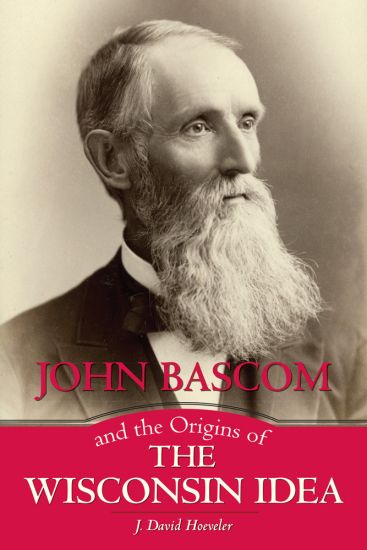
John Bascom and the Origins of the Wisconsin Idea

John Bascom and the Origins of the Wisconsin Idea

J. David Hoeveler

University of Wisconsin Press
2017
nidottu
In the Progressive Era of American history, the state of Wisconsin gained national attention for its innovative economic and political reforms. Amidst this ferment, the ""Wisconsin Idea"" was popularized?the idea that a public university should improve the lives of people beyond the borders of its campus.During his term as governor (1901?1906), Robert La Follette routinely consulted with University of Wisconsin researchers to devise groundbreaking programs and legislation. Although the Wisconsin Idea is often attributed to a 1904 speech by Charles Van Hise, then president of the University of Wisconsin, David Hoeveler argues that it originated decades earlier, in the creative and fertile mind of John Bascom.A philosopher, theologian, and sociologist, Bascom (1827?1922) deeply influenced a generation of students at the University of Wisconsin, including La Follette and Van Hise. Hoeveler documents how Bascom drew concepts from German idealism, liberal Protestantism, and evolutionary theory, transforming them into advocacy for social and political reform. He was a champion of temperance, women's rights, and labor, all of which brought him controversy as president of the university from 1874 to 1887. In a way unmatched by any of his peers at other institutions, Bascom outlined a social gospel that called for an expanded role for state governments and universities as agencies of moral improvement.Hoeveler traces the intellectual history of the Wisconsin Idea from the nineteenth century to such influential Progressive Era thinkers as Richard T. Ely and John R. Commons, who believed university researchers should be a vital source of expertise for government and citizens.
James McCosh and the Scottish Intellectual Tradition

James McCosh and the Scottish Intellectual Tradition

J. David Hoeveler

Princeton University Press
2014
pokkari
James McCosh played a leading role in the effort to reconcile two powerful intellectual and social forces of the nineteenth century: evolution and evangelicalism. In the first modern biography of this philosopher, religious leader, and educator, J. David Hoeveler demonstrates McCosh's significance for Scottish and American philosophy and for American education. Originally published in 1981. The Princeton Legacy Library uses the latest print-on-demand technology to again make available previously out-of-print books from the distinguished backlist of Princeton University Press. These editions preserve the original texts of these important books while presenting them in durable paperback and hardcover editions. The goal of the Princeton Legacy Library is to vastly increase access to the rich scholarly heritage found in the thousands of books published by Princeton University Press since its founding in 1905.
James McCosh and the Scottish Intellectual Tradition

James McCosh and the Scottish Intellectual Tradition

J. David Hoeveler

PRINCETON UNIVERSITY PRESS
2016
sidottu
James McCosh played a leading role in the effort to reconcile two powerful intellectual and social forces of the nineteenth century: evolution and evangelicalism. In the first modern biography of this philosopher, religious leader, and educator, J. David Hoeveler demonstrates McCosh's significance for Scottish and American philosophy and for American education. Originally published in 1981. The Princeton Legacy Library uses the latest print-on-demand technology to again make available previously out-of-print books from the distinguished backlist of Princeton University Press. These editions preserve the original texts of these important books while presenting them in durable paperback and hardcover editions. The goal of the Princeton Legacy Library is to vastly increase access to the rich scholarly heritage found in the thousands of books published by Princeton University Press since its founding in 1905.
Creating the American Mind

Creating the American Mind

J. David Hoeveler

Rowman Littlefield Publishers
2007
nidottu
The nine colleges of colonial America confronted the major political currents of the seventeenth and eighteenth centuries, while serving as the primary intellectual institutions for Puritanism and the transition to Enlightenment thought. The colleges also confronted the most partisan and divisive cultural movement of the eighteenth century—the Great Awakening. Creating the American Mind is the first book to present a synthetic treatment of the colonial colleges, tracing their role in the intellectual development of early Americans through the Revolution. Distinguished historian J. David Hoeveler focuses on Harvard, William and Mary, Yale, the College of New Jersey (Princeton), King's College (Columbia), the College of Philadelphia (University of Pennsylvania), Queen's College (Rutgers), the College of Rhode Island (Brown), and Dartmouth. Hoeveler pays special attention to the collegiate experience of prominent Americans, including Jefferson, Hamilton, and Madison. Written in clear and engaging prose, Creating the American Mind will be of great value to historians and educators interested in rediscovering the institutions that first fostered American intellectual thought.
Creating the American Mind

Creating the American Mind

J. David Hoeveler

Rowman Littlefield
2002
sidottu
The nine colleges of colonial America confronted the major political currents of the seventeenth and eighteenth centuries, while serving as the primary intellectual institutions for Puritanism and the transition to Enlightenment thought. The colleges also confronted the most partisan and divisive cultural movement of the eighteenth century—the Great Awakening. Creating the American Mind is the first book to present a synthetic treatment of the colonial colleges, tracing their role in the intellectual development of early Americans through the Revolution. Distinguished historian J. David Hoeveler focuses on Harvard, William and Mary, Yale, the College of New Jersey (Princeton), King's College (Columbia), the College of Philadelphia (University of Pennsylvania), Queen's College (Rutgers), the College of Rhode Island (Brown), and Dartmouth. Hoeveler pays special attention to the collegiate experience of prominent Americans, including Jefferson, Hamilton, and Madison. Written in clear and engaging prose, Creating the American Mind will be of great value to historians and educators interested in rediscovering the institutions that first fostered American intellectual thought.
Word And Work Of David J. Lewis

Word And Work Of David J. Lewis

David J Lewis

Palala Press
2018
pokkari
This work has been selected by scholars as being culturally important, and is part of the knowledge base of civilization as we know it. This work was reproduced from the original artifact, and remains as true to the original work as possible. Therefore, you will see the original copyright references, library stamps (as most of these works have been housed in our most important libraries around the world), and other notations in the work.This work is in the public domain in the United States of America, and possibly other nations. Within the United States, you may freely copy and distribute this work, as no entity (individual or corporate) has a copyright on the body of the work.As a reproduction of a historical artifact, this work may contain missing or blurred pages, poor pictures, errant marks, etc. Scholars believe, and we concur, that this work is important enough to be preserved, reproduced, and made generally available to the public. We appreciate your support of the preservation process, and thank you for being an important part of keeping this knowledge alive and relevant.
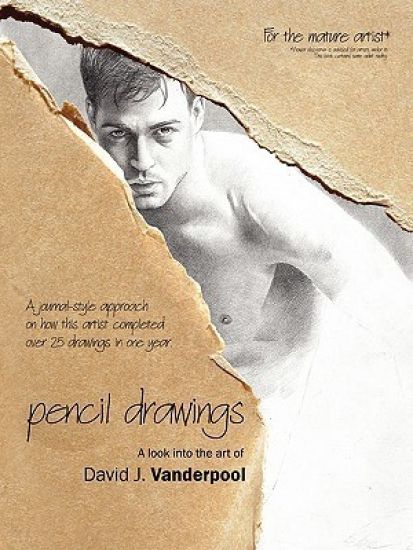
Pencil Drawings - A Look into the Art of David J. Vanderpool
Starting off with the artist's top winning pencil drawings from 2010 through 2012, this autobiography style book allows the reader an opportunity to not only learn the process it took to complete most of his drawings (created between 2008-2013) which are shown within these pages, but offers a personal look into who the artist is as a man. From portraits to figure drawings, David J. Vanderpool shares how simple pencil lines can be used to create masterfully crafted drawings - all while working through obstacles he would later encounter as an artist. Proving that art isn't always about who the artist is, but rather who catches his attention at that moment. Closing with several fan-favorite drawings from his other top selling books, this book offers his most completed works to date. VIEWER DISCRETION IS ADVISED: This book contains adult male nudity. NOTICE: This book is not a "how-to book" but rather as one review noted, "An Art Exhibit And Fan Book". The inside pages are not glossy.
Essays and Texts in Honor of J David Thomas

Essays and Texts in Honor of J David Thomas

T. Gagos; Roger S. Bagnall

American Society of Papyrologists
2001
sidottu
A collection of nine essays focused on military and administrative institutions in the ancient world, and supplemented by a presentation of thirty texts in Greek and Latin written on papyrus and wooden fragments, some previously unpublished. The essays and textual editions are contributed by a host of distinguished international scholars in honour of Professor J David Thomas seventieth birthday. Professor Thomas (formerly at the University of Durham) has edited a large number of ancient texts over the last 50 years, and his work has been important to our understanding of subjects as diverse as the military strength on Hadrians Wall and the chain of command in the Egyptian civil service.
Portfolio - A Collection of Graphite Pencil Drawings by David J. Vanderpool
Featuring over eighty-eight masterfully crafted graphite pencil drawings, from California portrait artist David J. Vanderpool, "Portfolio - A Collection of Graphite Pencil Drawings" offers the reader just that. A collection of his works between 2005-2016, and a brief look into who the artist is. "Brief"because this is actually a 'condensed' version to his autobiography-style book "Pencil Drawings - A look into the Art of David J. Vanderpool" where less is proven to be a good thing in this case. Less words but with a lot of drawings! Ranging from portraits to figure drawings, this book holds nothing back as it offers the reader a collection of the artist's more sought after, award winning drawings. Yes, that means that viewer discretion is advised to those not interested in seeing drawings depicting adult male nudity.
David J. Fairhead Presents Fiends of the Flesh

David J. Fairhead Presents Fiends of the Flesh

Jon Towers; Nelson Pyles; Michelle Bowser

Createspace Independent Publishing Platform
2017
nidottu
Combine horror with pitch dark emotion and human drama. Fiends of the Flesh will fit the needs of the thrill seeker inside us all that is looking for a new ride into the void of frenzied fear. You are officially welcome on a journey through an incredible gathering of fiends telling their tales in this anthology currently residing in your fingers. This veritable smorgasbord of stories will convalesce your hunger for terror; ranging from assassins to aliens, ghosts to gangsters, monsters to maniacs: A compilation of creepy tales to keep your blood and imagination racing till you get to the final pages. What better temptation is there but to flick that page to get your final answers, only to start a new stroll into a fresh and welcoming black tunnel?Dare we say that there are some heartwarming moments that appeal to our human side while delving into these nightmarish scenarios? Sometimes there is nowhere or nobody to turn to when the lights go out. So take this handbook (so to speak) with you into the night and be prepared rather than scared of the unknown. You see, we are the Fiends of the Flesh, and we know what frightens you or in some cases, entices you to open that doorway that leads to sites beyond comprehension.We invite you to a chuckle or two of course. Humor and horror have been known to cross similar paths when the outrageous becomes something tangible.Overall, find your comfy corner of the universe and enjoy tales from Burning Bulb veterans like Rich Bottles Jr., Nelson W. Pyles, Jon Towers, David J. Fairhead, Michelle Bowser, Solon Tsangaras and Paul Wargelin. Then you will also get into the minds of newcomers to the Burning Bulb arena; M.K. Oster, James Castiglione, and Bill Smith.In the end, we are all Fiends of the Flesh. So open up.
An Analysis of David J. Teece's Dynamic Capabilites and Strategic Management
Dynamic Capabilities and Strategic Management is a pioneering book in business studies, one of the most succinct and in-depth examinations of dynamic capabilities, explaining both their foundations and the strategic implications they hold for both academics and practitioners in the field of business strategy, innovation, entrepreneurship and economics. In contrast to earlier works, Teece explains, using the theory of the dynamic capabilities framework, the ways in which companies shape competition itself. Teece’s book has remained one of the most cited works in the fields of business and economics ever since its first publication in 1994.
An Analysis of David J. Teece's Dynamic Capabilites and Strategic Management
Dynamic Capabilities and Strategic Management is a pioneering book in business studies, one of the most succinct and in-depth examinations of dynamic capabilities, explaining both their foundations and the strategic implications they hold for both academics and practitioners in the field of business strategy, innovation, entrepreneurship and economics. In contrast to earlier works, Teece explains, using the theory of the dynamic capabilities framework, the ways in which companies shape competition itself. Teece’s book has remained one of the most cited works in the fields of business and economics ever since its first publication in 1994.
Irreduzibilität des Bewusstseins und dessen Implikationen bei David J. Chalmers und Daniel C. Dennett
Bachelorarbeit aus dem Jahr 2021 im Fachbereich Philosophie - Philosophie der Gegenwart, Note: 1,7, Ludwig-Maximilians-Universit t M nchen (Fakult t f r Philosophie), Sprache: Deutsch, Abstract: Die Frage nach dem Wesen des Bewusstseins ist eine der zentralen und auch verbl ffendsten Fragen der Menschheit, die wahrscheinlich seit der Zeit gestellt wird, als der Geist im Menschen erwacht ist und nach Erkenntnis rief. In der t glichen Erfahrung ist das Bewusstsein allgegenw rtig und subjektive Erlebnisse sind auf so einer direkten Art und Weise gegeben, dass niemand unter normalen Umst nden deren Existenz in Frage stellen w rde. Die Neurowissenschaften versuchen seit langer Zeit erfolglos, ein Korrelat des Bewusstseins im menschlichen Gehirn zu finden, und es ist fraglich, ob das jemals gelingen kann. Ren Descartes, sah das Bewusstsein gar nicht im Gehirn verortet, sondern postulierte eine res cogitans, eine eigene Substanz des denkenden Geistes, unabh ngig von der res extensa, der K rperwelt. David J. Chalmers, mit dessen 1996 erschienenen Buch "The Conscious Mind - In Search of a Fundamental Theory" diese Bachelorarbeit sich haupts chlich besch ftigt, fragt nach dem subjektiven Charakter des Bewusstseins und dessen Status in einer vor allem naturwissenschaftlich, physikalisch gepr gten Welt. Im Verlauf dieser Arbeit wird sich zeigen, dass die Existenz des Bewusstseins von Chalmers nicht in Frage gestellt wird, aber es schwierig ist, Bewusstsein zu fassen, da es eben nicht aus der Perspektive der dritten Person erkl rt werden kann. Mit Hilfe u. a. des Zombiearguments zeigt er, dass consciousness nicht global logisch ber dem Physikalischen superveniert, nicht auf das Physikalische reduzierbar ist und das der Physikalismus falsch ist. Er beschreibt einen "Naturalistic dualism", einen speziellen Eigenschaftsdualismus der consciousness als grundlegendes Prinzip "over and above" des Physikalismus betrachtet. Die Darstellung von David Chalmers negativer Theorie im Te