More than two years after nearly dying at the hands of a serial killer, sort-of psychic August Goodson is living his best life. He has a great relationship with his dreamy cop boyfriend, Luke. He works for his twin brother, Finn, with whom he's built a company. And he has the loving support of his long-time best friend, Cherry. When a high-profile murder occurs, however, and Luke is assigned to the case, August can't seem to shake the feeling that history could be repeating itself. His ability got him in trouble once before. Will it happen again? And if it does, will he and the ones he love come out of it alive?
This is the first book on John Edward Lloyd (1861-1947), widely regarded as the founder of the modern academic study of Welsh history. Published to mark the centenary of Lloyd's most important achievement, "A History of Wales from the Earliest Times to the Edwardian Conquest" (1911), this intellectual biography reassesses Lloyd's significance by setting his work in the context of his life and of the ideas and scholarship of his time. It thus provides a case study of how the past of a small, stateless nation was reconfigured to provide a new narrative of national origins.
Letters of General J. E. B. Stuart to His Wife, 1861 is a collection of personal correspondence written by Confederate General James Ewell Brown Stuart to his wife Flora during the early months of the American Civil War. The letters provide insight into Stuart's thoughts, emotions, and experiences as he served in the Confederate Army and participated in several key battles, including the First Battle of Bull Run. Stuart's letters also offer a glimpse into the daily life of a Confederate soldier and his relationships with fellow officers and soldiers. The book is a valuable primary source for historians and Civil War enthusiasts interested in the personal experiences of Confederate soldiers and their families.This scarce antiquarian book is a facsimile reprint of the old original and may contain some imperfections such as library marks and notations. Because we believe this work is culturally important, we have made it available as part of our commitment for protecting, preserving, and promoting the world's literature in affordable, high quality, modern editions, that are true to their original work.
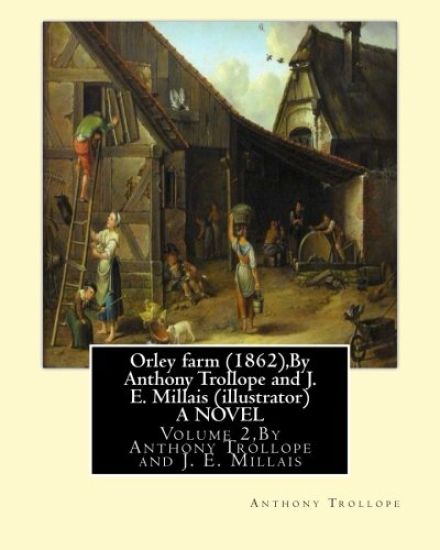
Volume 2, Sir John Everett Millais, Baronet, ( 8 June 1829 - 13 August 1896) was an English painter and illustrator. Orley Farm is a novel written in the realist mode by Anthony Trollope (1815-82), and illustrated by the Pre-Raphaelite artist John Everett Millais (1829-96). It was first published in monthly shilling parts by the London publisher Chapman and Hall. Although this novel appeared to have undersold (possibly because the shilling part was being overshadowed by magazines, such as The Cornhill, that offered a variety of stories and poems in each issue), Orley Farm became Trollope's personal favourite.George Orwell said the book contained "one of the most brilliant descriptions of a lawsuit in English fiction."When Joseph Mason of Groby Park, Yorkshire, died, he left his estate to his family. A codicil to his will, however, left Orley Farm (near London) to his much younger second wife and infant son. The will and the codicil were in her handwriting, and there were three witnesses, one of whom was no longer alive. A bitterly fought court case confirmed the codicil. Twenty years pass. Lady Mason lives at Orley Farm with her adult son, Lucius. Samuel Dockwrath, a tenant, is asked to leave by Lucius, who wants to try new intensive farming methods. Aggrieved, and knowing of the original case (John Kenneby, one of the codicil witnesses, had been an unsuccessful suitor of his wife Miriam Usbech), Dockwrath investigates and finds a second deed signed by the same witnesses on the same date, though they can remember signing only one. He travels to Groby Park in Yorkshire, where Joseph Mason the younger lives with his comically parsimonious wife, and persuades Mason to have Lady Mason prosecuted for forgery. The prosecution fails, but Lady Mason later confesses privately that she committed the forgery, and is prompted by conscience to give up the estate. There are various subplots. The main one deals with a slowly unfolding romance between Felix Graham (a young and relatively poor barrister without family) and Madeline Staveley, daughter of Judge Stavely of Noningsby. Graham has a long-standing engagement to the penniless Mary Snow, whom he supports and educates while she is being "moulded" to be his wife.Between the Staveleys at Alston and Orley Farm at Hamworth lies the Cleve, where Sir Peregrine Orme lives with his daughter-in-law, Mrs. Orme, and grandson, Peregrine. Sir Peregrine falls in love with Lady Mason and is briefly engaged to her, but she calls off the match when she realises the seriousness of the court case. Meanwhile, Mr. Furnival, another barrister, befriends Lady Mason, arousing the jealousy of his wife. His daughter, Sophia, has a brief relationship with Augustus Stavely and a brief engagement to Lucius Mason. Eventually Furnival and his wife are reconciled, and Sophia's engagement is dropped. Sophia is portrayed as an intelligent woman who writes comically skilful letters. Anthony Trollope ( 24 April 1815 - 6 December 1882) was one of the most successful, prolific and respected English novelists of the Victorian era. Among his best-loved works is a series of novels collectively known as the Chronicles of Barsetshire, which revolves around the imaginary county of Barsetshire. He also wrote perceptive novels on political, social, and gender issues, and on other topical matters.Trollope's literary reputation dipped somewhat during the last years of his life, but he regained the esteem of critics by the mid-twentieth century.Thomas Anthony Trollope, Anthony's father, was a barrister. Though a clever and well-educated man and a Fellow of New College, Oxford, he failed at the bar due to his bad temper. In addition, his ventures into farming proved unprofitable, and he lost an expected inheritance when an elderly childless uncle remarried and had children....ir John Everett Millais, 1st Baronet, ( 8 June 1829 - 13 August 1896) was an English painter and illustrato
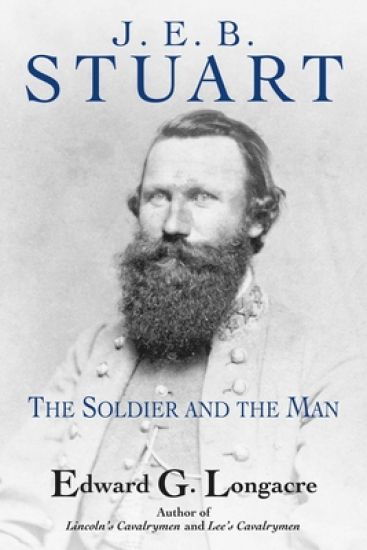
Fifteen years have passed since the publication of the last biography of Jeb Stuart. Several appeared during the last century lauding his contributions to Confederate fortunes in the Eastern Theater. Each follows a familiar tradition established by hero-worshipping subordinates portraying its subject as a model of chivalric conduct with a romantic’s outlook on life and a sense of fair dealing and goodwill, even toward his enemy. J. E. B. Stuart: The Soldier and the Man, by award-winning author Edward Longacre, is the first balanced, detailed, and thoroughly scrutinized study of the life and service of the Civil War’s most famous cavalryman. Long known to scholars and history buffs alike as “The Beau Sabreur of the Confederacy,” James Ewell Brown Stuart of Virginia was possessed of many gifts, personally and professionally, and led the Army of Northern Virginia’s cavalry to the all-but-complete satisfaction of his superiors. Stuart, insisted Robert E. Lee, “never brought me a piece of false information.” Being human, Stuart also under-performed. On occasion, he underestimated his opponents, took unnecessary risks with his habitually understrength command, failed to properly discipline and motivate his troopers, and was prone to errors both strategic and tactical. These flaws were evident during the Gettysburg Campaign, when his wayward route to the battlefield deprived Lee of the ability to safely negotiate his path toward a climactic confrontation with the Union Army of the Potomac. Because of his outsized wartime reputation—one embellished in the century-and-a-half since—most of Stuart’s errors have passed virtually unnoticed or, when addressed, have been excused or explained away in some fashion. Longacre’s study is based on hundreds of published works, archival sources, and newspapers. He probes not only Stuart’s military career but elements of his character and personality that invite investigation. Even the man’s fiercest partisans admitted that he was vain and inordinately sensitive to criticism, with a curious streak of immaturity—at times the hard-edged veteran, at other times a devotee of the pageantry of war, given to affectations such as ostrich-plumed hats, golden spurs, and the headquarters musicians who accompanied him on the march. Ever motivated by appeals to vanity, he curried the patronage of powerful men and responded readily to the attentions of attractive women even though by 1861, he was a long-married man. Personal flaws and limitations aside, Stuart was popular with his officers and men, beloved by members of his staff, and considered by the people of his state and region the beau ideal of Confederate soldiery. The distinction endures today. Longacre’s J. E. B. Stuart is an attempt to determine its validity.
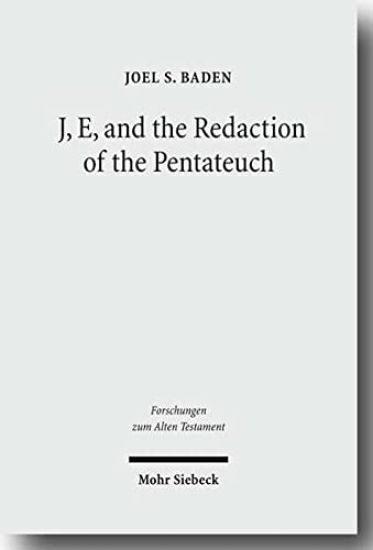
Joel S. Baden addresses the relationship between the J and E documents in the Pentateuch. He demonstrates that, contrary to the standard claims of classical source criticism, the J and E sources were never combined into a "JE" document. Rather, these two sources were combined with each other at the same time that they were combined with the P and D documents, in one process of redaction.After investigating the history of scholarly arguments regarding the existence and combination of J and E, the author goes on to argue in detail for the dependence of D on the separate, independent narratives of J and, primarily, E. Significant attention is paid to the issue of redaction. In particular, Baden critiques the manner in which passages have traditionally been attributed to redactors, and argues for a more restrictive concept of the redactor and his work. It is further argued that the literary evidence in the Pentateuch provides for the existence of only a single redactor, to whom the compilation of all four sources of the Pentateuch is to be attributed.In the course of this study, a number of important questions regarding the composition of the Pentateuch are addressed: the existence of E, the relationship between D and the narratives of Genesis-Numbers, and the nature of the redactor. In the end, this study stands as both a critique of traditional documentary analysis of the Pentateuch and a defense of its fundamental claims.
J. E. B. Stuart (Major-General) Commander Of The Cavalry Corps, Army Of Northern Virginia, C. S. A.: An Address Delivered At The Unveiling Of The Equestrian Statue Of General Stuart, At Richmond, Virginia, May 30, 1907 has been considered by academicians and scholars of great significance and value to literature. This forms a part of the knowledge base for future generations. So that the book is never forgotten we have represented this book in a print format as the same form as it was originally first published. Hence any marks or annotations seen are left intentionally to preserve its true nature.
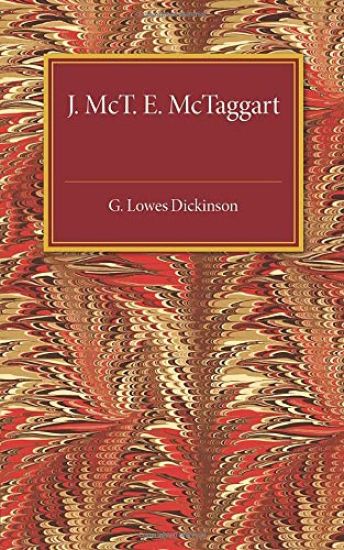
Originally published in 1931, this book presents a concise biography of the British idealist metaphysician John McTaggart Ellis McTaggart (1866–1925). The text was largely written by the prominent political scientist Goldsworthy Lowes Dickinson (1862–1932), a close friend of the subject. Abundant material from McTaggart's memoirs, letters and other writings is included, with earlier chapters covering more personal areas and later ones focusing on his philosophical approach. Ilustrative figures and notes are also included. This book will be of value to anyone with an interest in McTaggart, metaphysics and British idealism.
"The Life of Captain Garnett Archer" is a riveting and captivating story that takes you on an exciting journey of one of the greatest captains to grace the seas here in the beautiful Commonwealth of the Bahamas. Captain Garnett Archer was an extraordinary man of God, who was fearless, adventurous and never afraid to push the bar. Even in his final years as he battled cancer, he still demonstrated unbelievable strength and positivity. He dedicated his life to the Lord and requested to be baptized a year before he died. Captain Garnett Archer's legacy is one that is rich in the hearts of many who knew him personally and even those who encountered him on their voyage on the ocean. His life demonstrates the art of perseverance, hard work and the life one can achieve if they are committed to their dreams while serving others.
A study of the tradition and practice of early Arabic poetry, this book provides an investigation of the multiple versions of early poems that exist in various Abbasid collections. It offers a corrective to the more exaggerated claims concerning this poetry and revises some hitherto fundamental attitudes by advancing an individual philologically-driven vision of the period.