Kirjojen hintavertailu. Mukana 11 244 527 kirjaa ja 12 kauppaa.

Kirjahaku

Etsi kirjoja tekijän nimen, kirjan nimen tai ISBN:n perusteella.

1000 tulosta hakusanalla J. E. Smyth

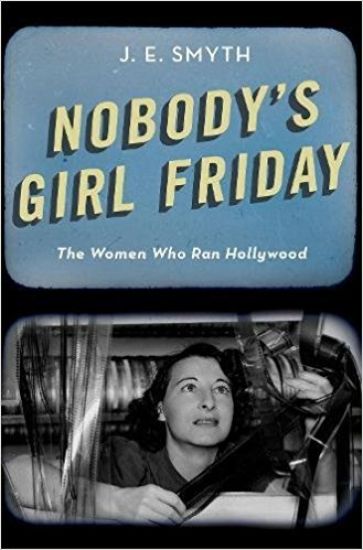
Nobody's Girl Friday

Nobody's Girl Friday

J. E. Smyth

Oxford University Press Inc
2018
sidottu
Looking back on her career in 1977, Bette Davis remembered with pride, "Women owned Hollywood for twenty years." She had a point. Between 1930 and 1950, over 40% of film industry employees were women, 25% of all screenwriters were female, two women supervised all studio feature output and could order retakes on any director's work, one woman ran MGM behind the scenes, over a dozen women worked as producers, a woman headed the Screen Writers Guild three times, and press claimed Hollywood was a generation or two ahead of the rest of the country in terms of gender equality and employment. But historians, critics, and the public have largely forgotten this era and persist in seeing studio-era Hollywood as a place where the only career open to a woman was as a passive, pretty face on screen or an underpaid, anonymous secretary. J. E. Smyth tells another story of a "golden age" for women's employment in the film industry and of Hollywood's ranks of powerful organization women. The first comprehensive history of Hollywood's high-flying career women during the studio era (1924-1956), Nobody's Girl Friday covers the impact of the executives, producers, editors, writers, agents, designers, directors, and actresses who shaped Hollywood film production and style, led their unions, climbed to the top during the war, and fought the blacklist. It focuses on women who called the shots at various levels of film production and articulated shifting attitudes toward gender, work, power, and politics, including executive Anita Colby, chief story editor Eve Ettinger, story editor and agent Kay Brown, secretary Ida Koverman, editor Barbara McLean, producers Harriet Parsons, Constance Bennett, and Virginia Van Upp, screenwriter and Screen Writers Guild President Mary C. McCall Jr., columnists Hedda Hopper, designer Dorothy Jeakins, agent Mary Baker, and President of the Hollywood Canteen and actor, Bette Davis. Many of the women featured in this book were influential during their lifetimes, politically active, heading committees in their professional guilds, and giving numerous PR interviews to syndicated journalists, and publicly supporting other women regardless of political affiliation. However, they were subsequently cut from mainstream academic and popular histories of the industry, or, as in Hopper's case, labeled as career-destroying, anti-communist viragos. Based on a decade of archival research, Smyth uncovers a formidable generation working within the American film industry and brings their voices back into the history of Hollywood. Their achievements, struggles, and perspectives fundamentally challenge popular ideas about director-based auteurism, male dominance, and female disempowerment in the years between First and Second Wave Feminism. Nobody's Girl Friday is a revisionist history, but it's also a deeply personal, collective account of hundreds of working women, the studios they worked for, and the films they helped to make. For many years, historians and critics have insisted that both American feminism and the power of women in Hollywood declined and virtually disappeared from the 1920s through the 1960s. But Smyth vindicates Bette Davis's claim. The story of the women who called the shots in studio-era Hollywood has never fully been told-until now.
Mary C. McCall Jr.

Mary C. McCall Jr.

J. E. Smyth

Columbia University Press
2024
sidottu
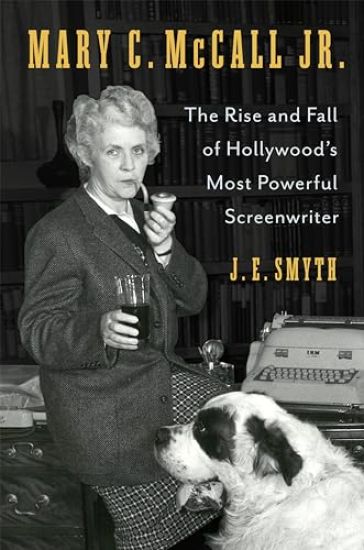
A screenwriter, novelist, labor leader, Hollywood insider, and feminist, Mary C. McCall Jr. was one of the film industry’s most powerful figures in the 1940s and early 1950s. She was elected the first woman president of the Screen Writers Guild after leading the fight to unionize the industry’s writers and secured the first contract guaranteeing a minimum wage, credit protection, and pay raises. Her advocacy was not welcomed by all: To screenwriters McCall was an “avenging goddess,” but to studio heads she was, in the words of one Hollywood executive, “the meanest bitch in town.” And after a clash with the mogul Howard Hughes in the blacklist-era 1950s, she disappeared from the pages of Hollywood history.J. E. Smyth tells McCall’s remarkable story for the first time, putting the spotlight on her trailblazing career and crucial influence. She explores McCall’s life and work, from her friendships with stars such as Bette Davis, Humphrey Bogart, and James Cagney to her authorship of the hit Maisie series about a working-class showgirl’s adventures. Analyzing McCall’s deft political maneuvering, Smyth offers new insight on screenwriters’ struggle for equality and recognition. She also examines why McCall’s legacy is unrecognized, showing how the Hollywood blacklist and entrenched sexism obscured her accomplishments. Colorful and compelling, this biography provides a powerful account of how one extraordinary woman shaped Golden Age Hollywood.
Mary C. McCall Jr.

Mary C. McCall Jr.

J. E. Smyth

Columbia University Press
2024
pokkari
A screenwriter, novelist, labor leader, Hollywood insider, and feminist, Mary C. McCall Jr. was one of the film industry’s most powerful figures in the 1940s and early 1950s. She was elected the first woman president of the Screen Writers Guild after leading the fight to unionize the industry’s writers and secured the first contract guaranteeing a minimum wage, credit protection, and pay raises. Her advocacy was not welcomed by all: To screenwriters McCall was an “avenging goddess,” but to studio heads she was, in the words of one Hollywood executive, “the meanest bitch in town.” And after a clash with the mogul Howard Hughes in the blacklist-era 1950s, she disappeared from the pages of Hollywood history.J. E. Smyth tells McCall’s remarkable story for the first time, putting the spotlight on her trailblazing career and crucial influence. She explores McCall’s life and work, from her friendships with stars such as Bette Davis, Humphrey Bogart, and James Cagney to her authorship of the hit Maisie series about a working-class showgirl’s adventures. Analyzing McCall’s deft political maneuvering, Smyth offers new insight on screenwriters’ struggle for equality and recognition. She also examines why McCall’s legacy is unrecognized, showing how the Hollywood blacklist and entrenched sexism obscured her accomplishments. Colorful and compelling, this biography provides a powerful account of how one extraordinary woman shaped Golden Age Hollywood.
Edna Ferber's Hollywood

Edna Ferber's Hollywood

J. E. Smyth

University of Texas Press
2009
pokkari
Edna Ferber's Hollywood reveals one of the most influential artistic relationships of the twentieth century-the four-decade partnership between historical novelist Edna Ferber and the Hollywood studios. Ferber was one of America's most controversial popular historians, a writer whose uniquely feminist, multiracial view of the national past deliberately clashed with traditional narratives of white masculine power. Hollywood paid premium sums to adapt her novels, creating some of the most memorable films of the studio era-among them Show Boat, Cimarron, and Giant. Her historical fiction resonated with Hollywood's interest in prestigious historical filmmaking aimed principally, but not exclusively, at female audiences. In Edna Ferber's Hollywood, J. E. Smyth explores the research, writing, marketing, reception, and production histories of Hollywood's Ferber franchise. Smyth tracks Ferber's working relationships with Samuel Goldwyn, Leland Hayward, George Stevens, and James Dean; her landmark contract negotiations with Warner Bros.; and the controversies surrounding Giant's critique of Jim-Crow Texas. But Edna Ferber's Hollywood is also the study of the historical vision of an American outsider-a woman, a Jew, a novelist with few literary pretensions, an unashamed middlebrow who challenged the prescribed boundaries among gender, race, history, and fiction. In a masterful film and literary history, Smyth explores how Ferber's work helped shape Hollywood's attitude toward the American past.
Fred Zinnemann and the Cinema of Resistance

Fred Zinnemann and the Cinema of Resistance

J. E. Smyth

University Press of Mississippi
2015
nidottu
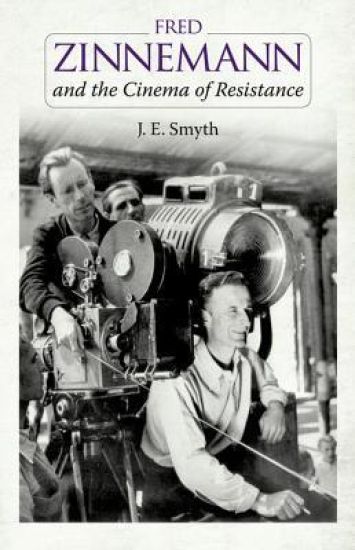
Fred Zinnemann directed some of the most acclaimed and controversial films of the twentieth century, yet he has been a shadowy presence in Hollywood history. In Fred Zinnemann and the Cinema of Resistance, J. E. Smyth reveals the intellectual passion behind some of the most powerful films ever made about the rise and resistance to fascism and the legacy of the Second World War, from The Seventh Cross and The Search to High Noon, From Here to Eternity, and Julia. Smyth's book is the first to draw upon Zinnemann's extensive papers at the Academy of Motion Picture Arts and Sciences and brings Fred Zinnemann's vision, voice, and film practice to life. In his engagement with the defining historical struggles of the twentieth century, Zinnemann fought his own battles with the Hollywood studio system, the critics, and a public bent on forgetting. Zinnemann's films explore the role of women and communists in the antifascist resistance, the West's support of Franco after the Spanish Civil War, and the darker side of America's national heritage. Smyth reconstructs a complex and conflicted portrait of Zinnemann's cinema of resistance, examining his sketches, script annotations, editing and production notes, and personal letters. Illustrated with seventy black-and-white images from Zinnemann's collection, Fred Zinnemann and the Cinema of Resistance discusses the director's professional and personal relationships with Spencer Tracy, Montgomery Clift, Audrey Hepburn, Vanessa Redgrave, and Gary Cooper; the critical reaction to his revisionist Western, High Noon; his battles over the censorship of From Here to Eternity, The Nun's Story, and Behold a Pale Horse; his unrealized history of the communist Revolution in China, Man's Fate; and the controversial study of political assassination, The Day of the Jackal. In this intense, richly textured narrative, Smyth enters the mind of one of Hollywood's master directors, redefining our knowledge of his artistic vision and practice.
Fred Zinnemann and the Cinema of Resistance

Fred Zinnemann and the Cinema of Resistance

J. E. Smyth

University Press of Mississippi
2014
sidottu
Fred Zinnemann directed some of the most acclaimed and controversial films of the twentieth century, yet he has been a shadowy presence in Hollywood history. In Fred Zinnemann and the Cinema of Resistance, J. E. Smyth reveals the intellectual passion behind some of the most powerful films ever made about the rise and resistance to fascism and the legacy of the Second World War, from The Seventh Cross and The Search to High Noon, From Here to Eternity, and Julia. Smyth's book is the first to draw upon Zinnemann's extensive papers at the Academy of Motion Picture Arts and Sciences and brings Fred Zinnemann's vision, voice, and film practice to life. In his engagement with the defining historical struggles of the twentieth century, Zinnemann fought his own battles with the Hollywood studio system, the critics, and a public bent on forgetting. Zinnemann's films explore the role of women and communists in the antifascist resistance, the West's support of Franco after the Spanish Civil War, and the darker side of America's national heritage. Smyth reconstructs a complex and conflicted portrait of Zinnemann's cinema of resistance, examining his sketches, script annotations, editing and production notes, and personal letters. Illustrated with seventy black-and-white images from Zinnemann's collection, Fred Zinnemann and the Cinema of Resistance discusses the director's professional and personal relationships with Spencer Tracy, Montgomery Clift, Audrey Hepburn, Vanessa Redgrave, and Gary Cooper; the critical reaction to his revisionist Western, High Noon; his battles over the censorship of From Here to Eternity, The Nun's Story, and Behold a Pale Horse; his unrealized history of the communist Revolution in China, Man's Fate; and the controversial study of political assassination, The Day of the Jackal. In this intense, richly textured narrative, Smyth enters the mind of one of Hollywood's master directors, redefining our knowledge of his artistic vision and practice.
The Basis of Accounting

The Basis of Accounting

J. E. (James Everil) 1920- Smyth

Hassell Street Press
2021
sidottu
This work has been selected by scholars as being culturally important and is part of the knowledge base of civilization as we know it.This work is in the public domain in the United States of America, and possibly other nations. Within the United States, you may freely copy and distribute this work, as no entity (individual or corporate) has a copyright on the body of the work.Scholars believe, and we concur, that this work is important enough to be preserved, reproduced, and made generally available to the public. To ensure a quality reading experience, this work has been proofread and republished using a format that seamlessly blends the original graphical elements with text in an easy-to-read typeface.We appreciate your support of the preservation process, and thank you for being an important part of keeping this knowledge alive and relevant.
The Basis of Accounting

The Basis of Accounting

J. E. (James Everil) 1920- Smyth

Hassell Street Press
2021
nidottu
This work has been selected by scholars as being culturally important and is part of the knowledge base of civilization as we know it.This work is in the public domain in the United States of America, and possibly other nations. Within the United States, you may freely copy and distribute this work, as no entity (individual or corporate) has a copyright on the body of the work.Scholars believe, and we concur, that this work is important enough to be preserved, reproduced, and made generally available to the public. To ensure a quality reading experience, this work has been proofread and republished using a format that seamlessly blends the original graphical elements with text in an easy-to-read typeface.We appreciate your support of the preservation process, and thank you for being an important part of keeping this knowledge alive and relevant.
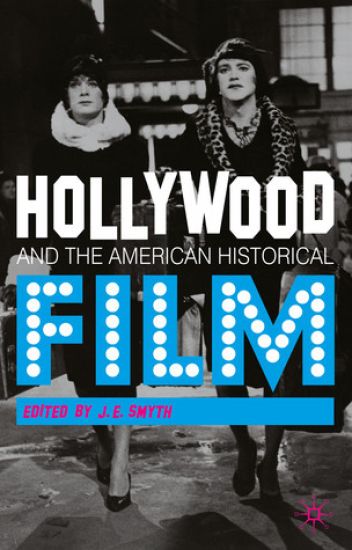
Hollywood and the American Historical Film
How do Hollywood filmmakers construct and interpret American history? Is film's visual historical language inherently different from the traditions of written history? This definitive collection of essays by leading scholars probes the theoretical and historical contexts of films made about the American past - from the silent era to the present. Exploring issues deeply connected with historical filmmaking, from historiography to censorship, to race, gender, and sexuality, the book discusses a wide range of films and genres- including classics such as The Virginian, Gone with the Wind and Citizen Kane. This collection is essential reading for anyone interested in studying, or researching American history and film. Includes essays by Susan Courtney, David Culbert, Nicholas J. Cull, Vera Dika, David Eldridge, Vittorio Hösle, Marcia Landy, Mark W. Roche, Robert Rosenstone, Ian Scott, Robert Sklar, J.E. Smyth, and Warren I. Susman.
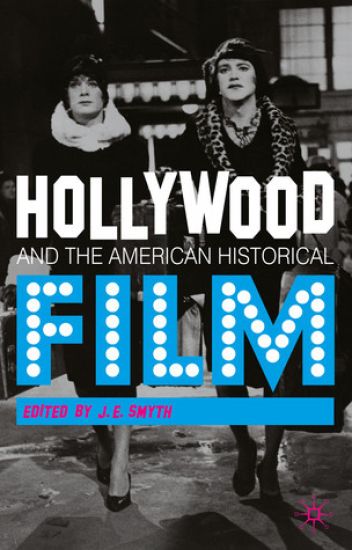
Hollywood and the American Historical Film
How do Hollywood filmmakers construct and interpret American history? Is film's visual historical language inherently different from the traditions of written history? This definitive collection of essays by leading scholars probes the theoretical and historical contexts of films made about the American past - from the silent era to the present. Exploring issues deeply connected with historical filmmaking, from historiography to censorship, to race, gender, and sexuality, the book discusses a wide range of films and genres- including classics such as The Virginian, Gone with the Wind and Citizen Kane. This collection is essential reading for anyone interested in studying, or researching American history and film. Includes essays by Susan Courtney, David Culbert, Nicholas J. Cull, Vera Dika, David Eldridge, Vittorio Hösle, Marcia Landy, Mark W. Roche, Robert Rosenstone, Ian Scott, Robert Sklar, J.E. Smyth, and Warren I. Susman.
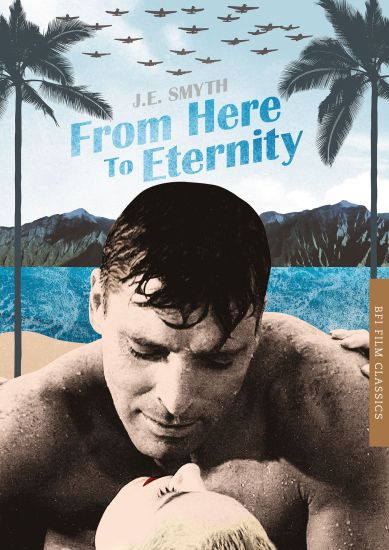
From Here to Eternity

From Here to Eternity

J.E. Smyth

BFI Publishing
2015
nidottu
From Here to Eternity (1953) is one of the most controversial films of its time. Adapted from James Jones's bestselling novel, the landmark blockbuster deals frankly with adultery, military corruption, physical abuse, racism and murder, and traces the unhappy lives of five American outsiders in the last days before Pearl Harbor. Made at the height of the Cold War and Hollywood's anticommunist purges, director Fred Zinnemann, writer Daniel Taradash and producer Buddy Adler defied military and industry pressure to censor the material.Exploring the film's full production history and drawing upon archival documents and rare interviews with cast and crew, J. E. Smyth provides a fascinating behind-the-scenes look at the film many industry insiders thought couldn't be made.This special edition features original cover artwork by Eda Akaltun.
The Djinn Falls in Love and Other Stories

The Djinn Falls in Love and Other Stories

Neil Gaiman; Amal El-Mohtar; Catherine King; Claire North; E. J. Swift; James Smythe; Kamila Shamsie; Kirsty Logan; K. J. Parker; Kuzhali Manickavel; Neon Yang

Rebellion Publishing Ltd.
2022
pokkari
An enthralling collection of new and classic tales of the fearsome Djinn, from bestselling, award-winning and breakthrough international writers. Imagine a world filled with fierce, fiery beings, hiding in our shadows, in our dreams, under our skins. Eavesdropping and exploring; tormenting us, saving our souls. They are monsters, saviours, victims, childhood friends. And they are everywhere. On street corners, behind the wheel of a taxi, in the chorus, between the pages of books. Every language has a word for them. Every culture knows their traditions. Every religion, every history has them hiding in their dark places. There is no part of the world that does not know them. They are the Djinn. With stories from Neil Gaiman, Nnedi Okorafor, Amal El-Mohtar, Catherine Faris King, Claire North, E.J. Swift, Hermes (trans. Robin Moger), Jamal Mahjoub, James Smythe, J.Y. Yang, Kamila Shamsie, Kirsty Logan, K.J. Parker, Kuzhali Manickavel, Maria Dahvana Headley, Monica Byrne, Saad Hossain, Sami Shah, Sophia Al-Maria and Usman Malik.
Metabolic Turnover in the Nervous System

Metabolic Turnover in the Nervous System

D. A. Rappoport; R. R. Fritz; S. Yamagami; Robert L. Herrmann; A. V. Palladin; N. M. Poljakova; Isaac Schenkein; Louis Sokoloff; A. Lajtha; N. Marks; J. R. Smythies; William A. Brodsky; Adil E. Shamoo; Irving L. Schwartz; H. R. Wyssbrod; W. N. Scott; W. A. Brodsky; I. L. Schwartz

Springer-Verlag New York Inc.
2013
nidottu
Volume V deals with the problems of turnover in the nervous system. "Turnover" is defined in different ways, and the term is used in different contexts. It is used rather broadly in the present volume, and intentionally so. The turnover of macromolecules is only one aspect; here "turnover" in­ dicates the simultaneous and coordinated formation and breakdown of macromolecular species. The complexities of cerebral protein turnover are shown in aseparate chapter dealing with the synthesis ofproteins, in another on breakdown, and in still another on the relationship ofthese two (showing how the two halves of turnover are controlled). The fact that most likely the two halves of protein turnover, synthesis and breakdown, are separated spatially and the mechanisms involved are different further emphasizes the complexity of macromolecular turnover. "Turnover" is used in a different context when the turnover of a cycle is discussed; but he re again a number of complex metabolic reactions have to be interrelated and controlled; some such cycles are discussed briefly in this volume, additional cycles have been discussed with metabolism, and some cycles still await elucidation or discovery.
Control del Gusano Cogollero Spodoptera frugiperda J.E. Smith. Con dif

Control del Gusano Cogollero Spodoptera frugiperda J.E. Smith. Con dif

Víctor Manuel Diaz Vicente

Editorial Academica Espanola
2018
pokkari
El ma z es un cultivo importante en la alimentaci n humana, en M xico forma parte de la dieta de sus habitantes, as como de muchos pa ses, por otra parte tambi n se utiliza como forraje para el ganado y en la industria alimenticia, como todo cultivo, el ma z es atacado por diferentes plagas y enfermedades, en donde la plaga clave es el gusano cogollero Spodoptera frugiperda J.E. Smith. Para su control se he hecho uso del Manejo Integrado de Plagas (MIP), una de las t cticas de control utilizada es el control qu mico, el cual causa da os al medio ambiente, una de las t cticas m s amigable con el ambiente es el control biol gico, como es el caso de la bacteria Saccharopolyspora spinosa Mertz et Yao 1990. Para este el control del gusano cogollero se utiliz un metabolito secundario (Spinosad) producido por esta bacteria, cuyo nombre comercial es Palgus. El texto trata adem s de otras plagas que atacan al ma z, e informaci n sobre su cultivo.
Captain E.J. Smith: Life After Titanic

Captain E.J. Smith: Life After Titanic

William Baird

Independently Published
2018
nidottu
No one knows for certain what happened to Captain of the Titanic EJ Smith the night of April 14, 1912. What if he survived? How would he have dealt with his actions and the actions of others on the night of the collision? What if he was injured and put on board a lifeboat without his knowledge? What if it was decided to hide his survival from the public? How does he cope with the memories of his actions on that April night? What is his life like after surviving the death of over 1,500 people from the Titanic while it was under his command?