M moire sur les voyages de l'Empereur Hadrien by J. G. H. Greppo. This book is a reproduction of the original book published in 1842 and may have some imperfections such as marks or hand-written notes.
H. G. J. Moseley (1887 - 1915), the son and grandson of distinguished English scientists, a favorite student of Rutherford's and a colleague of Bohr's, completed researches of capital importance for atomic physics just before the outbreak of World War I. He was urged to devote himself to scientific war work in England, but his duty as he aw it was to join the battle. He procured himself command of a signaling section in the Royal Engineers, a speedy trip to Gallipoli, and death in the bloody battle for Sari Bair. In this work the author presents a full record of Moseley's brief and brilliant career. It gives instructive detail about Eton, which, as Heilbron shows, offered more opportunity for acquiring a foundation in science than its emphasis on Greek and games would suggest; about Oxford, a scientific backwater in Moseley's time; and about Rutherford's thriving laboratory at the University of Manchester. It describes in detail Moseley's apprenticeship in experimental physics, his growth under the tight supervision of Manchester, and his classical independent work on X rays, which almost certainly would have brought him the Nobel Prize. An epilogue sketches the chief results secured by other in the decade after his death in the research lines he opened. Heilbron's account is informed by an unequaled acquaintance with the relevant manuscript material, including all of Moseley's known correspondence (most of which he discovered) and the paper of colleagues such as Bohr, W. H. Bragg, G. H. Darwin, F. A. Lindemann (Lord Cherwell), Rutherford, Henry Tizard, Georges Ubrain, and G. von Hevesy. An important feature of the book is the publication, in extenso, of Moseley's surviving correspondence. These letters are not only a rich source for historians of science and of education. Tehy are also splendid reading: well-written records of the maturing of a strong mind, pithy commentaries on the Establishment as Moseley saw it, and exciting notices of the course of one of the most important researches in modern physical science. This title is part of UC Press's Voices Revived program, which commemorates University of California Press's mission to seek out and cultivate the brightest minds and give them voice, reach, and impact. Drawing on a backlist dating to 1893, Voices Revived makes high-quality, peer-reviewed scholarship accessible once again using print-on-demand technology. This title was originally published in 1974.
H. G. J. Moseley (1887 - 1915), the son and grandson of distinguished English scientists, a favorite student of Rutherford's and a colleague of Bohr's, completed researches of capital importance for atomic physics just before the outbreak of World War I. He was urged to devote himself to scientific war work in England, but his duty as he aw it was to join the battle. He procured himself command of a signaling section in the Royal Engineers, a speedy trip to Gallipoli, and death in the bloody battle for Sari Bair. In this work the author presents a full record of Moseley's brief and brilliant career. It gives instructive detail about Eton, which, as Heilbron shows, offered more opportunity for acquiring a foundation in science than its emphasis on Greek and games would suggest; about Oxford, a scientific backwater in Moseley's time; and about Rutherford's thriving laboratory at the University of Manchester. It describes in detail Moseley's apprenticeship in experimental physics, his growth under the tight supervision of Manchester, and his classical independent work on X rays, which almost certainly would have brought him the Nobel Prize. An epilogue sketches the chief results secured by other in the decade after his death in the research lines he opened. Heilbron's account is informed by an unequaled acquaintance with the relevant manuscript material, including all of Moseley's known correspondence (most of which he discovered) and the paper of colleagues such as Bohr, W. H. Bragg, G. H. Darwin, F. A. Lindemann (Lord Cherwell), Rutherford, Henry Tizard, Georges Ubrain, and G. von Hevesy. An important feature of the book is the publication, in extenso, of Moseley's surviving correspondence. These letters are not only a rich source for historians of science and of education. Tehy are also splendid reading: well-written records of the maturing of a strong mind, pithy commentaries on the Establishment as Moseley saw it, and exciting notices of the course of one of the most important researches in modern physical science. This title is part of UC Press's Voices Revived program, which commemorates University of California Press's mission to seek out and cultivate the brightest minds and give them voice, reach, and impact. Drawing on a backlist dating to 1893, Voices Revived makes high-quality, peer-reviewed scholarship accessible once again using print-on-demand technology. This title was originally published in 1974.
The Wheels of Chance is an early comic novel by H. G. Wells about an August 1895 cycling holiday, somewhat in the style of Three Men in a Boat. In 1922 it was adapted into a silent film The Wheels of Chance directed by Harold M. Shaw. The hero of The Wheels of Chance, Mr. Hoopdriver, is a frustrated "draper's assistant" 2] in Putney, a badly paid, grinding position (and one which Wells briefly held); and yet he owns a bicycle and is setting out on a bicycling tour of "the Southern Coast" on his annual ten days' holiday. Hoopdriver survives his frustration by escaping in his imagination into a world of fantasy. He is not a skilled rider of his forty-three-pound bicycle, and his awkwardness reflects both Wells's own uncertainties in negotiating the English class system and his critical view of that society. Nonetheless, Hoopdriver is treated sympathetically: "But if you see how a mere counter-jumper, a cad on castors, and a fool to boot, may come to feel the little insufficiencies of life, and if he has to any extent won your sympathies, my end is attained." Hoopdriver's summer adventure begins lyrically: Only those who toil six long days out of the seven, and all the year round, save for one brief glorious fortnight or ten days in the summer time, know the exquisite sensations of the First Holiday Morning. All the dreary, uninteresting routine drops from you suddenly, your chains fall about your feet. . . . There were thrushes in the Richmond Road, and a lark on Putney Heath. The freshness of dew was in the air; dew or the relics of an overnight shower glittered on the leaves and grass. . . . He wheeled his machine up Putney Hill, and his heart sang within him.Hoopdriver encounters a pretty young woman cycling alone and wearing rationals (bloomers). He dares not speak to the Young Lady in Grey, as he calls her, but their paths keep crossing. She is ultimately revealed to be Jessie Milton, a girl of seventeen who has run away from her stepmother in Surbiton, risking "ruin" at the hands of the bounder Bechamel, an unscrupulous older man who has promised to help the naive Jessie to establish herself an independent life but who is really intent on seducing her. Ironically, her flight has in part been inspired by liberal ideals of unconventionality that have been hypocritically promoted by her stepmother's popular novels.......... Herbert George Wells (21 September 1866 - 13 August 1946)-known as H. G. Wells-was a prolific English writer in many genres, including the novel, history, politics, social commentary, and textbooks and rules for war games. Wells is now best remembered for his science fiction novels and is called a "father of science fiction", along with Jules Verne and Hugo Gernsback.His most notable science fiction works include The Time Machine (1895), The Island of Doctor Moreau (1896), The Invisible Man (1897), and The War of the Worlds (1898). He was nominated for the Nobel Prize in Literature four times. Wells's earliest specialised training was in biology, and his thinking on ethical matters took place in a specifically and fundamentally Darwinian context.He was also from an early date an outspoken socialist, often (but not always, as at the beginning of the First World War) sympathising with pacifist views. His later works became increasingly political and didactic, and he wrote little science fiction, while he sometimes indicated on official documents that his profession was that of journalist.Novels like Kipps and The History of Mr Polly, which describe lower-middle-class life, led to the suggestion, when they were published, that he was a worthy successor to Charles Dickens, but Wells described a range of social strata and even attempted, in Tono-Bungay (1909), a diagnosis of English society as a whole. A diabetic, in 1934 Wells co-founded the charity The Diabetic Association (known today as Diabetes UK). James Ayton Symington (1859-1939)British illustrator
This study provides a first comprehensive introduction to the political and economic thought of Johann Heinrich Gottlob von Justi (1717-1771). While previous scholarship saw Justi as quintessentially a German thinker, this analysis argues that his thought was a by-product of the broader European intellectual discourse on the political implications of modern trade. Writing between the conclusion of the War of the Austrian Succession (1748) and the end of the Seven Years War (1763) - when competition among European powers was sharply on the increase - Justi's aim was to create modern commercial monarchies in the larger states of the Holy Roman Empire that could equal the military strength, political standing and economic performance of England and France. Shedding fresh light on Justi's tortuous biography and complex oeuvre this study unveils the critical impact that French thinkers such as Fenelon, Saint-Pierre, d'Argenson and Montesquieu exerted on Justi's ideas and demonstrates that his economic thought was part and parcel of an innovative and comprehensive political reform plan for the entire European state system."
Dacroydes edulis (G. DON) is a multipurpose tree that provides a dual function of strengthening food security and Carbon sequestration in rural environments. The aim of the study was to investigate the agroforestry potential of D. edulis in south west Nigeria and the objective was to access the phytosociology and determine the vegetative propagation strength of D. edulis with the view to provide baseline information of its suitability for multi species agroforestry innovation and improve the sustainability of human livelihood in Nigeria. This study was carried out in the Akinyele and Ibadan North West local government area in Ibadan, an extensive field survey was carried out in the study areas, all compound farms, home gardens and forest were visited in the area. The data were collected on D. edulis by enumerating all the species and also by identifying and enumerating the plant species associated with the subject tree (D. edulis ).
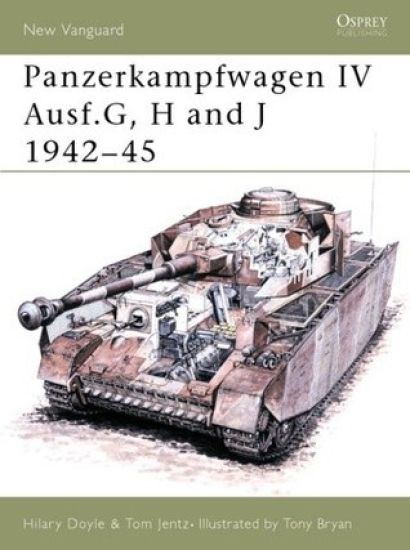
The Panzerkampfwagen IV was one of the most numerous and successful German tanks of World War II. Despite the introduction of the Panther and Tiger tanks, the PzKpfw IV remained the backbone of the German armoured units until the end of the war. This book details all of the variants of the Panzerkampfwagen IV with the long guns 7.5cm KwK 40 L/43 and L/48. Until 1942 armed with a short 7.5cm KwK L/24, it was used primarily in an infantry support role. However with the upgrading to the long 7.5cm it became the main battle tank of the Panzer Divisions.