
Kirjahaku
Etsi kirjoja tekijän nimen, kirjan nimen tai ISBN:n perusteella.
1000 tulosta hakusanalla J. M. Lanham
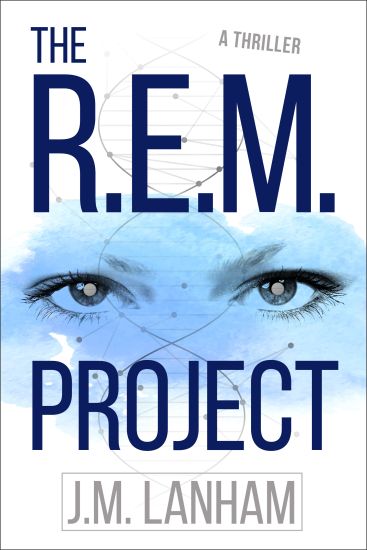
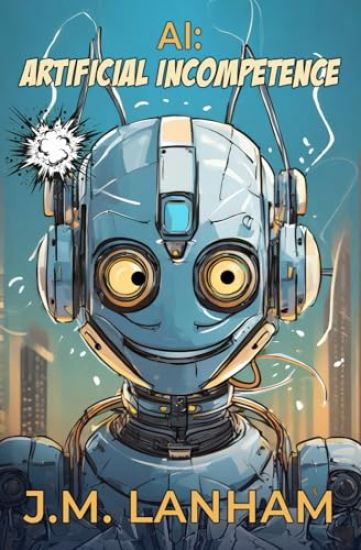
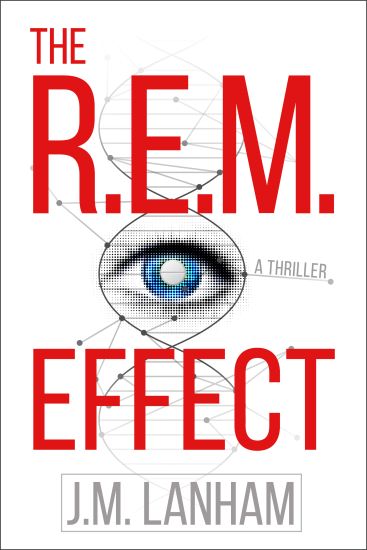
AI is turning into a real no-brainer.It's 2049 and college students Miles Cooper and Halle Hernandez just landed internships with The Department of SAILE, or Support for Artificial Intelligence in Law Enforcement, when the unthinkable happens. For the first time since AI has become self-aware (albeit coded to prioritize logic over emotional decision making), a fatal car crash involving a developer of the world's first artificial neural network (ANN) is leading members of SAILE to believe that AI has thrown logic completely out the window.Soon, the programming error responsible for the demise of a Descartes Labs employee begins turning every AI-powered system in the city of Jacksonville into one big (and highly emotional) basket case. Robotic pilots diverting commercial flights to Orlando just to see theme parks. Android waiters assaulting rude customers with faces full of pie. Personal Service Robots (PSRs) arguing with their owners over who they love more, them or the fridge. Smart cars doing dumb things. Androids on strike. Cybernetic chaos ensues.Now, it's up to Miles, Halle, Captain Bernard McArthur (SAILE's fearless leader), his PSR Rocky (an android programmed to sound like the famous fictional boxer) and a dynamic cast of white-hat hackers and teenage sleuths to stop the spread of AI-gone-astray before the world gets any dumber.
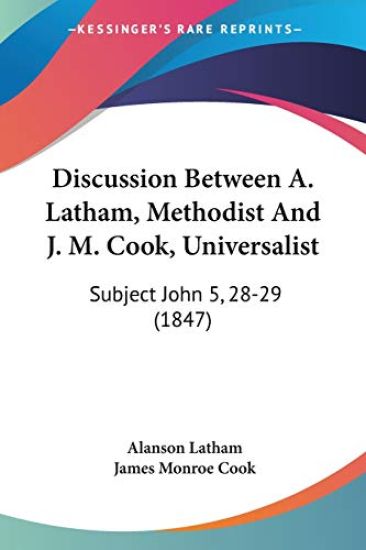
Discussion Between A. Latham, Methodist And J. M. Cook, Universalist
Alanson Latham; James Monroe Cook
KESSINGER PUBLISHING CO
2009
pokkari

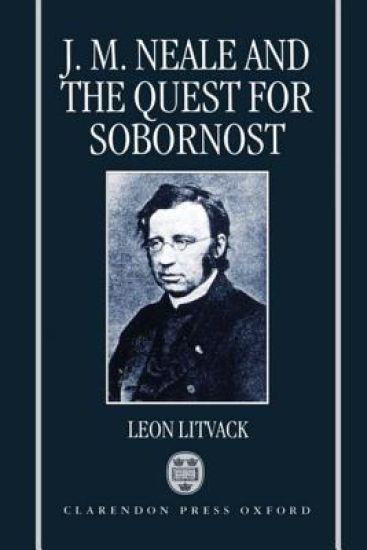
John Mason Neale (1818-1866), the famous Victorian divine, hymnologist, novelist, historian, and author of the carol `Good King Wenceslas', was also noted for his interest in ecunemism. This book traces Neale's interest in the Orthodox church, as expressed through his historical writings, translations of Greek hymns, and novels set in the Christian East. The work is based on a wide variety of manuscript and published sources for the subject, and demonstrates how this leading light in the Anglo-Catholic revival acted as an exemplary interpreter of Byzantium and Eastern Orthodoxy to the Victorian England of his day. In the context of the present time, when East-West relations are a topical suject, Neale's life and work provide a shining example of how two very different cultures and traditions might approach each other, with fruitful results for both.
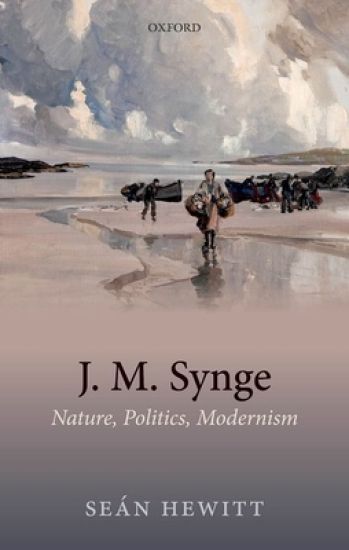
This book is a complete re-assessment of the works of J.M. Synge, one of Ireland's major playwrights. The book offers the first complete consideration of all of Synge's major plays and prose works in nearly 30 years, drawing on extensive archival research to offer innovative new readings. Much work has been done in recent years to uncover Synge's modernity and to emphasise his political consciousness. This book builds on this re-assessment, undertaking a full systematic exploration of Synge's published and unpublished works. Tracing his journey from an early Romanticism through to the more combative modernism of his later work, the book's innovative methodology treats text as process, and considers Synge's reading materials, his drafts, letters, diaries, and journalism, turning up exciting and unexpected revelations. Thus, Synge's engagement with occultism, pantheism, socialism, Darwinism, and even a late reaction against eugenic nationalisms, are all brought into the critical discussion. Breaking new ground in ascertaining the tenets of Synge's spirituality, and his aesthetic and political idealization of harmony with nature, the book also builds on new work in modernist studies, arguing that Synge can be understood as a leftist modernist, exhibiting many of the key concerns of early modernism, but routing them through a socialist politics. Thus, this book is valuable not only to considerations of Synge and the Irish Revival, but also to modernist studies more broadly.

Nobel Prize-winning novelist J. M. Coetzee is one of the most widely taught contemporary writers, but also one of the most elusive. Many critics who have addressed his work have devoted themselves to rendering it more accessible and acceptable, often playing down the features that discomfort and perplex his readers.Yet it is just these features, Derek Attridge argues, that give Coetzee's work its haunting power and offer its greatest rewards. Attridge does justice to this power and these rewards in a study that serves as an introduction for readers new to Coetzee and a stimulus for thought for those who know his work well. Without overlooking the South African dimension of his fiction, Attridge treats Coetzee as a writer who raises questions of central importance to current debates both within literary studies and more widely in the ethical arena. Implicit throughout the book is Attridge's view that literature, more than philosophy, politics, or even religion, does singular justice to our ethical impulses and acts. Attridge follows Coetzee's lead in exploring a number of issues such as interpretation and literary judgment, responsibility to the other, trust and betrayal, artistic commitment, confession, and the problematic idea of truth to the self.

J. M. Coetzee and the Ethics of Reading – Literature in the Event
Derek Attridge
University of Chicago Press
2004
nidottu
Nobel Prize-winning novelist J. M. Coetzee is one of the most widely taught contemporary writers, but also one of the most elusive. Many critics who have addressed his work have devoted themselves to rendering it more accessible and acceptable, often playing down the features that discomfort and perplex his readers.Yet it is just these features, Derek Attridge argues, that give Coetzee's work its haunting power and offer its greatest rewards. Attridge does justice to this power and these rewards in a study that serves as an introduction for readers new to Coetzee and a stimulus for thought for those who know his work well. Without overlooking the South African dimension of his fiction, Attridge treats Coetzee as a writer who raises questions of central importance to current debates both within literary studies and more widely in the ethical arena. Implicit throughout the book is Attridge's view that literature, more than philosophy, politics, or even religion, does singular justice to our ethical impulses and acts. Attridge follows Coetzee's lead in exploring a number of issues such as interpretation and literary judgment, responsibility to the other, trust and betrayal, artistic commitment, confession, and the problematic idea of truth to the self.

Clarkson pays sustained attention to the dynamic interaction between Coetzee's fiction and his critical writing, exploring the Nobel prize-winner's participation in, and contribution to, contemporary literary-philosophical debates. The book engages with the most recent literary and philosophical responses to Coetzee's work.
J. M. Coetzee and Ethics
Columbia University Press
2010
sidottu
In 2003, South African writer J. M. Coetzee was awarded the Nobel Prize in Literature for his riveting portrayals of racial repression, sexual politics, the guises of reason, and the hypocrisy of human beings toward animals and nature. Coetzee was credited with being "a scrupulous doubter, ruthless in his criticism of the cruel rationalism and cosmetic morality of western civilization." The film of his novel Disgrace, starring John Malkovich, brought his challenging ideas to a new audience. Anton Leist and Peter Singer have assembled an outstanding group of contributors who probe deeply into Coetzee's extensive and extraordinary corpus. They explore his approach to ethical theory and philosophy and pay particular attention to his representation of the human-animal relationship. They also confront Coetzee's depiction of the elementary conditions of life, the origins of morality, the recognition of value in others, the sexual dynamics between men and women, the normality of suppression, and the possibility of equality in postcolonial society. With its wide-ranging consideration of philosophical issues, especially in relation to fiction, this volume stands alone in its extraordinary exchange of ethical and literary inquiry.

J. M. Coetzee and Ethics
Columbia University Press
2010
pokkari
In 2003, South African writer J. M. Coetzee was awarded the Nobel Prize in Literature for his riveting portrayals of racial repression, sexual politics, the guises of reason, and the hypocrisy of human beings toward animals and nature. Coetzee was credited with being "a scrupulous doubter, ruthless in his criticism of the cruel rationalism and cosmetic morality of western civilization." The film of his novel Disgrace, starring John Malkovich, brought his challenging ideas to a new audience. Anton Leist and Peter Singer have assembled an outstanding group of contributors who probe deeply into Coetzee's extensive and extraordinary corpus. They explore his approach to ethical theory and philosophy and pay particular attention to his representation of the human-animal relationship. They also confront Coetzee's depiction of the elementary conditions of life, the origins of morality, the recognition of value in others, the sexual dynamics between men and women, the normality of suppression, and the possibility of equality in postcolonial society. With its wide-ranging consideration of philosophical issues, especially in relation to fiction, this volume stands alone in its extraordinary exchange of ethical and literary inquiry.
![Historia elemental del Continente Americano desde su descubrimiento hasta su independencia; para uso de las escuelas. Por J. M. G[utierrez].](/covers/9780274643691.jpg)
Historia elemental del Continente Americano desde su descubrimiento hasta su independencia; para uso de las escuelas. Por J. M. G[utierrez].
J. M. G
Creative Media Partners, LLC
2018
pokkari

In 1802, at the age of 26, Joseph Mallord William Turner became the youngest ever member of the Royal Academy.
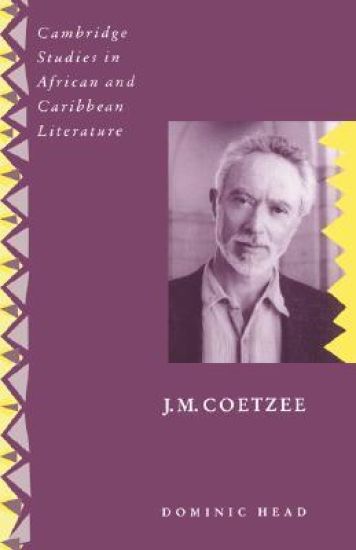
The importance of J. M. Coetzee in the development of twentieth-century fiction is now widely recognised. His work addresses some of the key critical issues of our time: the relationship between postmodernism and postcolonialism, the role of history in the novel, and, repeatedly, the question of how the author can combine an ethical and political consciousness with a commitment to the novel as a work of fiction. In this study, which may be used as an introduction and by those already familiar with Coetzee’s work, Dominic Head assesses Coetzee’s position as a white South African writer engaged with the legacy of colonialism. Through close readings of all the novels, Head shows how Coetzee inhabits a transitional site between Europe and Africa, and it is from this position that his more general concerns emerge. Coetzee’s engagement with the problems facing the postcolonial writer, Head argues, is always enriched by his awareness of a wider literary tradition.
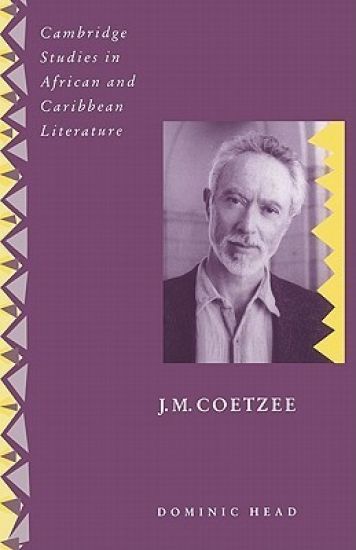
The importance of J. M. Coetzee in the development of twentieth-century fiction is widely recognised. His work addresses some of the key issues of the late twentieth and early twenty-first centuries: the relationship between postmodernism and postcolonialism, the role of history in the novel, and the question of how the author can combine an ethical and political consciousness with a commitment to the novel as a work of fiction. In this study, written in 1998, Dominic Head assesses Coetzee's position as a white South African writer engaged with the legacy of colonialism. Through close readings of all the novels, Head shows how Coetzee inhabits a transitional site between Europe and Africa, and it is from this position that his more general concerns emerge. Coetzee's engagement with the problems facing the postcolonial writer, Head argues, is always enriched by his awareness of a wider literary tradition.


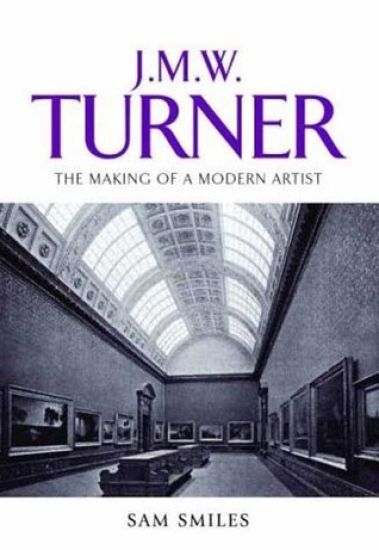
Alone of his contemporaries, J.M.W. Turner is commonly held to have prefigured modern painting, as signalled in the existence of The Turner Prize for contemporary art. Our celebration of his achievement is very different to what Victorian critics made of his art. This book shows how Turner was reinvented to become the artist we recognise today.On Turner's death in 1851 he was already known as an adventurous, even baffling, painter. But when the Court of Chancery decreed that the contents of his studio should be given to the nation, another side of his art was revealed that effected a wholescale change in his reputation. This book acts as a guide to the reactions of art writers and curators from the 1850s to the 1960s as they attempted to come to terms with his work. It documents how Turner was interpreted and how his work was displayed in Britain, in Europe and in North America, concentrating on the ways in which his artistic identity was manipulated by art writers, by curators at the Tate and by designers of exhibitions for the British Council and other bodies.