He and his followers amuse themselves by exploring his home and falling into adventures with its inhabitants, a collection of lunatics, dwarfs and ghosts. Uncle also frequently fights with the inhabitants of neighbouring Badfort, among them the repulsive Jellytussles (a quivering blob) and the cowardly Hitmouse.
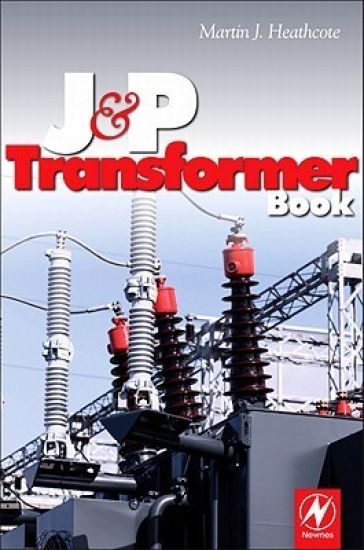
J and P Transformer Book, Fourteenth Edition is the latest in a series that has spanned 80 years as a classic reference book on professional power systems. It is the most comprehensive coverage of transformers on the market, and is suitable for engineers involved in transformer design, manufacture, testing, procurement, application, operation, maintenance, condition assessment, and life extension. As a widely used training source for those needing an introduction to transformer engineering, this new edition has been brought up-to-date with the latest research and practical developments in the subject, covering all of the latest IEEE, IEC, EN, and BS standards.
Maintaining appropriate power systems and equipment expertise is necessary for a utility to support the reliability, availability, and quality of service goals demanded by energy consumers now and into the future. However, transformer talent is at a premium today, and all aspects of the power industry are suffering a diminishing of the supply of knowledgeable and experienced engineers. Now in print for over 80 years since initial publication in 1925 by Johnson & Phillips Ltd, the J & P Transformer Book continues to withstand the test of time as a key body of reference material for students, teachers, and all whose careers are involved in the engineering processes associated with power delivery, and particularly with transformer design, manufacture, testing, procurement, application, operation, maintenance, condition assessment and life extension. Current experience and knowledge have been brought into this thirteenth edition with discussions on moisture equilibrium in the insulation system, vegetable based natural ester insulating fluids, industry concerns with corrosive sulphur in oil, geomagnetic induced current (GIC) impacts, transportation issues, new emphasis on measurement of load related noise, and enhanced treatment of dielectric testing (including Frequency Response Analysis), Dissolved Gas analysis (DGA) techniques and tools, vacuum LTCs, shunt and series reactors, and HVDC converter transformers. These changes in the thirteenth edition together with updates of IEC reference Standards documentation and inclusion for the first time of IEEE reference Standards, provide recognition that the transformer industry and market is truly global in scale. -- From the foreword by Donald J. Fallon Martin Heathcote is a consultant specializing in power transformers, primarily working for utilities. In this context he has established working relationships with transformer manufacturers on several continents. His background with Ferranti and the UK’s Central Electricity Generating Board (CEGB) included transformer design and the management and maintenance of transformer-based systems.
During the interwar period, J.P. Morgan was the most important bank in the world and at the crossroads of US politics, international relations and finance. In J.P. Morgan & Co. and the Crisis of Capitalism, Martin Horn brings us the first in-depth history of how J.P. Morgan responded to the greatest crisis in the history of financial capitalism, shedding new light on the Great Depression, the New Deal, and the coming of World War II. Horn shows how J.P. Morgan & Co as a business responded to the 1929 Crash and the Depression, including its part in the New York Stock Exchange Crash, arguing that the Morgan partners misread the seriousness of the crash. He also offers new insights into the interactions of politics and finance, exploring J.P. Morgan's relationship with the Hoover administration and the bank's clash with Roosevelt over New Deal legislation.
Come back from every setback a stronger and better leader.If you read nothing else on mental toughness, read these ten articles by experts in the field. We've combed through hundreds of articles in the Harvard Business Review archive and selected the most important ones to help you build your emotional strength and resilience--and to achieve high performance.This book will inspire you to:Thrive on pressure like an Olympic athleteManage and overcome negative emotions by acknowledging themPlan short-term goals to achieve long-term aspirationsSurround yourself with the people who will push you the hardestUse challenges to become a better leaderUse creativity to move past traumaUnderstand the tools your mind uses to recover from setbacksThis collection of articles includes "How the Best of the Best Get Better and Better," by Graham Jones; "Crucibles of Leadership," by Warren G. Bennis and Robert J. Thomas; "Building Resilience," by Martin E.P. Seligman; "Cognitive Fitness," by Roderick Gilkey and Clint Kilts; "The Making of a Corporate Athlete," by Jim Loehr and Tony Schwartz; "Stress Can Be a Good Thing If You Know How to Use It," by Alla Crum and Thomas Crum; "How to Bounce Back from Adversity," by Joshua D. Margolis and Paul G. Stoltz; "Rebounding from Career Setbacks," by Mitchell Lee Marks, Philip Mirvis, and Ron Ashkenas; "Realizing What You're Made Of," by Glenn E. Mangurian; "Extreme Negotiations," by Jeff Weiss, Aram Donigian, and Jonathan Hughes; and "Post-Traumatic Growth and Building Resilience," by Martin Seligman and Sarah Green Carmichael.HBR's 10 Must Reads paperback series is the definitive collection of books for new and experienced leaders alike. Leaders looking for the inspiration that big ideas provide, both to accelerate their own growth and that of their companies, should look no further. HBR's 10 Must Reads series focuses on the core topics that every ambitious manager needs to know: leadership, strategy, change, managing people, and managing yourself. Harvard Business Review has sorted through hundreds of articles and selected only the most essential reading on each topic. Each title includes timeless advice that will be relevant regardless of an ever-changing business environment.
Gexiang Zhang; Sergey Verlan; Tingfang Wu; Francis George C. Cabarle; Jie Xue; David Orellana-Martín; Jianping Dong; Luis Valencia-Cabrera; Mario J. Pérez-Jiménez
Spiking neural P systems represent a significant advancement in the field of membrane computing, drawing inspiration from the communication patterns observed in neurons. Since their inception in 2006, these distributed and parallel neural-like computing models have gained popularity and emerged as important tools within the membrane computing area. As a key branch of the third generation of artificial neural networks, a fascinating research area of artificial intelligence, spiking neural P systems offer a captivating blend of theoretical elegance and practical utility. Their efficiency, Turing completeness, and real-life application characteristics, including interpretability and suitability for large-scale problems, have positioned them at the forefront of contemporary research in membrane computing and artificial intelligence. This state-of-the-art reference work is organized into three parts comprising twelve chapters. It thoroughly investigates the theoretical foundations, real-life applications, and implementations of spiking neural P systems. From fundamental principles to computational power and complexity, the theoretical aspects are explored, laying the groundwork for understanding their practical applications. Real-life applications span a diverse range of domains, including complex optimization, classification, fault diagnosis, medical image processing, information fusion, cryptography, and robot control. Additionally, the book discusses several software and hardware implementations that provide valuable insights into the practical deployment of spiking neural P systems. As the rapid development of spiking neural P systems continues to unfold, there is an increasing demand for a systematic and comprehensive summary of their capabilities and applications. This work serves as an invaluable resource for researchers, scholars, and practitioners interested in the theoretical underpinnings, algorithms, and practical implementation of artificial intelligence and membrane computing.
Gexiang Zhang; Sergey Verlan; Tingfang Wu; Francis George C. Cabarle; Jie Xue; David Orellana-Martín; Jianping Dong; Luis Valencia-Cabrera; Mario J. Pérez-Jiménez
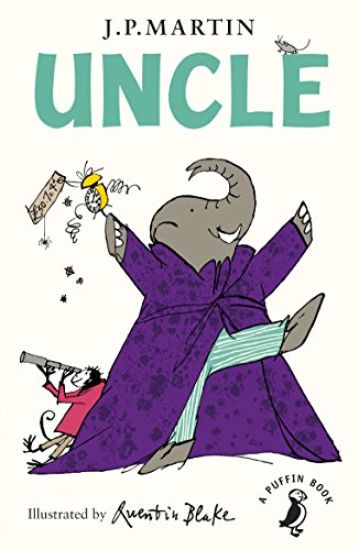
Uncle also frequently fights with the inhabitants of neighbouring Badfort, among them the repulsive Jellytussles (a quivering blob) and the cowardly Hitmouse. Includes: Uncle, and Uncle Cleans Up
This book is concerned with the prediction of thermodynamic and transport properties of gases and liquids. The prediction of such properties is essential for the solution of many problems encountered in chemical and process engineering as well as in other areas of science and technology. The book aims to present the best of those modern methods which are capable of practical application. It begins with basic scientific principles and formal results which are subsequently developed into practical methods of prediction. Numerous examples, supported by a suite of computer programmes, illustrate applications of the methods. The book is aimed primarily at the student market (for both undergraduate and taught postgraduate courses) but it will also be useful for those engaged in research and for chemical and process engineering professionals.
This book is concerned with the prediction of thermodynamic and transport properties of gases and liquids. The prediction of such properties is essential for the solution of many problems encountered in chemical and process engineering as well as in other areas of science and technology. The book aims to present the best of those modern methods which are capable of practical application. It begins with basic scientific principles and formal results which are subsequently developed into practical methods of prediction. Numerous examples, supported by a suite of computer programmes, illustrate applications of the methods. The book is aimed primarily at the student market (for both undergraduate and taught postgraduate courses) but it will also be useful for those engaged in research and for chemical and process engineering professionals.
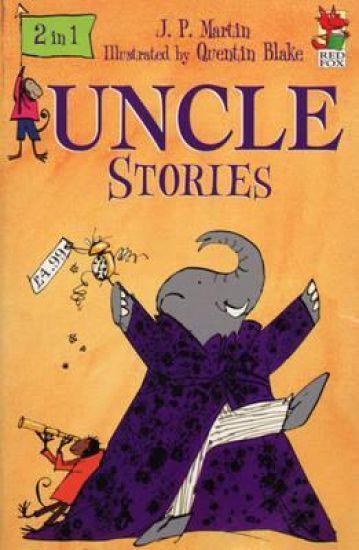
The wonderfully eccentric adventures of a kind-hearted elephant, hugely enjoyed by children and adults alike, by J. P. Martin and illustrated by Quentin Blake.A classic in the great English nonsense tradition - ObserverUncle is a millionaire elephant who has a B.A. and wears a purple dressing gown. He lives in a labyrinth of skyscrapers connected by water chutes, lifts and railways, and littered with oil lakes, walls of sweets and towers of treacle. He and his followers amuse themselves by exploring his home and falling into adventures with its inhabitants, a collection of lunatics, dwarfs and ghosts. Uncle also frequently fights with the inhabitants of neighbouring Badfort, among them the repulsive Jellytussles (a quivering blob) and the cowardly Hitmouse.
It is a time of rejoicing at Homeward, the Labyrinthine castle-city that is as magical as Oz and as full of wonders as Willy Wonka's chocolate factory. Uncle, the wise, kind, generous, and fabulously rich elephant who rules over Homeward, has joined with his many friends to celebrate their triumph over the ruffians in neighboring Badfort. Still, there's plenty of cleaning up to do in Homeward: the waterworks are tainted with vinegar, housing is scarce, and the Dwarftown Railway is terribly overcrowded-- meanwhile the Badfort crowd has devised its most diabolical plan yet. Uncle will need all the help he can get from his faithful assistant Old Monkey and from Goodman the literate cat--and possibly a wizard's spell--to get through this mess. Uncle Cleans Up displays the same subversive humor and ingenious plotting as its predecessor, Uncle, and serves as a no less delightful introduction to J.P. Martin's fantastic world; Quentin Blake's quirky drawings accompany a tale that has been charming children and adults alike for nearly fifty years.
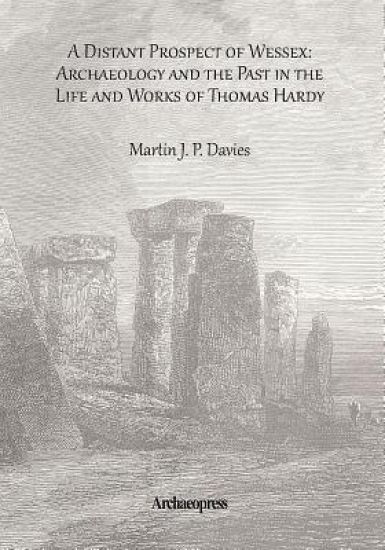
If the real Wessex, with its counties, towns, villages and topography, was no mere readily available template upon which Hardy could carve a fictional pattern, Dorchester provided a very different model, though at the level of local colour and detail, Casterbridge really is Dorchester 'by any other name.'' In this study, Martin Davies examines the role which Thomas Hardy’s involvement with the past plays in his life and literary work. Hardy’s life encompasses the transformation of archaeology out of mere antiquarianism into a fully scientific discipline. Hardy – once described as ‘a born archaeologist’ – observed this process at first hand, and its impact on his aesthetic and philosophical scheme was profound. Dr Davies’ study offers a different route to a fuller understanding of Hardy’s novels, poems, and short stories. How much was Hardy concerned with archaeology per se amongst his plethora of interests? How much did he actually know about it? Did his Classical education, architectural training, and visit to Italy impinge on his perception of the mysterious traces of British prehistory and the Roman occupation with which he had grown up? How does reference to archaeology fit in with his overall narrative, aesthetic, and philosophical scheme? These are the questions posed by Martin Davies in his study of the role played by archaeology and the past in the life and works of Thomas Hardy. The answers are far reaching and profound.