Kirjojen hintavertailu. Mukana 11 342 296 kirjaa ja 12 kauppaa.

Kirjahaku

Etsi kirjoja tekijän nimen, kirjan nimen tai ISBN:n perusteella.

1000 tulosta hakusanalla J. Reid Miller

Stain Removal

Stain Removal

J. Reid Miller

Oxford University Press Inc
2019
nidottu
Martin Luther King, Jr. famously expressed his dream that his children would "one day not be judged by the color of their skin, but by the content of their character." In his vision, a person's ethical qualities would be understood in spite of his or her body rather than through it. In general, we think that a person's actions should not be judged according to their physical features, such as race. In fact, we see evaluations based on a subject's race or other bodily traits as illegitimate. But Stain Removal argues that our perception of a person's actions always entails judgments of the body. It therefore challenges modern moral theory's premise that a subject's deeds and not its bodily traits count as primary objects of evaluation. Drawing on modern and pre-modern accounts of how ethical knowledge originates, from the Biblical story of Ham, to Socrates, Immanuel Kant, Alain Locke, Frantz Fanon, Langston Hughes, Onora O'Neill, and Louis Althusser, the book suggests that our recognition of both a person and that person's deeds demands an evaluative context. From this it proposes that all perception is "evaluative perception." Through the metaphor of the stain, J. Reid Miller traces the long history of thought suggesting that embodiments like race can and do signify ethical qualities. He argues that these qualities do not "attach" to subjects from the outside-like a stain on innocent and unraced beings-but are instead what allow us to see people as distinct ethical individuals. The objective of ethics, he shows, is not to determine whether race is good or bad but to illustrate how our "unique" personal traits emerge through our multiple relations to others. The consequence is that, contrary to King's vision, it is only through judgments of "skin" and other bodily features that the ethical "content" of subjects can be recognized.
Stain Removal

Stain Removal

J. Reid Miller

Oxford University Press Inc
2016
sidottu
Martin Luther King, Jr. famously expressed his dream that his children would "one day not be judged by the color of their skin, but by the content of their character." In his vision, a person's ethical qualities would be understood in spite of his or her body rather than through it. In general, we think that a person's actions should not be judged according to their physical features, such as race. In fact, we see evaluations based on a subject's race or other bodily traits as illegitimate. But Stain Removal argues that our perception of a person's actions always entails judgments of the body. It therefore challenges modern moral theory's premise that a subject's deeds and not its bodily traits count as primary objects of evaluation. Drawing on modern and pre-modern accounts of how ethical knowledge originates, from the Biblical story of Ham, to Socrates, Immanuel Kant, Alain Locke, Frantz Fanon, Langston Hughes, Onora O'Neill, and Louis Althusser, the book suggests that our recognition of both a person and that person's deeds demands an evaluative context. From this it proposes that all perception is "evaluative perception." Through the metaphor of the stain, J. Reid Miller traces the long history of thought suggesting that embodiments like race can and do signify ethical qualities. He argues that these qualities do not "attach" to subjects from the outside -- like a stain on innocent and unraced beings -- but are instead what allow us to see people as distinct ethical individuals. The objective of ethics, he shows, is not to determine whether race is good or bad but to illustrate how our "unique" personal traits emerge through our multiple relations to others. The consequence is that, contrary to King's vision, it is only through judgments of "skin" and other bodily features that the ethical "content" of subjects can be recognized.
Qualitative Research in Social Work

Qualitative Research in Social Work

Anne Fortune; William J. Reid; Jr. Miller

Columbia University Press
2013
sidottu
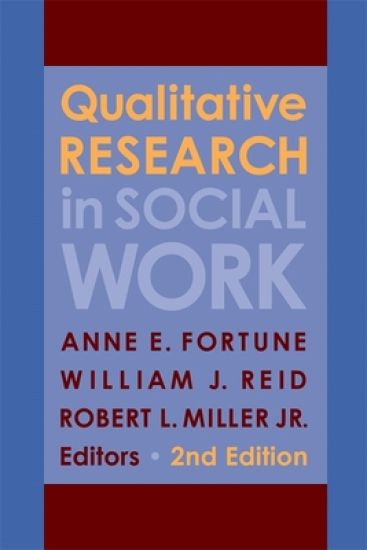
In this volume, progressive experts survey recent trends in qualitative study, which relies on small sample groups and interview data to better represent the context and complexity of social work practice. Chapters address different approaches to qualitative inquiry, applications to essential areas of research and practice, integration of qualitative and quantitative methods, and epistemological issues. This second edition brings even greater depth and relevance to social work qualitative research, including new material that tackles traditional research concerns, such as data quality, ethics, and epistemological stances, and updated techniques in data collection and analysis. To increase the usefulness for students and researchers, the editors have reorganized the text to present basic principles first and then their applications, and they have increased their focus on ethics, values, and theory. New and revised illustrative studies highlight more than ever the connection between effective research and improved social functioning among individuals and groups. The collection continues to feature scholars and practitioners who have shaped the social work research practice canon for more than twenty years, while also adding the innovative work of up-and-coming talent.
Qualitative Research in Social Work

Qualitative Research in Social Work

Anne Fortune; William J. Reid; Jr. Miller

Columbia University Press
2013
pokkari
In this volume, progressive experts survey recent trends in qualitative study, which relies on small sample groups and interview data to better represent the context and complexity of social work practice. Chapters address different approaches to qualitative inquiry, applications to essential areas of research and practice, integration of qualitative and quantitative methods, and epistemological issues. This second edition brings even greater depth and relevance to social work qualitative research, including new material that tackles traditional research concerns, such as data quality, ethics, and epistemological stances, and updated techniques in data collection and analysis. To increase the usefulness for students and researchers, the editors have reorganized the text to present basic principles first and then their applications, and they have increased their focus on ethics, values, and theory. New and revised illustrative studies highlight more than ever the connection between effective research and improved social functioning among individuals and groups. The collection continues to feature scholars and practitioners who have shaped the social work research practice canon for more than twenty years, while also adding the innovative work of up-and-coming talent.
Wallace Reid

Wallace Reid

E.J. Fleming

McFarland Co Inc
2013
pokkari
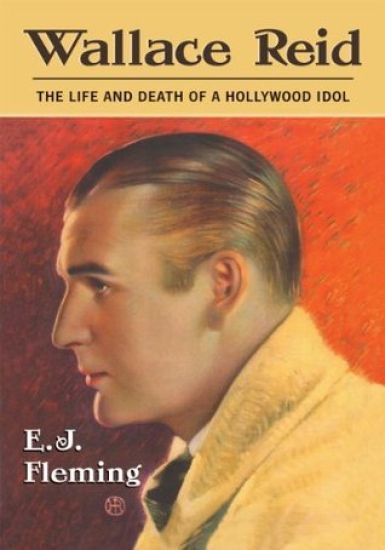
For a decade Wallace Reid was the most recognized face in Hollywood, the most universally beloved actor in silent film. Today all that is widely remembered of "Wally" Reid is that he died in a padded sanitarium cell, the victim of a fatal morphine addiction. Of all the actors who have enjoyed great fame only to vanish from the public eye, Reid perhaps fell the fastest and the hardest. This first full biography recounts Reid's complicated childhood, his disrupted family history and his rise to film stardom despite these restricting factors. It documents his myriad talents and accomplishments, most notably his gift for brilliant onscreen acting. The text explores in depth how the modern studio, however unconsciously, turned the popular star, a well-adjusted man with a loving family, into a drug-dependent mental patient within three years. His death rocked the foundations of Hollywood, and the huge new industry that he helped build nearly died with "Dashing Wally Reid."
Reid Stone: Hard as Stone

Reid Stone: Hard as Stone

J. D. James

Buggs Island Books
2022
nidottu
For fans of Lee Child's Jack Reacher series, a gritty female character who's every bit as hostile toward the criminal element as Reacher is-and maybe more.When ICE Agent Pamela R. Stone is fired from her fifteen-year position with U.S. Immigration and Customs Enforcement, she can't hit the open road fast enough, wind in her hair, sun on her cheeks, a new motorcycle rumbling beneath her.Instead of bidding adi s to Texas in her rear-view mirror as planned, she meets Detective Pete Anderson, who questions her concerning a triple homicide. The conversation soon turns personal, and before Reid knows it, not only is she involved with the detective, she's involved with another murder. When Detective Anderson admits to the true reason for taking an interest in Reid, she must choose between continuing on her journey or the hazards of traveling into Mexico ? to rescue a kidnap victim from a prostitution kingpin.However dangerous the choice might be, Reid has no problem taking the risk. If the opportunity to remove the criminal element from the human food chain presents itself, she's willing to do her part-because so few will.
Jimmy Reid

Jimmy Reid

W.W.J. Knox; A. McKinlay

Liverpool University Press
2019
sidottu
Described as "the best MP Scotland never had", Jimmy Reid was undoubtedly of the most important figures of late twentieth-century Britain. Often at the forefront of the major turning points in the history of industrial relations and politics in Britain, Jimmy’s story is an epic one; from a poverty-stricken background in Govan, Glasgow, he became a communist at a young age, leading a national strike of engineering apprentices while only twenty, before being thrown into the national limelight as the leading spokesperson for the Upper Clyde Shipbuilders Work-In in 1971-2. Disillusioned with communism he left the Party for Labour and the centre-left before leaving them disenchanted with New Labour to join the Scottish National Party. This enlightening book looks at Jimmy’s political journey from Communism, to Labourism, and ultimately to Nationalism (a political life in three acts), which not only speaks of the complexities of left politics after 1945, but also illuminates our understanding of institutions and social change in post-war Britain by showing how they were understood and negotiated by one inspirational individual.
Jimmy Reid

Jimmy Reid

W.W.J. Knox; A. McKinlay

Liverpool University Press
2019
nidottu
Described as "the best MP Scotland never had", Jimmy Reid was undoubtedly of the most important figures of late twentieth-century Britain. Often at the forefront of the major turning points in the history of industrial relations and politics in Britain, Jimmy’s story is an epic one; from a poverty-stricken background in Govan, Glasgow, he became a communist at a young age, leading a national strike of engineering apprentices while only twenty, before being thrown into the national limelight as the leading spokesperson for the Upper Clyde Shipbuilders Work-In in 1971-2. Disillusioned with communism he left the Party for Labour and the centre-left before leaving them disenchanted with New Labour to join the Scottish National Party. This enlightening book looks at Jimmy’s political journey from Communism, to Labourism, and ultimately to Nationalism (a political life in three acts), which not only speaks of the complexities of left politics after 1945, but also illuminates our understanding of institutions and social change in post-war Britain by showing how they were understood and negotiated by one inspirational individual.