For Giovanna, with Love is a biographical novel based on the life of Raymond Chandler. He is the author of The Big Sleep and the creator of the detective Philip Marlowe. Set in 1937, the story is told in the first person, and reflects Chandler's paradoxical view of life, a view that combines integrity with cynicism. After an alcoholic blackout, and down on his luck, Chandler is helped out of his doldrums by Rico Amici, owner of the North Broadway Caf in downtown Los Angeles. Working as a busboy and short-order cook, Chandler falls in love with Giovanna Barbaro, a waitress and part-time prostitute. Conflicted, Chandler also remains in love with his wife Cissy, a woman nineteen years his senior. When the unhappily pregnant Giovanna is murdered, the Amici family expects an ill-prepared Chandler to solve the murder and make la vendetta. The action of the novel requires a trip through the subterranean levels of a Los Angeles populated by con artists, manipulators, prostitutes, fading movie actresses, and abortionists. With the help of Sam Jacobs, a retired L.A.P.D. detective, Chandler solves the crime. The story ends in a deadly confrontation with Giovanna's murderer.
First published in 1938. This study of the labour crisis in the USA consists of interviews with leaders and members of labour unions, unorganised workers, businessmen, and those in positions of public responsibility. The author explores the foundations of the crisis, and examines the possible issues that he predicted the US labour force were going to encounter. This title will be of interest to scholars and students of political and labour history.
First published in 1938. This study of the labour crisis in the USA consists of interviews with leaders and members of labour unions, unorganised workers, businessmen, and those in positions of public responsibility. The author explores the foundations of the crisis, and examines the possible issues that he predicted the US labour force were going to encounter. This title will be of interest to scholars and students of political and labour history.
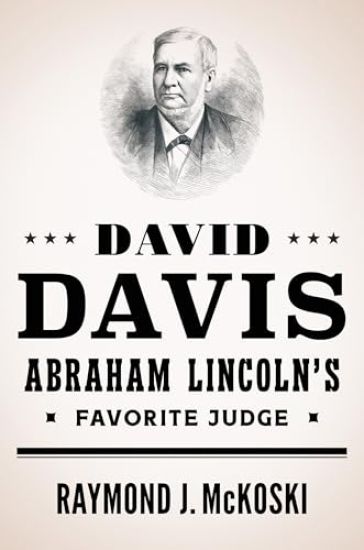
One of Abraham Lincoln’s staunchest and most effective allies, Judge David Davis masterminded the floor fight that gave Lincoln the presidential nomination at the 1860 Republican National Convention. This history-changing event emerged from a long friendship between the two men. It also altered the course of Davis’s career, as Lincoln named him to the U.S. Supreme Court in 1862. Raymond J. McKoski offers a biography of Davis’s public life, his impact on the presidency and judiciary, and his personal, professional, and political relationships with Lincoln. Davis lent his vast network of connections, organizational and leadership abilities, and personal persuasiveness to help Lincoln’s political rise. When Davis became a judge, he honed an ability to hear each case with complete impartiality, a practice that endeared him to Lincoln but one day put him at odds with the president over important Civil War–era rulings. McKoski details these cases while providing an in-depth account of Davis’s role in Lincoln’s two unsuccessful campaigns for U.S. Senate and the fateful run for the presidency.
Now includes new bonus e-chapter on COVID- 9 and Health Policy in eBook version.While other texts focus on just one aspect of policy -- theory, philosophy, ethics, history, economics, or analysis – this balanced, cross-disciplinary text explores health policy from all directions for the most thorough examination of policy today. Written with graduate students in mind, this balanced, cross-disciplinary text systematically examines the health policy process by looking at how we got to where we are today, the current realities of policy-making, and how students can influence the policy of tomorrow. Beginning with a discussion of political philosophy and an overview of policy-making theory and U.S. history, this comprehensive text moves onto a thorough examination political theory, the policy process, and comparative national health systems. The book concludes with health policy topical concerns, health policy outcomes, and advocacy. Given its broad, discipline-agnostic approach to the health policy process, Government amp Policy for U.S. Health Leaders is an ideal, well-rounded resource for policy courses across the health professions.Key Features:- Comprehensive, multidisciplinary content targeting all topics associated with health policy development for clinical and non-clinical graduate students and professionals.- Case studies and applied problems, along with chapter-specific discussion questions encourage students to critically think about the material and apply their knowledge. - Focus on new Interprofessional Education (IPE) standards, as well as accreditation needs of graduate programs in health administration, public health, and nursing.- Valuable instructor resources include a test bank, slides in PowerPoint format, an instructor's manual, case studies, and syllabus.
The world was at war, America precariously poised on the sidelines. But already a second secret war was well underway. While he fought on the home front to consolidate the FBI’s intelligence gathering power, J. Edgar Hoover was conducting an all-out campaign to make his agency America’s first foreign espionage service - a campaign that would lead to an uneasy alliance with British intelligence in a brilliantly successful operation to undermine Germany.Taking up the tale begun in his acclaimed Origins of FBI Counterintelligence, FBI historian and former agent Raymond Batvinis mines a wealth of heretofore untapped resources to expose Hoover’s remarkable connivances and accomplishments in concert - and occasionally contention - with the Allies in outsmarting German intelligence. Hoover’s Secret War opens up a world of spy rings, secret and double agents, surveillance, codes and ciphers, wire taps, micro dots, mail drops, invisible ink, radio transmissions and deception and disinformation as it tracks the warring nations spreading their intelligence tentacles throughout Europe and North and South America. As it documents the rocky evolution of the FBI’s relationship with Britain’s vaunted MI5 and MI6, the book brings to light the feud between Hoover and Williams Stephenson, director of the British Secret Intelligence Service’s U.S. operation.Batvinis reveals how the agency gained access to ULTRA intelligence. He uncovers eye-opening details of the FBI’s participation in the famed “Double-Cross"" System, which effectively “turned” German agents against the Fatherland, among them a flamboyant, larger-than-life playboy, a world famous French flyer and a lecherous Dutchman. Batvinis tells for the first time how the Bureau manipulated these agents and how it transmitted deceptive information critical to the Normandy landings, the Allied invasion of the Marshall Islands and the atomic bomb programme, among other matters. Rich with secrets and surprises worthy of the finest spy fiction, this true story of espionage and counterintelligence gives us our first clear look at the secret second world war and a significant moment in history.