Kirjahaku
Etsi kirjoja tekijän nimen, kirjan nimen tai ISBN:n perusteella.
1000 tulosta hakusanalla J. Turner; Nicholas Potter
Shakespeare's late plays are a 'mixed bag' with a common theme: from the fiendishly jealous Leontes to the saintly Pericles; from the ineffectual Cymbeline to the omnipotent Propspero; from the 'sprites and goblins' of The Tempest to the famous bear of The Winter's Tale, the characters have excited wonder and contempt while the range of incident is almost irresponsibly extravagant. Was Shakespeare losing his grip, or his interest, or both? Was he striking out in some bold new theatrical direction? This Guide provides a critical survey of the major debates and issues surrounding the late plays, from the earliest published accounts to the present day. Nicholas Potter offers a clear guiding narrative and an exploration of literary history, focusing on how criticism of these remarkable works, and attempts to make sense of them, have developed over the years.
This Guide provides a critical survey of the responses to this popular play. Chronologically arranged, the book draws on a rich range of critical writings, including Dr Johnson, Coleridge, Bradley and Leavis. This material is linked to more general issues regarding Shakespearean criticism and scholarship, and the development of literary theory.
Using secondary source material, this guide offers differing interpretations of Shakespeare's "Othello" - considered to be one of Shakespeare's four great tragedies. It aims to meet the needs of students on both interdisciplinary and single-honours courses.
Biocatalysis in Organic Synthesis
Nicholas J Turner; Luke Humphreys
Royal Society of Chemistry
2018
nidottu
The application of biocatalysis in organic synthesis is rapidly gaining popularity amongst chemists. Compared to traditional synthetic methodologies biocatalysis offers a number of advantages in terms of enhanced selectivity (chemo-, regio-, stereo-), reduced environmental impact and lower cost of starting materials. Together these advantages can contribute to more sustainable manufacturing processes across a wide range of industries ranging from pharmaceuticals to biofuels. The biocatalytic toolbox has expanded significantly in the past five years and given the current rate of development of new engineered biocatalysts it is likely that the number of available biocatalysts will double in the next few years. This textbook gives a comprehensive overview of the current biocatalytic toolbox and also establishes new guidelines or rules for “biocatalytic retrosynthesis”. Retrosynthesis is a well known and commonly used technique whereby organic chemists start with the structure of their target molecule and generate potential starting materials and intermediates through a series of retrosynthetic disconnections. These disconnections are then used to devise a forward synthesis, in this case using biocatalytic transformations in some of the key steps. Target molecules are disconnected with consideration for applying biocatalysts, as well as chemical reagents and chemocatalysts, in the forward synthesis direction. Using this textbook, students will be able to place biocatalysis within the context of other synthetic transformations that they have learned earlier in their studies. This additional awareness of biocatalysis will equip students for the modern world of organic synthesis where biocatalysts play an increasingly important role.In addition to guidelines for identifying where biocatalysts can be applied in organic synthesis, this textbook also provides examples of current applications of biocatalysis using worked examples and case studies. Tutorials enable the reader to practice disconnecting target molecules to find the ‘hidden’ biocatalytic reactions which can be applied in the synthetic direction. The book contains a complete description of the current biocatalyst classes that are available for use and also suggests areas where new enzymes are likely to be developed in the next few years. This textbook is an essential resource for lecturers and students studying synthetic organic chemistry. It also serves as a handy reference for practicing chemists who wish to embed biocatalysis into their synthetic toolbox.
Introduction to Biocatalysis Using Enzymes and Microorganisms
S. M. Roberts; Nicholas J. Turner; Andrew J. Willetts; Michael K. Turner
Cambridge University Press
1995
sidottu
This is an introductory text intended to give the non-specialist a comprehensive insight into the science of biotransformations. The book traces the history of biotransformations, clearly spells out the pros and cons of conducting enzyme-mediated versus whole-cell bioconversions, and gives a variety of examples wherein the bio-reaction is a key element in a reaction sequence leading from cheap starting materials to valuable end-products (such as pharmaceuticals and agrochemicals, fragrances and flavours). Biotransformations involving the hydrolysis of esters, amides and nitriles, the synthesis of esters and amides, reduction and oxidation reactions and carbon–carbon bond-forming systems are discussed. The book finishes with a discussion of some industrially important large-scale bioconversions.
Introduction to Biocatalysis Using Enzymes and Microorganisms
S. M. Roberts; Nicholas J. Turner; Andrew J. Willetts; Michael K. Turner
Cambridge University Press
1995
pokkari
This is an introductory text intended to give the non-specialist a comprehensive insight into the science of biotransformations. The book traces the history of biotransformations, clearly spells out the pros and cons of conducting enzyme-mediated versus whole-cell bioconversions, and gives a variety of examples wherein the bio-reaction is a key element in a reaction sequence leading from cheap starting materials to valuable end-products (such as pharmaceuticals and agrochemicals, fragrances and flavours). Biotransformations involving the hydrolysis of esters, amides and nitriles, the synthesis of esters and amides, reduction and oxidation reactions and carbon–carbon bond-forming systems are discussed. The book finishes with a discussion of some industrially important large-scale bioconversions.
J.M.W. Turner and the Subject of History is an in-depth consideration of the artist's complex response to the challenge of creating history paintings in the early nineteenth century. Structured around the linked themes of making and unmaking, of creation and destruction, this book examines how Turner's history paintings reveal changing notions of individual and collective identity at a time when the British Empire was simultaneously developing and fragmenting. Turner similarly emerges as a conflicted subject, one whose artistic modernism emerged out of a desire to both continue and exceed his eighteenth-century aesthetic background by responding to the altered political and historical circumstances of the nineteenth century.
The Water-Colours of J. M. W. Turner
J M W (Joseph Mallord Will Turner; A J (Alexander Joseph) Finberg; W G (William George) Rawlinson
Anson Street Press
2025
pokkari
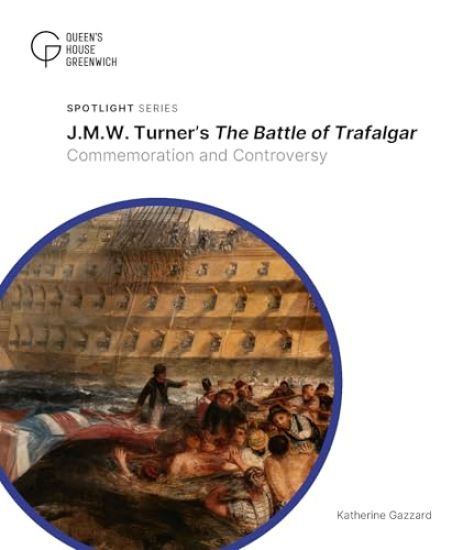
Published to coincide with the 250th anniversary of Turner’s birth, J.M.W. Turner’s ‘The Battle of Trafalgar’: Commemoration and Controversy explores the compelling history of Turner’s largest painting and his only royal commission. The Battle of Trafalgar is one of the most famous pictures in the collection of Royal Museums Greenwich, yet its story is surprisingly complex. This book charts the painting’s tumultuous journey, from the challenges that Turner faced during its creation and the storm of criticism that greeted its unveiling to its eventual place at the centre of a national art collection. J.M.W. Turner’s ‘The Battle of Trafalgar’: Commemoration and Controversy is part of the Royal Museums Greenwich Spotlight series, accessible introductions to some of the most intriguing objects in the collection.
J.M.W. Turner and the Subject of History is an in-depth consideration of the artist's complex response to the challenge of creating history paintings in the early nineteenth century. Structured around the linked themes of making and unmaking, of creation and destruction, this book examines how Turner's history paintings reveal changing notions of individual and collective identity at a time when the British Empire was simultaneously developing and fragmenting. Turner similarly emerges as a conflicted subject, one whose artistic modernism emerged out of a desire to both continue and exceed his eighteenth-century aesthetic background by responding to the altered political and historical circumstances of the nineteenth century.
J.M.W. Turner: A Biography
Lifecaps; Howard Brinkley
Createspace Independent Publishing Platform
2014
nidottu
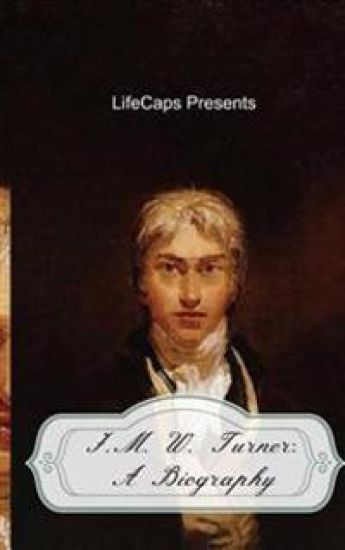
In 2005 the British Broadcasting Corporation sponsored a program to find the greatest painting in Britain. Any painting hanging in a British art gallery was eligible to become The Greatest Painting in Britain, whether it was created by an Englishman or not. After every work of art in the country was evaluated a short list of finalists by British, Italian, Dutch, Belgian and French artists was announced. There were heavy hitters like Still Life: Vase with Fifteen Sunflowers by Vincent Van Gogh. Also on the list was one of the most original works in the Western World's art canon - The Arnolfini Portrait by Netherlands painter Jan van Eyck in 1434, perpetrated with oils on three panels of oak boards.In the end the vote was not all that close. The winner was The Fighting T m raire Tugged to Her Last Berth to Be Broken Up, 1838 painted by a contemporary and bitter rival of Constable, Joseph William Mallord Turner.Turner was secretive and prolific in his paintings and did more than any other artist to elevate landscape painting to the lofty status of historical painting that was universally held to be the highest form of Western painting. Turner knew his rightful place among the Old Masters; 150 years after his death the people of England agreed with him.This book tells his incredible story.
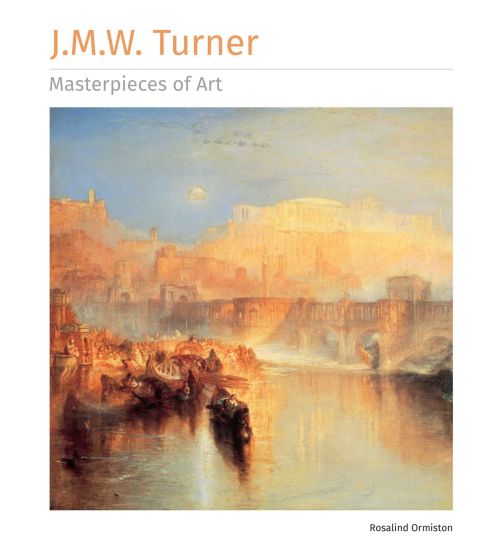
The English Romantic painter Joseph Mallord William Turner (23 April 1775–19 December 1851) was a brilliant landscape artist, a watercolourist and printmaker. His style, powerful and fierce, melding the elements with humankind are thought by many to have prepared the way for Impressionism. In his time he was controversial, but his focus on land and seascapes widened the palette of artists and their audience, and his impressionistic brushwork prepared the way for the fragmentation of the modern era. This wonderful new book brings to life his greatest achievements, with such paintings as The Fighting 'Temeraire’, Inside Tintern Abbey and Rain, Steam and Speed (The Great Western Railway).
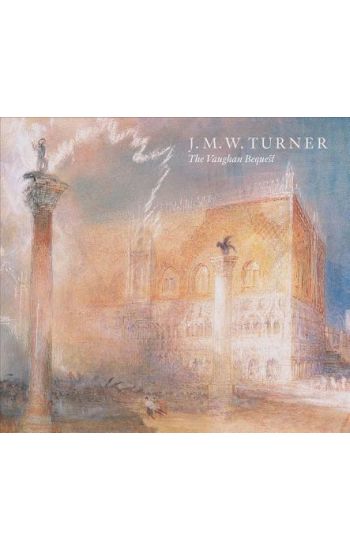
J.M.W. Turner 1775-1851 was perhaps the most prolific and innovative of all British artists. His outstanding watercolours in the Scottish National Gallery are one of the most popular features of its collection. Bequeathed to the Gallery in 1899 by the distinguished collector Henry Vaughan, they have been exhibited, as he requested, every January for over 100 years. Renowned for their excellent state of preservation, they provide a remarkable overview of many of the most important aspects of Turner's career. This richly illustrated book provides a commentary on the watercolours, addressing questions of technique and function, as well as considering some of the numerous contacts Turner had with other artists, collectors and dealers. The introduction concentrates on Henry Vaughan, one of the greatest enthusiasts for British art in the late nineteenth century, whose diverse collections have not previously been fully appreciated.
This book has been considered by academicians and scholars of great significance and value to literature. This forms a part of the knowledge base for future generations. So that the book is never forgotten we have represented this book in a print format as the same form as it was originally first published. Hence any marks or annotations seen are left intentionally to preserve its true nature.