Kirjahaku
Etsi kirjoja tekijän nimen, kirjan nimen tai ISBN:n perusteella.
1000 tulosta hakusanalla J.C. Briggs
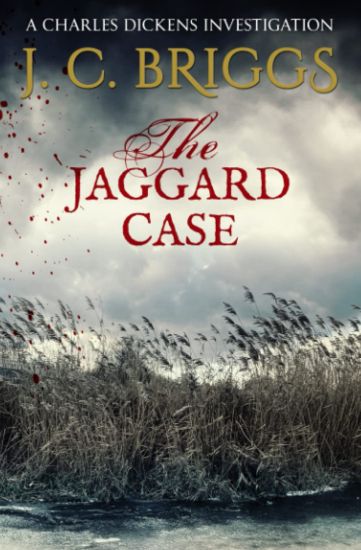
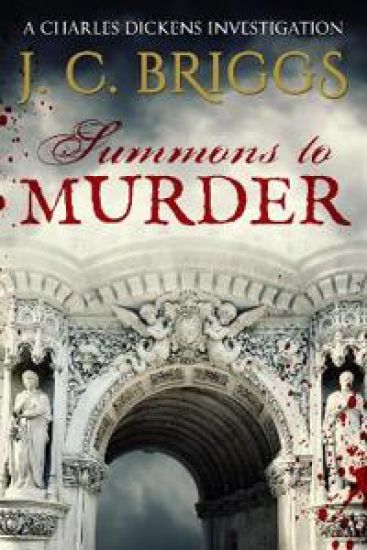
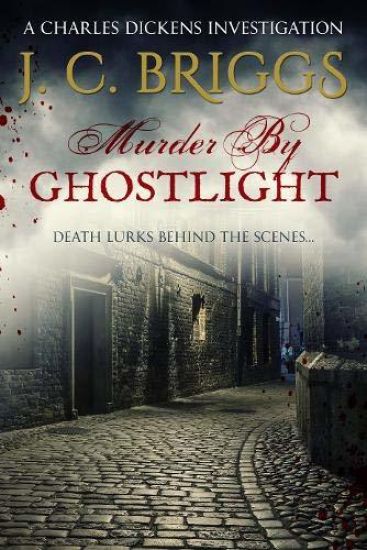
London, spring 1849. Charles Dickens, the famous author, turns detective. He and Superintendent Jones of Bow Street must find the man who cut the throat of Patience Brooke, assistant matron at Urania Cottage, Dickens’s home for fallen women – a man who sings as he kills. Their search takes them into the filthy slums of the Victorian capital where the fog hides grim secrets. When a little girl is found dead and another girl disappears from the Home, Dickens is forced to face deeply buried secrets from his own past in a race against time to prevent another murder.
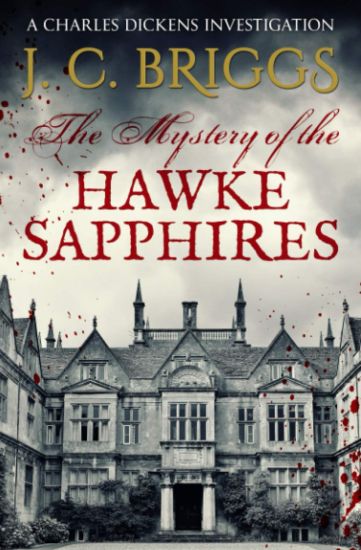
London, November 1849. When a boy is found drowned in the River Thames at Hungerford Stairs, novelist Charles Dickens and Superintendent Jones of Bow Street are mystified to discover that the child is not the missing youngster for whom they have been searching. But when two more boys are brutally murdered, the trail leads them on a hunt for a serial killer in a complicated case that tests their abilities to the limit.
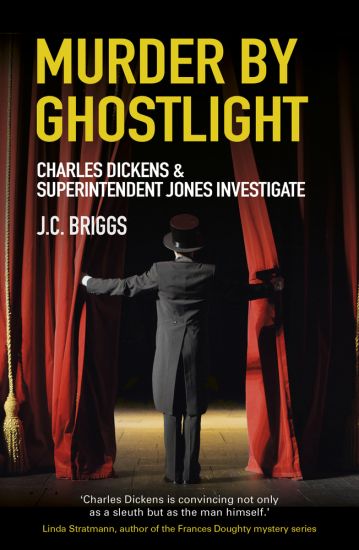
1850: When Charles Dickens discovers the corpse of an actor on the empty stage of a Manchester theatre Dickens himself becomes the number one suspect. But with the help of colleague and trusted friend Superintendent Jones of Bow Street the two set out to find the identity of the real murderer. The search takes them into the slums of Manchester and to the fog-bound streets of London, where some startling discoveries are made and Dickens’s life is threatened before this unusual case reaches its ultimate and thrilling climax.
The Journal Of The Franklin Institute V105, Nos. 625-630
J. C. Hoadley; Robert Briggs; Pliny E. Chase
KESSINGER PUBLISHING, LLC
2010
sidottu
The Journal Of The Franklin Institute V105, Nos. 625-630
J. C. Hoadley; Robert Briggs; Pliny E. Chase
KESSINGER PUBLISHING, LLC
2008
nidottu
Risk Assessment of Reinforcement Learning AI Systems
Kyle Bunch; Alexander C Hou; Ryan Haberman; Marissa Herron; Anthony Jacques; Gary J Briggs
RAND Corporation
2024
pokkari
This report presents some of the challenges that the U.S. Department of Defense (DoD) may face in fielding an artificial intelligence technology called reinforcement learning (RL) in DoD applications. RL has been credited with expanding the decisionmaking ability of machines beyond that of humans in playing complex games of strategy. RL-enabled systems can beat world experts in these games; can such systems outperform humans in DoD applications?
Developing New Future Scenarios for the U.S. Coast Guard's Evergreen Strategic Foresight Program
Abbie Tingstad; Michael T Wilson; Katherine Anania; Jordan R Fischbach; Susan A Resetar; Scott Savitz; Kristin Van Abel; R J Briggs; Aaron C Davenport; Stephanie Pezard; Kristin Sereyko; Jonathan Theel; Marc Thibault; Edward Ulin
RAND
2020
nidottu
The U.S. Coast Guard's motto is Semper Paratus--always ready. But for what? This report describes an approach to developing scenarios to aid in decisionmaking under deep uncertainty through the Evergreen strategic foresight initiative. The scenarios presented here focus on readiness, but the approach can be adapted for other contexts.
Architecture at Ahmedabad, the Capital of Goozerat, photographed by Colonel Biggs, ... With an historical and descriptive sketch, by T. C. H., ... and architectural notes by J. Fergusson, etc.
Theodore Cracraft Hope; Thomas Biggs; James Fergusson
British Library, Historical Print Editions
2011
pokkari
The Coin-Act. by Way of Dialogue. Designed for the Use of Every One That Has Any Thing at All to Do with Money; ... by J. C.
J C
Gale Ecco, Print Editions
2010
pokkari
The Coin-act. By way of Dialogue. Designed for the use of Every one That has any Thing at all to do With Money; ... By J. C
J C
Gale Ecco, Print Editions
2018
sidottu
The 18th century was a wealth of knowledge, exploration and rapidly growing technology and expanding record-keeping made possible by advances in the printing press. In its determination to preserve the century of revolution, Gale initiated a revolution of its own: digitization of epic proportions to preserve these invaluable works in the largest archive of its kind. Now for the first time these high-quality digital copies of original 18th century manuscripts are available in print, making them highly accessible to libraries, undergraduate students, and independent scholars.The Age of Enlightenment profoundly enriched religious and philosophical understanding and continues to influence present-day thinking. Works collected here include masterpieces by David Hume, Immanuel Kant, and Jean-Jacques Rousseau, as well as religious sermons and moral debates on the issues of the day, such as the slave trade. The Age of Reason saw conflict between Protestantism and Catholicism transformed into one between faith and logic -- a debate that continues in the twenty-first century.++++The below data was compiled from various identification fields in the bibliographic record of this title. This data is provided as an additional tool in helping to insure edition identification: ++++National Library of ScotlandT167124A religious allegory. Letter to the reader signed: Rowland Hill. Preface signed: Exactor. Edinburgh]: Printed at London in the year 1775, and reprinted for the publisher, 1781. 24p.; 8
L'art d'imprimer les tableaux. Traité d'après les écrits, les opérations & les instructions verbales, de J.C. le Blon.
J C Le Blon
Wentworth Press
2018
pokkari
"My chief desire in all my writings, is to exalt the Lord Jesus Christ and make Him beautiful and glorious in the eyes of people; and to promote the increase of repentance, faith, and holiness upon earth."
This book was first published in 1966. It was surprising that so small and so remote a country as Switzerland should have played such an important part in the industrial revolution on the Continent in the nineteenth century. A lack of natural resources and basic raw materials and population of 1,687,000 in 1817, faraway trade ports, and until 1848 no real central government with the administrative structure to support expansion of manufacturers. However, the people were hardworking, thrifty and high standards of workmanship; and had good relations with France and Germany, which saw the watchmakers, silkweavers and chocolate crafters start to thrive. Johann Conrad Fischer was typical of the entrepreneurs who laid the foundations of Switzerland's prosperity with his steelworks.