
Kirjahaku
Etsi kirjoja tekijän nimen, kirjan nimen tai ISBN:n perusteella.
1000 tulosta hakusanalla J.J. Ryeczek
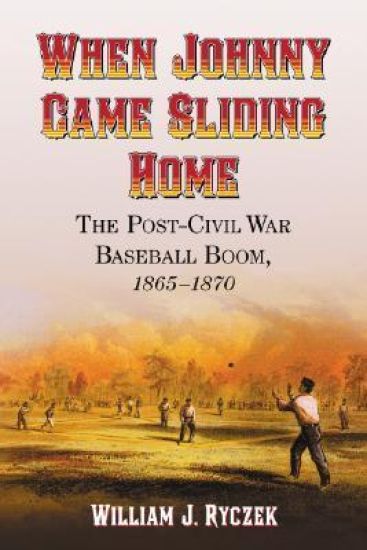
As the Civil War ended, the thoughts of many Northern soldiers turned to a game that some had learned about for the first time during the war--baseball. Their newfound interest in the sport, combined with the postwar economic boom and the resultant growth of many cities, took the game from one practiced by a few amateur clubs in New York City before the war to a professional sport covering almost the entire northeastern United States. Researched from primary sources, the game of the late 1860s is described season-by-season: the fields, the crowds, the strategy, the rules, the style of play, and the confusing struggles to crown a national champion, with all the chicanery and machinations of the contenders. Such landmark events as the Washington Nationals' pioneering 1867 tour and the Cincinnati Red Stockings' undefeated 1869 season are covered.
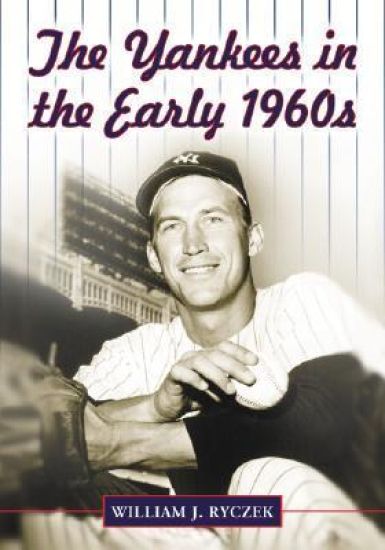
This is a history of the New York Yankees over a decade which saw them at the top of the American League and at the bottom. Based upon thorough background research and interviews with over 100 former players, the book covers the major stories of the period as well as some not seen elsewhere. The seventh games of the 1960 and 1962 World Series are described in detail, replete with the remembrances of many of the participants. The infamous Phil Linz harmonica incident, the fruitless search for another Mickey Mantle and the surprising emergence of Mel Stottlemyre are some of the stories that make the early '60s such a fascinating era in Yankee lore.
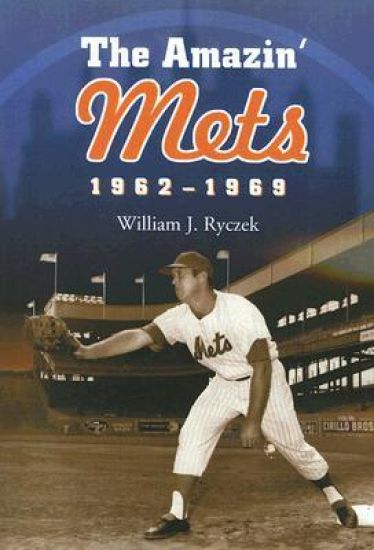
This book traces the history of the New York Mets from the franchise's inauspicious beginnings--the 1962 team, led by Casey Stengel and made up of players like Rod Kanehl and Jay Hook, lost 120 games--through the miraculous championship season of 1969. Based on interviews with more than one hundred former players and extensive research by one of the more highly regarded baseball historians writing today, the book covers the era in unprecedented detail. Any Met fan from the 1960s will find some familiar stories along with some they've probably never read before. Presented in an easy-to-read, narrative style, this book traces the rapid ascent of the Mets and explores the reasons for their early failure and dramatic success.

Before Namath, before the Heidi Game, before the guaranteed Super Bowl victory, there were the New York Titans. Remember the Titans? They played to meager crowds and mediocre results in the decrepit Polo Grounds. The organization, a charter member of the American Football League in 1960, was in constant danger of bankruptcy. After struggling for three seasons, the Titans would finally be assumed by the league. New owners were found, the franchise was renamed the Jets and a new stadium would welcome the team in 1964. The revised edition of this award-winning book covers the turbulent history and eventual crash landing of the team that would become the New York Jets. The early days of the upstart AFL are also explored, as are the league's constant feuds with the Titans' underfunded and overbearing owner, Harry Wismer. Four appendices with team results, rosters and statistics are included.
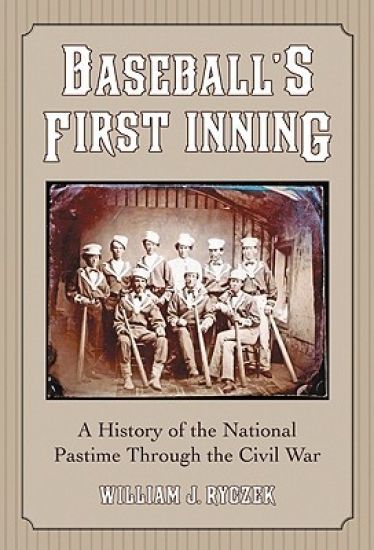
This history of America's pastime describes the evolution of baseball from early bat and ball games to its growth and acceptance in different regions of the country. Such New York clubs as the Atlantics, Excelsiors and Mutuals are a primary focus, serving as examples of how the sport became more sophisticated and popular. The author compares theories about many of baseball's "inventors," exploring the often fascinating stories of several of baseball's oldest founding myths. The impact of the Civil War on the sport is discussed and baseball's unsteady path to becoming America's national game is analyzed at length.
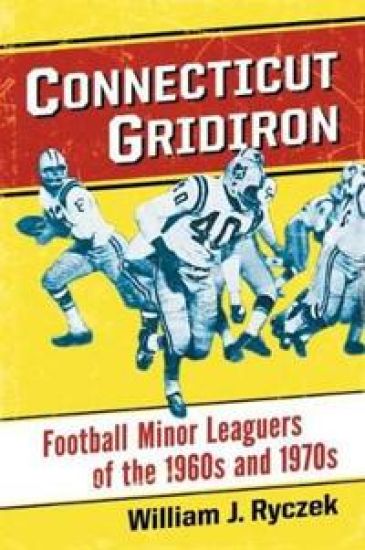
This narrative history of minor league football teams in Connecticut in the 1960s and 1970s is based on extensive newspaper and periodical research and interviews with nearly 70 former players, broadcasters and journalists. Only a few players--like Marv Hubbard, Lou Piccone and Bob Tucker--made it to the NFL, but many more played for as little as $25 per game in their quest to make it big or just have fun. Wealthy men like Pete Savin and Frank D'Addario owned teams in Hartford and Bridgeport. In the days before cable television saturated the media with live sports, small town fans turned out to support their local heroes, often men who worked on construction crews during the week and stopped by the diner Sunday morning to talk football. Now in their 60s, 70s and 80s, these men share their stories of a simpler era; the good times, like the Hartford Knights' 1968 ACFL championship season, and the long bus rides and missed paydays that were as much a part of minor league ball as first downs and interceptions.

It was a novel experiment as baseball's leading men formed the National Association, bringing order to the hodgepodge of professional and amateur clubs that made up the sport from the end of the Civil War through 1870. It was an imperfect beginning to organized professional sports in America--the league was plagued by gambling, contract jumping and rumors of dishonest play--but it laid the groundwork for the multi-billion-dollar enterprises of the 21st century. Like most sporting endeavors, it was entertaining, with the best players in the world displaying their talents throughout the northeastern and mid-western United States and, in 1874, during a ground-breaking journey to England. The present volume covers all the action--both on and off the field--of the NA's five years, providing the definitive history of the first professional sports league in the U.S.
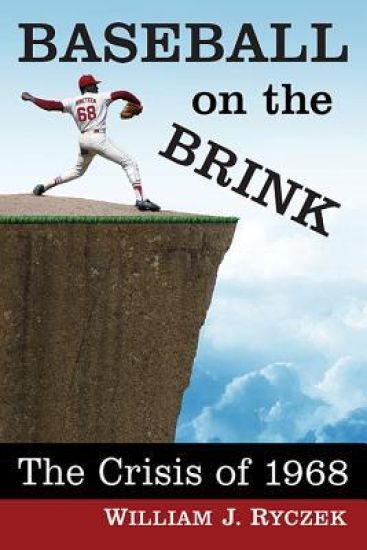
Major League Baseball was in crisis in 1968. The commissioner was inept, professional football was challenging the sport's popularity and the game on the field was boring, with pitchers dominating hitters in a succession of dull, low-scoring games. The major league expanded for the 1969 season but the muddled process by which new franchises were selected highlighted the ineffective management of the sport. This book describes how baseball reached its nadir in the late 1960s and how it survived and began its slow comeback. The lack of offense in the game is examined, taking in the great pitching performances of Denny McLain, Bob Gibson, Don Drysdale and others. Colorful characters like Charley Finley and Ken Harrelson are covered, along with the effects that dramatic changes in American society and the war in Vietnam had on the game.

The 1960s were one of the most tumultuous periods in American history. Perceptions of race, gender and age changed dramatically, ripping away beliefs that had endured for generations. Newspapers, the primary source of information at the time, broadcasted all of these events, from important national news--such as President Nixon's efforts to end the Vietnam war--to more light-hearted affairs--such as a topless dancer's pursuit of the Stanford University student government presidency. Included in this book are examinations of newspaper articles from 1959 to 1973, to which the author provides background and often an epilogue showing what happened to some of the dramatic players. The subjects of sex, drugs, rock and roll, marriage, politics, entertainment, and more are discussed in both a serious and humorous vein, with the perspective of more than 50 years. For those who lived through the 1960s, this book will bring back memories. For those too young to remember the era, this is an opportunity to learn more about why parents are the way they are.

Dick Stuart (1932-2002) began as a minor league first baseman, noted for his outsized ego and terrible fielding. His brash personality and 66 home runs for the Lincoln Chiefs of the Western League made him a national figure in 1956. In 1958, he came up to the majors in Pittsburgh and played some fine seasons with the Pirates, and later the Boston Red Sox. In 1961, he was selected for the National League All-Star team, and he led the American League in RBI in 1963. A wise-cracking bon vivant, his career was not what it might have been. If he had worked harder, he might have been a better player. If Bill Mazeroski hadn't ended the 1960 Series with a home run, Stuart, who was on deck, might have been the hero. Yet his great hitting ability, quick wit and love for the limelight made him one of the most interesting players of his era.
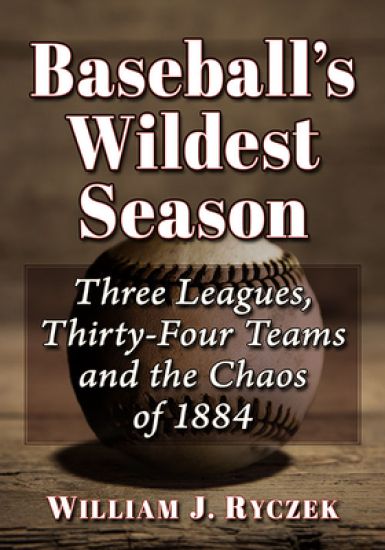
At the end of the 1883 baseball season, things looked rosy--attendance had skyrocketed and the National League and American Association were at peace. A year later, however, the sport was in total disarray. A third major league, the Union Association, had come on the scene and waged a bitter war that rocked the baseball world. By the dawn of the 1885 season, the UA had dissolved in a sea of red ink, the AA had dropped four teams, and the minor leagues were desperately hoping to make it through the season. Amid the chaos of 1884 were some historic moments. Iron-man pitcher Hoss Radbourn won 59 games and led the Providence Grays to victory over the New York Metropolitans in the first World Series. Fleet Walker broke baseball's first color line. There were a record eight no-hitters and a cast of fascinating figures--some famous, some lost to history--like Radbourn, Hustling Horace Phillips, Dan O'Leary, and Edward (The Only) Nolan. This book tells the story of the momentous yet overshadowed 1884 season.

J.-J. Rousseau aux Francais. Par J. Martin.]Date de l'edition originale: 1802Ce livre est la reproduction fidele d'une oeuvre publiee avant 1920 et fait partie d'une collection de livres reimprimes a la demande editee par Hachette Livre, dans le cadre d'un partenariat avec la Bibliotheque nationale de France, offrant l'opportunite d'acceder a des ouvrages anciens et souvent rares issus des fonds patrimoniaux de la BnF.Les oeuvres faisant partie de cette collection ont ete numerisees par la BnF et sont presentes sur Gallica, sa bibliotheque numerique.En entreprenant de redonner vie a ces ouvrages au travers d'une collection de livres reimprimes a la demande, nous leur donnons la possibilite de rencontrer un public elargi et participons a la transmission de connaissances et de savoirs parfois difficilement accessibles.Nous avons cherche a concilier la reproduction fidele d'un livre ancien a partir de sa version numerisee avec le souci d'un confort de lecture optimal. Nous esperons que les ouvrages de cette nouvelle collection vous apporteront entiere satisfaction.Pour plus d'informations, rendez-vous sur www.hachettebnf.fr



J.J.P. Oud was a famed modern architect; his European contemporaries are Le Corbusier, Walter Gropius, and Ludwig Mies van der Rohe. In Leiden in 1917, Oud, with the Dutch artist Theo van Doesburg and the expatriate Hungarian Vilmos Huszár, and fellow Hollanders Jan Wils and Bart van der Leck formed a collaboration between artists and architects a movement they called De Stijl. The loose knit group slowly disintegrated, but in terms of architectural style the movement sought a unity between art and society that flirted with Constructivism, developed theories of Neoplasticism, and what Oud called Cubism. Although these intellectualized theories seldom resulted in architectural realities, the realized projects were spectacular and they include Oud's director's hut at the Oud-Mathenesse housing development, 1923, and the facade of the Café De Unie, Rotterdam, 1925. This annotated bibliography documents not only the literature on Oud but also Oud's own writings. A biographical essay, this book examines the place afforded Oud in the international literature of architecture and traces his career which spanned fifty-seven years. Architectural students and scholars will benefit from this guide to the major archives, minor collections, and listing of Oud's projects and the books in his own professional library. Bibliographic entries are alphabetically arranged, by books and monographs and by journals, within chronological divisions. Entries are cross-referenced to a works list and index.

J.J. Thompson And The Discovery Of The Electron
E. A. Davis; Isabel Falconer
Taylor Francis Ltd
1997
sidottu
This historical survey of the discovery of the electron has been published to coincide with the centenary of the discovery. The text maps the life and achievements of J.J. Thomson, with particular focus on his ideas and experiments leading to the discovery. It describes Thomson's early years and education. It then considers his career at Cambridge, first as a fellow of Trinity, later as the head of the Cavendish Laboratory and finally as Master of Trinity and national spokesman for science. The core of the book is concerned with the work undertaken at the Cavendish, culminating in the discovery of "corpuscles", later named "electrons".; In the final two chapters, the immediate aftermath and implications of the work are described. These include the creation of the subject of atomic physics as well as the broader long term developments which can be traced from vacuum valves and the transistor through to the microelectronics revolution.