

Kirjahaku
Etsi kirjoja tekijän nimen, kirjan nimen tai ISBN:n perusteella.
1000 tulosta hakusanalla Jack J. Koenig

Sketch of the Life of Jack J. Spalding: His Family and His Spalding, Huston, and Johnson Ancestors.
Jack Johnson 1856-1938 Spalding
Hassell Street Press
2021
nidottu

Strategic Air Warfare: An Interview with Generals Curtis E. LeMay, Leon W. Johnson, David A. Burchinal, and Jack J. Catton
Joseph P. Harahan; Richard H. Kohn
Createspace Independent Publishing Platform
2012
nidottu


The Transformative Self explores three of life's perennial questions: How do we make sense of our lives? What is a good life? How do we create one? In this comprehensive volume, developmental psychologist Jack J. Bauer responds to those three questions by integrating three main areas of study-narrative identity, the good life, and personal growth-to present an innovative model of humane flourishing and human development. The Transformative Self synthesizes an extensive range of scholarship, from scientific research in psychology to work in philosophy, literature, history, cultural studies, and more. The result is a cohesive framework for understanding how personal and cultural stories shape our development and how, through those stories, we might cultivate the growth of happiness, love, and wisdom for the self and others.
Despite global economic disparities, recent years have seen rapid technological changes in developing countries, as it is now common to see people across all levels of society with smartphones in their hands and computers in their homes. However, does access to Information Communication Technologies (ICTs) actually improve the day-to-day lives of low-income citizens? This book argues that access to the internet can help alleviate poverty, improve development outcomes, and is now vital for realizing many human rights. This book posits that good governance is essential to the realization of inclusive pro-poor development goals, and puts forward policy recommendations that aim to mitigate the complex digital divide by employing governance as the primary actor. In making his argument, the author provides a quantitative analysis of developing countries, conjoined with a targeted in-depth study of Mexico. This mixed method approach provides an intriguing case for how improvements in the quality of governance impacts both ICT penetration, and poverty alleviation. Overall, the book challenges the neoliberal deterministic perspective that the open market will "solve" technology diffusion, and argues instead that good governance is the lynchpin that creates conducive conditions for ICTs to make an impact on poverty alleviation. In fact, the digital divide should not be considered binary, rather it is a multifaceted problem where income, education, and language all need to be considered to address it effectively. This book will be useful for researchers/students of development, communication technologies, and comparative politics as well as for development practitioners and policy makers with an interest in how modern technology is impacting the poor in the developing world.

The new institutional economics offers one of the most exciting research agendas in economics today. Yet can it really explain processes of economic change? Economic Evolution explores three of the main approaches within the new institutional economics:* the new theory of the firm,* Nelson and Winter's evolutionary economics * game theoretic accounts of spontaneous evolution.Close analysis reveals that the approaches differ on such fundamental issues as the meaning of terms like `institution' and `evolution'. However, the book also uncovers two evolutionary mechanisms that govern processes of economic change in all of these approaches.

The new institutional economics offers one of the most exciting research agendas in economics today. Yet can it really explain processes of economic change? Economic Evolution explores three of the main approaches within the new institutional economics:* the new theory of the firm,* Nelson and Winter's evolutionary economics * game theoretic accounts of spontaneous evolution.Close analysis reveals that the approaches differ on such fundamental issues as the meaning of terms like `institution' and `evolution'. However, the book also uncovers two evolutionary mechanisms that govern processes of economic change in all of these approaches.
The tools, guidelines, and procedures that IS auditors need Auditing Information Systems, Second Edition, explains clearly how to audit the controls and security over all types of information systems environments. The concepts and techniques in the book enable auditors, information security professionals, managers, and audit committee members of every knowledge and skill level to truly understand whether or not their computing systems are safe. The book provides a detailed examination of contemporary auditing issues such as: *Information systems audit approach (physical, logical, environmental security) *Security certifications such as SAS 70, TruSecure, SysTrust, and WebTrust *Computer forensics *E-Commerce and Internet security (including encryption and cryptography) *Information privacy laws and regulations *Information systems project management controls *New technologies and future risks Auditing Information Systems, Second Edition gives auditing professionals the tools they need to get their job done right. It is a must-have reference for any auditors library.

An Introduction to Human Molecular Genetics Second Edition Jack J. Pasternak The Second Edition of this internationally acclaimed text expands its coverage of the molecular genetics of inherited human diseases with the latest research findings and discoveries. Using a unique, systems-based approach, the text offers readers a thorough explanation of the gene discovery process and how defective genes are linked to inherited disease states in major organ and tissue systems. All the latest developments in functional genomics, proteomics, and microarray technology have been thoroughly incorporated into the text. The first part of the text introduces readers to the fundamentals of cytogenetics and Mendelian genetics. Next, techniques and strategies for gene manipulation, mapping, and isolation are examined. Readers will particularly appreciate the text's exceptionally thorough and clear explanation of genetic mapping. The final part features unique coverage of the molecular genetics of distinct biological systems, covering muscle, neurological, eye, cancer, and mitochondrial disorders. Throughout the text, helpful figures and diagrams illustrate and clarify complex material. Readers familiar with the first edition will recognize the text's same lucid and engaging style, and will find a wealth of new and expanded material that brings them fully up to date with a current understanding of the field, including: * New chapters on complex genetic disorders, genomic imprinting, and human population genetics * Expanded and fully revised section on clinical genetics, covering diagnostic testing, molecular screening, and various treatments This text is targeted at upper-level undergraduate students, graduate students, and medical students. It is also an excellent reference for researchers and physicians who need a clinically relevant reference for the molecular genetics of inherited human diseases.
Energy and Problems of a Technical Society
Jack J. Kraushaar; Robert A. Ristinen
John Wiley Sons Inc
1993
nidottu
This text stresses a quantitative approach with enough real physics and other sciences used to put the topics on a sound basis for students who have had little mathematical or scientific background. It continues to cover the physics of energy and the environment. The goal of the text is to bring an understanding of the technological problems facing our society to the attention of students. This text carefully discusses the impact of our actions on the lifetimes of resources, offering motivation for the reader to become interested in the material.

Surrealist Art and Writing offers a fresh analysis of Surrealism, the avant-garde movement that, in its search for contemporary lyricism and imagery, united literature and art to politics and psychology. Examining Surrealism’s main phases from a variety of perspectives, Jack Spector emphasises the rebellion of the protagonists against their middle-class education. In Manifestos and Manifestations the Surrealists promoted Marxist over liberal politics; Freudian psychoanalysis over French psychiatry; Hegelian dialectics over Cartesian logic; and the outmoded, psychotic, or childish over modernist art. This study offers a coherent overview of the exciting and important interwar period in Europe. In particular it places avant-garde ideas and imagery within the historical and political contexts of the 1920s and 30s, integrating them into contemporary artistic and ideological currents.

Based on the best-selling Clinical Ophthalmology: A Systematic Approach, 7th Edition, by Jack J Kanski and Brad Bowling, this synopsis distills the essential information needed to quickly and accurately diagnose and manage a comprehensive range of ophthalmic disorders. Ideally used as an on-the-go reference for the busy clinician and a review guide for those preparing for examinations. Get guidance you can trust from a portable, practical handbook that distills all the key information from Clinical Ophthalmology: A Systematic Approach - Drs. Kanski and Bowling's best-selling comprehensive eye reference. Updated throughout with the latest guidance in medical and surgical therapies. Includes over 800 colour illustrations, many of which are new. Access the complete contents and downloadable image bank online at www.expertconsult.com.
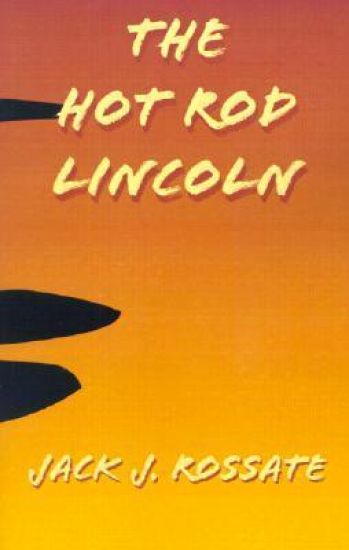
Timothy Flynn Farrell is a cocky Marine War hero from the Gulf War. The only reason he came back to North Conway, New Hampshire was to see his mother. The town hadn’t treated him fairly since he was a child but his mother loved the area. As a good son, he would come back for her sake. But life offers it’s own plan for him. Nothing happens the way he expected, but he also learns that perhaps nothing happened the way history had called it. The real story covers the way his character had prepared him for the challanges that lie in wait. As you follow him keep in mind that the more things change the more they stay the same.Author Biography: Jack Rossate is a relative newcomer to the publishing arena. Still involved in a career in manufacturing, Jack’s first novel, "DECEIT" has created an interest in his future works. This second work, "The Hot Rod Lincoln" is a novel that he spent nearly 10 years working on. Jack has endured the snide comments of his friends as they met, summer after summer, awaiting this book to read on the beach. His greatest regret in striving for accuracy with this book is that a few of the old timers in the North Conway area didn’t last long enough to see themselves and their strong character captured for posterity. As Jack researched the records of Carroll County, he was amazed at what these men accomplished. You will be too. Watch for the follow-up in "Search to Witness" and "Justice in Carroll County."

This work is the third in a series of stories about Timothy Flynn Farrell, Flynn for short. He's a young man with a problem. See grew up in the 1970's but has wound up in 1941. He's seen a crime, he stopped it and then he was accused of it. He's cleared his name but he has to see the real killer convicted. Now he has to call on his new friends to help him. This is a cast of characters that is up to the job, but with a twist. Author Biography: Jack Rossate has now completed and published 4 novels. He's a manufacturer by profession and a writer at heart. After so many people commented on his letter writing, Jack decided to put that fun part of his work into something more people might enjoy. It seems to be working. Deceit, Hot Rod Lincoln, Search to Witness and now Justice in Carroll County all bring the reader into the beautiful Mt. Washington Valley area and see the good people and the evil that they need to battle.

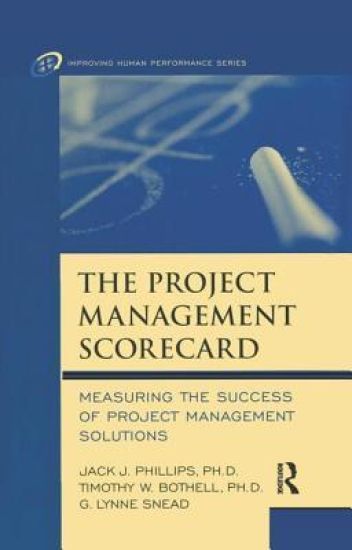
The Project Management Scorecard
Jack J. Phillips; Timothy W. Bothell; G. Lynne Snead
Butterworth-Heinemann Ltd
2002
sidottu
Return on Investment (ROI) remains one of the most challenging and intriguing issues facing human resource development and performance improvement professionals. Drawing on their expertise in developing and implementing ROI programs in human performance and training, Jack J. Phillips, Ph.D., Timothy W. Bothell and G. Lynn Snead demonstrate how you can effectively apply ROI to project management. Today, almost every industry requires employees to manage multiple projects with competing priorities, critical deadlines, and unexpected interruptions—rendering everyone a project manager in some respect. Most employees feel the pressure of juggling any number of key projects simultaneously. Organizations have responded by investing large amounts of both time and money to improve project management, and most strive to justify the efforts and resources dedicated to improving this goal. 'The Project Management Scorecard' is a welcome relief for anyone managing a project or multiple projects, as well as the trainers, human resource development staff, or supervisors charged with measuring, evaluating, and managing project managers. Project Management is one of the hottest topics in business management today, affecting nearly every individual in any organization across the globe. Let three HRD experts show you how to apply the hugely popular ROI process to the key organizational issue of successful project management including: * Project management issues and challenges * Measuring reaction and satisfaction * How to calculate and interpret ROI * Capturing business impact data * Measuring skill and knowledge changes during the project * Monitoring the true costs of the project solution * Converting business measure to monetary values * Forecasting ROI The authors' step-by-step approach allows you to begin the ROI process immediately. Start measuring the success of your project management results today.

Managing Employee Retention
Jack J. Phillips; Adele O. Connell
Butterworth-Heinemann Ltd
2003
sidottu
During the past decade, employee turnover has become a very serious problem for organizations. Managing retention and keeping the turnover rate below target and industry norms is one of the most challenging issues facing business. All indications point toward the issue compounding in the future and, even as economic times change, turnover will continue to be an important issue for most job groups. Yet despite these facts employee turnover continues to be the most unappreciated and undervalued issue facing business leaders. There are a variety of reasons for this, for example, the true cost of employee turnover is often underestimated. The causes of turnover are not adequately identified, and solutions are often not matched with the causes, so they fail. Preventive measures are either not in place or do not target the issues properly, and therefore have little or no effect, and a method for measuring progress and identifying a monetary value (ROI) on retention does not exist in most organizations. 'Managing Employee Retention' is a practical guide for managers to retain their talented employees. It shows how to manage and monitor turnover and how to develop the ROI of keeping your talent using innovative retention programs. The book presents a logical process of managing retention, from identifying turnover costs and causes, designing solutions that match the causes of turnover, developing tools for tracking turnover and placing alerts when action is needed, and measuring the ROI of retention programs.

Strong leaders are essential to business success, which makes leadership development a business imperative in today’s competitive environment. Leaders are needed that can do more than manage - leaders are needed that can make a business great. In addition, there is increasing pressure on organizations to demonstrate the wise investment of development dollars. This requires the effective use of leadership development methods, as well as the ability to demonstrate the success of those methods. The Leadership Scorecard combines an explanation and discussion on best practice leadership development methods and incorporates ROI measurement & evaluation methodology.