Kirjahaku
Etsi kirjoja tekijän nimen, kirjan nimen tai ISBN:n perusteella.
1000 tulosta hakusanalla Jack Lyon


For more than twenty years, Editor's ToolKit Plus has been the premier editing add-in for Microsoft Word, easing the workload of editors all over the world. With the release of the 2023 version of the program, the documentation for the program is at long last available as a printed book, with wide pages that make it easy to leave the book open on your desk for ready reference, and expansive margins with plenty of room for notes.The book includes detailed instructions for all of the program's features, including such new ones as: Projects. Save (and then later reopen) all the documents related to a specific project.Switcheroo. Instantly switch between words or phrases, such as last and past, or loose and lose.Lookups. Automatically look up the currently selected text in online dictionaries, encyclopedias, and other reference works.Document Converter. Export documents in a different format (such as ePub or Markdown).Of course, a searchable, hyperlinked PDF of this book is included with the program itself, but for ease of use, it's tough to beat paper pages. This printed edition of Editor's ToolKit Plus 2023 User Manual gives them to you.

Perception is our main source of epistemic access to the outside world. Perception and Basic Beliefs addresses two central questions in epistemology: which beliefs are epistemologically basic (i.e., noninferentially justified) and where does perception end and inferential cognition begin. Jack Lyons offers a highly externalist theory, arguing that what makes a belief a basic belief or a perceptual belief is determined by the nature of the cognitive system, or module, that produced the beliefs. On this view, the sensory experiences that typically accompany perceptual beliefs play no indispensable role in the justification of these beliefs, and one can have perceptual beliefs-justified perceptual beliefs-even in the absence of any sensory experiences whatsoever. Lyons develops a general theory of basic beliefs and argues that perceptual beliefs are a species of basic beliefs. This results from the fact that perceptual modules are a special type of basic belief-producing modules. Importantly, some beliefs are not the outputs of this class of cognitive module; these beliefs are therefore non-basic, thus requiring inferential support from other beliefs for their justification. This last point is used to defend a reliabilist epistemology against an important class of traditional objections (where the agent uses a reliable process that she doesn't know to be reliable). Perception and Basic Beliefs brings together an important treatment of these major epistemological topics and provides a positive solution to the traditional problem of the external world.
Perception is our main source of epistemic access to the outside world. Perception and Basic Beliefs addresses two central questions in epistemology: which beliefs are epistemologically basic (i.e., noninferentially justified) and where does perception end and inferential cognition begin. Jack Lyons offers a highly externalist theory, arguing that what makes a belief a basic belief or a perceptual belief is determined by the nature of the cognitive system, or module, that produced the beliefs. On this view, the sensory experiences that typically accompany perceptual beliefs play no indispensable role in the justification of these beliefs, and one can have perceptual beliefs--justified perceptual beliefs--even in the absence of any sensory experiences whatsoever. Lyons develops a general theory of basic beliefs and argues that perceptual beliefs are a species of basic beliefs. This results from the fact that perceptual modules are a special type of basic belief-producing modules. Importantly, some beliefs are not the outputs of this class of cognitive module; these beliefs are therefore non-basic, thus requiring inferential support from other beliefs for their justification. This last point is used to defend a reliabilist epistemology against an important class of traditional objections (where the agent uses a reliable process that she doesn't know to be reliable). Perception and Basic Beliefs brings together an important treatment of these major epistemological topics and provides a positive solution to the traditional problem of the external world. "This book deserves kudos. It presents one of the more novel versions of reliabilism to appear in recent years. The style is fast-paced and energetic, with no sacrifice in philosophical precision. It applies original interpretations of perceptual science to central issues in traditional epistemology, and should thereby earn itself a prominent place in the naturalistic epistemology literature. Finally, the book is more comprehensive than its title suggests. It illuminates a great many issues of traditional epistemology beyond perception, providing an up-to-date and thoroughgoing basic epistemology." - Alvin Goldman, Philosophical Studies "Perception and Basic Beliefs is a fine book. The overall dialectic is always kept clearly in view for the reader. The arguments are vigorously presented, are always provocative, and are often quite persuasive. The book is very well informed, both about the contours of recent epistemology and about pertinent work in cognitive science. The writing is elegant, crisp, and uncluttered. Lyons' way of parsing the landscape of epistemological positions concerning justified belief is very illuminating, especially because of his emphasis on the distinction between evidential and non-evidential forms of justification. The book was a pleasure to read, and I recommend it very strongly to any philosopher or philosophy graduate student interested in epistemology." - Terry Horgan, Philosophical Studies "This is a bold and original book. The book is intrepid, striking, and forceful. It contains a great deal of very fine work. It is powerfully conceived, well crafted, and engagingly written. It is obviously the product of many years of careful reflection devoted to these topics, and the quality of argument is very high. In every way the book fits the gold standard of quality set by Oxford University Press." - Frederick Schmitt, Professor of Philosophy, Indiana University
This book aims to improve real-world critical thinking.Traditional critical thinking texts neglect two crucial facts. First, as psychologists have shown, many of our mistakes are caused not by faulty formal reasoning but because we bypass it in favor of intuitive, often unreliable heuristics. Second, good critical thinking requires not only the proper assessment of inference but also of our premises: the evaluation of information sources is of fundamental importance, especially in this internet era of fake news and politicized science.This highly innovative text is psychologically informed, both in its diagnosis of inferential errors and in teaching students how to watch out for, and circumnavigate, their natural intellectual blind spots. It also incorporates insights from epistemology and philosophy of science to formulate best practices for assessing information sources on the internet and other media. The result is a practical, hands-on primer for real-world critical thinking.The authors bring more than five combined decades of classroom experience to the subject, covering the usual core topics of deductive, inductive, causal, and probabilistic inference, argument identification, reconstruction, and diagramming, while also extending the text’s scope to include testimony, the nature and credibility of science, rhetoric, and dialectical argumentation.The Second Edition further develops and refines these innovations, combining in-depth discussion of “fake news” and conspiracy theories with exercises and projects designed to teach broadly applicable source assessment skills. There is also a more nuanced positive account of science that emphasizes its continuity with commonsense causal reasoning. For instructors, there are additional online resources, notably banks of exam questions with solutions and various class projects.Key Features:Uses contemporary psychological explanations and remedies for pervasive errors in belief formation. No other critical thinking text generally applies this psychological approachRigorously addresses the evaluation of premises based on testimony, in particular the testimony of internet sourcesCarefully explains the concept of validity, paying particular attention to distinguishing logical possibility from other species of possibilityUses frequency trees as a simple and reliable alternative to more complicated Bayesian methodsUses arguments maps, which improve students’ reasoning and argument evaluationKey Updates to the Second Edition:Expanded discussion of the psychology of reasoning and belief, including treatment of motivated reasoningUses a conventional truth-table–based approach to propositional logic while incorporating a more intuitive, psychologically informed approach to the logic of conditionalsNew Summary BoxesEnhanced treatment of testimony, with an expanded discussion of fake news, conspiracy theories, and the application of general epistemic principles to navigate the extremes of gullibility and unmotivated skepticism.New exercises that emphasize practical, hands-on source assessment skillsAn improved discussion of the nature of science emphasizing the central role of causal inference and the multi-generational, cumulative character of scientific knowledgeA new Index of Arguments, summarizing the most common argument forms and associated defeaters for the inductive formsNew online content, including exams and additional questions (plus solutions), suitable for upload to course management software (e.g., Blackboard, etc.)For online resources for students and instructors, use the Instructor & Student Resources and Support Material links below.

This book aims to improve real-world critical thinking.Traditional critical thinking texts neglect two crucial facts. First, as psychologists have shown, many of our mistakes are caused not by faulty formal reasoning but because we bypass it in favor of intuitive, often unreliable heuristics. Second, good critical thinking requires not only the proper assessment of inference but also of our premises: the evaluation of information sources is of fundamental importance, especially in this internet era of fake news and politicized science.This highly innovative text is psychologically informed, both in its diagnosis of inferential errors and in teaching students how to watch out for, and circumnavigate, their natural intellectual blind spots. It also incorporates insights from epistemology and philosophy of science to formulate best practices for assessing information sources on the internet and other media. The result is a practical, hands-on primer for real-world critical thinking.The authors bring more than five combined decades of classroom experience to the subject, covering the usual core topics of deductive, inductive, causal, and probabilistic inference, argument identification, reconstruction, and diagramming, while also extending the text’s scope to include testimony, the nature and credibility of science, rhetoric, and dialectical argumentation.The Second Edition further develops and refines these innovations, combining in-depth discussion of “fake news” and conspiracy theories with exercises and projects designed to teach broadly applicable source assessment skills. There is also a more nuanced positive account of science that emphasizes its continuity with commonsense causal reasoning. For instructors, there are additional online resources, notably banks of exam questions with solutions and various class projects.Key Features:Uses contemporary psychological explanations and remedies for pervasive errors in belief formation. No other critical thinking text generally applies this psychological approachRigorously addresses the evaluation of premises based on testimony, in particular the testimony of internet sourcesCarefully explains the concept of validity, paying particular attention to distinguishing logical possibility from other species of possibilityUses frequency trees as a simple and reliable alternative to more complicated Bayesian methodsUses arguments maps, which improve students’ reasoning and argument evaluationKey Updates to the Second Edition:Expanded discussion of the psychology of reasoning and belief, including treatment of motivated reasoningUses a conventional truth-table–based approach to propositional logic while incorporating a more intuitive, psychologically informed approach to the logic of conditionalsNew Summary BoxesEnhanced treatment of testimony, with an expanded discussion of fake news, conspiracy theories, and the application of general epistemic principles to navigate the extremes of gullibility and unmotivated skepticism.New exercises that emphasize practical, hands-on source assessment skillsAn improved discussion of the nature of science emphasizing the central role of causal inference and the multi-generational, cumulative character of scientific knowledgeA new Index of Arguments, summarizing the most common argument forms and associated defeaters for the inductive formsNew online content, including exams and additional questions (plus solutions), suitable for upload to course management software (e.g., Blackboard, etc.)For online resources for students and instructors, use the Instructor & Student Resources and Support Material links below.

You have to be tough to live in Montana: Autobiography: birth to retirement
L. Jack Lyon
Createspace Independent Publishing Platform
2013
nidottu

You have to be tough to live in Montana: Retirement and Beyond
L. Jack Lyon
Createspace Independent Publishing Platform
2016
nidottu
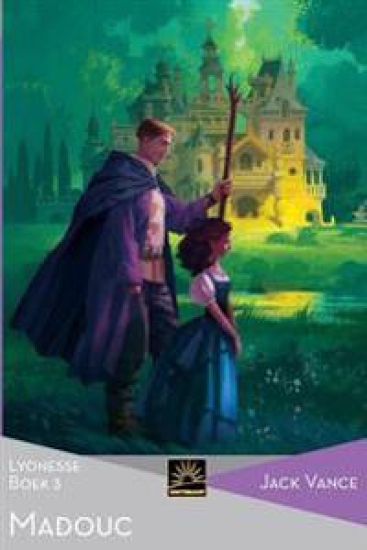
Na het verdrijven van de Ska houdt Koning Aillas met zijn Ulfse troepen de onneembare vesting Po litetz bezet, tot groot ongenoegen van Koning Audry van Dahaut, op wie de Ska het fort hadden veroverd. Koning Casmir van Lyonesse is er al evenmin gelukkig mee, want nu kan hij Dahaut niet langer via de Vlakte der Schaduwen binnenvallen; de Oude Eilanden balanceren op het randje van een grote oorlog... Hoog in de Teach tac Teach tracht oppermagi r Murgen vanuit zijn kasteel Swer Smod een mysterieuze dreiging af te wenden, terwijl vanuit een glazen bol de verslagen Tamurello hem in de vorm van een wezelskelet met boosaardige zwarte oogjes gadeslaat. Prinses Madouc van Lyonesse komt erachter dat ze een wisselkind is en besluit om, bijgestaan door Ridder Pom-pom, de wijde wereld in te trekken op zoek naar haar stamboom en de Graal. Het wordt een tocht vol gevaren en magie terwijl in de diepte Joald zich roert... Voor Madouc, het sluitstuk van de vermaarde Lyonesse trilogie, ontving Jack Vance een World Fantasy Award.Madouc is deel 54 van Het Verzameld Werk van Jack Vance, uitgegeven door Spatterlight. Omslagillustratie: Luc Desmarchelier. Deze vertaling van Annemarie van Ewyck verscheen eerder bij Meulenhoff, Amsterdam 1990. De tekst van de Spatterlight editie is op diverse punten gecorrigeerd en aangepast aan de hedendaagse spelling. Bevat 6 pagina's nieuwe kaarten.
The Elder Isles - an ancient land where chivalry and the realm of fairie exist side by side. A land of mystery, strange beauty, high adventure and arcane magic. Kings are at war, opposing magicians devise ever more cunning stratagems. It is a land where princesses and changelings both can become embroiled in political rivalries and the quest for the grail.The Gollancz Black Books have proved to be an immensely successful formula for getting well loved stories into the hands of people who also love well made books. Jack Vance's Complete Lyonesse is a perfect addition to the series and contains Madouc the novel for which Vance won the World Fantasy Award.

Una saga splendida e grandiosa, colorita e avvincente, un magnifico capolavoro fantastico dell'autore del ciclo di Tschai e della serie dei Principi Demoni.Dopo la fine dell'Impero Romano e prima delle vicende di Re Art e della Tavola Rotonda, in un'epoca al confine tra la storia e la leggenda, a sud delle Isole Britanniche si trovavano le Isole Elder. Prima di essere sommerse per sempre dalle tumultuose acque dell'Oceano Atlantico queste terre erano la dimora di folletti e di principesse, di re bizzosi e valorosi cavalieri, di vecchie streghe e di malvagi furfanti, ricche di palazzi dall'architettura fine e delicata e di magnifici giardini, scenari di intrighi misteriosi e di terribili incantesimi.In queste isole, nel regno di Lyonesse, viveva la principessa Suldrun, figlia del re Casmir e della regina Sollace d'Aquitania. Una principessa bellissima ma triste e solitaria in un mondo crudele e violento. Quando un giorno Suldrun scopr il corpo di un giovane rigettato sulla spiaggia dalle possenti correnti dell'Atlantico non solo il suo destino, ma quello di tutte le Isole Elder sarebbe cambiato per sempre.Il primo libro dell'affascinante trilogia fantasy dal grande autore di "La terra morente", che racconta la storia della principessa triste Suldrun, del valoroso principe Aillas e del misterioso regno di Lyonesse.Il giardino di Suldrun: trilogia di Lyonesse, volume 1Traduzione rivista: Annarita GuarnieriCopertina: Luc Desmarchelier
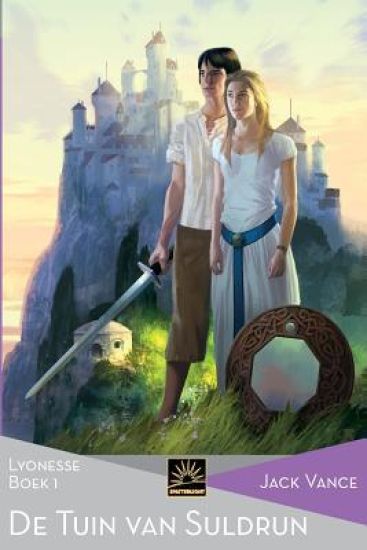
In een tijd voor Koning Arthur wordt er in de koninklijke familie van Lyonesse, een van de bakkeleiende koninkrijken die samen de mythische archipel der Oude Eilanden uitmaken, een prinses geboren. Suldrun groeit op tot een ietwat dromerig meisje aan wie noch de complexe hofintriges, noch de uithuwelijkingsplannen van haar ambitieuze vader, koning Casmir, besteed zijn. Wanneer Suldrun naar een vergeten deel van de paleistuin verbannen wordt, begint een weergaloos avontuur waarin Grootmeester Jack Vance ons op zijn unieke manier meeneemt van de kerkers van kasteel Haidion naar het betoverde Woud van Tantrevalles met zijn scharen halflingen, heksen, trollen en menseneters; van de wispelturige elfen van de Thripsey Schoei naar de landhuizen van wedijverende magi rs en het onneembare kasteel Tintzin Fyral. De Tuin van Suldrun is het eerste deel van de vermaarde Lyonesse trilogie, het Fantasy magnum opus van Jack Vance.De Tuin van Suldrun is deel 52 van Het Verzameld Werk van Jack Vance, uitgegeven door Spatterlight in het jaar van de honderdste geboortedag van de schrijver. Omslagillustratie: Luc Desmarchelier.
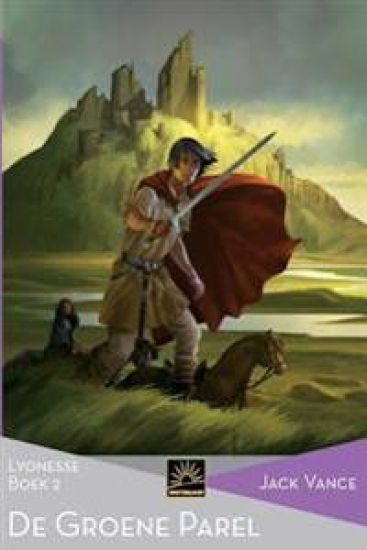
Na de val van Kasteel Tintzin Fyral wordt Faude Carfilhiot opgeknoopt en zijn lijk verbrand. Maar uit de brandstapel ontsnapt een smerige groene walm, de kwaadaardige essentie van de heks Desme . De wind voert de walm mee naar zee, waar deze zich met het zeeschuim vermengt en samenbalt tot een groene parel die wordt opgeslokt door een bot. Wanneer de bot wordt gevangen door een arme visser blijkt al gauw dat de parel ieder die hem aanraakt aantast met hebzucht en uiteindelijk zijn eigenaar in het verderf stort. Terwijl de parel van hand tot hand gaat, poogt koning Aillas in Noord-Ulfland de invasie van de Ska tot staan te brengen, en laaien de ambities van koning Casmir om koning van de Oude Eilanden te worden weer fel op. Aan Casmir's gemoedsrust knaagt de profetie van de magische spiegel Persilian dat niet hijzelf maar de eerstgeborene van de prinses Suldrun op de troon Evandig zal komen te zitten. Casmir zal dan ook alles in het werk stellen om Glyneth en prins Dhrun te vinden, en schuwt daarbij niet om de hulp in te roepen van onfrisse figuren als Visbhume, een tovenaarsdiscipel zonder scrupules. De Groene Parel is het tweede deel van de vermaarde Lyonesse trilogie, het Fantasy magnum opus van Jack Vance.De Groene Parel is deel 53 van Het Verzameld Werk van Jack Vance, uitgegeven door Spatterlight. Omslagillustratie: Luc Desmarchelier. Deze vertaling van Annemarie van Ewyck verscheen eerder bij Meulenhoff, Amsterdam 1985. De tekst van de Spatterlight editie is op diverse punten gecorrigeerd en aangepast aan de hedendaagse spelling. Bevat 6 pagina's nieuwe kaarten.

Book 1 of the "Jack Be Dead" seriesLondon-Today- "Jacks" are being killed across the city by a female serial killer with an almost supernatural ability to stay hidden. When Jack Tate, an emotionally bleak Detective Sergeant, is called in to investigate the brutal killings, he teams with Mae, an intellectual wannabe-detective, and Albert, Mae's packrat psychic father, to unravel the killer's taunting clues, until the devastating truths behind the killings force Jack into a dark revelation that is centuries old and bathed in blood. Karma is a bitch, and then you die-if you're lucky.