If you've got any knowledge or even just mere curiosity surrounding the topic of brain injury then this book is something that you can only find captivating.
This is a critical, personalized approach to reframing the discipline of psychology through a singular narrative in the form of a memoir written by a successful research psychologist. In this book we follow Martin’s unique career, which has allowed him to understand and adopt different perspectives and ways of approaching psychology, from working in applied areas like educational and counseling psychology to more specialized areas like theory and history of psychology. His journey through and within the field describes his movement away from scientifically based psychology, which views teachings and interventions to be primarily underwritten by hard scientific evidence. Martin exposes the flaws in this approach and highlights the importance of focusing on the study of persons in their life contexts over the use of aggregated group results to ensure that the discipline survives and flourishes.This is an impactful and universally applicable book with valuable insights for students and scholars of psychology today, particularly those studying history of psychology, theoretical psychology, and philosophical psychology.
This is a critical, personalized approach to reframing the discipline of psychology through a singular narrative in the form of a memoir written by a successful research psychologist. In this book we follow Martin’s unique career, which has allowed him to understand and adopt different perspectives and ways of approaching psychology, from working in applied areas like educational and counseling psychology to more specialized areas like theory and history of psychology. His journey through and within the field describes his movement away from scientifically based psychology, which views teachings and interventions to be primarily underwritten by hard scientific evidence. Martin exposes the flaws in this approach and highlights the importance of focusing on the study of persons in their life contexts over the use of aggregated group results to ensure that the discipline survives and flourishes.This is an impactful and universally applicable book with valuable insights for students and scholars of psychology today, particularly those studying history of psychology, theoretical psychology, and philosophical psychology.
Capt. John R. Hughes' exploits in tracking down horse thieves led not only to his earning the enmity of the Wild Bunch, the desperados led by Butch Cassidy, but also to his becoming a Texas Ranger. Originally published in 1942 with a new introduction by Mike Cox. Illustrations are by Texas native, Frank Anthony Stanush.
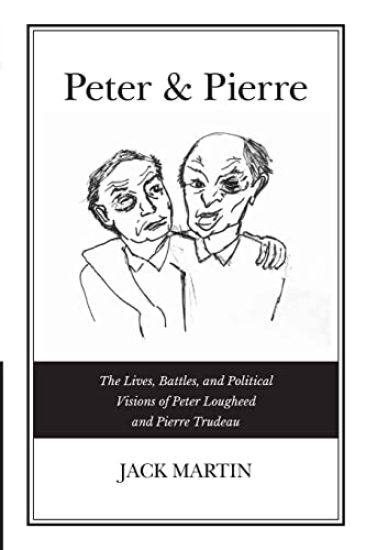
For fifteen years, from 1970 to 1985, Pierre Trudeau, Peter Lougheed, and Ren L vesque were principal players in what has been dubbed the era of Canadian conflictual federalism-a period during which the nation was almost torn apart by battles over provincial versus federal powers, fueled by separatist sentiments in Quebec and fights over the sharing of profits from Alberta's vast petroleum resources. These matters escalated in 1980 with Quebec's referendum on sovereignty association and Trudeau's implementation of the National Energy Program (NEP). They came to a head during the constitutional talks between the federal and provincial governments in early November of 1981. This book tells the story of how different stages in the personal development and political lives of Pierre Trudeau and Peter Lougheed shaped their very different visions of Canadian federalism, and how these conflicting views played out in their fights over the NEP and patriation of the Canadian Constitution and Charter of Rights and Freedoms during the early 1980s. L vesque and the other premiers are not forgotten, but focusing on Trudeau and Lougheed provides a fascinating exploration of personal similarities and differences grounded in the historical, sociocultural, and political contexts of their lives. This is the story of two confident, powerful, and far from perfect men who understood themselves as having obligations to their home provinces and to Canada as a whole that only they could discharge. The consequences of their political contests and their eventual compromises continue to play out, as do their visions of Canada and what it might become. The book is structured as a dual character study of Trudeau and Lougheed that is embedded in the histories of their home provinces and country, in their childhoods and educations, and in the relationships and undertakings that marked their adult lives. It is demonstrated and argued that neither could have done what the other did. Despite their many similarities, they each exercised signature capabilities and engaged different strategies and styles from those available to the other. How these capabilities, strategies, and styles developed in the contexts of their life experiences and attempts at self-development provides a unique glimpse into the complex intricacies of modes and manners of leadership suited to particular times and places, all subject to the vicissitudes of the predictable and the unexpected. Both men and their lives come more vividly into focus through the telling of their stories in tandem.
This book illustrates how Life Positioning Analysis can be used as a theoretical and methodological approach to sociocultural psychobiography.Life positioning psychobiography studies lives as they unfold within a world of interactivity. It recognizes and portrays us as social beings embedded and developing within our life relationships and circumstances and striving to make something of our lives. Here, Jack Martin presents both single-subject and dual-subject studies of social psychologist Stanley Milgram, former Canadian Prime Minister Pierre Elliott Trudeau, existential humanist Ernest Becker, American heiress and child advocate Dorothy Burlingham and her life partner, renowned psychoanalyst Anna Freud, and indigenous athlete Jim Thorpe and his college coach Glenn “Pop” Warner. These case studies provide vividly memorable demonstrations of how we are positioned by circumstances and others, and come to position ourselves as socioculturally constituted, psychological persons. In so doing, they offer a systematic framework for studying the lives of people that shows sociocultural and social psychological development without resorting to mentalistic theories, concepts, and interpretations.The book will be of interest to students and scholars in areas related to sociocultural and developmental psychology, the psychology and sociology of personhood, theoretical psychology, qualitative methodology, and social science and life writing more generally.
This book illustrates how Life Positioning Analysis can be used as a theoretical and methodological approach to sociocultural psychobiography. Life positioning psychobiography studies lives as they unfold within a world of interactivity. It recognizes and portrays us as social beings embedded and developing within our life relationships and circumstances and striving to make something of our lives. Here, Jack Martin presents both single-subject and dual-subject studies of social psychologist Stanley Milgram, former Canadian Prime Minister Pierre Elliott Trudeau, existential humanist Ernest Becker, American heiress and child advocate Dorothy Burlingham and her life partner, renowned psychoanalyst Anna Freud, and indigenous athlete Jim Thorpe and his college coach Glenn “Pop” Warner. These case studies provide vividly memorable demonstrations of how we are positioned by circumstances and others, and come to position ourselves as socioculturally constituted, psychological persons. In so doing, they offer a systematic framework for studying the lives of people that shows sociocultural and social psychological development without resorting to mentalistic theories, concepts, and interpretations. The book will be of interest to students and scholars in areas related to sociocultural and developmental psychology, the psychology and sociology of personhood, theoretical psychology, qualitative methodology, and social science and life writing more generally.
A Spectroscopic Atlas of the Stars: A Pocket Field Guide is a standard reference book for all amateur astronomers interested in practical spectroscopy or spectrography. For the first time in one place, it identifies more than 70 (northern hemisphere) bright stars that are suitable observational targets for both amateurs and astronomy students. Finder charts are provided for locating these sometimes-familiar stars. Data for each star includes labelled stellar spectra, a spectral profile with spectral lines identified. These are conveniently laid out on a single page, opposite tables of spectroscopic properties, and lines and wavelengths identified. This is the first Spectral Atlas designed for amateur astronomers. It is equally relevant to college undergraduates, being intended to familiarize astronomers of any age and level of knowledge with labelled stellar spectra and their different properties. It contains much information about stars which is hard to find or inaccessible to most people.
The Civil War has ended—but the killing isn’t over—in this intriguing historical murder mystery: “I can’t wait to read the next Alphonso Clay book.” —RP Dahlke, author of the Dead Red Mysteries April 1865: The Civil War is all but over after Lee’s surrender at Appomattox, but there are those who don’t want the killing to end. Abraham Lincoln’s assassin is still in hiding—but more violence is planned in a conspiracy to destroy the country once and for all. With the nation and countless civilian lives at stake, Col. Alphonso Clay, a master of intrigue and detection who has served General Grant with honor, is assigned to the case by the secretary of state. With the help of a beautiful agent, he is about to travel into the destructive heart of a secretive cult older than the United States itself . . .
Amid the tensions of Reconstruction, a Civil War veteran and presidential agent hunts down violent threats and secretive hidden enemies . . . The Civil War ended four years ago—but that doesn’t mean that peace rules the land. Confederate veterans have formed a secret organization, the Ku Klux Klan, to fight what they perceive as unjust oppression, violently attacking former slaves and attempting to sabotage the government’s authority in the South. To address the danger they pose, President Ulysses S. Grant turns to his most trusted agent: Maj. Alphonso Brutus Clay. The goal is to end the mayhem without sparking a renewal of hostilities and plunging the nation into bloodshed again. With the help of a friend, Ambrose Bierce, and the fierce Teresa Duval, Clay must confront a corrupt cabal intent on controlling this still-fragile Union—a threat to not only the United States but the world. “I can’t wait to read the next Alphonso Clay book.” —RP Dahlke, author of the Dead Red Mysteries
A Union Army captain is tasked with finding a turncoat before more blood is spilled—both on and off the battlefield—in this vivid historical mystery. Tennessee, Autumn 1863: The Confederate Army, after being defeated at Vicksburg, has rallied to a victory at Chickamauga. General Grant is on his way to aid the besieged Northern forces—but a highly placed spy is getting in the way of that mission. One officer has already been murdered to protect the traitor’s identity, and if the spy isn’t rooted out soon it may be the end for the Army of the Ohio. Grant recruits Cpt. Alphonso Clay for the job, but Clay’s work is complicated by a woman with her own nefarious agenda—and a little-known secret society . . . “I can’t wait to read the next Alphonso Clay book.” —RP Dahlke, author of the Dead Red Mysteries
A man investigating treason is assassinated, and the case must be solved by a “brilliant and haunted Southerner” working for the Union Army (RP Dahlke, author of the Dead Red Mysteries). Cpt. Alphonso Clay had been summoned to meet John Brown—not that John Brown, but a former Boston detective recruited by Abe Lincoln to put his skills to work in the war effort. Brown has now ferreted out treachery among powerful military figures . . . but he’s killed before he can meet with Clay. Now Clay’s only hope is to decipher Brown’s cryptic notes and follow his deductive instincts to solve the murder, unmask the traitors, and ensure the Union’s victory at Vicksburg . . .
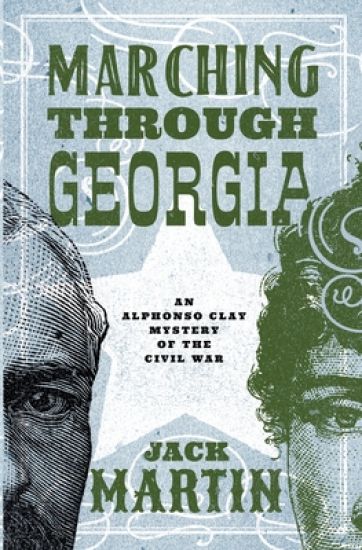
As Sherman moves toward Atlanta, an agent searches for traitors among the troops in this compelling Civil War thriller . . . When Sherman’s army hits a wall of resistance at Kennesaw Mountain in the summer of 1864—despite what seemed to be highly reliable intelligence—he’s convinced by one of the Union nurses to call in Maj. Alphonso Clay to hunt for a saboteur. With his scout Ambrose Bierce badly wounded and a general murdered in the midst of battle, he summons Clay, who soon joins him on his march through Georgia. But as Clay investigates the situation—and tries to prevent any further unwelcome surprises from the Confederates—it becomes apparent that there may be more than one person betraying the Union . . . “I can’t wait to read the next Alphonso Clay book.” —RP Dahlke, author of the Dead Red Mysteries
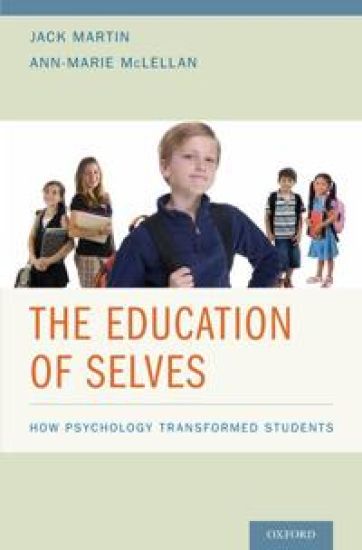
Most contemporary North Americans, as well as many other Westerners, take for granted their conceptions of themselves as individuals with uniquely valuable and complex inner lives -- lives filled with beliefs, imaginings, understandings, and motives that determine their actions and accomplishments. Yet, such psychological conceptions of selfhood are relatively recent, dating mostly from the late eighteenth century. Perhaps more surprisingly, our understandings of ourselves as creatively self-expressive and strategically self-managing are, for the most part, products of twentieth-century innovations in Enlightenment-based social sciences, especially psychology. Fueled by the enthusiasm for self-expression and self-actualization that emerged in the 1960s, humanistic, cognitive, developmental, and educational psychologists published widely on the overwhelmingly positive consequences of increased self-esteem in children and adolescents. While previous generations had been wary of self-confidence and self-interest, these qualities became widely regarded as desirable traits to be cultivated in both the home and the school. In The Education of Selves, Jack Martin and Ann-Marie McLellan examine ways in which psychological theories, research, and interventions employed in American and Canadian schools during the last half of the twentieth century changed our understanding of students, conceptualizing ideal students as self-expressive, enterprising, and entitled to forms of education that recognize and cater to such expressivity and enterprise. The authors address each of the major programs of psychological research and intervention in American and Canadian schools from 1950 to 2000: self-esteem, self-concept, self-efficacy, and self-regulation. They give critical consideration to definitions and conceptualizations, research measures and methods, intervention practices, and the social, cultural consequences of these programs of inquiry and practice. The first decade of the twenty-first century has seen a backlash against what some have come to regard as a self-absorbed generation of young people. Such criticism may be interpreted, at least in part, as a reaction to the scientific and professional activities of psychologists, many of whom now appear to share in the general concern about where their activities have left students, schools, and society at large.
More than half a century has passed since the publication of An American Dilemma: The Negro Problem and Modern Democracy, Gunnar Myrdal's agonizing portrait of the pervasiveness of racially prejudiced attitudes and discriminatory practices in American life. Central to Myrdal's work was the paradox posed by the coexistence of race-based social, economic, and political inequality on the one hand, and the cherished American cultural values of freedom and equality on the other. In the five decades since the publication of this work, there has been a dramatic decline in white Americans' overt expressions of anti-black and anti-integrationist sentiments and in many of the inequalities Myrdal highlighted in his monumental work. Yet the persistence of racial antipathy is evidence of the continuing dilemma of race in American society. This collection of original essays by leading race relations experts focuses on the recent history and current state of racial attitudes in the United States. It addresses key issues and debates in the literature, and it includes chapters on the racial attitudes of African-Americans as well as whites. The volume will be of great importance to students and scholars concerned with the sociology and politics of contemporary American race relations.
More than half a century has passed since the publication of An American Dilemma: The Negro Problem and Modern Democracy, Gunnar Myrdal's agonizing portrait of the pervasiveness of racially prejudiced attitudes and discriminatory practices in American life. Central to Myrdal's work was the paradox posed by the coexistence of race-based social, economic, and political inequality on the one hand, and the cherished American cultural values of freedom and equality on the other. In the five decades since the publication of this work, there has been a dramatic decline in white Americans' overt expressions of anti-black and anti-integrationist sentiments and in many of the inequalities Myrdal highlighted in his monumental work. Yet the persistence of racial antipathy is evidence of the continuing dilemma of race in American society. This collection of original essays by leading race relations experts focuses on the recent history and current state of racial attitudes in the United States. It addresses key issues and debates in the literature, and it includes chapters on the racial attitudes of African-Americans as well as whites. The volume will be of great importance to students and scholars concerned with the sociology and politics of contemporary American race relations.