Aimed at politics students in their final year of secondary education or beginning their degrees, this highly readable book is the ideal introduction to politics. Doing Politics is a detailed guide to both the study and the activity of politics, which explores why we study politics, what is involved in a politics degree, and the skills and mindset that are needed to tackle the subject.Key questions are answered, including:Just what is politics and how does it affect us?Why does politics, and why do politicians, get a bad press?How do we study non-traditional forms of politics?Assuming no prior knowledge, this lively and engaging guide is the perfect introduction to the academic study of politics.
Aimed at politics students in their final year of secondary education or beginning their degrees, this highly readable book is the ideal introduction to politics. Doing Politics is a detailed guide to both the study and the activity of politics, which explores why we study politics, what is involved in a politics degree, and the skills and mindset that are needed to tackle the subject.Key questions are answered, including:Just what is politics and how does it affect us?Why does politics, and why do politicians, get a bad press?How do we study non-traditional forms of politics?Assuming no prior knowledge, this lively and engaging guide is the perfect introduction to the academic study of politics.
Who's a girl gotta kill to make a buck? Nobody really knows who Jacqui Bleu is, which is exactly what she wants. Raised on a farm, miles away from where she was born, her life is full of danger and violence and she wouldn't have it any other way. As a bounty hunter and sometimes contract killer, working with a certain level of anonymity is to be expected. She's worked hard to reinvent herself; even changing her name and moving to a tiny town in unincorporated Georgia and somehow, he still managed to find her. The man who'd had her parents killed has discovered she's still alive, so naturally he wants her dead. Jacqui will do whatever she has to do to save the people in her life who mean everything to her, even if it means dropping more bodies than she's getting paid for. She can't imagine her parents would have ever wanted her to become a bounty hunter, but destiny has a funny way of turning you into exactly who you were meant to be.
"Hallum's painting is charged with delight in colour, line, surface and composition, in powerfully unconventional ways." - Hettie JudahThis is the first monograph on the London-born, Devon-based artist Jacqui Hallum. The publication documents Hallum's solo exhibition at The Walker Art Gallery, Liverpool (10 October 2019 - 1 March 2020), along with a series of solo, two-person and group exhibitions held between 2014 and 2020.Hallum is best-known for her mixed-media paintings on textiles - techniques she has developed and refined over the course of twenty years since completing her studies. Incorporating imagery and visual languages ranging from medieval woodcuts and stained-glass windows to Art Nouveau children's illustrations, tarot cards and Berber rugs, Hallum employs ink staining, painting, drawing and printing to create layers of pattern, abstraction and passages of figurative imagery. As part of her working process, Hallum often leaves the fabrics in the open air, exposed to the elements, in order to introduce weathering into the works. History, religion, mysticism and the beliefs and creativity of past civilisations are among the themes that overlap - often in a literal sense of pieces of fabrics layered, pinned, draped and hung together - to form painterly palimpsests that carry a sense of the past with them into the present.Along with a foreword by Professor Caroline Wilkinson, Director of the School of Art and Design at Liverpool John Moores University, and an introductory essay by artist, curator and director of Kingsgate Workshops and Project Space in London, Dan Howard-Birt, the publication features newly commissioned essays by arts journalist and critic Hettie Judah and by Andrew Hunt, Professor of Fine Art and Curating at the University of Manchester. Also featured is the edited transcript of a conversation between Hallum and Howard-Birt held at The Walker Art Gallery, Liverpool.Jacqui Hallum (b.1977, London) graduated with a BA in Fine Art from Coventry School of Art& Design, Coventry University, in 1999, and an MFA in Painting from the Slade School of Fine Art, University of London, in 2002. Hallum’s solo exhibition at The Walker Art Gallery followed a three-month fellowship at Liverpool John Moores University, which resulted from winning the prestigious John Moores Painting Prize in 2018.The monograph, designed by work-form and edited by Susan Taylor, has been produced by Kingsgate Project Space and co-published with Anomie Publishing.
Jacqui met Reg, old enough to be her father while he was driving his cab. Being a promiscuous young woman, she teased then seduced him over several months until she finally had him. Reg although married for over thirty years was innocent in the things she wanted him to do. Using her wiles, she trained him then introduced him to a fetish photographer, Helen, whom took over the training and educating them both beyond their wildest dreams, making them a lot of money along the way. Of course, Reg's wife does become involved which opens her eyes to a world she never knew existed. The sexual drive of Jacqui has no match except for Reg whom finds he is usually the star attraction much to Jacqui's delight.
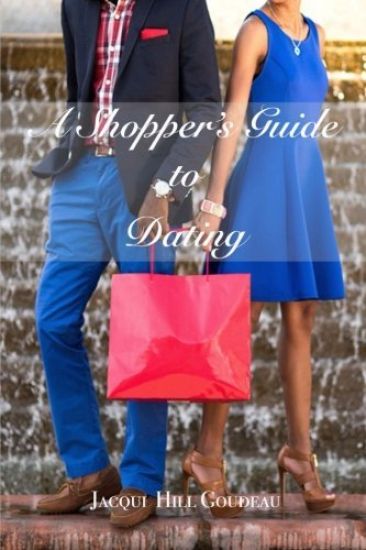
FOR MEN AND WOMEN SHOPPING. Whether you love to do it or dread the thought, it might say something about your love life Are you a bargain shopper? Maybe you prefer online shopping or only frequent specialy and brand names stores? Find out something (completely unscientific) about yourself. This book may help you venture out of your norm and find the deal of a lifetime
ââ?¬Ë?A thrilling and gripping novel.ââ?¬â?¢ Roberta Kray ââ?¬Ë?No matter what she did, he would always be there, right behind her. She could never escapeââ?¬â?¢
ââ?¬Ë?Gritty and grippingââ?¬â?¢ Kimberley Chambers ââ?¬Ë?A gritty, thrilling page-turnerââ?¬â?¢ Kerry Barnes Sheââ?¬â?¢s no saint, but is she a SINNER?
‘A captivating read.’ Mel Sherratt ‘She trusted the man she loved. It was the most dangerous thing she had ever done …’ No one can touch Del Williams – the hardest gangster in Soho. He’s got the monopoly on the drugs, the clubs and the girls – it’d be a mistake to underestimate him. The one person he’d take a bullet for is tough, beautiful Bunny Barker, mother of their daughter Star. Bunny is determined to shield Star from ‘life’ but Del has a lot of enemies. When a familiar face appears from their past, their family is put into terrible danger. Can Bunny protect Star from the demons of her own past, and her very worst nightmare? A gripping story of gangs, drugs, girls and unbreakable bonds. Perfect for fans of Martina Cole and Mandasue Heller. Praise for Jacqui Rose ‘Gritty and gripping’ Kimberley Chambers ‘A thrilling and gripping novel.’ Roberta Kray ‘A cracking good read.’ Jessie Keane
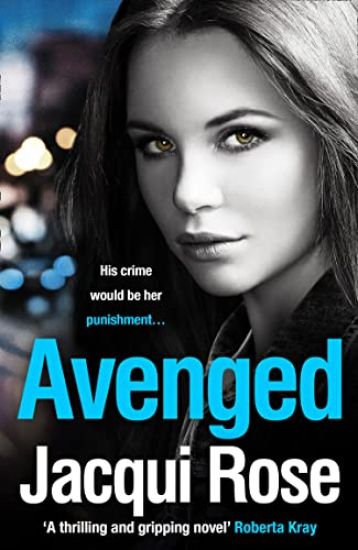
‘Gritty and gripping’ Kimberley Chambers You make a deal with the devil; you pay your dues… Franny Doyle has always known that her father Patrick has been up to no good. After all you don’t become one of London’s number one gangsters without ruffling a few feathers along the way. Still, she adores her dad and she knows that he would lay down his life for her – she is his number one girl and he has taught her everything she knows. But when something terrible happens to Patrick, Franny realises that he has some very dangerous enemies. Delving into Patrick’s past, Franny becomes involved in a high-stakes game. She’s not afraid. Patrick has taught her to be a fighter and she’s determined to make him proud, even if it means paying the ultimate price – her own life. Thrilling, dangerous and compulsive, Avenged is perfect for fans of Martina Cole and Kimberley Chambers. Praise for Jacqui Rose ‘A captivating read from one of my favourite emerging authors.’ Mel Sherratt ‘A thrilling and gripping novel.’ Roberta Kray ‘A cracking good read.’ Jessie Keane
The heart-racing new gangland thriller from bestselling author Jacqui Rose, available to pre-order now. Perfect for fans of Kimberley Chambersâ?? Queenie and Martina Cole.
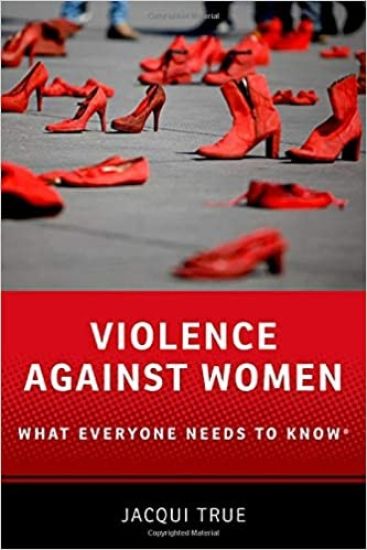
Violence against women and girls (VAWG) is a longstanding problem that has increasingly come to the forefront of international and national policy debates and news: from the US reauthorization of the Violence against Women Act and a United Nations declaration to end sexual violence in war, to coverage of gang rapes in India, cyberstalking and "revenge porn", honor killings, female genital mutilation, and international trafficking. Yet, while we frequently read or learn about particular experiences or incidents of VAWG, we are often unaware of the full picture. Jacqui True, an internationally renowned scholar of globalization and gender, provides an expansive frame for understanding VAWG in this book. Among the questions she addresses include: What are we talking about when we discuss VAWG? What kinds of violence does it encompass? Who does it affect most and why? What are the risk factors for victims and perpetrators? Does VAWG occur at the same level in all societies? Are there cultural explanations for it? What types of legal redress do victims have? How reliable are the statistics that we have? Are men and boys victims of gender-based violence? What is the role of the media in exacerbating VAWG? And, what sorts of policy and advocacy routes exist to end VAWG? This volume addresses the current state of knowledge and research on these questions. True surveys our best understanding of the causes and consequences of violence against women in the home, local community, workplace, public, and transnationally. In so doing, she brings together multidisciplinary perspectives on the problem of violence against women and girls, and sets out the most promising policy and advocacy frameworks to end this violence.
Violence against women and girls (VAWG) is a longstanding problem that has increasingly come to the forefront of international and national policy debates and news: from the US reauthorization of the Violence against Women Act and a United Nations declaration to end sexual violence in war, to coverage of gang rapes in India, cyberstalking and "revenge porn", honor killings, female genital mutilation, and international trafficking. Yet, while we frequently read or learn about particular experiences or incidents of VAWG, we are often unaware of the full picture. Jacqui True, an internationally renowned scholar of globalization and gender, provides an expansive frame for understanding VAWG in this book. Among the questions she addresses include: What are we talking about when we discuss VAWG? What kinds of violence does it encompass? Who does it affect most and why? What are the risk factors for victims and perpetrators? Does VAWG occur at the same level in all societies? Are there cultural explanations for it? What types of legal redress do victims have? How reliable are the statistics that we have? Are men and boys victims of gender-based violence? What is the role of the media in exacerbating VAWG? And, what sorts of policy and advocacy routes exist to end VAWG? This volume addresses the current state of knowledge and research on these questions. True surveys our best understanding of the causes and consequences of violence against women in the home, local community, workplace, public, and transnationally. In so doing, she brings together multidisciplinary perspectives on the problem of violence against women and girls, and sets out the most promising policy and advocacy frameworks to end this violence.
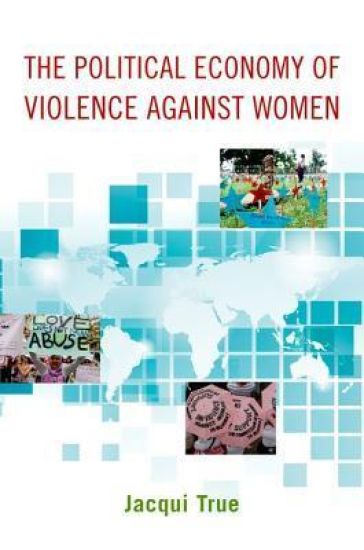
Violence against women is a major problem in all countries, affecting women in every socio-economic group and at every life stage. Nowhere in the world do women share equal social and economic rights with men or the same access as men to productive resources. Economic globalization and development are creating new challenges for women's rights as well as some new opportunities for advancing women's economic independence and gender equality. Yet, when women have access to productive resources and they enjoy social and economic rights they are less vulnerable to violence across all societies. The Political Economy of Violence against Women develops a feminist political economy approach to identify the linkages between different forms of violence against women and macro structural processes in strategic local and global sites - from the household to the transnational level. In doing so, it seeks to account for the globally increasing scale and brutality of violence against women. These sites include economic restructuring and men's reaction to the loss of secure employment, the abusive exploitation associated with the transnational migration of women workers, the growth of a sex trade around the creation of free trade zones, the spike in violence against women in financial liberalization and crises, the scourge of sexual violence in armed conflict and post-crisis peacebuilding or reconstruction efforts and the deleterious gendered impacts of natural disasters. Examples are drawn from South Africa, Kenya, the Democratic Republic of Congo, China, Ciudad Juarez in Mexico, the Pacific Islands, Argentina, Eastern Europe, Central Asia, Haiti, Sri Lanka, Indonesia, New Zealand, Ireland, the United Kingdom, the United States and Iceland.
Violence against women is a major problem in all countries, affecting women in every socio-economic group and at every life stage. Nowhere in the world do women share equal social and economic rights with men or the same access as men to productive resources. Economic globalization and development are creating new challenges for women's rights as well as some new opportunities for advancing women's economic independence and gender equality. Yet, when women have access to productive resources and they enjoy social and economic rights they are less vulnerable to violence across all societies. The Political Economy of Violence against Women develops a feminist political economy approach to identify the linkages between different forms of violence against women and macro structural processes in strategic local and global sites - from the household to the transnational level. In doing so, it seeks to account for the globally increasing scale and brutality of violence against women. These sites include economic restructuring and men's reaction to the loss of secure employment, the abusive exploitation associated with the transnational migration of women workers, the growth of a sex trade around the creation of free trade zones, the spike in violence against women in financial liberalization and crises, the scourge of sexual violence in armed conflict and post-crisis peacebuilding or reconstruction efforts and the deleterious gendered impacts of natural disasters. Examples are drawn from South Africa, Kenya, the Democratic Republic of Congo, China, Ciudad Juarez in Mexico, the Pacific Islands, Argentina, Eastern Europe, Central Asia, Haiti, Sri Lanka, Indonesia, New Zealand, Ireland, the United Kingdom, the United States and Iceland.