Kirjojen hintavertailu. Mukana 11 342 296 kirjaa ja 12 kauppaa.

Kirjahaku

Etsi kirjoja tekijän nimen, kirjan nimen tai ISBN:n perusteella.

1000 tulosta hakusanalla Jaimey Fisher

Christian Petzold

Christian Petzold

Jaimey Fisher

University of Illinois Press
2013
nidottu
In eleven feature films across two decades, Christian Petzold has established himself as the most critically celebrated director in contemporary Germany. The best-known and most influential member of the Berlin School, Petzold's career reflects the trajectory of German film from 1970s New German Cinema to more popular fare in the 1990s and back again to critically engaged and politically committed filmmaking.In the first book-length study on Petzold in English, Jaimey Fisher frames Petzold's cinema at the intersection of international art cinema and sophisticated genre cinema. This approach places his work in the context of global cinema and invites comparisons to the work of directors like Pedro Almodovar and Rainer Werner Fassbinder, who repeatedly deploy and reconfigure genre cinema to their own ends. These generic aspects constitute a cosmopolitan gesture in Petzold's work as he interprets and elaborates on cult genre films and popular genres, including horror, film noir, and melodrama. Fisher explores these popular genres while injecting them with themes like terrorism, globalization, and immigration, central issues for European art cinema. The volume also includes an extended original interview with the director about his work.
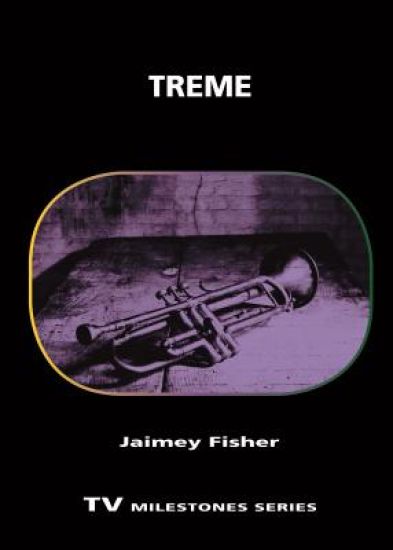
Treme

Treme

Jaimey Fisher

Wayne State University Press
2019
nidottu
In Treme, Jaimey Fisher analyzes how the HBO television series Treme treads new ground by engaging with historical events and their traumatic aftermaths, in particular, with Hurricane Katrina in 2005 and subsequent flooding in New Orleans. Instead of building up to a devastating occurrence, David Simon's much anticipated follow-up to The Wire (2002-8) unfolds with characters coping in the wake of catastrophe, in a mode of what Fisher explores as a prevailing mode of ""afterness."" Treme charts these changes while also memorializing the number of New Orleans cultures that were immediately endangered. David Simon's and Eric Overmyer's Treme (2010-13) attempts something unprecedented for a multi-season series. Although the show follows, in some ways, in the celebrated footsteps of The Wire-for example, in its elegiac tracking of the historical struggles of an American city-Fisher investigates how Treme varies from The Wire's work with genre and what replaces it: The Wire is a careful, even baroque variation on the police drama, while Treme dispenses with genre altogether. This poses considerable challenges for popular television, which Simon and Overmyer address in several ways, including offering a carefully montaged map of New Orleans and foregrounding the distance witnessing of watershed events there. Another way in which Treme sets itself apart is its memorialization of the city's inestimable contributions to American music, especially to jazz, soul, rhythm and blues, rap, rock, and funk. Treme gives such music and its many makers unprecedented attention, both in terms of screen time for music and narrative exposition around musicians. A key element of the volume is its look at the show's themes of race, crime, and civil rights as well as the corporate versus community recovery and remaking of the city. Treme's synthesizing mélange of the arts in their specific geographical context, coupled with political and socio-economic analysis of the city, highlights the show's unique approach. Fans of the works of Simon and Overmyer, as well as television studies students and scholars, will enjoy this keen-eyed approach to a beloved show.
German Ways of War

German Ways of War

Jaimey Fisher

RUTGERS UNIVERSITY PRESS
2022
nidottu
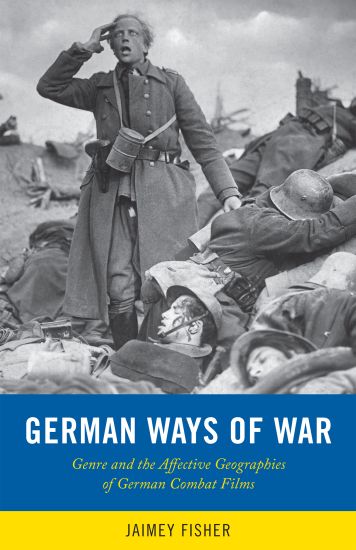
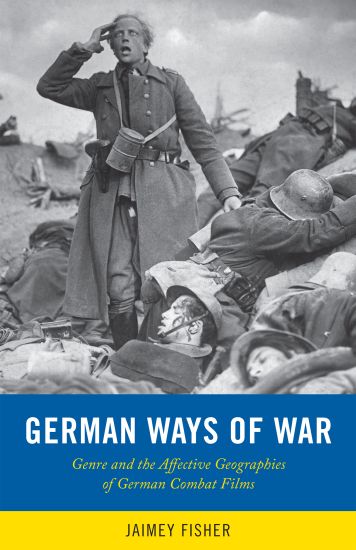
German Ways of War deploys theories of space, mobility, and affect to investigate how war films realize their political projects. Analyzing films across the decades, from the 1910s to 2000s, German Ways of War addresses an important lacuna in media studies: while scholars have tended to focus on the similarities between cinematic looking and weaponized targeting -- between shooting a camera and discharging a gun – this book argues that war films negotiate spaces throughout that frame their violence in ways more revealing than their battle scenes. Beyond that well-known intersection of visuality and violence, German Ways of War explores how the genre frames violence within spatio-affective operations. The production of novel spaces and evocation of new affects transform war films, including the genre’s manipulation of mobility, landscape, territory, scales, and topological networks. Such effects amount to what author Jaimey Fisher terms the films’ “affective geographies” that interweave narrative-generated affects, spatial depictions, and political processes.
German Ways of War

German Ways of War

Jaimey Fisher

RUTGERS UNIVERSITY PRESS
2022
sidottu
German Ways of War deploys theories of space, mobility, and affect to investigate how war films realize their political projects. Analyzing films across the decades, from the 1910s to 2000s, German Ways of War addresses an important lacuna in media studies: while scholars have tended to focus on the similarities between cinematic looking and weaponized targeting -- between shooting a camera and discharging a gun – this book argues that war films negotiate spaces throughout that frame their violence in ways more revealing than their battle scenes. Beyond that well-known intersection of visuality and violence, German Ways of War explores how the genre frames violence within spatio-affective operations. The production of novel spaces and evocation of new affects transform war films, including the genre’s manipulation of mobility, landscape, territory, scales, and topological networks. Such effects amount to what author Jaimey Fisher terms the films’ “affective geographies” that interweave narrative-generated affects, spatial depictions, and political processes.
Christian Petzold

Christian Petzold

Fisher Jaimey

University of Illinois Press
2013
sidottu
In eleven feature films across two decades, Christian Petzold has established himself as the most critically celebrated director in contemporary Germany. The best-known and most influential member of the Berlin School, Petzold's career reflects the trajectory of German film from 1970s New German Cinema to more popular fare in the 1990s and back again to critically engaged and politically committed filmmaking.In the first book-length study on Petzold in English, Jaimey Fisher frames Petzold's cinema at the intersection of international art cinema and sophisticated genre cinema. This approach places his work in the context of global cinema and invites comparisons to the work of directors like Pedro Almodovar and Rainer Werner Fassbinder, who repeatedly deploy and reconfigure genre cinema to their own ends. These generic aspects constitute a cosmopolitan gesture in Petzold's work as he interprets and elaborates on cult genre films and popular genres, including horror, film noir, and melodrama. Fisher explores these popular genres while injecting them with themes like terrorism, globalization, and immigration, central issues for European art cinema. The volume also includes an extended original interview with the director about his work.
Uncommon Goods

Uncommon Goods

Jaimey Hamilton Faris

Intellect Books
2013
nidottu
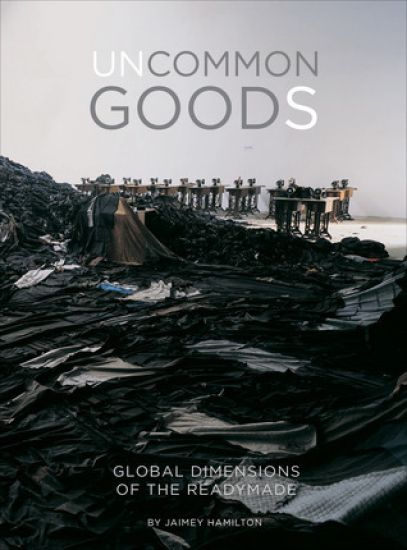
Since Marcel Duchamp created his 'readymades' a century ago – most famously christening a urinal as a fountain – the practice of incorporating commodity objects into art has become ever more pervasive. Uncommon Goods traces one particularly important aspect of that progression: the shift in artistic concern toward the hidden ethical dimensions of global commerce. Jaimey Hamilton Faris discusses the work of, among many others, Ai Weiwei, Cory Arcangel, Thomas Hirschhorn and Santiago Sierra, reading their artistic explorations as overlapping with debates about how common goods hold us and our world in common. The use of readymade now registers concerns about international migrant labor, outsourced manufacturing, access to natural resources, intellectual copyright, and the commoditization of virtual space. In each chapter, Hamilton Faris introduces artists who exemplify the focus of readymade aesthetics on aspects of global commodity culture, including consumption, marketing, bureaucracy, labour and community. She explores how materially intensive, 'uncommon' aesthetic situations can offer moments to meditate on the kinds of objects, experiences and values we ostensibly share in the age of globalization. The resulting volume will be an important contribution to scholarship on ready-made art as well as to the study of materiality, embodiment and globalization.
Jamey Guy Private Eye

Jamey Guy Private Eye

Rod Martinez

Lulu.com
2018
pokkari
Eight year old Jamey Guy loves computers, detective shows and eating pizza. Celebrating the last day of school is what he and his friends are getting ready for, but a series of crimes in town has the grown-ups in fear. Someone needs to solve this mystery so they can all celebrate summer in peace. Will it be the police or Jamey who crack the case?
Jaime Davidovich in Conversation with Daniel R. Quiles
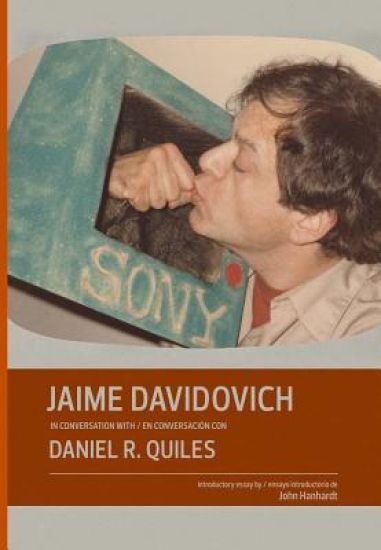
As a fixture on the SoHo-based experimental art scene of the 1970s and 1980s, Argentine-American video/television-art pioneer and conceptual artist Jaime Davidovich (born 1936) has worked in a broad variety of mediums throughout his long career, including video, painting and installation, while also establishing himself as an activist and TV producer. His weekly variety program, The Live! Show (1979–84), featured performances and interviews with artists such as Laurie Anderson, Eric Bogosian, Tony Oursler and Michael Smith, while other video works included appearances by the artist Stuart Sherman. Davidovich embraced a postmodernist’s eclecticism and a humorous aesthetic. In this lively conversation with scholar Daniel R. Quiles, Davidovich recounts his early years in postwar Argentina, the 1963 coup d’état that led to his relocation to New York and his long, influential career.
Jimey the Woodpile Mouse

Jimey the Woodpile Mouse

Elar Ericsson

Pine Alley Press
2014
sidottu
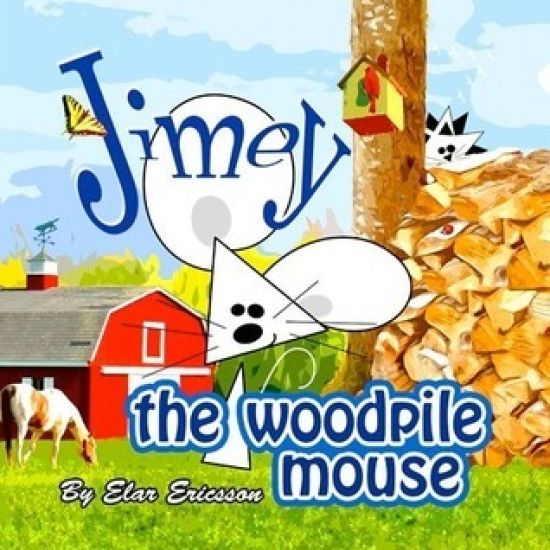
The late, great Norman Bridwell, creator of Clifford the Big Red Dog, wrote in a handwritten letter to author Elar Ericsson after reading Jimey the Woodpile Mouse, "Dear Elar, Thank you for the book. You have a very unique art style. I like it very much. Being a mouse fan myself I appreciate the story." He continued, "I hope your books are successful. There is something special about making a child smile."Jimey (j-eye-mee) was a woodpile mouse. He lived in the woodpile outside of Farmer Karson's farmhouse. Jimey loved his woodpile. But there was one big problem. Jimey's woodpile was quickly shrinking Every day the Farmer took logs from the woodpile, and now there were only a few logs left. Jimey worried that his woodpile would soon be gone Where would he live? How would he stay warm and dry? But one thing worried Jimey most of all-how would he stay safe from the Farmer's cat, Kloee?This debut story from author and illustrator Elar Ericsson gently addresses fear and worry with the comfort of being protected, loved, and cared for. The simple message easily translates to children and adults alike.