Kirjojen hintavertailu. Mukana 11 244 527 kirjaa ja 12 kauppaa.

Kirjahaku

Etsi kirjoja tekijän nimen, kirjan nimen tai ISBN:n perusteella.

1000 tulosta hakusanalla Jakob Wassermann

Diskurse über Gerechtigkeit im Werk Jakob Wassermanns
With her analysis of Wassermann's literary concept of justice, Elisabeth Jutten presents him for the first time as a representative of a modern age inspired by a life philosophy. Just like the philosophical, cultural and religious discourses of the turn of the century, his concept of justice with its personal accentuation is based on the topos of the 'new man', which is given its specific form by Wassermann's dual identity as a German and a Jew. For Wassermann, the Jew is predestined to forge a unity out of the duality in himself and thus to put an end to all injustice."
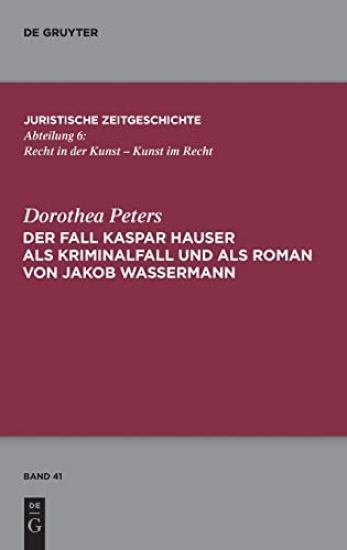
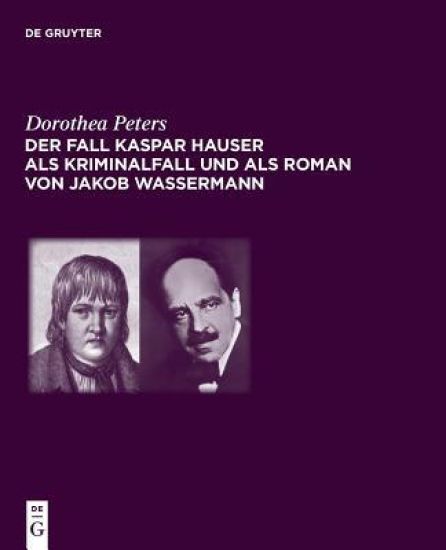
Der Fall Kaspar Hauser als Kriminalfall und als Roman von Jakob Wassermann
Rechtsgeschichte ist ein Teil der Kulturgeschichte. Rechtsentwicklungen werden in Kunstwerken reflektiert, mitunter auch vorweggenommen. Umgekehrt verm gen juristisches Handwerk und juristische Reflexion h ufig bei der Erschlie ung literarischer Werke Hilfestellung zu leisten. Die Abteilung "Recht in der Kunst" bietet diese Hilfestellung an. Sie enth lt neben sekund rwissenschaftlichen Textsammlungen und Abhandlungen vor allem Textausgaben literarischer Werke, in deren Mittelpunkt Fragen des Rechts stehen und die mit je einem Kommentar aus literaturwissenschaftlicher Sicht und aus rechtlicher und / oder rechtshistorischer Sicht versehen werden.
Der Fall Kaspar Hauser als Kriminalfall und als Roman von Jakob Wassermann
Auch 2014 ist die Problematik des Kaspar-Hauser-Falles aktuell: Neben der bis heute ungeklärten Frage seiner Herkunft triumphiert insbesondere das menschenverachtende Vorgehen gegen ihn ungebrochen. Aus der Gegenüberstellung von Kriminalrechtsfall und Wassermann-Roman unterbreitet die Studie Vorschläge für eine Reform des Strafgesetzbuches, die das Verbrechen am Seelenleben integriert.
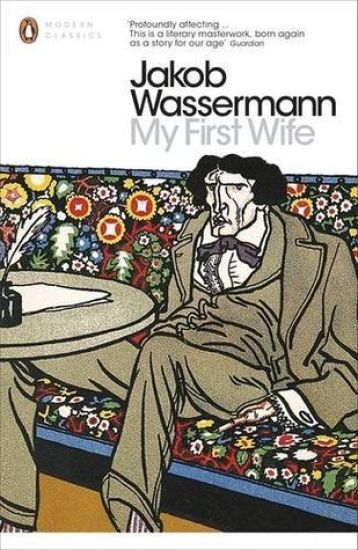
My First Wife

My First Wife

Jakob Wassermann

Penguin Classics
2013
pokkari
My First Wife is Jakob Wassermann's intense, powerful account of a marriage - and its ruinous collapse - translated by the award-winning translator of Alone in Berlin, Michael Hofmann. It is the story of Alexander Herzog, a young writer, who goes to Vienna to escape his debts and a failed love affair. There he is pursued by book-loving Ganna: giddy, girlish, clumsy, eccentric and wild. Dazzled and unnerved by her devotion to him, and attracted to the large dowry offered by her wealthy father, he thinks he can mould Ganna into what he wants. But no-one can control her troubling passions. As their marriage starts to self-destruct, Herzog will discover that Ganna has resources and determination of which he had no idea - and that he can never escape her.Posthumously published in 1934 and based on the author Jakob Wassermann's own ruinous marriage, My First Wife bears the unmistakable aura of true and bitter experience. It is a tragic masterpiece that unfolds in shocking detail. Now this story of rare intensity and drama is brought to English readers in a powerful new translation by Michael Hofmann.Reviews:'Like something out of Chekhov - it's all there, the ennui, the preening etiquette, the intellectual posturing ... painfully heartfelt ... My First Wife is a devastating indictment of the choices we make out of convenience against our hearts and instincts, and the tragedies that ensue' Independent'You won't find a more agonising, fascinating literary account of a marriage hitting the rocks' Mail Online
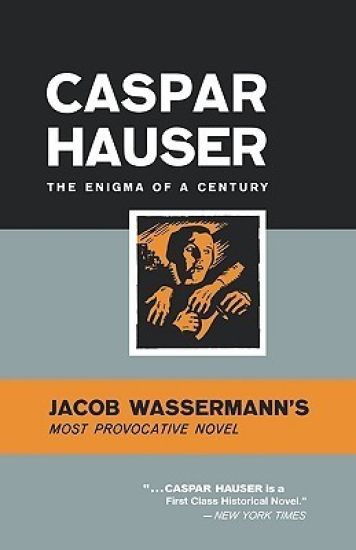
Caspar Hauser

Caspar Hauser

Jakob Wassermann

Liveright Publishing Corporation
1956
nidottu
This novel is considered by most European critics the finest and most important of Wassermann’s novels. It now makes its first appearance in English. Caspar Hauser, that strange figure which puzzled Europe in the years from 1823, when he first appeared, to 1833, when he met his inexplicable death, has remained an unsolved mystery to this day. There is a considerable body of literature in all languages on the subject; bitter and violent sides have been taken as to who he was; yet the evidence is in complete confusion. On the one hand it is claimed that he was a deliberate imposter, while many others maintain that he was the Crown Prince of Baden and that he was victimized by the family of the ruler’s morganatic wife who desired to secure the succession. An unkempt young man of about seventeen, dressed as a peasant, wandered into Nuremberg in the fall of 1828. Although it later turned out that he had an acute mind, he was at that time so undeveloped that he could speak only a few broken words and his recollections were only of a small dark room and of one man who provided him with water during the night. His strange existence from then on and his final death at the hand of a mysterious assassin, five years later, makes one of the most mysterious and fascinating episodes in all history.