Kirjojen hintavertailu. Mukana 11 244 527 kirjaa ja 12 kauppaa.

Kirjahaku

Etsi kirjoja tekijän nimen, kirjan nimen tai ISBN:n perusteella.

1000 tulosta hakusanalla James Arthur Diamond

Maimonides and the Hermeneutics of Concealment

Maimonides and the Hermeneutics of Concealment

James Arthur Diamond

State University of New York Press
2002
pokkari
Examines how Maimonides integrates scriptural and rabbinic literature into his magnum opus, The Guide of the Perplexed. Winner of the 2003 Nachman Sokol-Mollie Halberstadt Prize in Biblical/Rabbinic Scholarship presented by the Canadian Jewish Book Awards Maimonides and the Hermeneutics of Concealment demonstrates the type of hermeneutic that the medieval Jewish philosopher Moses Maimonides (1138–1204) engaged in throughout his treatise, The Guide of the Perplexed. By comprehensively analyzing Maimonides' use of rabbinic and scriptural sources, James Arthur Diamond argues that, far from being merely prooftexts, they are in fact essential components of Maimonides' esoteric stratagem. Diamond's close reading of biblical and rabbinic citations in the Guide not only penetrates its multilayered structure to arrive at its core meaning, but also distinguishes Maimonides as a singular contributor to the Jewish exegetical tradition.

James Arthur

James Arthur

Cohen Nadia

Flame Tree Publishing
2013
nidottu
James Arthur: an unofficial biography. James Arthur has oodles of charm and a voice to soothe the soul - just remember that X-Factor performance of Marvin Gaye’s ‘Let’s Get it On’. The ninth winner of the UK X-Factor, James’s debut single ‘Impossible’ has become the fastest-selling X Factor winner's single so far. With every performance comes a heartfelt passion for music, something that won over both X-Factor judges and fans alike. Amazing images and inspirational text tell the story of James Arthur’s climb to fame.
The Formation of Character in Education
The Formation of Character: From Aristotle to the 21st Century offers an introduction to the foundations, practices, policies and issues of character formation historically. Following a chronological order, it charts the idea of character formation in the Western tradition by critically examining its precursors, origins, development, meanings and uses.The book is based on the premise that current conditions and debates around character formation cannot be fully understood without knowledge of the historical background. It introduces many of the debates character formation has generated in order to offer different perspectives and possibilities and uses Aristotle as a lens to gain a better understanding of some of these positions, particularly the theoretical goals of character formation. Chapters explore character education from the classical period through the medieval, early modern, enlightenment and Victorian eras to 20th century influences, ending with a discussion of contemporary policies and themes relating to character education. This book will appeal to academics, researchers, and post-graduate students in the fields of character and virtue education as well as the history of education.
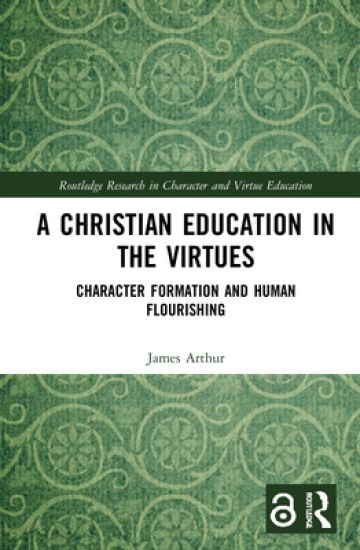
A Christian Education in the Virtues
A Christian Education in the Virtues examines the connection between human nature and human flourishing. It draws on ancient and medieval sources to explore the formation of the person based on a Christian anthropology, emphasising the communal nature of the virtuous life and provides a richer approach to the question of contemporary character education.The book argues that the only way to understand and construct our character virtues is to have a clear picture of what is the purpose and meaning of human life. It highlights the importance of engaging with moral issues and makes the case that, for Christian educators, human flourishing is inseparable from God’s active relationship to human beings. The book also explores a teleological approach to character education goals. To educate the whole person in the light of an all-embracing Christian worldview is challenged by secular and liberal ideology and is often seen as irrational to the modern mind. Overall, the text seeks to demonstrate that many aspects of a Neo-Aristotelian-Thomist theoretical underpinning for Christian character education holds out a viable option for Christians. It therefore argues the case for the educational potential of Christian character education.This important book will be essential reading for academics, researchers and students in the fields of character and virtue education, religious education and the philosophy of education. The Open Access version of this book, available at www.taylorfrancis.com/books/oa-mono/10.4324/9781003141877, has been made available under a Creative Commons Attribution-Non Commercial-No Derivatives 4.0 license.
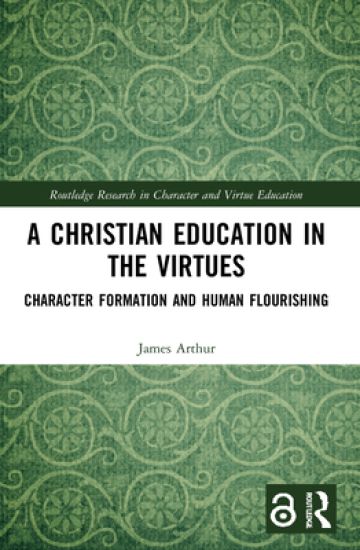
A Christian Education in the Virtues

A Christian Education in the Virtues

James Arthur

TAYLOR FRANCIS LTD
2023
nidottu
A Christian Education in the Virtues examines the connection between human nature and human flourishing. It draws on ancient and medieval sources to explore the formation of the person based on a Christian anthropology, emphasising the communal nature of the virtuous life and provides a richer approach to the question of contemporary character education.The book argues that the only way to understand and construct our character virtues is to have a clear picture of what is the purpose and meaning of human life. It highlights the importance of engaging with moral issues and makes the case that, for Christian educators, human flourishing is inseparable from God’s active relationship to human beings. The book also explores a teleological approach to character education goals. To educate the whole person in the light of an all-embracing Christian worldview is challenged by secular and liberal ideology and is often seen as irrational to the modern mind. Overall, the text seeks to demonstrate that many aspects of a Neo-Aristotelian-Thomist theoretical underpinning for Christian character education holds out a viable option for Christians. It therefore argues the case for the educational potential of Christian character education.This important book will be essential reading for academics, researchers and students in the fields of character and virtue education, religious education and the philosophy of education. The Open Access version of this book, available at www.taylorfrancis.com/books/oa-mono/10.4324/9781003141877, has been made available under a Creative Commons Attribution-Non Commercial-No Derivatives 4.0 license.
Subject Mentoring in the Secondary School
Student teachers have always worked with professionals during their teaching practice, but as teacher training becomes more school based, the role of the mentor has become much more important. Even newer is the emergence of the subject mentor. This book is an examination of the nature of effective mentoring and its contribution to student teacher development. Part One of the book has a broad perspective and looks at policy developments and the differing approaches to teacher education. Part Two explores central issues which have emerged in the author's research with mentors. It identifies tendencies in subject mentoring which characterise the work of subject mentors in schools, and key aspects of mentoring are examined, such as collaborative teaching, observation and the practice of discursive mentoring.
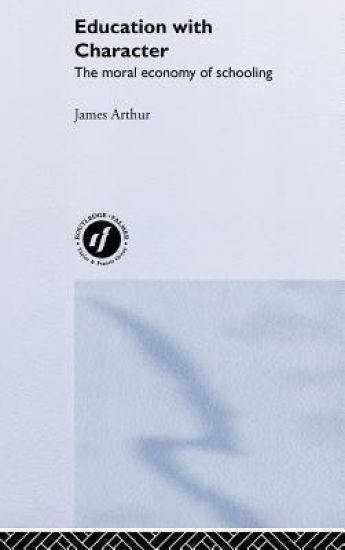
Education with Character

Education with Character

James Arthur

Routledge
2002
sidottu
The establishment of citizenship education as a compulsory subject has recently been accompanied by the government's policy of 'promoting education with character.' Schools are identified as having a crucial role to play in helping to shape and reinforce basic character traits that will ultimately lead to a better society. This radical new policy is explicitly linked to raising academic standards and to the needs of the emerging new economy. This book provides an introduction to character education within the British context by exploring its meanings, understandings, and rationale, through the perspective of a number of academic disciplines. The author examines character education from a philosophical, religious, psychological, political, social and economic perspective to offer a more detailed understanding of character education and what it can offer. He also considers how British schools can implement character education successfully and what lessons we can draw from the American experience. This book will be of interest to academics, researchers, policy makers and teachers with responsibility for citizenship education in their schools.
Education with Character

Education with Character

James Arthur

Routledge
2002
nidottu
The establishment of citizenship education as a compulsory subject has recently been accompanied by the government's policy of 'promoting education with character.' Schools are identified as having a crucial role to play in helping to shape and reinforce basic character traits that will ultimately lead to a better society. This radical new policy is explicitly linked to raising academic standards and to the needs of the emerging new economy. This book provides an introduction to character education within the British context by exploring its meanings, understandings, and rationale, through the perspective of a number of academic disciplines. The author examines character education from a philosophical, religious, psychological, political, social and economic perspective to offer a more detailed understanding of character education and what it can offer. He also considers how British schools can implement character education successfully and what lessons we can draw from the American experience. This book will be of interest to academics, researchers, policy makers and teachers with responsibility for citizenship education in their schools.
Faith and Secularisation in Religious Colleges and Universities
This book is a detailed study of higher education institutions affiliated to particular religions. It considers the debates surrounding academic freedom, institutional governance, educational policy, mission and identity together with institutions’ relations with the state and their wider communities. A wide range of institutions are examined, including: Christian, Islamic and Jewish universities in the US, Europe and the Middle East. Essentially, this volume questions whether such institutions can be both religious and a ‘university’ and also considers the appropriate role of religious faith within colleges and universities.
The Endoscopic Classification of Representations

The Endoscopic Classification of Representations

James Arthur

American Mathematical Society
2013
sidottu
Within the Langlands programme, endoscopy is a fundamental process for relating automorphic representations of one group with those of another. In this book, Arthur establishes an endoscopic classification of automorphic representations of orthogonal and symplectic groups G. The representations are shown to occur in families (known as global L-packets and A-packets), which are parametrised by certain self-dual automorphic representations of an associated general linear group GL(N). The central result is a simple and explicit formula for the multiplicity in the automorphic discrete spectrum of G for any representation in a family. The results of the volume have already had significant applications: to the local Langlands correspondence, the construction of unitary representations, the existence of Whittaker models, the analytic behaviour of Langlands L-functions, the spectral theory of certain locally symmetric spaces, and to new phenomena for symplectic epsilon-factors. One can expect many more. In fact, it is likely that both the results and the techniques of the volume will have applications to almost all sides of the Langlands programme. The methods are by comparison of the trace formula of G with its stabilisation (and a comparison of the twisted trace formula of $GL(N) with its stabilisation, which is part of work in progress by Moeglin and Waldspurger). This approach is quite different from methods that are based on L-functions, converse theorems, or the theta correspondence. The comparison of trace formulas in the volume ought to be applicable to a much larger class of groups. Any extension at all will have further important implications for the Langlands programme.
The Formation of Character in Education

The Formation of Character in Education

James Arthur

Taylor Francis Ltd
2021
nidottu
The Formation of Character: From Aristotle to the 21st Century offers an introduction to the foundations, practices, policies and issues of character formation historically. Following a chronological order, it charts the idea of character formation in the Western tradition by critically examining its precursors, origins, development, meanings and uses.The book is based on the premise that current conditions and debates around character formation cannot be fully understood without knowledge of the historical background. It introduces many of the debates character formation has generated in order to offer different perspectives and possibilities and uses Aristotle as a lens to gain a better understanding of some of these positions, particularly the theoretical goals of character formation. Chapters explore character education from the classical period through the medieval, early modern, enlightenment and Victorian eras to 20th century influences, ending with a discussion of contemporary policies and themes relating to character education. This book will appeal to academics, researchers, and post-graduate students in the fields of character and virtue education as well as the history of education.
Philosophies of Catholic Education

Philosophies of Catholic Education

James Arthur

TAYLOR FRANCIS LTD
2024
sidottu
This seminal volume takes an interdisciplinary approach to presenting an authoritative account of contemporary philosophies of Catholic education, intersecting the substantive boundaries of education, religious studies, philosophy, and theology to ultimately re-examine these philosophies and reinvigorate the authentic aspects of the Catholic educational endeavour.Against the backdrop of an increasingly volatile debate between liberal and conservative values within Catholic educational and theological settings, chapters provide a thorough and judicious blending of historical accuracy with contemporary urgency. Combining a diversity of knowledge and historical account – including discussion on Thomism, Christian existentialism, and ideologically oppositional philosophies – the book argues that philosophies of Catholic education are in a new process of evolution necessary in order to justify the aims and priorities of Catholic education.This book will be of value to academics, scholars, teachers, and researchers with an interest in Roman Catholicism and the philosophy of education. Those more broadly interested in exploring the intersection between education, philosophy, and religion will also find the volume of use.The Open Access version of this book, available at www.taylorfrancis.com, has been made available under a Creative Commons Attribution-Non Commercial-No Derivatives (CC-BY-NC-ND) 4.0 license.
Philosophies of Catholic Education

Philosophies of Catholic Education

James Arthur

TAYLOR FRANCIS LTD
2025
nidottu
This seminal volume takes an interdisciplinary approach to presenting an authoritative account of contemporary philosophies of Catholic education, intersecting the substantive boundaries of education, religious studies, philosophy, and theology to ultimately re-examine these philosophies and reinvigorate the authentic aspects of the Catholic educational endeavour. Against the backdrop of an increasingly volatile debate between liberal and conservative values within Catholic educational and theological settings, chapters provide a thorough and judicious blending of historical accuracy with contemporary urgency. Combining a diversity of knowledge and historical account – including discussion on Thomism, Christian existentialism, and ideologically oppositional philosophies – the book argues that philosophies of Catholic education are in a new process of evolution necessary in order to justify the aims and priorities of Catholic education. This book will be of value to academics, scholars, teachers, and researchers with an interest in Roman Catholicism and the philosophy of education. Those more broadly interested in exploring the intersection between education, philosophy, and religion will also find the volume of use. The Open Access version of this book, available at www.taylorfrancis.com, has been made available under a Creative Commons Attribution-Non Commercial-No Derivatives (CC-BY-NC-ND) 4.0 license.
Policy Entrepreneurship in Education
Policy Entrepreneurship in Education aims to build the confidence and skills of education academics in securing higher impact for their work. It offers guidance and identifies methods of capturing and measuring impact, as well as practical advice in helping academics engage policy makers and influence society with their research. Written specifically for the field of education, the book utilises domestic and international examples to illustrate those policy entrepreneurship activities which advance impact and appeal to international audiences, who are increasingly concerned with how higher education studies in education can make a difference on the ground. Combining theory and practice, the book employs a practical approach to doing policy entrepreneurship. It is a unique offering that will appeal to all who have an academic or practical interest in policy change and how to affect this.
Policy Entrepreneurship in Education
Policy Entrepreneurship in Education aims to build the confidence and skills of education academics in securing higher impact for their work. It offers guidance and identifies methods of capturing and measuring impact, as well as practical advice in helping academics engage policy makers and influence society with their research. Written specifically for the field of education, the book utilises domestic and international examples to illustrate those policy entrepreneurship activities which advance impact and appeal to international audiences, who are increasingly concerned with how higher education studies in education can make a difference on the ground. Combining theory and practice, the book employs a practical approach to doing policy entrepreneurship. It is a unique offering that will appeal to all who have an academic or practical interest in policy change and how to affect this.
Subject Mentoring in the Secondary School
Student teachers have always worked with professionals during their teaching practice, but as teacher training becomes more school based, the role of the mentor has become much more important. Even newer is the emergence of the subject mentor. This book is an examination of the nature of effective mentoring and its contribution to student teacher development. Part One of the book has a broad perspective and looks at policy developments and the differing approaches to teacher education. Part Two explores central issues which have emerged in the author's research with mentors. It identifies tendencies in subject mentoring which characterise the work of subject mentors in schools, and key aspects of mentoring are examined, such as collaborative teaching, observation and the practice of discursive mentoring.
Faith and Secularisation in Religious Colleges and Universities
This book is a detailed study of higher education institutions affiliated to particular religions. It considers the debates surrounding academic freedom, institutional governance, educational policy, mission and identity together with institutions’ relations with the state and their wider communities. A wide range of institutions are examined, including: Christian, Islamic and Jewish universities in the US, Europe and the Middle East. Essentially, this volume questions whether such institutions can be both religious and a ‘university’ and also considers the appropriate role of religious faith within colleges and universities.