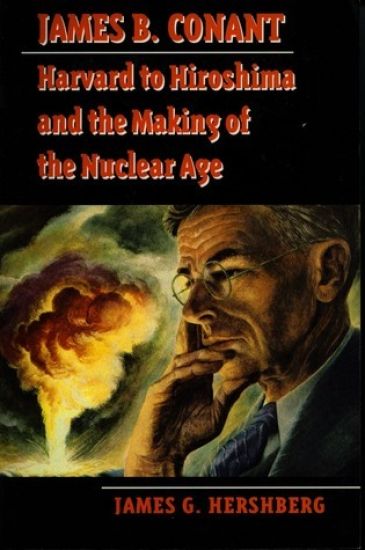
James B. Conant (1893-1978) was one of the giants of the American establishment in the twentieth century. President of Harvard University from 1933 to 1953, he was also a scientist who led the US government's effort to develop weapons of mass destruction, and his story mirrors the transition of the United States from isolationism to global superpower at the dawn of the nuclear age. 'This splendid portrait of Conant ...illuminates the life of a pivotal figure in the making of US nuclear, scientific, educational, and foreign policy for almost half a century. But the book is much more: it is not only an insightful narration of Conant's life, it is also a brilliant and important account of the making of the nuclear age, a chronicle that contains much that is new.' TheWashington Post 'The bomb would be as much Conant's as it was anyone's in government. His inner response to that burden of responsibility has long been obscured, but it is illumined here ...This is a model of historiography that is evocative reading.' The New York Times Book Review 'Vibrantly written and compelling, it breaches Conant's shield of public discretion in masterly fashion ...It is a huge, ambitious work - a history of the Cold War as Conant encountered it as well as a study of the man.' The New Yorker 'Magnificent ...Any reader interested in nuclear weapons, Cold War history, or American politics from FDR to JFK will find this biography riveting.'