This 1952 study is an investigation into the nature of language that focuses on reinterpreting Hamann's theories of language in light of twentieth century linguistic philosophy. One of the first studies of Hamann to be presented in English, it poses many questions of universal concern and interest.
The evolution of the Boston metropolitan area, from country villages and streetcar suburbs to exurban sprawl and "smart growth." Boston's metropolitan landscape has been two hundred years in the making. From its proto-suburban village centers of 1800 to its far-flung, automobile-centric exurbs of today, Boston has been a national pacesetter for suburbanization. In The Hub's Metropolis, James O'Connell charts the evolution of Boston's suburban development.The city of Boston is compact and consolidated--famously, "the Hub." Greater Boston, however, stretches over 1,736 square miles and ranks as the world's sixth largest metropolitan area. Boston suburbs began to develop after 1820, when wealthy city dwellers built country estates that were just a short carriage ride away from their homes in the city. Then, as transportation became more efficient and affordable, the map of the suburbs expanded. The Metropolitan Park Commission's park-and-parkway system, developed in the 1890s, created a template for suburbanization that represents the country's first example of regional planning.O'Connell identifies nine layers of Boston's suburban development, each of which has left its imprint on the landscape: traditional villages; country retreats; railroad suburbs; streetcar suburbs (the first electric streetcar boulevard, Beacon Street in Brookline, was designed by Frederic Law Olmsted); parkway suburbs, which emphasized public greenspace but also encouraged commuting by automobile; mill towns, with housing for workers; upscale and middle-class suburbs accessible by outer-belt highways like Route 128; exurban, McMansion-dotted sprawl; and smart growth. Still a pacesetter, Greater Boston has pioneered antisprawl initiatives that encourage compact, mixed-use development in existing neighborhoods near railroad and transit stations.O'Connell reminds us that these nine layers of suburban infrastructure are still woven into the fabric of the metropolis. Each chapter suggests sites to visit, from Waltham country estates to Cambridge triple-deckers.
Over the years, Boston has been one of America’s leading laboratories of urban culture, including restaurants, and Boston history provides valuable insights into American food ways. James C. O’Connell, in this fascinating look at more than two centuries of culinary trends in Boston restaurants, presents a rich and hitherto unexplored side to the city’s past. Dining Out in Boston shows that the city was a pioneer in elaborate hotel dining, oyster houses, French cuisine, student hangouts, ice cream parlors, the twentieth-century revival of traditional New England dishes, and contemporary locavore and trendy foodie culture. In these stories of the most-beloved Boston restaurants of yesterday and today—illustrated with an extensive collection of historic menus, postcards, and photos—O’Connell reveals a unique history sure to whet the intellectual and nostalgic appetite of Bostonians and restaurant-goers the world over.
In the late twentieth century the American and global economy shifted from manufacturing toward a knowledge industry. Following an economic low point several decades earlier, the city of Boston took advantage of the new era of globalization, fueled by dramatic advances in telecommunications, computer power, and air and sea travel, as well as its own impressive intellectual capital.Boston and the Making of a Global City pulls together scholarship, media stories, personal interviews, and city planning documents to tell the story of Boston’s historical trajectory, as it quickly became a competitive global hub. Starting with its role as a colonial port and nineteenth-century maritime power, but moving quickly forward, the book describes how Boston capitalized on its strengths in higher education and such innovation sectors as life sciences, healthcare, information technology, and finance. Author James O’Connell traces the historical sweep of global flows—trade and supply chains, innovation and the dissemination of knowledge, investment, transportation, tourism, telecommunications, and immigration—that have shaped the city and region’s development. This volume also addresses the economic, social, and environmental challenges that Boston currently faces and how it is strategically positioned to confront them going forward.
In the late twentieth century the American and global economy shifted from manufacturing toward a knowledge industry. Following an economic low point several decades earlier, the city of Boston took advantage of the new era of globalization, fueled by dramatic advances in telecommunications, computer power, and air and sea travel, as well as its own impressive intellectual capital.Boston and the Making of a Global City pulls together scholarship, media stories, personal interviews, and city planning documents to tell the story of Boston’s historical trajectory, as it quickly became a competitive global hub. Starting with its role as a colonial port and nineteenth-century maritime power, but moving quickly forward, the book describes how Boston capitalized on its strengths in higher education and such innovation sectors as life sciences, healthcare, information technology, and finance. Author James O’Connell traces the historical sweep of global flows—trade and supply chains, innovation and the dissemination of knowledge, investment, transportation, tourism, telecommunications, and immigration—that have shaped the city and region’s development. This volume also addresses the economic, social, and environmental challenges that Boston currently faces and how it is strategically positioned to confront them going forward.
Deterministic Methods in Systems Hydrology presents the basic theory underlying the multitude of parameter-rich models which dominate the hydrological literature. Its objectives are to introduce the elements of systems science as applied to hydrological problems; to present flood prediction and flood routing as problems in linear systems theory, clarifying the basic assumptions and evaluating their accuracy; and to review and to evaluate some deterministic models of components of the hydrological cycle, with a view to assembling the most appropriate model of catchment response, for a particular problem in applied hydrology. The material is developed in two parts: the first four chapters present the systems viewpoint, the nature of hydrological systems, some systems mathematics and their application to direct storm runoff. The final four chapters cover linear conceptual models of direct runoff, the fitting of conceptual models to data, simple models of subsurface flow and non-linear deterministic models.
Deterministic Methods in Systems Hydrology presents the basic theory underlying the multitude of parameter-rich models which dominate the hydrological literature. Its objectives are to introduce the elements of systems science as applied to hydrological problems; to present flood prediction and flood routing as problems in linear systems theory, clarifying the basic assumptions and evaluating their accuracy; and to review and to evaluate some deterministic models of components of the hydrological cycle, with a view to assembling the most appropriate model of catchment response, for a particular problem in applied hydrology. The material is developed in two parts: the first four chapters present the systems viewpoint, the nature of hydrological systems, some systems mathematics and their application to direct storm runoff. The final four chapters cover linear conceptual models of direct runoff, the fitting of conceptual models to data, simple models of subsurface flow and non-linear deterministic models.
How do adults learn? For nearly thirty years the general education field, influenced by the adult education model of Malcolm Knowles, has directed considerable attention toward answering this question. With The Christian Educator's Handbook on Adult Education, evangelicals join the discussion. The Christian Educator's Handbook on Adult Education represents one of the first comprehensive attempts by evangelicals to apply adult education theory to Christian education in general. In this book contributors from across the evangelical spectrum--practitioners and academics--present an accessible interpretation, application, and critique of Knowles' approach from a biblical perspective. The result is a highly practical volume composed of applied, theoretical, and age-specific chapters that will appeal to those in ministry and higher education. Also included is a chapter by Knowles, reflecting on his contributions to Christian adult education.
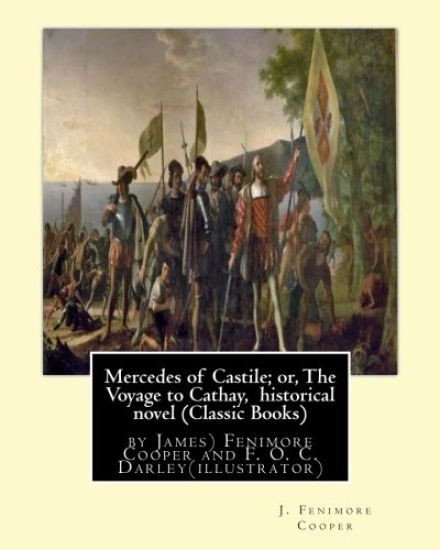
Mercedes of Castile; or, The Voyage to Cathay is a 1840 historical novel by James Fenimore Cooper. The novel is set in 15th century Europe, and follows the preparations and expedition of Christopher Columbus westward to the new world, Archival materials A full manuscript of the novel is held at the The Clifton Waller Barrett Library of American Literature in the Albert and Shirley Small Special Collections Library at the University of Virginia.Contemporary reception The New York Review of Books reviewed the novel in 1840 and was unimpressed, saying the novel was not contributing to "any great increase of fame or fortune to Mr Cooper".The review continued to describe the novel as not including much "romance", instead successfully focusing on the historical elements.In 1978, critic Kennedy Williams, Jr. agreed with the assessment, noting that the novel uses history well and accurately, but is Cooper's best example of the combination of history and fiction when "fail ing] miserably" in Cooper's novels. James Fenimore Cooper (September 15, 1789 - September 15, 1851) was a prolific and popular American writer of the early 19th century.His historical romances of frontier and Indian life in the early American days created a unique form of American literature. He lived most of his life in Cooperstown, New York, which was founded by his father William on property that he owned. Cooper was a lifelong member of the Episcopal Church and, in his later years, contributed generously to it. 1] He attended Yale University for three years, where he was a member of the Linonian Society, but was expelled for misbehavior. Before embarking on his career as a writer, he served in the U.S. Navy as a Midshipman, which greatly influenced many of his novels and other writings. The novel that launched his career was The Spy, a tale about counterespionage set during the Revolutionary War and published in 1821.He also wrote numerous sea stories, and his best-known works are five historical novels of the frontier period known as the Leatherstocking Tales. Among naval historians, Cooper's works on the early U.S. Navy have been well received, but they were sometimes criticized by his contemporaries. Among his most famous works is the Romantic novel The Last of the Mohicans, often regarded as his masterpiece.James Fenimore Cooper was born in Burlington, New Jersey in 1789 to William Cooper and Elizabeth (Fenimore) Cooper, the eleventh of 12 children, most of whom died during infancy or childhood. He was descended from James Cooper of Stratford-upon-Avon, Warwickshire, England, who emigrated to the American colonies in 1679. James and his wife were Quakers who purchased plots of land in New Jersey and Pennsylvania. Seventy-five years after his arrival in America, his great-grandson William was born on December 2, 1754. Shortly after James' first birthday, his family moved to Cooperstown, New York, a community founded by his father on a large piece of land which he had bought for development. Later, his father was elected as a United States Congressman from Otsego County. Their town was in a central area of New York that had previously been occupied by the Iroquois of the Six Nations. The Iroquois were forced to cede their territory after British defeat in the Revolutionary War, as they had been allies.Shortly after the American Revolutionary War, the state opened up these former Iroquois lands for sale and development. Cooper's father purchased several thousand acres of land in upstate New York along the head-waters of the Susquehanna River. By 1788, William Cooper had selected and surveyed the site where Cooperstown would be established. He erected a home on the shore of Otsego lake and moved his family there in the autumn of 1790. He soon began construction of the mansion that would be known as Otsego Hall. It was completed in 1799 when James was ten.
This work has been selected by scholars as being culturally important and is part of the knowledge base of civilization as we know it.This work is in the public domain in the United States of America, and possibly other nations. Within the United States, you may freely copy and distribute this work, as no entity (individual or corporate) has a copyright on the body of the work.Scholars believe, and we concur, that this work is important enough to be preserved, reproduced, and made generally available to the public. To ensure a quality reading experience, this work has been proofread and republished using a format that seamlessly blends the original graphical elements with text in an easy-to-read typeface.We appreciate your support of the preservation process, and thank you for being an important part of keeping this knowledge alive and relevant.
VICTORIA. Is this really artificial intelligence or not? As a companion book to AIDENN read about the advanced androids and their developed thinking. How will Victoria and Aidenn work together to help mankind? What is their goal? What are the alternate goals of the world's military leaders? Will their organization, ARCOR, be a benefit to humanity, or will some perceive them as a threat? Delve into the current world and future world of advanced Artificial Intelligence and decide for yourself where you think it is headed. Will your thinking be on board with Victoria and Aidenn, or not?
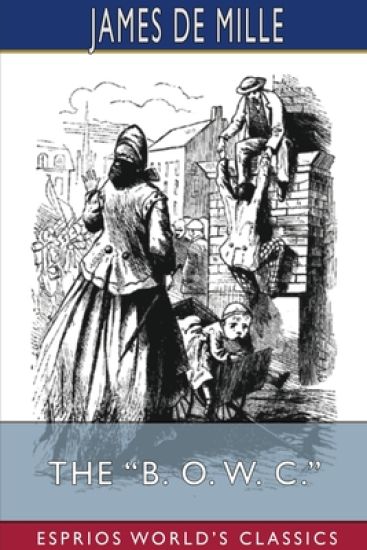
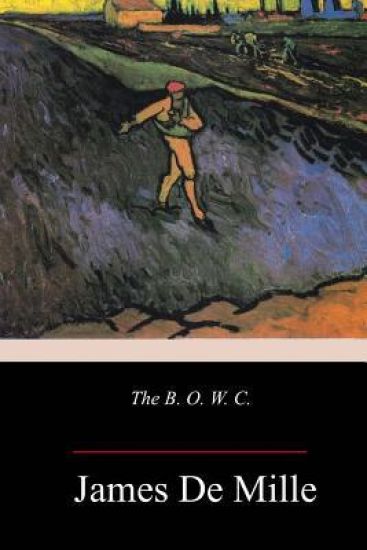
James De Mille (23 August 1833 - 28 January 1880) was a professor at Dalhousie University, Nova Scotia, and an early Canadian novelist who published numerous works of popular fiction from the late 1860s through the 1870s. His most popular work with contemporaries, and the work for which he is most known presently, is A Strange Manuscript Found in a Copper Cylinder, which was serialized posthumously in the magazine Harper's Weekly, and published in book form by Harper and Brothers of New York City, during 1888. Other works included the 1867 historical novel Helena's Household: A Tale of Rome in the First Century, A Castle in Spain (1869), The American Baron (1872) and The Seven Hills (1873).
This scarce antiquarian book is a selection from Kessinger Publishing's Legacy Reprint Series. Due to its age, it may contain imperfections such as marks, notations, marginalia and flawed pages. Because we believe this work is culturally important, we have made it available as part of our commitment to protecting, preserving, and promoting the world's literature. Kessinger Publishing is the place to find hundreds of thousands of rare and hard-to-find books with something of interest for everyone