Glenwood Lake has not seen knights of the realm since, well, ever. But that quickly changes when Sam, Jim, Mark, and their friends find inspiration from a summer blockbuster and motivation from an unknown opponent. Follow their adventures as they enter the woods of Casco Forest and establish their own version of M.A.R.S. (the Middle Ages Reenactment Society). Discover the secrets behind the Kudzu Knights
Race and the Greening of Atlanta turns an environmental lens on Atlanta’s ascent to thriving capital of the Sunbelt over the twentieth century. Uniquely wide ranging in scale, from the city’s variegated neighborhoods up to its place in regional and national political economies, this book reinterprets the fall of Jim Crow as a democratization born of two metropolitan movements: a well-known one for civil rights and a lesser known one on behalf of “the environment.” Arising out of Atlanta’s Black and white middle classes respectively, both movements owed much to New Deal capitalism’s undermining of concentrated wealth and power, if not racial segregation, in the Jim Crow South.Placing these two movements on the same historical page, Christopher C. Sellers spotlights those environmental inequities, ideals, and provocations that catalyzed their divergent political projects. He then follows the intermittent, sometimes vital alliances they struck as civil rights activists tackled poverty, as a new environmental state arose, and as Black politicians began winning elections. Into the 1980s, as a wealth-concentrating style of capitalism returned to the city and Atlanta became a national “poster child” for sprawl, the seedbeds spread both for a national environmental justice movement and for an influential new style of antistatism. Sellers contends that this new conservativism, sweeping the South with an antienvironmentalism and budding white nationalism that echoed the region’s Jim Crow past, once again challenged the democracy Atlantans had achieved.
Race and the Greening of Atlanta turns an environmental lens on Atlanta’s ascent to thriving capital of the Sunbelt over the twentieth century. Uniquely wide ranging in scale, from the city’s variegated neighborhoods up to its place in regional and national political economies, this book reinterprets the fall of Jim Crow as a democratization born of two metropolitan movements: a well-known one for civil rights and a lesser known one on behalf of “the environment.” Arising out of Atlanta’s Black and white middle classes respectively, both movements owed much to New Deal capitalism’s undermining of concentrated wealth and power, if not racial segregation, in the Jim Crow South.Placing these two movements on the same historical page, Christopher C. Sellers spotlights those environmental inequities, ideals, and provocations that catalyzed their divergent political projects. He then follows the intermittent, sometimes vital alliances they struck as civil rights activists tackled poverty, as a new environmental state arose, and as Black politicians began winning elections. Into the 1980s, as a wealth-concentrating style of capitalism returned to the city and Atlanta became a national “poster child” for sprawl, the seedbeds spread both for a national environmental justice movement and for an influential new style of antistatism. Sellers contends that this new conservativism, sweeping the South with an antienvironmentalism and budding white nationalism that echoed the region’s Jim Crow past, once again challenged the democracy Atlantans had achieved.
This book chronicles the creation of Everglades National Park, the largest subtropical wilderness in the United States. This effort, which spanned 1928 to 1958, was of central importance to the later emergence of modern environmentalism. Prior to the park’s creation, the Everglades was seen as a reviled and useless swamp, unfit for typical recreational or development projects. The region’s unusual makeup also made it an unlikely candidate to become a national park, as it had none of the sweeping scenic vistas or geological monuments found in other nationally protected areas.Park advocates drew on new ideas concerning the value of biota and ecology, the importance of wilderness, and the need to protect habitats, marine ecosystems, and plant life to redefine the Everglades. Using these ideas, the Everglades began to be recognized as an ecologically valuable and fragile wetland—and thus a region in need of protective status.While these new ideas foreshadowed the later emergence of modern environmentalism, tourism and the economic desires of Florida’s business and political elites also impacted the park’s future. These groups saw the Everglades’ unique biology and ecology as a foundation on which to build a tourism empire. They connected the Everglades to Florida’s modernization and commercialization, hoping the park would help facilitate the state’s transformation into the Sunshine State. Political conservatives welcomed federal power into Florida so long as it brought economic growth.Yet, even after the park’s creation, conservative landowners successfully fought to limit the park and saw it as a threat to their own economic freedoms. Today, a series of levees on the park’s eastern border marks the line between urban and protected areas, but development into these areas threatens the park system. Rising sea levels caused by global warming are another threat to the future of the park. The battle to save the swamp’s biodiversity continues, and Everglades Park stands at the center of ongoing restoration efforts.
This book chronicles the creation of Everglades National Park, the largest subtropical wilderness in the United States. This effort, which spanned 1928 to 1958, was of central importance to the later emergence of modern environmentalism. Prior to the park’s creation, the Everglades was seen as a reviled and useless swamp, unfit for typical recreational or development projects. The region’s unusual makeup also made it an unlikely candidate to become a national park, as it had none of the sweeping scenic vistas or geological monuments found in other nationally protected areas.Park advocates drew on new ideas concerning the value of biota and ecology, the importance of wilderness, and the need to protect habitats, marine ecosystems, and plant life to redefine the Everglades. Using these ideas, the Everglades began to be recognized as an ecologically valuable and fragile wetland—and thus a region in need of protective status.While these new ideas foreshadowed the later emergence of modern environmentalism, tourism and the economic desires of Florida’s business and political elites also impacted the park’s future. These groups saw the Everglades’ unique biology and ecology as a foundation on which to build a tourism empire. They connected the Everglades to Florida’s modernization and commercialization, hoping the park would help facilitate the state’s transformation into the Sunshine State. Political conservatives welcomed federal power into Florida so long as it brought economic growth.Yet, even after the park’s creation, conservative landowners successfully fought to limit the park and saw it as a threat to their own economic freedoms. Today, a series of levees on the park’s eastern border marks the line between urban and protected areas, but development into these areas threatens the park system. Rising sea levels caused by global warming are another threat to the future of the park. The battle to save the swamp’s biodiversity continues, and Everglades Park stands at the center of ongoing restoration efforts.
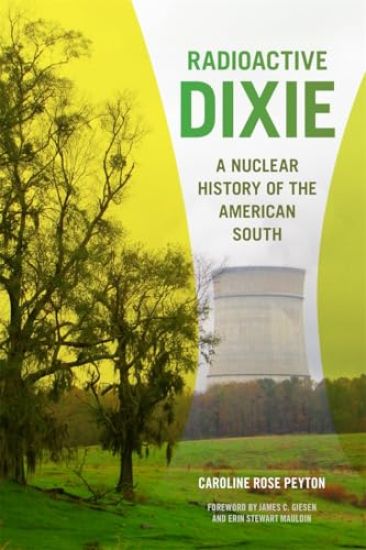
How and why did the South’s history, culture, and politics shape the region’s nuclear and energy industries? And how is that history linked to broader developments in the nuclear and energy industries—nationally and globally? Radioactive Dixie answers those questions as it traces the origins of the U.S. South’s love affair with the atom.The South contains more nuclear reactors than any other region in the United States and much of the nation’s radioactive waste. This book shows how the South’s atomic footprint resulted from a decades-long effort by southern politicians, industry figures, universities, and government officials to transform the American South into a nuclear-oriented region. Waving the atomic talisman, the nuclear industry served as one pivotal part in a larger project of regional modernization—a process that began in the nineteenth century and lasted more than a century. From this perspective, bomb plants and nuclear reactors promised to expand the South’s economy and to cast its identity as a center of modern industry, science, and engineering and as a producer of cheap, limitless energy. Radioactive Dixie is the first book to chronicle this regional story that had national implications. Southern history informed national siting decisions, regulatory oversight, and attitudes toward the various nuclear projects that proliferated in the post–World War II period.
How and why did the South’s history, culture, and politics shape the region’s nuclear and energy industries? And how is that history linked to broader developments in the nuclear and energy industries—nationally and globally? Radioactive Dixie answers those questions as it traces the origins of the U.S. South’s love affair with the atom.The South contains more nuclear reactors than any other region in the United States and much of the nation’s radioactive waste. This book shows how the South’s atomic footprint resulted from a decades-long effort by southern politicians, industry figures, universities, and government officials to transform the American South into a nuclear-oriented region. Waving the atomic talisman, the nuclear industry served as one pivotal part in a larger project of regional modernization—a process that began in the nineteenth century and lasted more than a century. From this perspective, bomb plants and nuclear reactors promised to expand the South’s economy and to cast its identity as a center of modern industry, science, and engineering and as a producer of cheap, limitless energy. Radioactive Dixie is the first book to chronicle this regional story that had national implications. Southern history informed national siting decisions, regulatory oversight, and attitudes toward the various nuclear projects that proliferated in the post–World War II period.
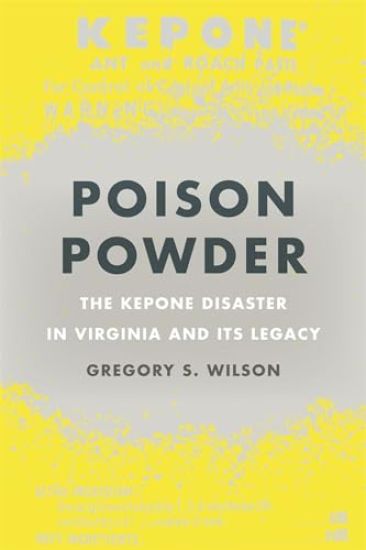
In 1975 workers at Life Science Products, a small makeshift pesticide factory in Hopewell, Virginia, became ill after exposure to Kepone, the brand name for the pesticide chlordecone. They made the poison under contract for a much larger Hopewell company, Allied Chemical. Life Science workers had been breathing in the dust for more than a year. Ingestion of the chemical made their bodies seize and shake. News of ill workers eventually led to thediscovery of widespread environmental contamination of the nearby James River and the landscape of the small, working-class city. Not only had Life Science dumped the chemical, but so had Allied when the company manufactured it in the 1960s and early 1970s. The resulting toxic impact was not only on the city of Hopewell but also on the faraway fields where Kepone was used as an insecticide.Aspects of this environmental tragedy are all too common: corporate avarice, ignorance, and regulatory failure combined with race and geography to determine toxicity and shape the response. But the Kepone story also contains some surprising medical, legal, and political moments amid the disaster. With Poison Powder, Gregory S. Wilson explores the conditions that put the Kepone factory and the workers there in the first place and the effects of the poison on the people and natural world long after 1975. Although the manufacture and use of Kepone is now banned by the Environmental Protection Agency, organochlorines have long half-lives, and these toxic compounds and their residues still remain in the environment.
In 1975 workers at Life Science Products, a small makeshift pesticide factory in Hopewell, Virginia, became ill after exposure to Kepone, the brand name for the pesticide chlordecone. They made the poison under contract for a much larger Hopewell company, Allied Chemical. Life Science workers had been breathing in the dust for more than a year. Ingestion of the chemical made their bodies seize and shake. News of ill workers eventually led to thediscovery of widespread environmental contamination of the nearby James River and the landscape of the small, working-class city. Not only had Life Science dumped the chemical, but so had Allied when the company manufactured it in the 1960s and early 1970s. The resulting toxic impact was not only on the city of Hopewell but also on the faraway fields where Kepone was used as an insecticide.Aspects of this environmental tragedy are all too common: corporate avarice, ignorance, and regulatory failure combined with race and geography to determine toxicity and shape the response. But the Kepone story also contains some surprising medical, legal, and political moments amid the disaster. With Poison Powder, Gregory S. Wilson explores the conditions that put the Kepone factory and the workers there in the first place and the effects of the poison on the people and natural world long after 1975. Although the manufacture and use of Kepone is now banned by the Environmental Protection Agency, organochlorines have long half-lives, and these toxic compounds and their residues still remain in the environment.
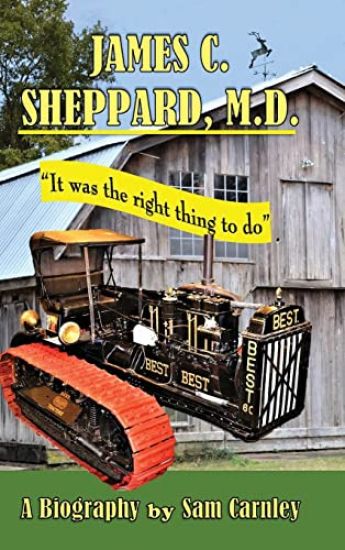
A biography of retired 87 year-old James C. Sheppard, M. D. Born to a poor tenant farmer below Dothan in south Alabama's Houston County, he excelled academically and earned through his educational journey a medical degree, after which he served a four year stint as a U, . S. Air Force flight surgeon. Following separation from the military, he earned specialist certifications in cardiology and internal medicine. He then practiced in Fort Walton Beach, Florida for 37 years. On his farm near DeFuniak Springs, Florida, he collected and restored to like-new condition over 150 antique John Deere and Caterpillar tractors as a hobby. His collection is possibly the largest of its kind in the world.
Reverend Carl Boston sat at the funeral of his best friend and colleague, the Right Reverend Dr. Morgan L. Kendal. Morgan was forty-five years old. He left to cherish his memory, his wife Lorraine and their son Lester, who was sitting on the front pew with other relatives, numb and bewildered, staring straight ahead and focused on Morgan's bronze casket. Morgan was donned in full regalia, a bishop's cross around his neck and a bishop's ring on his right hand, although it had been a posthumous elevation. Carl ached inside, wondering what was so terrible that the only way out for his best friend was to put a gun in his mouth and pull the trigger... None of those that gave remarks at the funeral, including Carl, addressed the "why." Instead, they attempted to console themselves with platitudes such as: "He's resting in Jesus's arms. Even if he could, he wouldn't return to this evil and perverse world," and "We'll surely see him again someday." ...