Kirjojen hintavertailu. Mukana 12 390 323 kirjaa ja 12 kauppaa.

Kirjahaku

Etsi kirjoja tekijän nimen, kirjan nimen tai ISBN:n perusteella.

1000 tulosta hakusanalla James Carleton Yocum; Viva Boothe

The Wit of Whitlam

The Wit of Whitlam

James Carleton

Melbourne University Press
2014
nidottu
His wife Margaret was his 'best appointment', he called Malcolm Fraser 'Kerr's cur' after the Dismissal and when Sir Winton Turnbull called out in parliament 'I am a country member', Gough interjected 'I remember'.When it was suggested he was funny, Gough responded: 'Funny! Funny? Witty, yes. Epigrammatic perhaps, but not funny. You make me sound like a clown. 'James Carleton, Radio National presenter and founder of the university club 'The Dewy-Eyed Whitlamites', presents a keepsake of Goughisms that vindicates the Great Man's self-assessment, 'I never said I was immortal, merely eternal.'
Jews, Christians and Jewish Christians in Antiquity
The book, which consists of some previously published and unpublished essays, examines a variety of issues relevant to the study of ancient Judaism and Christianity and their interaction, including polemic, proselytism, biblical interpretation, messianism, the phenomenon normally described as Jewish Christianity, and the fate of the Jewish community after the Bar Kokhba revolt, a period of considerable importance for the emergence not only of Judaism but also of Christianity. The volume, typically for a collection of essays, does not lay out a particular thesis. If anything binds the collection together, it is the author's attempt to set out the major fault lines in current debate about these disputed subjects, and in the process to reveal their complex and entangled character.
"A Stranger and an Enigma"

"A Stranger and an Enigma"

James Carleton Paget

Mohr Siebeck
2025
sidottu
Albert Schweitzer is principally known as a medical missionary who went to the Gabon just before the First World War and ended up winning the Nobel Peace Prize in the early 1950s. In this volume, which consists of a lengthy introductory chapter followed by nine studies, most of which have been published before but appear here in modified form, an attempt is made to show how any assessment of Schweitzer must take into account his varied identities, both geographic and cultural (as an Alsatian born in 1875 and dying in 1965, he spent his first forty three years as a German and his next forty-seven as a Frenchman), and intellectual and aesthetic (in so far as he ever had a properly professional job, he was a theologian, though he thought of himself more as a philosopher, and music, in its varied manifestations, played a vital part in his life). Were these identities properly integrated and can one argue that in some way they came together in his decision to go to the Gabon? In the process of answering this question, others are addressed: why was it that Schweitzer became the icon he did and why he is now so little known except in German-speaking lands? And the extent to which his activities in Africa make him a figure of contested character in a post-colonial age? In the process of answering these and other questions, and drawing upon a wealth of recently published material, both primary and secondary, the volume presents its readers with a more complex and difficult image of Schweitzer, who can appear more distant and alien.
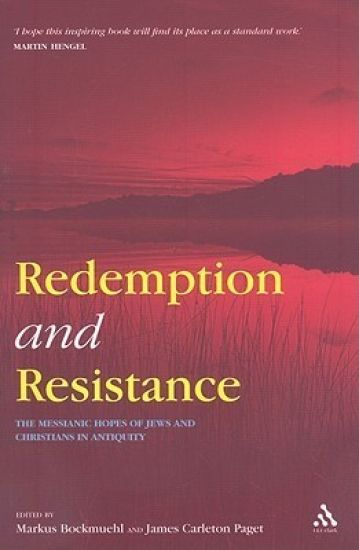
Redemption and Resistance

Redemption and Resistance

Markus Bockmuehl; James Carleton Paget

T. T.Clark Ltd
2009
nidottu
Redemption and Resistance brings together an eminent cast of contributors to provide a state-of-the-art discussion of Messianism as a topic of political and religious commitment and controversy. By surveying this motif over nearly a thousand years with the help of a focused historical and political searchlight, this volume is sure to break fresh ground. It will serve as an attractive contribution to the history of ancient Judaism and Christianity, of the complex and often problematic relationship between them, and of the conflicting loyalties their hopes for redemption created vis-à-vis a public order that was at first pagan and later Christian. Although each chapter is designed to stand on its own as an introduction to the topic at hand, the overall argument unfolds a coherent history. The first two parts, on pre-Christian Jewish and primitive Christian Messianism, set the stage by identifying two entities that in Part III are then addressed in the development of their explicit relationship in a Graeco-Roman world marked by violent persecution of Jewish and Christian hopes and loyalties. The story is then explored beyond the Constantinian turn and its abortive reversal under Julian, to the Christian Empire up to the rise of Islam.
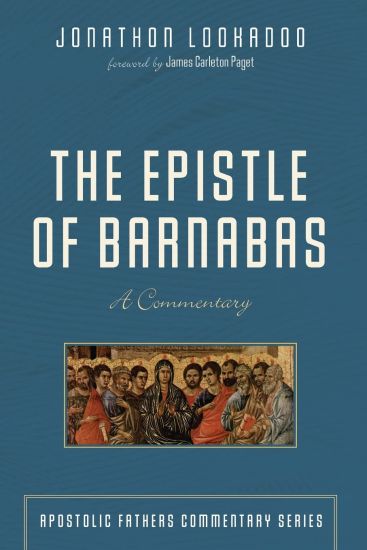
The Epistle of Barnabas

The Epistle of Barnabas

Jonathon Lookadoo; James Carleton Paget

Wipf Stock Publishers
2022
sidottu
Although the Epistle of Barnabas may be best known for its Two Ways Tradition or its anti-Jewish use of Scripture, its contents reveal much that will be of interest to anyone studying Christian origins. In keeping with other contributions to the Apostolic Fathers Commentary Series, this volume not only introduces readers to critical issues such as date, authorship, and opponents but also reflects on the multifaceted scriptural interpretations at play within the argument and sketches the theological beliefs that underlie the text. The commentary also provides a fresh English translation of the Greek text while endeavoring to highlight the internal literary connections within the Epistle of Barnabas. In so doing, this book provides a knowledgeable and accessible interpretation of a fascinating early Christian document.
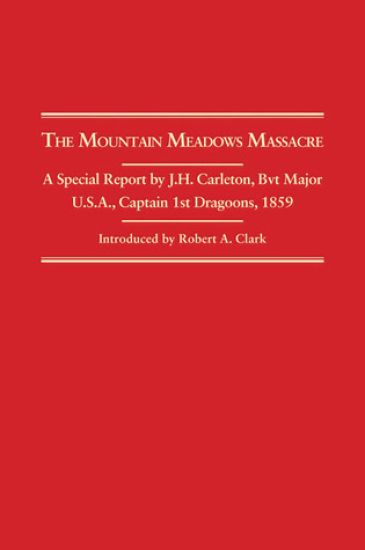
The Mountain Meadows Massacre

The Mountain Meadows Massacre

James Henry Carleton

Arthur H. Clark Company
2000
nidottu
The massacre of 120 emigrant men, women, and children at Mountain Meadows on September 11, 1857, by Mormons and Mormon-incited Indians shocked the nation. It was not until the spring of 1859 that federal authorities began to conduct inquiries into the massacre. Bvt. Major James H. Carleton, 1st Dragoons, was instructed to investigate the even while en route to Salt Lake City. Carleton's account of May 1859 from the bone-strewn ground is full, accurate, and understandably emotional.
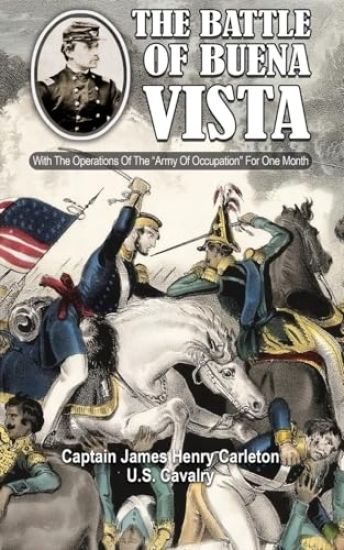
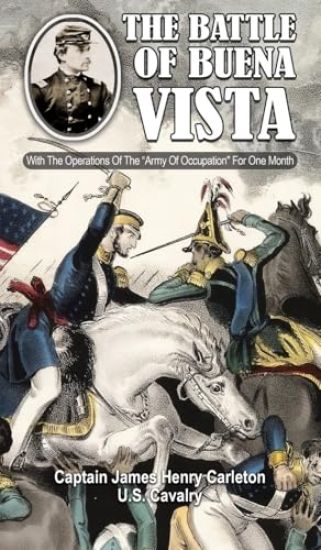
THE BATTLE OF BUENA VISTA With The Operations Of The "Army Of Occupation" For One Month
The author Captain James Henry Carleton was an officer in the US Army and a Union general during the American Civil War. Carleton and is best known as an Indian fighter in the South-western United States.. Partly on the strength of 'The Battle of Buena Vista' he received an appointment from Secretary of War Jefferson Davis in 1856 to make a study of European cavalry tactics.On 22 February 1847, having heard of weakness from the written orders found on an ambushed US scout, Santa Anna, the Mexican soldier and politician, seized the initiative and marched Mexico's entire army north to fight General Zachary Taylor with 20,000 men, hoping to win a smashing victory before William Wallace Smith Bliss's army could invade from the sea. The two armies met and fought the largest battle of the war at the Battle of Buena Vista. Taylor, with 4,600 men, had entrenched at a mountain pass called La Angostura, or 'the narrows', several miles south of Buena Vista ranch. Santa Anna, having little logistics to supply his army, suffered desertions on the long march north and arrived with only 15,000 men in a tired state.Having demanded and been refused the surrender of the US Army, Santa Anna's army attacked the next morning, using a ruse in the battle with the US forces. Santa Anna flanked the US positions by sending his cavalry and some of his infantry up the steep terrain that made up one side of the pass, while a division of infantry attacked frontally to distract and draw out the US forces along the road leading to Buena Vista. Furious fighting ensued, during which the US troops were nearly routed, but managed to cling to their entrenched position, thanks to the Mississippi Rifles, a volunteer regiment led by Jefferson Davis, who formed them into a defensive V formation. The Mexicans had nearly broken the American lines at several points, but their infantry columns, navigating the narrow pass, suffered heavily from the American horse artillery, which fired point-blank canister shots to break up the attacks.Initial reports of the battle, as well as propaganda from the Santanistas, credited the victory to the Mexicans, much to the joy of the Mexican populace, but rather than attack the next day and finish the battle, Santa Anna retreated, losing men along the way, having heard word of rebellion and upheaval in Mexico City. Taylor was left in control of part of northern Mexico, and Santa Anna later faced criticism for his withdrawal. Mexican and American military historians agree that the US Army could likely have