Kirjahaku
Etsi kirjoja tekijän nimen, kirjan nimen tai ISBN:n perusteella.
1000 tulosta hakusanalla James Cyril M Weale
VAN EYCK By James Cyril M. Weale A fully illustrated introduction to one of the masters of Early Netherlandish painting, Jan van Eyck (c. 1390-1441), commonly described as the founder of modern oil painting. Includes a study of Van Eyck's brother, Hubert. Early Netherlandish painting, also known as Flemish painting, is characterized by figurative realism, its incredible sense of domestic interiors and details, luminous light, its 'realist' faces, and its fusions of a micro- and macro- cosmic vision. All Early Netherlandish paintings were made on wood panels, and painted from light to dark in thin glazes. It is partly this subtle glazing which gives Early Netherlandish painting its glorious luminescence. The Early Netherlandish artists exploited the effects of different hues and thicknesses of glazes of oil paint, controlling how the glazes reflected light. Fully illustrated in a brand new format, including contemporaries of Van Eyck. Bibliography and notes. Painters Series. 100 pages. www.crmoon.com
Memlinc
W H James (William Henry Jam Weale; J Cyril M (James Cyril M ) Weale; T Leman (Thomas Leman) Hare
Anson Street Press
2025
pokkari
Memlinc, has been acknowledged as a major work throughout human history, and we have taken precautions to assure its preservation by republishing this book in a modern manner for both present and future generations. This book has been completely retyped, revised, and reformatted. The text is readable and clear because these books are not created from scanned copies.
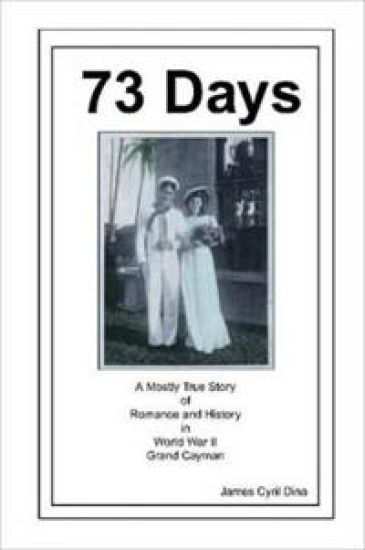
A mostly true story of romance and history in World War II Grand Cayman.
Cantor Lectures on Decorative Bookbinding
Cyril James Humphries Davenport
Kessinger Pub
2009
pokkari
English Embroidered Bookbindings
Cyril James Humphries Davenport
Createspace Independent Publishing Platform
2017
nidottu
A modern-day fable based on the dreams of a mother for her daughter’s future. Through the mother’s teachings we follow the life of a boy through manhood and into old age. The young boy’s mindset is explored in how he manages to overcome a terrible tragedy as a 10-year-old boy which leaves him nurturing an overpowering need for revenge. It is then a second tragic experience as a young man, having been brought up as a displaced orphan and educated in India, which leads him to examine his conscience and his former need for revenge. Circumstance on the boy’s journeys to and from Wales to India and his determination to honour his father give him a fuller understanding about himself. Eventually through his individual effort to succeed, and despite his experiences and troubles, he marries the need to con-join the two important cultures in his life.
Part of a family's heritage is the tales they leave behind, but what happens if you don't have the voice to tell them? Known locally as the Herring Man, Samuel Evans was a fisherman and sailor. He travelled across the seas, sketching down his experiences and leaving his adventure stories as a legacy. His grandson Gwyn is the only living relative left to tell his tales, but he spends his days in silent isolation, fixing damaged fishing nets with the net-needle Samuel carved from a walrus tusk. When a lonely young boy becomes intrigued with his boat and offers to help fix it, they form a bond that gives him hope he'll be able to speak again. As Gwyn starts talking about the past he begins to leave a legacy of his own. A riddle for the young boy to solve. The Herring Man is a modern-day fable, beautifully illustrated by the author, about dealing with grief and searching for hope.
In August 1973, the large and growing television audience of the Soviet Union first laid eyes on what would become its quintessential if fictitious hero spy. He was nothing like the West's action man and sex icon James Bond who had risen to global fame in the 1960s. By contrast, Shtirlits made his first appearance as a handsome yet somewhat tired-looking, middle-aged man on a meditative stroll in wintry woods, to the score of a very slow piano rendition of the show's wistful signature theme. The Cold War East, the Soviet Union and its sphere of domination and influence in Eastern Europe, produced a rich array of home-made intelligence heroes who became vastly popular among television audiences in the 1960s and '70s. In this work, Tarik Cyril Amar recovers and analyzes a world of spy fiction entertainment, focusing on three blockbuster series in the former Soviet bloc: Seventeen Moments of Spring (USSR), Stakes Greater Than Life (Poland), and The Invisible Visor (East Germany). Not only did these shows feature secret agents as heroes, but they were also important to party-state authorities, including security and intelligence services, who were combatting Western subversion and deliberately polishing their own image behind the Iron Curtain. The series made reference to World War II, the Holocaust, and the Cold War, shaping public interpretations of historical events and inspiring a rising generation to join intelligence services, including Vladmir Putin. And they remained persistently popular, surviving the collapse of the authoritarian-socialist political regimes under which they had been produced. Based on exhaustive research of unpublished primary sources in archives in Berlin, Moscow, and Warsaw, James Bond's Socialist Rivals offers a more expansive vision of the phenomenon of the spy as popular-culture hero and of the complex nature of Cold War interactions across ideological divisions, geopolitical blocs, and national borders.
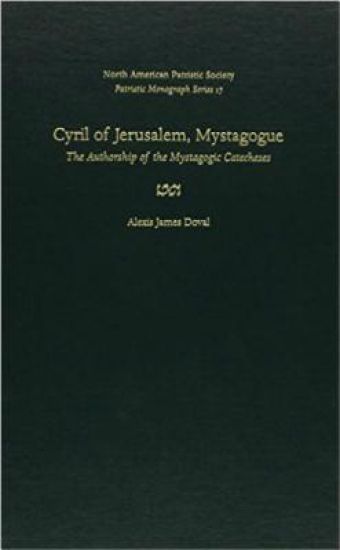
Cyril of Jerusalem, Mystagogue v. 17
Alexis James Doval
The Catholic University of America Press
2001
sidottu
After centuries of unresolved dispute over the question of whether the Mystagogic Catecheses belongs among the works of St. Cyril of Jerusalem, this book finally settles the controversy. These post-baptismal Easter sermons are a prized witness to the way the rites of initiation (baptism, confirmation, and Eucharist) were celebrated in fourth-century. Jerusalem and for the rich sacramental theology they contain. Uncertain authorship has prevented the text from being fully appreciated as an integral part of Cyril's works. Cyril's reputation as a catechist is time-honored, and his Baptismal Catecheses has served as an invaluable source of early Church doctrine and practice. Scholars can now confidently include the mystagogic sermons in their study of Cyril's doctrinal and sacramental theology and practice. This study addresses much more than the question of authorship. A thorough examination of the Mystagogic Catecheses in conjunction with Cyril's Baptismal Catecheses provides a new view into his life and thought as both catechist and mystagogue. It begins with a survey of those aspects of Cyril's life and his Jerusalem church that are relevant to reassessing the authorship of the Mystagogic Catecheses. It then examines the text's manuscript tradition, literary tradition, and date. There follows the most extensive section, a comparative analysis of the disputed sermons and Cyril's Baptismal Catecheses in the areas of liturgical rites, theology, spirituality, and literary style. The text is then compared to the known works of the contending author, John Il of Jerusalem. Finally, the sermons are subjected to a stylometric analysis, that is, a computer-based statistical analysis of literary style. This book will be welcomed by scholars of early Christianity, especially those interested in the life and works of Cyril of Jerusalem. Of special interest is its treatment of the history and development of liturgy in the Christian East through the fourth century. This is the first volume in the Patristic Monograph Series of the North American Patristic Society to be published by the Catholic University of America Press.
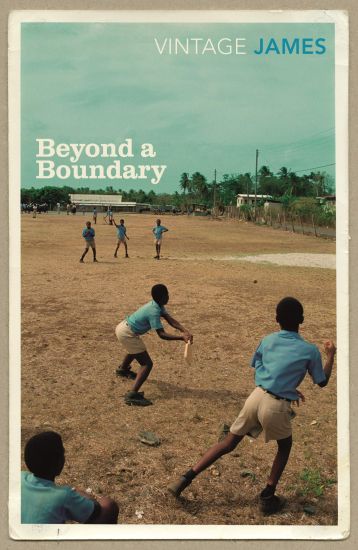
'To say "the best cricket book ever written" is piffingly inadequate praise' Guardian'Great claims have been made for [Beyond a Boundary] since its first appearance in 1963: that it is the greatest sports book ever written; that it brings the outsider a privileged insight into West Indian culture; that it is a severe examination of the colonial condition. All are true' Sunday TimesC L R James, one of the foremost thinkers of the twentieth century, was devoted to the game of cricket. In this classic summation of half a lifetime spent playing, watching and writing about the sport, he recounts the story of his overriding passion and tells us of the players whom he knew and loved, exploring the game's psychology and aesthetics, and the issues of class, race and politics that surround it. Part memoir of a West Indian boyhood, part passionate celebration and defence of cricket as an art form, part indictment of colonialism, Beyond a Boundary addresses not just a sport but a whole culture and asks the question, 'What do they know of cricket who only cricket know?
Soil Fertility Laboratory Manual
Cyril George Hopkins; James Harvey Pettit
Hutson Street Press
2025
sidottu