Kirjahaku
Etsi kirjoja tekijän nimen, kirjan nimen tai ISBN:n perusteella.
1000 tulosta hakusanalla James Davison Hunter
The call to make the world a better place is inherent in the Christian belief and practice. But why have efforts to change the world by Christians so often failed or gone tragically awry? And how might Christians in the 21st century live in ways that have integrity with their traditions and are more truly transformative? In To Change the World, James Davison Hunter offers persuasive--and provocative--answers to these questions. Hunter begins with a penetrating appraisal of the most popular models of world-changing among Christians today, highlighting the ways they are inherently flawed and therefore incapable of generating the change to which they aspire. Because change implies power, all Christian eventually embrace strategies of political engagement. Hunter offers a trenchant critique of the political theologies of the Christian Right and Left and the Neo-Anabaptists, taking on many respected leaders, from Charles Colson to Jim Wallis and Stanley Hauerwas. Hunter argues that all too often these political theologies worsen the very problems they are designed to solve. What is really needed is a different paradigm of Christian engagement with the world, one that Hunter calls ¨faithful presence¨-an ideal of Christian practice that is not only individual but institutional; a model that plays out not only in all relationships but in our work and all spheres of social life. He offers real-life examples, large and small, of what can be accomplished through the practice of ¨faithful presence.¨ Such practices will be more fruitful, Hunter argues, more exemplary, and more deeply transfiguring than any more overtly ambitious attempts can ever be. Written with keen insight, deep faith, and profound historical grasp, To Change the World will forever change the way Christians view and talk about their role in the modern world.

"Looking at what he calls 'The Coming Generation' of Evangelical opinion leaders and elites . . . Hunter draws a nuanced and finely detailed portrait of young Evangelicals who, while certainly more conservative than the mainstream of American Protestants, are at least ambivalent about some important aspects of fundamentalism and at most ready to repudiate elements of fundamentalist faith, politics, and practice. . . . With this book, James Hunter confirms his position as one of the most informed and informing writers on American Evangelicalism."—Samuel C. Heilman, This World
From “the nation’s leading cultural historian” (David Brooks, New York Times), the long-developing cultural divisions beneath our present political crisis Liberal democracy in America has always contained contradictions—most notably, a noble but abstract commitment to freedom, justice, and equality that, tragically, has seldom been realized in practice. While these contradictions have caused dissent and even violence, there was always an underlying and evolving solidarity drawn from the cultural resources of America’s “hybrid Enlightenment.” James Davison Hunter, who introduced the concept of “culture wars” thirty years ago, tells us in this new book that those historic sources of national solidarity have now largely dissolved. While a deepening political polarization is the most obvious sign of this, the true problem is not polarization per se but the absence of cultural resources to work through what divides us. The destructive logic that has filled the void only makes bridging our differences more challenging. In the end, all political regimes require some level of unity. If it cannot be generated organically, it will be imposed by force. Can America’s political crisis be fixed? Can an Enlightenment-era institution—liberal democracy—survive and thrive in a post-Enlightenment world? If, for some, salvaging the older sources of national solidarity is neither possible sociologically, nor desirable politically or ethically, what cultural resources will support liberal democracy in the future?
Addressing America's cultural conflict about such issues as abortion, homosexuality, and family values, the author presents a plan in which America can achieve a renewed democracy, despite these differences.
Why efforts to create a scientific basis of morality are neither scientific nor moral In this illuminating book, James Davison Hunter and Paul Nedelisky trace the origins and development of the centuries-long, passionate, but ultimately failed quest to discover a scientific foundation for morality. The “new moral science” led by such figures as E. O. Wilson, Patricia Churchland, Sam Harris, Jonathan Haidt, and Joshua Greene is only the newest manifestation of that quest. Though claims for its accomplishments are often wildly exaggerated, this new iteration has been no more successful than its predecessors. But rather than giving up in the face of this failure, the new moral science has taken a surprising turn. Whereas earlier efforts sought to demonstrate what is right and wrong, the new moral scientists have concluded, ironically, that right and wrong don’t actually exist. Their (perhaps unwitting) moral nihilism turns the science of morality into a social engineering project. If there is nothing moral for science to discover, the science of morality becomes, at best, a feeble program to achieve arbitrary societal goals. Concise and rigorously argued, Science and the Good is a definitive critique of a would-be science that has gained extraordinary influence in public discourse today and an exposé of that project’s darker turn.
"In the wake of a bitter presidential campaign and in the face of numerous divisive policy questions, many Americans wonder if their country has split in two. People are passionately choosing sides on contentious issues such as the invasion of Iraq, gay marriage, stem-cell research, and the right to die, and the battle over abortion continues unabated. Social and political splits fascinate the media: we hear of Red States against Blue States and the ""Religious Right"" against ""Secular America""; Fox News and Air America; NASCAR dads and soccer moms. Is America, in fact, divided so clearly? Does a moderate middle still exist? Is the national fabric fraying? To the extent that these divisions exist, are they simply the healthy and unavoidable products of a diverse, democratic nation? In Is There a Culture War? two of America's leading authorities on political culture lead a provocative and thoughtful investigation of this question and its ramifications. James Davison Hunter and Alan Wolfe debate these questions with verve, insight, and a deep knowledge rooted in years of study and reflection. Long before most scholars and pundits addressed the issue, Hunter and Wolfe were identifying the fault lines in the debate. Hunter's 1992 book Culture Wars put the term in popular circulation, arguing that America was in the midst of a ""culture war"" over ""our most fundamental and cherished assumptions about how to order our lives."" Six years later, in One Nation After All, Wolfe challenged the idea of a culture war and argued that a majority of Americans were seeking a middle way, a blend of the traditional and the modern. For the first time, these two distinguished scholars join in dialogue to clarify their differences, update their arguments, and search for the truth about America's cultural condition. "
A brilliant meditation on politics, morality, and history from one of the most courageous and controversial authors of our age Renowned Eastern European author Adam Michnik was jailed for more than six years by the communist regime in Poland for his dissident activities. He was an outspoken voice for democracy in the world divided by the Iron Curtain and has remained so to the present day. In this thoughtful and provocative work, the man the Financial Times named “one of the 20 most influential journalists in the world” strips fundamentalism of its religious component and examines it purely as a secular political phenomenon. Comparing modern-day Poland with postrevolutionary France, Michnik offers a stinging critique of the ideological “virus of fundamentalism” often shared by emerging democracies: the belief that, by using techniques of intimidating public opinion, a state governed by “sinless individuals” armed with a doctrine of the only correct means of organizing human relations can build a world without sin. Michnik employs deep historical analysis and keen political observation in his insightful five-point philosophical meditation on morality in public life, ingeniously expounding on history, religion, moral thought, and the present political climate in his native country and throughout Europe.
Cultural Analysis
Robert Wuthnow; James Davison Hunter; Albert J. Bergesen; Edith Kurzweil
Routledge
2012
nidottu
First published in 1984, Cultural Analysis is a systematic examination of the theories of culture contained in the writings of four contemporary social theorists: Peter L. Berger, Mary Douglas, Michel Foucault, and Jürgen Habermas.This study of their work clarifies their contributions to the analysis of culture and shows the converging assumptions that the authors believe are laying the foundation for a new approach to the study of culture. The focus is specifically on culture, a concept that remains subject to ambiguities of treatment, and concentrates on questions concerning the definition and content of culture, its construction, its relations with social conditions, and the manner in which it may be changing. The books demonstrates how these writers have made strides towards defining culture as an objective element of social interaction which can be subjected to critical investigation.
Cultural Analysis
Robert Wuthnow; James Davison Hunter; Albert J. Bergesen; Edith Kurzweil
Routledge
2009
sidottu
First published in 1984, Cultural Analysis is a systematic examination of the theories of culture contained in the writings of four contemporary social theorists: Peter L. Berger, Mary Douglas, Michel Foucault, and Jürgen Habermas.This study of their work clarifies their contributions to the analysis of culture and shows the converging assumptions that the authors believe are laying the foundation for a new approach to the study of culture. The focus is specifically on culture, a concept that remains subject to ambiguities of treatment, and concentrates on questions concerning the definition and content of culture, its construction, its relations with social conditions, and the manner in which it may be changing. The books demonstrates how these writers have made strides towards defining culture as an objective element of social interaction which can be subjected to critical investigation.
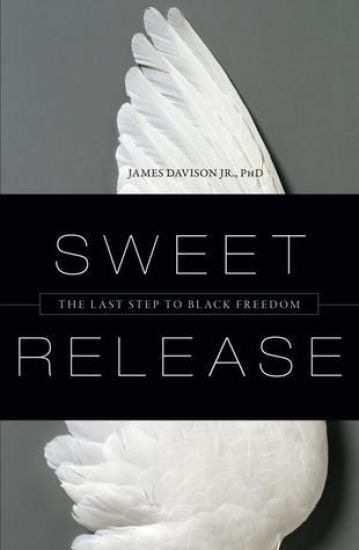
African Americans have come a long way in the difficult upward struggle from slavery to the relatively broad freedoms enjoyed today. Together, as a potent and well-knit group, they have battled endlessly in their march toward freedom. Finally, according to psychologist James Davison Jr, the last step to freedom for black Americans has arrived. But, that last step must be taken as individuals - not as a collective. In this assessment of the problems and potentials facing African Americans, Dr Davison argues that in order for achieving individuals to advance to the final step of freedom, they must break free from the mental shackles created by the black community.The central theme of "Sweet Release" is that the forces that impinge most upon psychological freedom for black Americans come from within. Guilt for being successful, shame in reaction to the misbehaviours of race peers, demands to give back to the community, and accusations of trying to be white are just a few of the mechanisms that thwart psychological freedom for black persons. Dr Davison argues that individual lifestyles, aspirations, even identities are constrained by the spectre of racial unity. As a result, for black advancers, what remains to be overcome is not 'the system' or 'them', but internalised community attitudes that put a choke hold on individual freedom. Unafraid of controversy or candid assessment, Dr Davison addresses these and other thorny issues with psychological insight while offering strategies to move beyond group constrictions toward personal freedom.
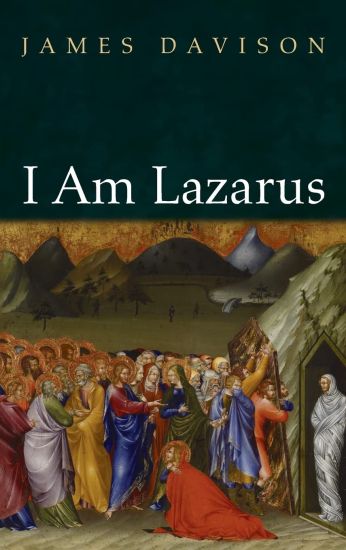
We sometimes wonder what God's plan is for our short time on Earth. In this story, three people resurrected by the Son of God--Lazarus of Bethany, the daughter of Jarius, and the son of the widow from Nain--are stunned when the apostle Paul reveals that they are now immortal. Together they travel across the centuries, collecting and preserving the words of Jesus Christ. But it soon becomes clear that they must also become warriors for Christ as they elude a persistent group of zealots who are determined to permanently return them to the grave.
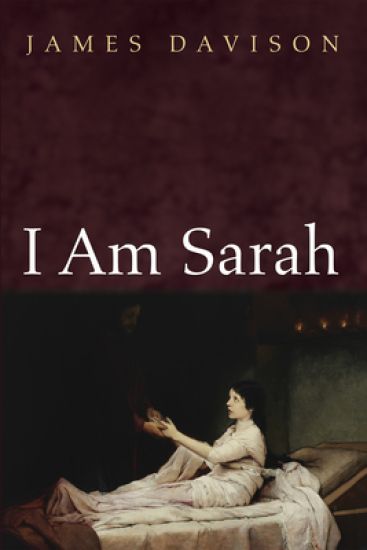
This is the entertaining and intriguing account of Sarah, a woman who has been alive for more than a millennium. She fell ill in her nineteenth year of life, died, and was resurrected by Jesus Christ. Pursued by the authorities who view her return to life as an abomination, she has been traveling through history with two others resurrected by Jesus, Lazarus of Bethany, and Elan, the son of the widow from Nain. After learning that their resurrections conveyed immortality, the three set out to discover why. While Lazarus is intent on preserving the beginnings of Christianity and Elan is happily exploring new geographies, Sarah searches for her life's purpose. Having fought alongside Lazarus and Elan in the Crusades, she now finds her place as a teacher, mentor, and gifted healer. But her new life is soon tested in a way she wasn't prepared to face.
The Ballads and Songs of Yorkshire
Christopher James Davison Ingledew
Anson Street Press
2025
pokkari
The Ballads and Songs of Yorkshire
Christopher James Davison Ingledew
Anson Street Press
2025
sidottu
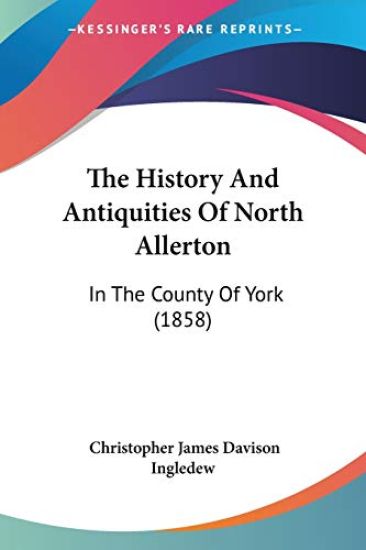
The History And Antiquities Of North Allerton: In The County Of York (1858)
Christopher James Davison Ingledew
KESSINGER PUBLISHING, LLC
2008
nidottu
The History And Antiquities Of North Allerton: In The County Of York (1858)
Christopher James Davison Ingledew
KESSINGER PUBLISHING, LLC
2008
sidottu