Kirjojen hintavertailu. Mukana 11 244 527 kirjaa ja 12 kauppaa.

Kirjahaku

Etsi kirjoja tekijän nimen, kirjan nimen tai ISBN:n perusteella.

1000 tulosta hakusanalla James Elkins

Why Art Cannot Be Taught

Why Art Cannot Be Taught

James Elkins

University of Illinois Press
2001
nidottu
In this smart survival guide for students and teachers--the only book of its kind--James Elkins examines the "curious endeavor to teach the unteachable" that is generally known as college-level art instruction. This singular project is organized around a series of conflicting claims about art: "Art can be taught, but nobody knows quite how." "Art can be taught, but it seems as if it can't be since so few students become outstanding artists." "Art cannot be taught, but it can be fostered or helped along." "Art cannot be taught or even nourished, but it is possible to teach right up to the beginnings of art so that students are ready to make art the moment they graduate." "Great art cannot be taught, but more run-of-the-mill art can be." Elkins traces the development (or invention) of the modern art school and considers how issues such as the question of core curriculum and the intellectual isolation of art schools affect the teaching and learning of art. He also addresses the phenomenon of art critiques as a microcosm for teaching art as a whole and dissects real-life critiques, highlighting presuppositions and dynamics that make them confusing and suggesting ways to make them more helpful. Elkins's no-nonsense approach clears away the assumptions about art instruction that are not borne out by classroom practice. For example, he notes that despite much talk about instilling visual acuity and teaching technique, in practice neither teachers nor students behave as if those were their principal goals. He addresses the absurdity of pretending that sexual issues are absent from life-drawing classes and questions the practice of holding up great masters and masterpieces as models for students capable of producing only mediocre art. He also discusses types of art--including art that takes time to complete and art that isn't serious--that cannot be learned in studio art classes.Why Art Cannot Be Taught is a response to Elkins's observation that "we know very little about what we do" in the art classroom. His incisive commentary illuminates the experience of learning art for those involved in it, while opening an intriguing window for those outside the discipline.
Our Beautiful, Dry, and Distant Texts

Our Beautiful, Dry, and Distant Texts

James Elkins

Pennsylvania State University Press
1997
sidottu
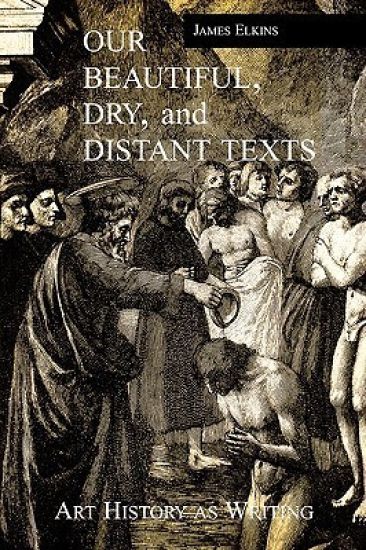
How do psychoanalytic, semiotic, deconstructive, and other interpretations represent works of art? What can they see, and what must they miss? In Our Beautiful, Dry, and Distant Texts, Elkins suggests that the philosophic problems posed by these questions are essentially insuperable because philosophy makes demands of visual artifacts that they can answer only by becoming mirror images of philosophic discourse. Elkins argues that writing is what art historians produce, and, whether such writing is a transparent vehicle for the transmission of facts or an embattled forum for the rehearsal of institutional relations and constructions of history, it is an expressive medium, with the capacity for emotion and reflection. Therefore, it needs to be taken seriously for its own sake: it is the testament of art history and of individual historians, and it is only weakened and slighted by versions of history that imagine it either as uncontrolled dissemination or objective discovery and reporting. Elkins's investigation is not a prescription for opening art history to new influences or for focusing it on particular problems. It is a plea for circumspection in the entire endeavor of trying to force images into words, and in the curious vocation of writing the history of art.
Why Are Our Pictures Puzzles?

Why Are Our Pictures Puzzles?

James Elkins

Routledge
1999
nidottu
With bracing clarity, James Elkins explores why images are taken to be more intricate and hard to describe in the twentieth century than they had been in any previous century. Why Are Our Pictures Puzzles? uses three models to understand the kinds of complex meaning that pictures are thought to possess: the affinity between the meanings of paintings and jigsaw-puzzles; the contemporary interest in ambiguity and 'levels of meaning'; and the penchant many have to interpret pictures by finding images hidden within them. Elkins explores a wide variety of examples, from the figures hidden in Renaissance paintings to Salvador Dali's paranoiac meditations on Millet's Angelus, from Persian miniature paintings to jigsaw-puzzles. He also examines some of the most vexed works in history, including Watteau's "meaningless" paintings, Michelangelo's Sistine Ceiling, and Leonardo's Last Supper.
Our Beautiful, Dry and Distant Texts
Our Beautiful, Dry, and Distant Texts examines art historical writing as an expressive medium, capable of emotion and reflection - and therefore deserving of serious consideration for its own sake, as the testament of art history and of individual historians. Elkins asks such questions as: How do various art historical approaches represent works of art? What can they see, and what must they miss? And what insight does such writing offer us about ourselves? Drawing on analyses of texts by Derrida, Deleuze and other leading critics, as well as illustrations of artworks from various cultures, Elkins constructs an eloquent plea for circumspection in the entire endeavour of trying to force images into words and in the curious vocation of writing the history of art.
Pictures and Tears

Pictures and Tears

James Elkins

Routledge
2001
sidottu
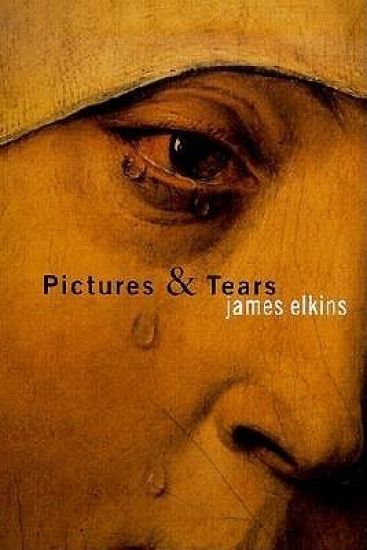
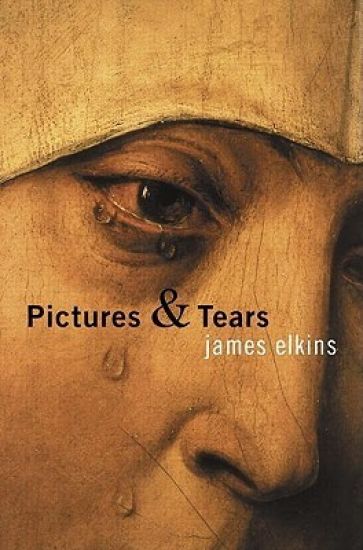
Art Does art leave you cold? And is that what it's supposed to do? Or is a painting meant to move you to tears? Hemingway was reduced to tears in the midst of a drinking bout when a painting by James Thurber caught his eye. And what's bad about that? In Pictures and Tears, art historian James Elkins tells the story of paintings that have made people cry. Drawing upon anecdotes related to individual works of art, he provides a chronicle of how people have shown emotion before works of art in the past, and a meditation on the curious tearlessness with which most people approach art in the present. Deeply personal, Pictures and Tears is a history of emotion and vulnerability, and an inquiry into the nature of art. This book is a rare and invaluable treasure for people who love art. Also includes an 8-page color insert.
Stories of Art

Stories of Art

James Elkins

Routledge
2002
sidottu
Stories of Art is James Elkins's intimate history of art. Concise and original, this engaging book is an antidote to the behemoth art history textbooks from which we were all taught. As he demonstrates so persuasively, there can never be one story of art. Cultures have their own stories - about themselves, about other cultures - and to hear them all is one way to hear the multiple stories that art tells. But each of us also has our own story of art, a kind of private art history made up of the pieces we have seen, and loved or hated, the effects they had on us, and the connections that might be drawn among them.Elkins opens up the questions that traditional art history usually avoids. What about all the art not produced in Western Europe or in the Europeanized Americas? Is it possible to include Asian art and Indian art in ‘the story?’ What happens when one does? To help us find answers, he uses both Western and non-Western artworks, tables of contents from art histories written in cultures outside the centre of Western European tradition, and strangely wonderful diagrams of how artworks might connect through a single individual. True multiculturalism may be an impossibility, but art lovers can each create a ‘story of art’ that is right for themselves.
Stories of Art

Stories of Art

James Elkins

Routledge
2002
nidottu
Stories of Art is James Elkins's intimate history of art. Concise and original, this engaging book is an antidote to the behemoth art history textbooks from which we were all taught. As he demonstrates so persuasively, there can never be one story of art. Cultures have their own stories - about themselves, about other cultures - and to hear them all is one way to hear the multiple stories that art tells. But each of us also has our own story of art, a kind of private art history made up of the pieces we have seen, and loved or hated, the effects they had on us, and the connections that might be drawn among them.Elkins opens up the questions that traditional art history usually avoids. What about all the art not produced in Western Europe or in the Europeanized Americas? Is it possible to include Asian art and Indian art in ‘the story?’ What happens when one does? To help us find answers, he uses both Western and non-Western artworks, tables of contents from art histories written in cultures outside the centre of Western European tradition, and strangely wonderful diagrams of how artworks might connect through a single individual. True multiculturalism may be an impossibility, but art lovers can each create a ‘story of art’ that is right for themselves.
Visual Studies

Visual Studies

James Elkins

Routledge
2003
sidottu
In his latest book, James Elkins offers a road map through the field of visual studies, describing its major concerns and its principal theoretical sources. Then, with the skill and insight that have marked his successful books on art and visuality, Elkins takes the reader down a side road where visual studies can become a more interesting place. Why look only at the same handful of theorists? Why exclude from one's field of vision non-Western art or the wealth of scientific images?
Visual Studies

Visual Studies

James Elkins

Routledge
2003
nidottu
In his latest book, James Elkins offers a road map through the field of visual studies, describing its major concerns and its principal theoretical sources. Then, with the skill and insight that have marked his successful books on art and visuality, Elkins takes the reader down a side road where visual studies can become a more interesting place. Why look only at the same handful of theorists? Why exclude from one's field of vision non-Western art or the wealth of scientific images?
On the Strange Place of Religion in Contemporary Art
Can contemporary art say anything about spirituality? John Updike calls modern art "a religion assembled from the fragments of our daily life," but does that mean that contemporary art is spiritual? What might it mean to say that the art you make expresses your spiritual belief?On the Strange Place of Religion in Contemporary Art explores the curious disconnection between spirituality and current art. This book will enable you to walk into a museum and talk about the spirituality that is or is not visible in the art you see.
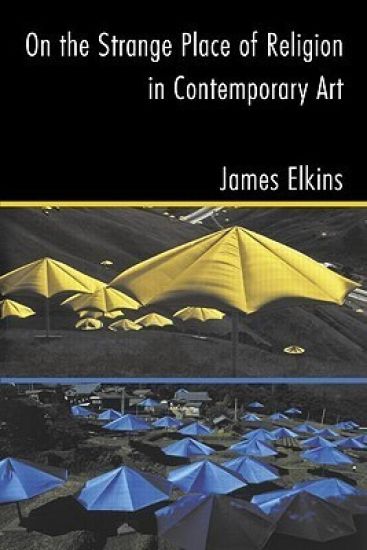
On the Strange Place of Religion in Contemporary Art
Can contemporary art say anything about spirituality? John Updike calls modern art "a religion assembled from the fragments of our daily life," but does that mean that contemporary art is spiritual? What might it mean to say that the art you make expresses your spiritual belief?On the Strange Place of Religion in Contemporary Art explores the curious disconnection between spirituality and current art. This book will enable you to walk into a museum and talk about the spirituality that is or is not visible in the art you see.
Pictures and Tears

Pictures and Tears

James Elkins

Routledge
2004
nidottu
Art Does art leave you cold? And is that what it's supposed to do? Or is a painting meant to move you to tears? Hemingway was reduced to tears in the midst of a drinking bout when a painting by James Thurber caught his eye. And what's bad about that? In Pictures and Tears, art historian James Elkins tells the story of paintings that have made people cry. Drawing upon anecdotes related to individual works of art, he provides a chronicle of how people have shown emotion before works of art in the past, and a meditation on the curious tearlessness with which most people approach art in the present. Deeply personal, Pictures and Tears is a history of emotion and vulnerability, and an inquiry into the nature of art. This book is a rare and invaluable treasure for people who love art. Also includes an 8-page color insert.
Master Narratives and their Discontents
In this bracing engagement with the many versions of art history, James Elkins argues that the story of modernism and postmodernism is almost always told in terms of four narratives. Works of art are either seen as modern or postmodern, or praised for their technical skill or because of the politics they appear to embody. These are master narratives of contemporary criticism, and each leads to a different understanding of what art is and does. Both a cogent overview of the state of thinking about art and a challenge to think outside the art historical box, Master Narratives and their Discontents is the first volume in a series of short books on the theories of modernism by leading art historians on twentieth-century art and art criticism.
Master Narratives and their Discontents
In this bracing engagement with the many versions of art history, James Elkins argues that the story of modernism and postmodernism is almost always told in terms of four narratives. Works of art are either seen as modern or postmodern, or praised for their technical skill or because of the politics they appear to embody. These are master narratives of contemporary criticism, and each leads to a different understanding of what art is and does. Both a cogent overview of the state of thinking about art and a challenge to think outside the art historical box, Master Narratives and their Discontents is the first volume in a series of short books on the theories of modernism by leading art historians on twentieth-century art and art criticism.
How to Use Your Eyes

How to Use Your Eyes

James Elkins

Routledge
2008
nidottu
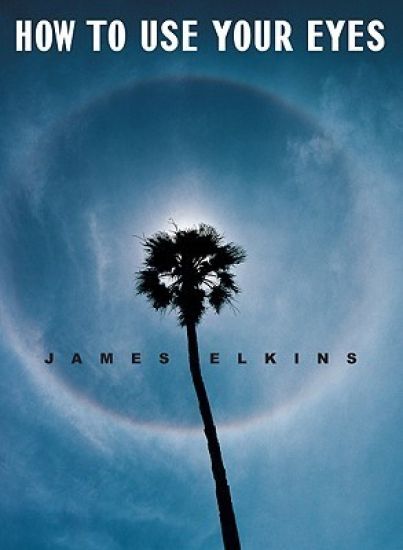
"... visually stunning and mentally stimulating."—Scientific American"…the author of What Painting Is (1998) has written a fascinating new book filled with gorgeous illustrations that would inspire us ‘to learn to see anything.’ It's a tall order, to be sure, but one that the author pulls off admirably….How to Use Your Eyes is a wondrous visual tour that Elkins hopes will help us ‘learn to use our eyes more concertedly until the details of the world slowly reveal themselves.’ Readers will be inspired to stop and smell--nay, see--the roses."—Booklist"Elkins invites his readers to extend perception beyond narrow specialties to see meaning in the mundane. He is ever curious, his mind seemingly in overdrive."—Chicago Tribune Magazine"In that fascinating zone where creative imagination and scientific observation meet, Elkins shines a conceptual flashlight, aiming to illuminate in 32 short chapters a fraction of what we are missing daily. He asks us to use our eyes and our minds differently, to see the world as few of us bother to see it because we rarely make the effort."—Library JournalGrass, the night sky, a postage stamp, a crack in the sidewalk, a shoulder. Ordinary objects of everyday life.But when we look at them—really look at them—what do we see?In the tradition of John Berger’s bestselling Ways of Seeing, James Elkins’s How to Use your Eyes invites us to look at- and maybe see for the first time- the world around us, with breathtaking results. Here are the common artifacts of life, often misunderstood and largely ignored, brought into striking focus. A butterfly's wing pattern encodes its identity. A cloudless sky yields a precise sequence of colors at sunset. A bridge reveals the relationship of a population with its landscape. With the discerning eye of a painter and the zeal of a detective, Elkins also explores complicated things like mandalas, the periodic table, or a hieroglyph, remaking the world into a treasure box of observations—eccentric, ordinary, marvelous. How to Use Your Eyes will transform your view of nature and the mind.
What Photography Is

What Photography Is

James Elkins

Routledge
2011
sidottu
In What Photography Is, James Elkins examines the strange and alluring power of photography in the same provocative and evocative manner as he explored oil painting in his best-selling What Painting Is. In the course of an extended imaginary dialogue with Roland Barthes's Camera Lucida, Elkins argues that photography is also about meaninglessness--its apparently endless capacity to show us things that we do not want or need to see--and also about pain, because extremely powerful images can sear permanently into our consciousness. Extensively illustrated with a surprising range of images, the book demonstrates that what makes photography uniquely powerful is its ability to express the difficulty--physical, psychological, emotional, and aesthetic--of the act of seeing.
What Photography Is

What Photography Is

James Elkins

Routledge
2011
nidottu
In What Photography Is, James Elkins examines the strange and alluring power of photography in the same provocative and evocative manner as he explored oil painting in his best-selling What Painting Is. In the course of an extended imaginary dialogue with Roland Barthes's Camera Lucida, Elkins argues that photography is also about meaninglessness--its apparently endless capacity to show us things that we do not want or need to see--and also about pain, because extremely powerful images can sear permanently into our consciousness. Extensively illustrated with a surprising range of images, the book demonstrates that what makes photography uniquely powerful is its ability to express the difficulty--physical, psychological, emotional, and aesthetic--of the act of seeing.
On Pictures and the Words that Fail Them

On Pictures and the Words that Fail Them

James Elkins

Cambridge University Press
2011
pokkari
In this innovative, interdisciplinary study, James Elkins argues against the assumption that images can be adequately described in words. In his view, words must always fail because pictures possess a residue of 'meaningless' marks that cannot be apprehended as signs. On Pictures and the Words that Fail Them is a 1998 text which provides detailed, incisive critiques of fundamental notions about pictures: their allegedly semiotic structures; the 'rational' nature of realism; and the ubiquity of the figure-ground relation. Elkins then opens the concept of images to non-Western and prehistoric ideas, exploring Chinese concepts of magic, Mesopotamian practices of counting and sculpture, religious ideas about hypostasis, philosophical discussions concerning invisibility and blindness, and questions on the limits of the destruction of meaning.