

Kirjahaku
Etsi kirjoja tekijän nimen, kirjan nimen tai ISBN:n perusteella.
1000 tulosta hakusanalla James F. Dunn





Dirty Little Secrets of the Vietnam War: Military Information You're Not Supposed to Know
James F. Dunnigan; Albert a. Nofi
St. Martin's Griffin
2000
nidottu
James F. Dunnigan and Albert A Nofi's Dirty Little Secrets of the Vietnam War allows us to see what really happened to American forces in Southeast Asia, separating popular myth from explosive reality in a clear, concise manner. Containing more than two hundred examinations of different aspects of the war, the book questions why the American military ignored the lessons taught by previous encounters with insurgency forces; probes the use of group think and mind control by the North Vietnamese; and explores the role technology played in shaping the way the war was fought. Of course, the book also reveals the "dirty little secrets," the truth behind such aspects of the conflict as the rise of the Montagnard mercenaries-the most feared group of soldiers participating in the secret war in Laos-and the details of the hidden struggle for the Ho Chi Minh Trail. With its unique and perceptive examination of the conflict, Dirty Little Secrets of the Vietnam War offers a critical addition to the library of Vietnam War history.

How To Make War A Comprehensive Guide to Modern Warfare for the Post-Col d War Era
James F Dunnigan
HARPERCOLLINS PUBLISHERS
2003
sidottu
An up-to-date, comprehensive survey of modern warfare furnishes a detailed explanation of virtually every facet of modern war, examining the world's armed forces, cutting-edge weapons, tactics, logistics, intelligence, the increasing use of terrorist techniques, and more. Original.




Dirty Little Secrets of the Twentieth Century
James F Dunnigan
HARPERCOLLINS PUBLISHERS INC
2000
pokkari
The popular author of Dirty Little Secrets, Dirty Little Secrets of World War II, and Dirty Little Secrets of the Vietnam War offers a comprehensive look at what really happened in our century, exposing the real stories behind what we've always assumed as fact. In a concise, easy-to-read format, Dunnigan divulges 150 of the biggest misconceptions about the twentieth century, organizing them under a broad range of such categories as the military, entertainment, technology, and politics.In the same thoughtful but slightly irreverent style that has characterized the Dirty Little Secrets series, Dunnigan explains why nongovernment organizations are actually more powerful than many governments and how the use of droids or combat robots has gone largely unnoticed. He reports the real reason the human life span is so much longer now, and reveals that this century has been as plagued as the Middle Ages by religious wars. And while we might think that wars or epidemics have been the primary cause of death in the twentieth century, Dunnigan reveals that more people have been killed by their own governments than any other means.Perfectly timed for the approach of a new millennium, Dirty Little Secrets of the Twentieth Century reveals the shape of the past and direction of our future through the best-kept secrets and surprises of the century

"Dirty Little Secrets of World War II " exposes the dark, irreverent, misunderstood, and often tragicomic aspects of military operations during World War II, many of them virtually unknown even to military buffs. Like its successful predecessor, "Dirty Little Secrets," Dunnigan and Nofi's new book vividly brings to life all theaters and participants of the war. Revelations include: - The real death count for the war, and why it has never been previously released.- The "new age" general who refused to smoke or drink, who lived on a vitamin-enriched diet, who opposed animal experimentation, and who regularly consulted his astrologer. - How equipment developed for the war led to such modern high-tech innovations as "smart bombs," electronic warfare, and nuclear missles. - The lackadaisical relationship between Germany and Japan throughout the war.- Tricky bits of information about the lingering effects of the war -- like the thousands of live shells and mines that are still buried in Europe and off the East Coast of America.

Tall, handsome and charismatic, James Jaquess impressed men and charmed ladies who knew him as a preacher, a college president or colonel of an Illinois regiment. In 1864 he and James Gilmore talked to Jefferson Davis about terms of peace. Lincoln recognized his many abilities and invited Jaquess to serve as one of his personal agents. But after the Civil War ended, this biography reveals, Jaquess' life changed for the worse. He was tried in Kentucky for the death of a woman and failed as a carpetbagger in Arkansas and Mississippi. Then he convinced his family and friends in Indiana and numerous residents of New York to invest in Lawrence-Townley bonds and share in a fortune waiting in England. This venture ended in poverty for him and a sentence in a British prison. When he returned to America for his final years, Jaquess still held the respect of the men of the 73rd Infantry and the affection of the women who knew him as president of their college in Jacksonville. His misadventures having turned his black hair to white, he still possessed the charisma that had led to his national fame.
![The Ambrose Brewer Family, 1753-1855 / [by James F. Bowman].](/covers/9781014203106.jpg)
The Ambrose Brewer Family, 1753-1855 / [by James F. Bowman].
James F. Bowman
Hassell Street Press
2021
nidottu
This work has been selected by scholars as being culturally important and is part of the knowledge base of civilization as we know it.This work is in the public domain in the United States of America, and possibly other nations. Within the United States, you may freely copy and distribute this work, as no entity (individual or corporate) has a copyright on the body of the work.Scholars believe, and we concur, that this work is important enough to be preserved, reproduced, and made generally available to the public. To ensure a quality reading experience, this work has been proofread and republished using a format that seamlessly blends the original graphical elements with text in an easy-to-read typeface.We appreciate your support of the preservation process, and thank you for being an important part of keeping this knowledge alive and relevant.
This work has been selected by scholars as being culturally important and is part of the knowledge base of civilization as we know it.This work is in the public domain in the United States of America, and possibly other nations. Within the United States, you may freely copy and distribute this work, as no entity (individual or corporate) has a copyright on the body of the work.Scholars believe, and we concur, that this work is important enough to be preserved, reproduced, and made generally available to the public. To ensure a quality reading experience, this work has been proofread and republished using a format that seamlessly blends the original graphical elements with text in an easy-to-read typeface.We appreciate your support of the preservation process, and thank you for being an important part of keeping this knowledge alive and relevant.
This work has been selected by scholars as being culturally important and is part of the knowledge base of civilization as we know it.This work is in the public domain in the United States of America, and possibly other nations. Within the United States, you may freely copy and distribute this work, as no entity (individual or corporate) has a copyright on the body of the work.Scholars believe, and we concur, that this work is important enough to be preserved, reproduced, and made generally available to the public. To ensure a quality reading experience, this work has been proofread and republished using a format that seamlessly blends the original graphical elements with text in an easy-to-read typeface.We appreciate your support of the preservation process, and thank you for being an important part of keeping this knowledge alive and relevant.
![The Ambrose Brewer Family, 1753-1855 / [by James F. Bowman].](/covers/9781019354704.jpg)
The Ambrose Brewer Family, 1753-1855 / [by James F. Bowman].
James F. Bowman
Hassell Street Press
2023
sidottu
Drawing on meticulous genealogical research and beautifully illustrated with photographs and reproductions of historical documents, this book tells the story of the Brewer family through several generations, focusing in particular on the life and times of Ambrose Brewer, a prominent figure in early 19th-century Virginia.This work has been selected by scholars as being culturally important, and is part of the knowledge base of civilization as we know it.This work is in the "public domain in the United States of America, and possibly other nations. Within the United States, you may freely copy and distribute this work, as no entity (individual or corporate) has a copyright on the body of the work.Scholars believe, and we concur, that this work is important enough to be preserved, reproduced, and made generally available to the public. We appreciate your support of the preservation process, and thank you for being an important part of keeping this knowledge alive and relevant.
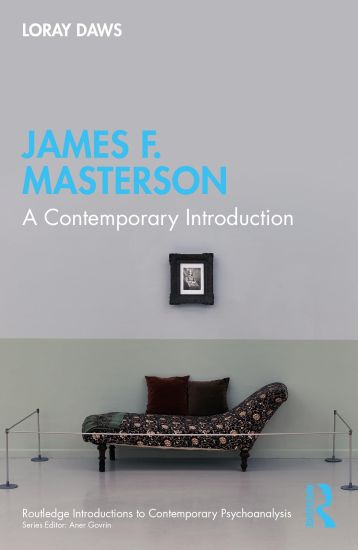
In this volume, Loray Daws traces the life and work of Dr. James F. Masterson, with a focus on the scientific development and later expansion of the six developmental stages of the Masterson Method.Exploring more than 15 of Masterson’s volumes, as well as countless articles, Daws shows how Masterson’s approach to Object Relations and the developmental self can serve clinicians in both conceptualizing and treating borderline, narcissistic, and schizoid disorders of self. Considering the pioneering and innovative nature of Masterson’s work, Daws looks at how he creatively expanded on Freud’s theories on repression, successfully developing therapeutically sound ways to touch and transform developmental trauma and trauma reflected in a deep abandonment depression.James F. Masterson: A Contemporary Introduction will be of interest to students in psychology, psychiatry, and psychiatric nursing, as well as psychoanalytically orientated psychotherapists, psychoanalysts, and those specializing in the ever-growing field of the treatment of the disorders of the self.