Kirjojen hintavertailu. Mukana 11 627 461 kirjaa ja 12 kauppaa.

Kirjahaku

Etsi kirjoja tekijän nimen, kirjan nimen tai ISBN:n perusteella.

1000 tulosta hakusanalla James G. Speight; Nour Shafik El-Gendy

Introduction to Petroleum Biotechnology

Introduction to Petroleum Biotechnology

James G. Speight; Nour Shafik El-Gendy

Gulf Professional Publishing
2017
nidottu
Introduction to Petroleum Biotechnology introduces the petroleum engineer to biotechnology, bringing together the various biotechnology methods that are applied to recovery, refining and remediation in the uses of petroleum and petroleum products. A significant amount of petroleum is undiscoverable in reservoirs today using conventional and secondary methods. This reference explains how microbial enhanced oil recovery is aiding to produce more economical and environmentally-friendly metabolic events that lead to improved oil recovery. Meanwhile, in the downstream side of the industry, petroleum refining operators are facing the highest levels of environmental regulations while struggling to process more of the heavier crude oils since conventional physical and chemical refining techniques may not be applicable to heavier crudes. This reference proposes to the engineer and refining manager the concepts of bio-refining applications to not only render heavier crudes as lighter crudes through microbial degradation, but also through biodenitrogenation, biodemetallization and biodesulfurization, making more petroleum derivatives purified and upgraded without the release of more pollutants. Equipped for both upstream and downstream to learn the basics, this book is a necessary primer for today’s petroleum engineer.
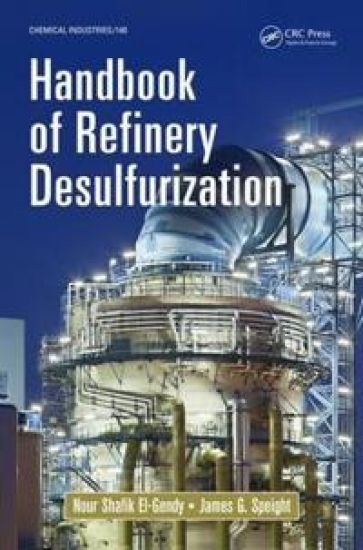
Handbook of Refinery Desulfurization

Handbook of Refinery Desulfurization

Nour Shafik El-Gendy; James G. Speight

CRC Press
2020
nidottu
Handbook of Refinery Desulfurization describes the operation of the various desulfurization process units in a petroleum refinery. It also explains the processes that produce raw materials for the petrochemical industry. It illustrates all the possible processes to lower the sulfur contents in petroleum and its fractions to decrease emissions of sulfur oxides.This book introduces you to desulfurization concepts, including biodesulfurization, as well as technology, giving guidance on how to accomplish desulfurization in various refining processes. It contains background chapters on the composition and evaluation of feedstocks and includes diagrams and tables of feedstocks and their respective produce. It also outlines how to decide which method should be employed to remove sulfur from different feedstocks.A practical and thorough discussion of the field, Handbook of Refinery Desulfurization gives you a strong grasp of the various processes involved with industrial desulfurization while giving you pointers on which procedures to use under certain conditions.
Handbook of Refinery Desulfurization

Handbook of Refinery Desulfurization

Nour Shafik El-Gendy; James G. Speight

CRC Press Inc
2015
sidottu
Handbook of Refinery Desulfurization describes the operation of the various desulfurization process units in a petroleum refinery. It also explains the processes that produce raw materials for the petrochemical industry. It illustrates all the possible processes to lower the sulfur contents in petroleum and its fractions to decrease emissions of sulfur oxides.This book introduces you to desulfurization concepts, including biodesulfurization, as well as technology, giving guidance on how to accomplish desulfurization in various refining processes. It contains background chapters on the composition and evaluation of feedstocks and includes diagrams and tables of feedstocks and their respective produce. It also outlines how to decide which method should be employed to remove sulfur from different feedstocks.A practical and thorough discussion of the field, Handbook of Refinery Desulfurization gives you a strong grasp of the various processes involved with industrial desulfurization while giving you pointers on which procedures to use under certain conditions.
Petroleum Nanobiotechnology

Petroleum Nanobiotechnology

Nour Shafik El-Gendy; Hussein Nabil Nassar; James G. Speight

Apple Academic Press Inc.
2022
sidottu
This book, Petroleum Nanobiotechnology: Modern Applications for a Sustainable Future, explores the unique fusion of biotechnology and nanotechnology as applied to the different sectors of the oil and gas industry. It is a concise resource on the most recent and most up-to-date bottom-up fabrication techniques in petroleum nanobiotechnology, covering the advantages of biofabrication over chemical or physical techniques from the point of being more cost-effective, ecofriendly, biocompatibly superior, and highly stable.The volume covers the important topic of microbial and phytosynthesis of metal and metal oxide nanoparticles. The key applications discussed here include the application of these nanoparticles in different sectors of the oil and gas industry, with special emphasis on antimicrobial applications, reduction of environmental pollutants, and bio-upgrading of petroleum and its fractions. The discussion of each application is augmented with a critical review of the potential for continued development.The book first provides an overview of petroleum microbiology and nanotechnology and proceeds to consider phytosynthesis of metal nanoparticles, microbial synthesis of metal nanoparticles, biosynthesis of metal oxide nanoparticles, nanobiotechnology and mitigation of microbial-influenced corrosion in petroleum industry, applications of nanobiotechnology in petroleum refining, and how nanobiotechnology can be used for petroleum wastewater treatment.This book covers the very important principle of nanobiotechnology as applied in the petroleum industry and how it can be used for:Oil recoveryMicrobial enhanced oil recoveryPetroleum refinery, such as, for example, desulfurization, denitrogenation, demetallization, biotransformation, and bio-upgradingBioremediation of oil polluted soil and waterMitigation of microbial corrosion and bio-foulingToxicity of nano-materials and its obstacles upon applicationNanobiotechnology in petroleum industry and the 17 goals of sustainable developmentThe advantages of the application of nanobiotechnology in the oil industries are enormous and clearly outweigh any negligible cons. The success can have a huge impact on the exploration, production, refining, mitigation of corrosion, waste management, and economics. This informative volume will be valuable for petroleum engineers and petroleum microbiologists, scientists, and researchers concerned with nanotechnology, environmental pollution, petroleum biotechnology, petroleum microbiology, petroleum refining, and the petroleum industry in general.
Petroleum Nanobiotechnology

Petroleum Nanobiotechnology

Nour Shafik El-Gendy; Hussein Nabil Nassar; James G. Speight

Apple Academic Press Inc.
2024
nidottu
This book, Petroleum Nanobiotechnology: Modern Applications for a Sustainable Future, explores the unique fusion of biotechnology and nanotechnology as applied to the different sectors of the oil and gas industry. It is a concise resource on the most recent and most up-to-date bottom-up fabrication techniques in petroleum nanobiotechnology, covering the advantages of biofabrication over chemical or physical techniques from the point of being more cost-effective, ecofriendly, biocompatibly superior, and highly stable.The volume covers the important topic of microbial and phytosynthesis of metal and metal oxide nanoparticles. The key applications discussed here include the application of these nanoparticles in different sectors of the oil and gas industry, with special emphasis on antimicrobial applications, reduction of environmental pollutants, and bio-upgrading of petroleum and its fractions. The discussion of each application is augmented with a critical review of the potential for continued development.The book first provides an overview of petroleum microbiology and nanotechnology and proceeds to consider phytosynthesis of metal nanoparticles, microbial synthesis of metal nanoparticles, biosynthesis of metal oxide nanoparticles, nanobiotechnology and mitigation of microbial-influenced corrosion in petroleum industry, applications of nanobiotechnology in petroleum refining, and how nanobiotechnology can be used for petroleum wastewater treatment.This book covers the very important principle of nanobiotechnology as applied in the petroleum industry and how it can be used for:Oil recoveryMicrobial enhanced oil recoveryPetroleum refinery, such as, for example, desulfurization, denitrogenation, demetallization, biotransformation, and bio-upgradingBioremediation of oil polluted soil and waterMitigation of microbial corrosion and bio-foulingToxicity of nano-materials and its obstacles upon applicationNanobiotechnology in petroleum industry and the 17 goals of sustainable developmentThe advantages of the application of nanobiotechnology in the oil industries are enormous and clearly outweigh any negligible cons. The success can have a huge impact on the exploration, production, refining, mitigation of corrosion, waste management, and economics. This informative volume will be valuable for petroleum engineers and petroleum microbiologists, scientists, and researchers concerned with nanotechnology, environmental pollution, petroleum biotechnology, petroleum microbiology, petroleum refining, and the petroleum industry in general.
Heavy Oil Production Processes

Heavy Oil Production Processes

James G. Speight

Gulf Professional Publishing
2013
nidottu
As conventional-oil resources are depleted worldwide, vast heavy oil reserves available in various parts of the world become increasingly important as a secure future energy source. Brief but readable, Heavy Oil Production Processes discusses the latest improvements in production processes including; thermal methods (steam floods, cyclic steam stimulation, SAGD) as well as non-thermal methods (cold flow with sand production, cyclic solvent process, VAPEX). The book begins with an overview of the chemistry, engineering, and technology of heavy oil as they evolve into the twenty-first century. The preceding chapters are written to provide a basic understanding of each technology, evolving processes and new processes as well as the various environmental regulations. Clear and rigorous, Heavy Oil Production Processes will prove useful for those scientists and engineers already engaged in fossil fuel science and technology as well as scientists, non-scientists, engineers, and non-engineers who wish to gain a general overview or update of the science and technology of fossil fuels. The not only does the book discuss the production processes but also provides methods which should reduce environmental footprint and improve profitability.
Shale Oil Production Processes

Shale Oil Production Processes

James G. Speight

Gulf Professional Publishing
2012
nidottu
Shale Oil represents a huge additional global fossil fuel resource. However, extracting oil from the shale is no simple task; much still needs to be understood to make the process more cost-effective to increase economic flow rates. Clear and rigorous, Oil Shale Production Process will prove useful for those scientists and engineers already engaged in fossil fuel science and technology as well as scientists, non-scientists, engineers, and non-engineers who wish to gain a general overview or update of the science and technology of fossil fuels. Not only does the book discuss the production processes but also provides methods which should reduce environmental footprint by properly addressing: surface mining and extraction processes, in situ conversion process and hydrotreatment.
Heavy and Extra-heavy Oil Upgrading Technologies

Heavy and Extra-heavy Oil Upgrading Technologies

James G. Speight

Gulf Professional Publishing
2013
nidottu
Unconventional reservoirs of oil and gas represent a huge additional global source of fossil fuels. However, there is much still to be done to improve techniques for their processing to make recovery and refining of these particular energy sources more cost-effective. Brief but readable, Heavy and Extra-heavy Oil Upgrading Technologies provide readers with a strategy for future production (the up-stream) and upgrading (the down-stream). The book provides the reader with an understandable overview of the chemistry and engineering behind the latest developments and technologies in the industry as well as the various environmental regulations.Clear and rigorous, Heavy and Extra-heavy Oil Upgrading Technologies will prove tool for those scientists and engineers already engaged in fossil fuel science and technology as well as scientists, non-scientists, engineers, and non-engineers who wish to gain a general overview or update of the science and technology of unconventional fossil fuels in general and upgrading technologies in particular. The use of microorganisms and a number of physical methods, such as ultrasound, median microwave, cold plasma, electrokinetic and monocrystalline intermetallics, etc., will be discussed for the first time.
Shale Gas Production Processes

Shale Gas Production Processes

James G. Speight

Gulf Professional Publishing
2013
nidottu
The extraction of natural gas from shale formations is no simple task and perhaps the most expensive when compared to over unconventional gases. Although, its popularity has grown over the years, there is much to be done to make their production and processing more cost-effective. Brief but comprehensive, Shale Gas Production Processes begins with an overview of the chemistry, engineering and technology of shale gas. This is quickly followed by self-contained chapters concerning new and evolving process technologies and their applications as well as environmental regulations. Written in an easy to read format, Shale Gas Production Processes will prove useful for those scientists and engineers already engaged in fossil fuel science and technology as well as scientists, non-scientists, engineers, and non-engineers who wish to gain a general overview or update of the science and technology of shale gas. In addition, the book discusses methods used to reduce environmental footprint and improve well performance.
Oil Sand Production Processes

Oil Sand Production Processes

James G. Speight

Gulf Professional Publishing
2012
nidottu
The combination of global warming and peak oil has made finding alternative sources of energy more important than ever. Written in an easy-to-read format, Oil Sands Production Processes provide the reader with an understandable overview of the chemistry, engineering, and technology of oil sands. The various chapters have been written to include the latest developments in the oil sands industry, including evolving and new processes as well as the various environmental regulations.
Gasification of Unconventional Feedstocks

Gasification of Unconventional Feedstocks

James G. Speight

Gulf Professional Publishing
2014
nidottu
World gasification capacity is expected to grow by more than 70% by 2015. While gasification is not a new process, the higher price in crude has lead operators and refineries to look at all possible coal-based technologies for energy conversion, and with the flow of heavy oil, tar sands and other unconventional feedstocks making their way to the refineries for processing, refinery managers and engineers alike must be made aware of how to process these uncommon energy sources. Gasification of Unconventional Feedstocks addresses these unfamiliar feeds and provides a quick and up-to-date reference on the background, process technology and downstream applications required to help refineries maximize profits turning low-value feedstock to beneficial syngas and other fuel products. Clear and comprehensive, Gasification of Unconventional Feedstocks provides engineers and refinery managers with the tools needed to quickly adapt to the more unconventional feedstocks and still maximize their refineries potential.
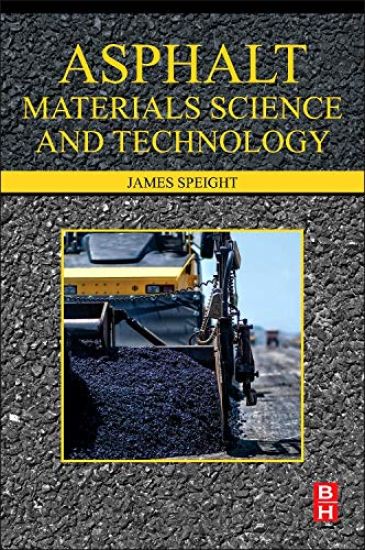
Asphalt Materials Science and Technology

Asphalt Materials Science and Technology

James G. Speight

Butterworth-Heinemann Inc
2015
sidottu
Asphalt is a complex but popular civil engineering material. Design engineers must understand these complexities in order to optimize its use. Whether or not it is used to pave a busy highway, waterproof a rooftop or smooth out an airport runway, Asphalt Materials Science and Technology acquaints engineers with the issues and technologies surrounding the proper selection and uses of asphalts. With this book in hand, researchers and engineering will find a valuable guide to the production, use and environmental aspect of asphalt.
Oil and Gas Corrosion Prevention

Oil and Gas Corrosion Prevention

James G. Speight

Gulf Professional Publishing
2014
nidottu
According to NACE (National Association of Corrosion Engineers), the total annual cost of corrosion in petroleum refining takes up $3.7 billion in the US alone. Corrosion control is always a challenge for the downstream industry, but as the quality of feedstock is declining due to refineries accepting more of the heavy and shale gas and oil resources that are more readily available today, refinery managers, petroleum and natural gas engineers are unprepared for the new set of corrosion problems that are showing up in their equipment and processing units. Oil and Gas Corrosion Prevention: From Surface Facilities to Refineries quickly gets the engineer and manager up to speed on the latest types of corrosion common for these lower grade crude oils and gases as well as the best prevention methods for all of the major sections of the refinery, especially desalting and sulfur recovery units, which are the most common problem areas for unconventional feedstocks. Also covering the unique midstream sections, or point of entry to the refinery, as well as the major critical refinery equipment, Oil and Gas Corrosion Prevention: From Surface Facilities to Refineries offers the perfect quick cross-reference for the oil and gas community.
High Acid Crudes

High Acid Crudes

James G. Speight

Gulf Professional Publishing
2014
nidottu
High Acid Crudes quickly gets the refinery manager and all other relative personnel up to date on this particular type of feedstock by providing an overview and relevant details of the identification of high acid crudes and their influence on the refinery’s process units, especially regarding corrosion potential. Covering the types, effects on the various refining units, and proper acid stripping techniques, High Acid Crudes effectively trains refinery personnel with a quick reference guide for day-to-day use in today’s refineries. Due to their discounted value but potential for higher production rates, refineries are accepting more of high acidic crude feedstocks, otherwise referred to as “opportunity? or “challenging? crude oils. Refining of these resources is still increasing due to high oil prices, with China dominating this market and doubling their production of high acid crudes by 2015. Processing these resources can significantly increase any refinery’s productivity, but knowledge and proper training for the refinery manager and crude supplier is key to reducing the risk that is commonly associated with high acid feedstocks, while still maintaining clean production standards.
Fouling in Refineries

Fouling in Refineries

James G. Speight

Gulf Professional Publishing
2015
nidottu
Fouling in Refineries is an important and ongoing problem that directly affects energy efficiency resulting in increased costs, production losses, and even unit shutdown, requiring costly expenditures to clean up equipment and return capacity to positive levels. This text addresses this common challenge for the hydrocarbon processing community within each unit of the refinery. As refineries today face a greater challenge of accepting harder to process heavier crudes and the ongoing flow of the lighter shale oil feedstocks, resulting in bigger challenges to balance product stability within their process equipment, this text seeks to inform all relative refinery personnel on how to monitor fouling, characterize the deposits, and follow all available treatments. With basic modeling and chemistry of fouling and each unit covered, users will learn how to operate at maximum production rates and elongate the efficiency of their refinery’s capacity.
Deep Shale Oil and Gas

Deep Shale Oil and Gas

James G. Speight

Gulf Professional Publishing
2016
nidottu
Natural gas and crude oil production from hydrocarbon rich deep shale formations is one of the most quickly expanding trends in domestic oil and gas exploration. Vast new natural gas and oil resources are being discovered every year across North America and one of those new resources comes from the development of deep shale formations, typically located many thousands of feet below the surface of the Earth in tight, low permeability formations. Deep Shale Oil and Gas provides an introduction to shale gas resources as well as offer a basic understanding of the geomechanical properties of shale, the need for hydraulic fracturing, and an indication of shale gas processing. The book also examines the issues regarding the nature of shale gas development, the potential environmental impacts, and the ability of the current regulatory structure to deal with these issues. Deep Shale Oil and Gas delivers a useful reference that today’s petroleum and natural gas engineer can use to make informed decisions about meeting and managing the challenges they may face in the development of these resources.
Natural Water Remediation

Natural Water Remediation

James G. Speight

Butterworth-Heinemann Inc
2019
nidottu
Natural Water Remediation: Chemistry and Technology considers topics such as metal ion solubility controls, pH, carbonate equilibria, adsorption reactions, redox reactions and the kinetics of oxygenation reactions that occur in natural water environments. The book begins with the fundamentals of acid-base and redox chemistry to provide a better understanding of the natural system. Other sections cover the relationships among environmental factors and natural water (including biochemical factors, hydrologic cycles and sources of solutes in the atmosphere). Chemical thermodynamic models, as applied to natural water, are then discussed in detail. Final sections cover self-contained applications concerning composition, quality measurement and analyses for river, lake, reservoir and groundwater sampling.
Reaction Mechanisms in Environmental Engineering

Reaction Mechanisms in Environmental Engineering

James G. Speight

Butterworth-Heinemann Inc
2018
nidottu
Reaction Mechanisms in Environmental Engineering: Analysis and Prediction describes the principles that govern chemical reactivity and demonstrates how these principles are used to yield more accurate predictions. The book will help users increase accuracy in analyzing and predicting the speed of pollutant conversion in engineered systems, such as water and wastewater treatment plants, or in natural systems, such as lakes and aquifers receiving industrial pollution. Using examples from air, water and soil, the book begins with a clear exposition of the properties of environmental and inorganic organic chemicals that is followed by partitioning and sorption processes and sorption and transformation processes. Kinetic principles are used to calculate or estimate the pollutants' half-lives, while physical-chemical properties of organic pollutants are used to estimate transformation mechanisms and rates. The book emphasizes how to develop an understanding of how physico-chemical and structural properties relate to transformations of organic pollutants.