Kirjojen hintavertailu. Mukana 11 244 527 kirjaa ja 12 kauppaa.

Kirjahaku

Etsi kirjoja tekijän nimen, kirjan nimen tai ISBN:n perusteella.

1000 tulosta hakusanalla James H. Cone

Introducing James H. Cone

Introducing James H. Cone

Anthony G. Reddie

SCM PRESS
2022
nidottu
It is rarely the case that an intellectual movement can point to an individual figure as its founder. Yet James Cone has been heralded as the acknowledged genius and the creator of black theology. In nearly 50 years of published work, James Cone redefined the intent of academic theology and defined a whole new movement in intellectual thought. In Introducing James H. Cone Anthony Reddie offers us an accessible and engaging assessment of Cone’s legacy, from his first book Black Theology and Black Power in 1969 through to his final intellectual autobiography I Said I wasn’t Gonna Tell Nobody in 2018. It is an indispensable field guide to perhaps the greatest black theologian of recent times.
For My People

For My People

James H. Cone

Orbis Books (USA)
1984
nidottu
Looks at the history of Black theology, discusses its relationship to white and liberation theology, and identifies new directions for Black churches to take in the eighties.
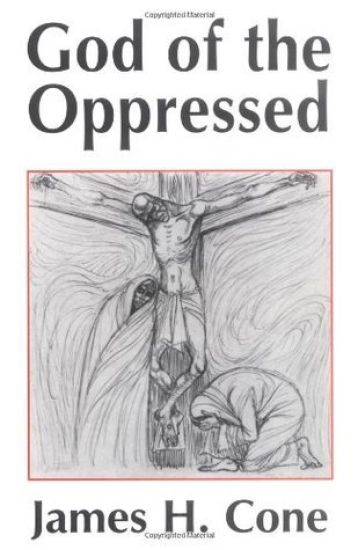
God of the Oppressed

God of the Oppressed

James H. Cone

Orbis Books (USA)
1997
pokkari
In his reflections on God, Jesus, suffering, and liberation, James H. Cone relates the gospel message to the experience of the black community. But a wider theme of the book is the role that social and historical context plays in framing the questions we address to God as well as the mode of the answers provided.
Martin and Malcolm and America

Martin and Malcolm and America

James H. Cone

Orbis Books (USA)
2012
nidottu
This groundbreaking and highly acclaimed work examines the two most influential African-American leaders of this century. While Martin Luther King, Jr., saw America as "essentially a dream . . . as yet unfulfilled," Malcolm X viewed America as a realized nightmare. James Cone cuts through superficial assessments of King and Malcolm as polar opposites to reveal two men whose visions are complementary and moving toward convergence.
The Cross and the Lynching Tree

The Cross and the Lynching Tree

James H. Cone

Orbis Books (USA)
2013
nidottu
The cross and the lynching tree are the two most emotionally charged symbols in the history of the African American community. In this powerful new work, theologian James H. Cone explores these symbols and their interconnection in the history and souls of black folk
A Black Theology of Liberation

A Black Theology of Liberation

James H. Cone

Orbis Books (USA)
2020
pokkari
With the publication of his two early works, Black Theology & Black Power (1969) and A Black Theology of Liberation (1970), James Cone emerged as one of the most creative and provocative theological voices in North America. His books offered a searing indictment of white theology and society and introduced a radical presentation of the Christian message of our time. Combining the visions of Malcolm X and Martin Luther King Jr., Cone radically reappraised Christianity from the perspective of the oppressed black community in North America. Fifty years later, his work retains its original power.
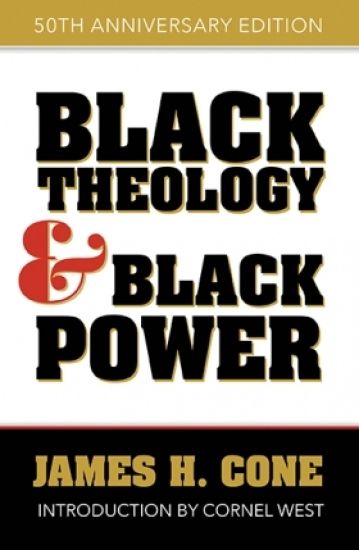
Black Theology and Black Power

Black Theology and Black Power

James H. Cone; Cornel West

Orbis Books (USA)
2019
pokkari
First published in 1969, Black Theology and Black Power provided the first systematic presentation of Black Theology, while also introducing the voice of an African American theologian who would shake the foundations of American theology. Relating the militant struggle for liberation with the gospel message of salvation, James Cone laid out the foundation for an interpretation of Christianity from the perspective of the oppressed that retains its urgency and challenge today.
Said I Wasn’t Gonna Tell Nobody

Said I Wasn’t Gonna Tell Nobody

James H. Cone; Cornel West

Orbis Books (USA)
2020
pokkari
James Cone is widely regarded as the "father of Black Theology"--his own synthesis of Gospel message embodied by Martin Luther King, Jr., and the black pride of Malcolm X. Next year marks the 50th anniversary of his first book, Black Theology and Black Power. This new work is truly the capstone to that career, showing how he was compelled by events to articulate this theology, how it led to his career at Union and his succession of books--along the way learning from his critics, his students, and the ongoing challenge of his principal models--King, Malcolm X, and James Baldwin.
James H. Carson's California, 1847-1853

James H. Carson's California, 1847-1853

Doris Shaw Castro

Authorhouse
2006
pokkari
It is said that California has the most complete recorded history of any state in the Union. Contemporaries called James H. (Henry) Carson's "sketches" as the most correct eye-witness reports of early California. The U. S. Congress declared war on Mexico in May 1846, and sent four units to occupy and hold Alta California, with a view to its acquisition. Sgt. Carson's Co. F, 3d Reg., Artillery, the "pioneer company," arrived in California in January 1847, after a five-months' voyage around the Horn; the Panama Canal was not yet built. In 1847 Carson served as commissary sergeant at 10th Military District Headquarters. In this capacity he obtained food supplies from the Califor-nios and shared in their social life, making him an important person at Monterey, capital of Alta California. He was one of the few who did not desert his post when gold was discovered in January 1848. In June-July he accompanied R. B. Mason, Col. 1st Dragoons, and Lt. W. T. Sherman (later Gen. Sherman of Civil War fame) on the first official tour of the Northern Gold Mines. In August 1848, on furlough, he discovered Carson Hill, classic gold mining ground of California. In July 1849 he traveled with Gen. B. Riley, Acting Governor of California and Lt. G. H. Derby on a tour of the Southern Mines. Upon discharge from the Army in November 1849, he elected to remain in California, and became a miner. In May 1850 he served as guide to Lt. Derby, Topographical Engineers, on the first official survey of San Joaquin Valley. It was here he contracted a fatal disease. He wrote his "sketches" during this period of inactivity until his death at Stockton on Dec. 12, 1853, aged thirty-two years. Carson was a keen observer, and wrote about California's mineral and agricultural resources; land titles and public domain; establishing a state capital; the first State Legislature. He "saw the elephant." He learned to laugh at himself, and his writings reflected a broad humor as he wrote about his fellowmen
The Winds of Time by James H. Schmitz, Science Fiction, Adventure
John W. Campbell wrote this for a blurb for this tale when it appeared in Analog: He contracted for a charter trip -- but the man who hired his spacer wasn't quite a man, it turned out -- and he wanted more than service James H. Schmitz was a heck of a writer, and this story -- "The Winds of Time" -- is fascinating stuff. Star ships, aliens from the future, time travel, romance, cannibalism, pet humans, and mute-but-brilliant aliens. . . . and, of course, it's got a hero who solves every problem by being smarter and trickier and better-prepared than we'd ever imagine being. But what would you expect? This story first appeared in John W. Campbell's Analog. Analog heroes did it with their brains. Us? We have to work.
The Ethics Of Cooperation: (James H. Tufts Classics Collection)

The Ethics Of Cooperation: (James H. Tufts Classics Collection)

James H. Tufts

Createspace Independent Publishing Platform
2015
nidottu
ACCORDING to Plato's famous myth, two gifts of the gods equipped man for living: the one, arts and inventions to supply him with the means of livelihood; the other, reverence and justice to be the ordering principles of societies and the bonds of friendship and conciliation. Agencies for mastery over nature and agencies for co peration among men remain the two great sources of human power. But after two thousand years, it is possible to note an interesting fact as to their relative order of development in civilization. Nearly all the great skills and inventions that had been acquired up to the eighteenth century were brought into man's service at a very early date. The use of fire, the arts of weaver, potter, and metal worker, of sailor, hunter, fisher, and sower, early fed man and clothed him. These were carried to higher perfection by Egyptian and Greek, by Tyrian and Florentine, but it would be difficult to point to any great new unlocking of material resources until the days of the chemist and electrician. Domestic animals and crude water mills were for centuries in man's service, and until steam was harnessed, no additions were made of new powers.