This genealogical guide traces the history of the Ellis family, with a particular emphasis on the Underhill and Giles branches. Featuring historical maps, photographs, and other illustrations, this book is a great resource for anyone interested in the Ellis family or the history of colonial America.This work has been selected by scholars as being culturally important, and is part of the knowledge base of civilization as we know it.This work is in the "public domain in the United States of America, and possibly other nations. Within the United States, you may freely copy and distribute this work, as no entity (individual or corporate) has a copyright on the body of the work.Scholars believe, and we concur, that this work is important enough to be preserved, reproduced, and made generally available to the public. We appreciate your support of the preservation process, and thank you for being an important part of keeping this knowledge alive and relevant.
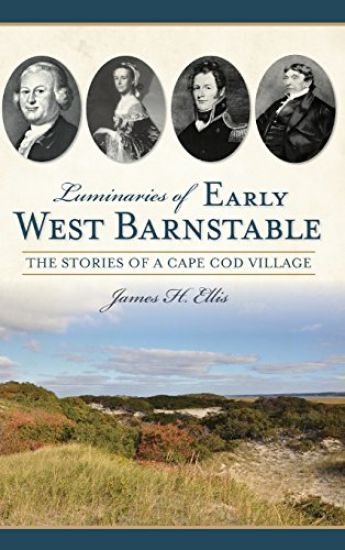
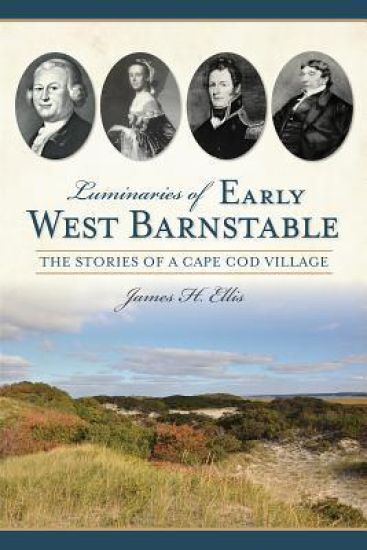
West Barnstable is unique among historic colonial Cape Cod hamlets. A quartet born in the little village in a fifty-six-year span in the eighteenth century marked this village on the map forever. James Otis Jr., the Patriot," led the intellectual revolution and helped shape American independence. His sister, Mercy Otis Warren, broke free of the defined roles for women of her time to become a significant political activist, dramatist, poet and historian. War hero John "Mad Jack" Percival rose to the highest rank in the U.S. Navy and saved the USS "Constitution "from the scrap heap before sailing it around the world. America's magistrate Lemuel Shaw influenced the country from his seat as chief justice of the Massachusetts Supreme Court. Few villages shone so brightly for their size. Join author James H. Ellis as he traces the stories of West Barnstable's luminaries and their profound village legacy."
West Barnstable is unique among historic colonial Cape Cod hamlets. A quartet born in the little village in a fifty-six-year span in the eighteenth century marked this village on the map forever. James Otis Jr., the Patriot, led the intellectual revolution and helped shape American independence. His sister, Mercy Otis Warren, broke free of the defined roles for women of her time to become a significant political activist, dramatist, poet and historian. War hero John Mad Jack Percival rose to the highest rank in the U.S. Navy and saved the USS Constitution from the scrap heap before sailing it around the world. America's magistrate Lemuel Shaw influenced the country from his seat as chief justice of the Massachusetts Supreme Court. Few villages shone so brightly for their size. Join author James H. Ellis as he traces the stories of West Barnstable's luminaries and their profound village legacy.
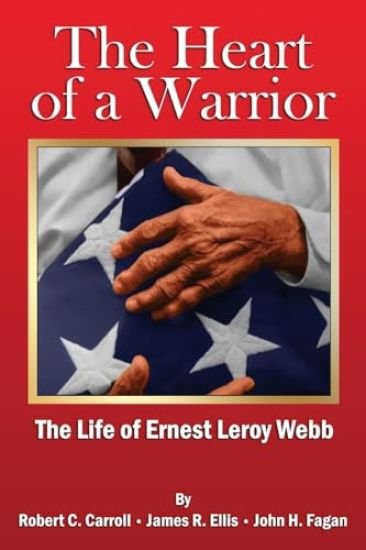
Ernest Leroy Webb is a great patriot, a phenomenal leader, and a dear friend. But most of all, he is a warrior... a warrior with a heart. These seemingly contradictory two words are, in fact, complementary.Webb is a combat hero, brave beyond the pale. He is a ferocious fighter and fearless leader. He is a warrior in the spiritual sense of fighting for good against evil. At the same time, he possesses great compassion for mankind, including the enemy he has been ordered to fight. He is extremely passionate about his country, his fellow soldiers, and his family. He has a heart for humanity.This book is written for anyone who ever knew Ernie Webb and anyone wishing to read the biography of an amazing leader. Military history buffs will enjoy the many true accounts, including stories from West Point and the Vietnam War. The three authors, Bob Carroll, Jim Ellis, and Jack Fagan, teamed up to write this fascinating biography of their friend of 60+ years. In the Preface, Bob Carroll writes: "I first met Webb on July 1, 1958, the day we both arrived at West Point. We were assigned to Company A2, one of the 24 hundred-man companies in the Corps of Cadets. After graduation in 1962, Webb and I served together in the US, Vietnam, Germany, and on the faculty at West Point. After retiring from the Army, we joined forces in teaching corporate executives the fundamentals of leadership."The authors discovered an interview of Webb hosted on the Library of Congress website. As part of The Veterans History Project, a one-and-a-half-hour interview with Webb was conducted on June 10, 2019, by Joseph L. Galloway, coauthor of We Were Soldiers Once... and Young. This video interview is a treasure trove of stories, told in first-person by the man they pay tribute to in this book. The Heart of a Warrior has an extraordinary feature for readers: throughout the book, the authors include eleven short video clips (1-3 minutes each) from the above-mentioned interview, where you can see and hear Ernie himself. These short clips are hosted on a special YouTube channel, easily accessible using QR (Quick Response) codes, the square images placed throughout the book. The reading experience is enhanced as you view the short clips to see, hear, and appreciate the man and his stories. The cover photo is of Ernie Webb, clutching Old Glory to his heart (2021).
Written for engineers without a background in seismic design. Provides design standards and parameters, explaining how to interpret and apply them. Examines and recommends procedures to accommodate the enormous forces and variations in effects common to major earthquakes. Covers practical aspects of soil behavior and structural and foundation design. Gives tips on special construction situations: foundations, dams and retaining walls, strengthening existing structures and construction over active faults.
Ernest Leroy Webb is a great patriot, a phenomenal leader, and a dear friend. But most of all, he is a warrior... a warrior with a heart. These seemingly contradictory two words are, in fact, complementary.Webb is a combat hero, brave beyond the pale. He is a ferocious fighter and fearless leader. He is a warrior in the spiritual sense of fighting for good against evil. At the same time, he possesses great compassion for mankind, including the enemy he has been ordered to fight. He is extremely passionate about his country, his fellow soldiers, and his family. He has a heart for humanity.This book is written for anyone who ever knew Ernie Webb and anyone wishing to read the biography of an amazing leader. Military history buffs will enjoy the many true accounts, including stories from West Point and the Vietnam War. The three authors, Bob Carroll, Jim Ellis, and Jack Fagan, teamed up to write this fascinating biography of their friend of 60+ years. In the Preface, Bob Carroll writes: "I first met Webb on July 1, 1958, the day we both arrived at West Point. We were assigned to Company A2, one of the 24 hundred-man companies in the Corps of Cadets. After graduation in 1962, Webb and I served together in the US, Vietnam, Germany, and on the faculty at West Point. After retiring from the Army, we joined forces in teaching corporate executives the fundamentals of leadership."The authors discovered an interview of Webb hosted on the Library of Congress website. As part of The Veterans History Project, a one-and-a-half-hour interview with Webb was conducted on June 10, 2019, by Joseph L. Galloway, coauthor of We Were Soldiers Once... and Young. This video interview is a treasure trove of stories, told in first-person by the man they pay tribute to in this book. The Heart of a Warrior has an extraordinary feature for readers: throughout the book, the authors include eleven short video clips (1-3 minutes each) from the above-mentioned interview, where you can see and hear Ernie himself. These short clips are hosted on a special YouTube channel, easily accessible using QR (Quick Response) codes, the square images placed throughout the book. The reading experience is enhanced as you view the short clips to see, hear, and appreciate the man and his stories. The cover photo is of Ernie Webb, clutching Old Glory to his heart (2021).
Master the full range of colorectal procedures performed today with Atlas of Surgical Techniques for the Colon, Rectum, and Anus. In this volume in the Surgical Techniques Atlas Series, top authorities provide expert, step-by-step guidance on surgery of the large bowel, rectum, and anus - including both open and closed approaches for many procedures - to help you expand your repertoire and hone your clinical skills. Easily review normal anatomy and visualize the step-by-step progression of each procedure thanks to more than 600 detailed anatomic line drawings and clinical photographs. Master both open and laparoscopic techniques for numerous surgeries, such as abdominal perineal resection, abdominal colectomy, and low anterior resection. Apply the latest developments in colorectal surgery, including restorative and reconstructive techniques (such as pelvic floor reconstruction after abdominal perineal resection or sacrectomy) and the newest procedures in transanal endoscopic microsurgery (TEM). Effectively interpret preoperative and postoperative imaging studies for improved decision making and outcomes. Avoid complications with pearls and pitfalls from the authors for every technique. Access the entire text online and download all the images at www.expertconsult.com.
It is said that California has the most complete recorded history of any state in the Union. Contemporaries called James H. (Henry) Carson's "sketches" as the most correct eye-witness reports of early California. The U. S. Congress declared war on Mexico in May 1846, and sent four units to occupy and hold Alta California, with a view to its acquisition. Sgt. Carson's Co. F, 3d Reg., Artillery, the "pioneer company," arrived in California in January 1847, after a five-months' voyage around the Horn; the Panama Canal was not yet built. In 1847 Carson served as commissary sergeant at 10th Military District Headquarters. In this capacity he obtained food supplies from the Califor-nios and shared in their social life, making him an important person at Monterey, capital of Alta California. He was one of the few who did not desert his post when gold was discovered in January 1848. In June-July he accompanied R. B. Mason, Col. 1st Dragoons, and Lt. W. T. Sherman (later Gen. Sherman of Civil War fame) on the first official tour of the Northern Gold Mines. In August 1848, on furlough, he discovered Carson Hill, classic gold mining ground of California. In July 1849 he traveled with Gen. B. Riley, Acting Governor of California and Lt. G. H. Derby on a tour of the Southern Mines. Upon discharge from the Army in November 1849, he elected to remain in California, and became a miner. In May 1850 he served as guide to Lt. Derby, Topographical Engineers, on the first official survey of San Joaquin Valley. It was here he contracted a fatal disease. He wrote his "sketches" during this period of inactivity until his death at Stockton on Dec. 12, 1853, aged thirty-two years. Carson was a keen observer, and wrote about California's mineral and agricultural resources; land titles and public domain; establishing a state capital; the first State Legislature. He "saw the elephant." He learned to laugh at himself, and his writings reflected a broad humor as he wrote about his fellowmen
John W. Campbell wrote this for a blurb for this tale when it appeared in Analog: He contracted for a charter trip -- but the man who hired his spacer wasn't quite a man, it turned out -- and he wanted more than service James H. Schmitz was a heck of a writer, and this story -- "The Winds of Time" -- is fascinating stuff. Star ships, aliens from the future, time travel, romance, cannibalism, pet humans, and mute-but-brilliant aliens. . . . and, of course, it's got a hero who solves every problem by being smarter and trickier and better-prepared than we'd ever imagine being. But what would you expect? This story first appeared in John W. Campbell's Analog. Analog heroes did it with their brains. Us? We have to work.
ACCORDING to Plato's famous myth, two gifts of the gods equipped man for living: the one, arts and inventions to supply him with the means of livelihood; the other, reverence and justice to be the ordering principles of societies and the bonds of friendship and conciliation. Agencies for mastery over nature and agencies for co peration among men remain the two great sources of human power. But after two thousand years, it is possible to note an interesting fact as to their relative order of development in civilization. Nearly all the great skills and inventions that had been acquired up to the eighteenth century were brought into man's service at a very early date. The use of fire, the arts of weaver, potter, and metal worker, of sailor, hunter, fisher, and sower, early fed man and clothed him. These were carried to higher perfection by Egyptian and Greek, by Tyrian and Florentine, but it would be difficult to point to any great new unlocking of material resources until the days of the chemist and electrician. Domestic animals and crude water mills were for centuries in man's service, and until steam was harnessed, no additions were made of new powers.