Kirjojen hintavertailu. Mukana 11 244 527 kirjaa ja 12 kauppaa.

Kirjahaku

Etsi kirjoja tekijän nimen, kirjan nimen tai ISBN:n perusteella.

1000 tulosta hakusanalla James H. Lebovic

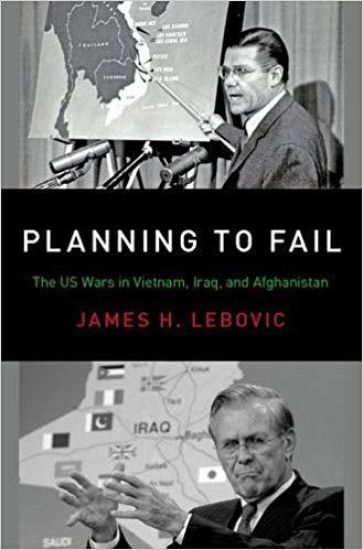
Planning to Fail

Planning to Fail

James H. Lebovic

Oxford University Press Inc
2019
sidottu
The United States national-security establishment is vast, yet the United States has failed to meet its initial objectives in almost every one of its major, post-World War II conflicts. Of these troubled efforts, the US wars in Vietnam (1965-73), Iraq (2003-11), and Afghanistan (2001-present) stand out for their endurance, resource investment, human cost, and miscalculated decisions. Because overarching policy goals are distant and open to interpretation, policymakers ground their decisions in the immediate world of short-term objectives, salient tasks, policy constraints, and fixed time schedules. As a consequence, they exaggerate the benefits of their preferred policies, ignore the accompanying costs and requirements, and underappreciate the benefits of alternatives. In Planning to Fail, James H. Lebovic argues that a profound myopia helps explain US decision-making failures. In each of the wars explored in this book, he identifies four stages of intervention. First and foremost, policymakers chose unwisely to go to war. After the fighting began, they inadvisably sought to extend or expand the mission. Next, they pursued the mission, in abbreviated form, to suboptimal effect. Finally, they adapted the mission to exit from the conflict. Lebovic argues that US leaders were effectively planning to fail whatever their hopes and thoughts were at the time the intervention began. Decision-makers struggled less than they should have, even when conditions allowed for good choices. Then, when conditions on the ground left them with only bad choices, they struggled furiously and more than could ever matter. Policymakers allowed these wars to sap available capabilities, push US forces to the breaking point, and exhaust public support. They finally settled for terms of departure that they (or their predecessors) would have rejected at the start of these conflicts. Offering a far-ranging and detailed analysis, this book identifies an unmistakable pattern of failure and highlights lessons we can learn from it.
The False Promise of Superiority

The False Promise of Superiority

James H. Lebovic

OXFORD UNIVERSITY PRESS INC
2023
sidottu
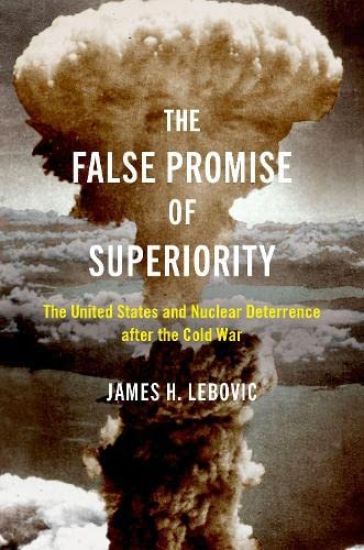
This political analysis exposes the fanciful logic that the United States can use nuclear weapons to vanquish nuclear adversaries or influence them when employing various coercive tactics. During the Cold War, American policymakers sought nuclear advantages to offset an alleged Soviet edge. Policymakers hoped that US nuclear capabilities would safeguard deterrence, when backed perhaps by a set of coercive tactics. But policymakers also hedged their bets with plans to fight a nuclear war to their advantage should deterrence fail. In The False Promise of Superiority, James H. Lebovic argues that the US approach was fraught with peril and remains so today. He contends that the United States can neither simply impose its will on nuclear adversaries nor safeguard deterrence using these same coercive tactics without risking severe, counterproductive effects. As Lebovic shows, the current faith in US nuclear superiority could produce the disastrous consequences that US weapons and tactics are meant to avoid. This book concludes that US interests are best served when policymakers resist the temptation to use, or prepare to use, nuclear weapons first or to brandish nuclear weapons for coercive effect.
The False Promise of Superiority

The False Promise of Superiority

James H. Lebovic

OXFORD UNIVERSITY PRESS INC
2023
nidottu
This political analysis exposes the fanciful logic that the United States can use nuclear weapons to vanquish nuclear adversaries or influence them when employing various coercive tactics. During the Cold War, American policymakers sought nuclear advantages to offset an alleged Soviet edge. Policymakers hoped that US nuclear capabilities would safeguard deterrence, when backed perhaps by a set of coercive tactics. But policymakers also hedged their bets with plans to fight a nuclear war to their advantage should deterrence fail. In The False Promise of Superiority, James H. Lebovic argues that the US approach was fraught with peril and remains so today. He contends that the United States can neither simply impose its will on nuclear adversaries nor safeguard deterrence using these same coercive tactics without risking severe, counterproductive effects. As Lebovic shows, the current faith in US nuclear superiority could produce the disastrous consequences that US weapons and tactics are meant to avoid. This book concludes that US interests are best served when policymakers resist the temptation to use, or prepare to use, nuclear weapons first or to brandish nuclear weapons for coercive effect.
Foregone Conclusions

Foregone Conclusions

James H. Lebovic

Routledge
2019
sidottu
With the end of the Cold War and the erosion of the Soviet threat, the United States is reevaluating its defense policy and its acquisition of weapons. James Lebovic shows that, although current military missions are adapted to post-Cold War realities, the self-defeating bias of bureaucrats and military services toward Cold War weaponry is still prevalent. He examines the impact of this bias on the armed services as they assess threat, generate requirements, develop and change weapon concepts, set production rates, and engage in testing. The author asserts that bias compromises service interests and broader military objectives and he offers general policy recommendations to put U.S. weapons acquisition on a more effective track.
Foregone Conclusions

Foregone Conclusions

James H. Lebovic

Routledge
2020
nidottu
In this book, the author shows that, although current military missions are adapted to post-Cold War realities, the self-defeating bias of bureaucrats and military services toward Cold War weaponry is still prevalent. He examines the impact of this bias on the armed services. .
Deterring International Terrorism and Rogue States
This new study challenges the widely held view that many current US adversaries cannot be deterred, maintaining that deterrence is not a relic of the Cold War period and that it should shape US policies toward so-called ‘rogue states’ and terror groups. James Lebovic argues that deterrence principles continue to apply, and focuses upon the ‘three pillars’ of the Bush administration’s national security policy: missile defence, which preoccupied the administration until September 11, 2001 pre-emption, which became the US focus with the September 11 attacks and US success in overthrowing the Taliban regime in Afghanistan homeland security, which the administration has portrayed as more a natural response to threat than an aspect of policy that must be reconciled with the other pillars. Deterring International Terrorism and Rogue States asserts that bad offences and defences have been endemic to the current US policy approach, leading US policy makers to pursue policies that require them to do everything without adequate concern for resource trade-offs, overreach, and unintended consequences. This book will be of great interest to students of US foreign policy, national and international security, terrorism and international relations in general.
Deterring International Terrorism and Rogue States
This new study challenges the widely held view that many current US adversaries cannot be deterred, maintaining that deterrence is not a relic of the Cold War period and that it should shape US policies toward so-called ‘rogue states’ and terror groups. James Lebovic argues that deterrence principles continue to apply, and focuses upon the ‘three pillars’ of the Bush administration’s national security policy: missile defence, which preoccupied the administration until September 11, 2001 pre-emption, which became the US focus with the September 11 attacks and US success in overthrowing the Taliban regime in Afghanistan homeland security, which the administration has portrayed as more a natural response to threat than an aspect of policy that must be reconciled with the other pillars. Deterring International Terrorism and Rogue States asserts that bad offences and defences have been endemic to the current US policy approach, leading US policy makers to pursue policies that require them to do everything without adequate concern for resource trade-offs, overreach, and unintended consequences. This book will be of great interest to students of US foreign policy, national and international security, terrorism and international relations in general.
The Limits of U.S. Military Capability

The Limits of U.S. Military Capability

James H. Lebovic

Johns Hopkins University Press
2010
sidottu
Political scientist James H. Lebovic establishes that the size, strength, flexibility, and adaptability of the U.S. military cannot ensure victory in asymmetrical conflicts. In The Limits of U.S. Military Capability, Lebovic shows how political and psychological factors trumped U.S. military superiority in Vietnam and Iraq, where inappropriate strategies, low stakes, and unrealistic goals mired the United States military in protracted, no-win conflicts. Lebovic contends that the United States is at a particular disadvantage when fighting a counterinsurgency without the full support of the host government; when leveraging various third parties (the adversary's foreign allies, societal leaders, and indigenous populations); when attempting to build coalitions and nations while involved in combat; and when sustaining government and public support at home when costs rise and benefits decline. Lebovic cautions against involving the U.S. military in operations without first considering U.S. stakes and suggests that the military take a less-is-more approach when choosing to employ force. Ambitious goals bring higher costs, unexpected results, diminished options, and a greater risk of failure. Rejecting the heavy-handed approach that is typical of most comparisons between the Vietnam and Iraq wars, The Limits of U.S. Military Capability carefully assesses evidence to develop lessons applicable to other conflicts-especially the ongoing war in Afghanistan.
Flawed Logics

Flawed Logics

James H. Lebovic

Johns Hopkins University Press
2014
pokkari
James H. Lebovic explores the logic of seeking peace in an arms race. Flawed Logics offers a compelling intellectual history of U.S.-Russian strategic nuclear arms control. Lebovic thoroughly reviews the critical role of ideas and assumptions in U.S. arms control debates, tying them to controversies over U.S. nuclear strategy from the birth of the atomic age to the present. Each nuclear arms treaty - from the Truman to the Obama administration - is assessed in depth and the positions of proponents and opponents are systematically presented, discussed, and critiqued. Lebovic concludes that the terms of these treaties with the Russians were never as good as U.S. proponents claimed nor as bad as opponents feared. The comprehensive analysis in Flawed Logics is objective and balanced, challenging the logic of hawks and doves, Democrats and Republicans, and theorists of all schools with equal vigor. Lebovic's controversial argument will promote debate as to the very plausibility of arms control.
James H. Carson's California, 1847-1853

James H. Carson's California, 1847-1853

Doris Shaw Castro

Authorhouse
2006
pokkari
It is said that California has the most complete recorded history of any state in the Union. Contemporaries called James H. (Henry) Carson's "sketches" as the most correct eye-witness reports of early California. The U. S. Congress declared war on Mexico in May 1846, and sent four units to occupy and hold Alta California, with a view to its acquisition. Sgt. Carson's Co. F, 3d Reg., Artillery, the "pioneer company," arrived in California in January 1847, after a five-months' voyage around the Horn; the Panama Canal was not yet built. In 1847 Carson served as commissary sergeant at 10th Military District Headquarters. In this capacity he obtained food supplies from the Califor-nios and shared in their social life, making him an important person at Monterey, capital of Alta California. He was one of the few who did not desert his post when gold was discovered in January 1848. In June-July he accompanied R. B. Mason, Col. 1st Dragoons, and Lt. W. T. Sherman (later Gen. Sherman of Civil War fame) on the first official tour of the Northern Gold Mines. In August 1848, on furlough, he discovered Carson Hill, classic gold mining ground of California. In July 1849 he traveled with Gen. B. Riley, Acting Governor of California and Lt. G. H. Derby on a tour of the Southern Mines. Upon discharge from the Army in November 1849, he elected to remain in California, and became a miner. In May 1850 he served as guide to Lt. Derby, Topographical Engineers, on the first official survey of San Joaquin Valley. It was here he contracted a fatal disease. He wrote his "sketches" during this period of inactivity until his death at Stockton on Dec. 12, 1853, aged thirty-two years. Carson was a keen observer, and wrote about California's mineral and agricultural resources; land titles and public domain; establishing a state capital; the first State Legislature. He "saw the elephant." He learned to laugh at himself, and his writings reflected a broad humor as he wrote about his fellowmen
The Winds of Time by James H. Schmitz, Science Fiction, Adventure
John W. Campbell wrote this for a blurb for this tale when it appeared in Analog: He contracted for a charter trip -- but the man who hired his spacer wasn't quite a man, it turned out -- and he wanted more than service James H. Schmitz was a heck of a writer, and this story -- "The Winds of Time" -- is fascinating stuff. Star ships, aliens from the future, time travel, romance, cannibalism, pet humans, and mute-but-brilliant aliens. . . . and, of course, it's got a hero who solves every problem by being smarter and trickier and better-prepared than we'd ever imagine being. But what would you expect? This story first appeared in John W. Campbell's Analog. Analog heroes did it with their brains. Us? We have to work.
The Ethics Of Cooperation: (James H. Tufts Classics Collection)

The Ethics Of Cooperation: (James H. Tufts Classics Collection)

James H. Tufts

Createspace Independent Publishing Platform
2015
nidottu
ACCORDING to Plato's famous myth, two gifts of the gods equipped man for living: the one, arts and inventions to supply him with the means of livelihood; the other, reverence and justice to be the ordering principles of societies and the bonds of friendship and conciliation. Agencies for mastery over nature and agencies for co peration among men remain the two great sources of human power. But after two thousand years, it is possible to note an interesting fact as to their relative order of development in civilization. Nearly all the great skills and inventions that had been acquired up to the eighteenth century were brought into man's service at a very early date. The use of fire, the arts of weaver, potter, and metal worker, of sailor, hunter, fisher, and sower, early fed man and clothed him. These were carried to higher perfection by Egyptian and Greek, by Tyrian and Florentine, but it would be difficult to point to any great new unlocking of material resources until the days of the chemist and electrician. Domestic animals and crude water mills were for centuries in man's service, and until steam was harnessed, no additions were made of new powers.