
Kirjahaku
Etsi kirjoja tekijän nimen, kirjan nimen tai ISBN:n perusteella.
1000 tulosta hakusanalla James Henry Miller


History Of Summers County V1: From The Earliest Settlement To The Present Time (1908)
James Henry Miller
Literary Licensing, LLC
2014
nidottu

History of Summers County V2: From the Earliest Settlement to the Present Time (1908)
James Henry Miller
Literary Licensing, LLC
2014
nidottu
DAISY MILLER HENRY JAMES Large Print
Henry James
Createspace Independent Publishing Platform
2017
pokkari
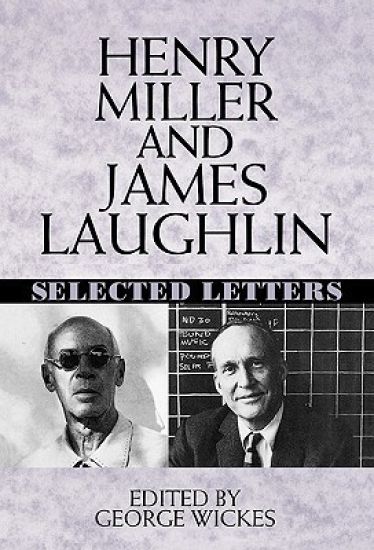
Henry Miller and James Laughlin
Laughlin James; Henry Miller; Wickes George
WW NORTON CO
1996
sidottu
Ever mercurial in temperament, an idealist who struggled financially to meet his material needs, Henry Miller for decades relied on his publisher James Laughlin's generosity and expert editorial advice. Although Miller's letters decried the conservatism of American book publishing and were often suspicious in tone, Miller nevertheless admired and trusted Laughlin with intimate details about his work and his personal life. The resulting correspondence, spanning from 1935 to 1979, shortly before Miller's death on June 7, 1980, is a remarkable, uncensored record of the ideas and intentions behind many of the author's most provocative literary endeavors.
Daisy Miller: a study (1878)-novela by Henry James: Daisy Miller: a study. An international episode. Four meetings
Henry James
Createspace Independent Publishing Platform
2016
nidottu
Daisy Miller is a novella by Henry James that first appeared in Cornhill Magazine in June-July 1878, and in book form the following year.It portrays the courtship of the beautiful American girl Daisy Miller by Winterbourne, a sophisticated compatriot of hers. His pursuit of her is hampered by her own flirtatiousness, which is frowned upon by the other expatriates when they meet in Switzerland and Italy.Annie "Daisy" Miller and Frederick Winterbourne first meet in Vevey, Switzerland, in a garden of the grand hotel 2] where Winterbourne is allegedly vacationing from his studies (an attachment to an older lady is rumoured). They are introduced by Randolph Miller, Daisy's 9-year-old brother. Randolph considers their hometown of Schenectady, New York, to be absolutely superior to all of Europe. Daisy, however, is absolutely delighted with the continent, especially the high society she wishes to enter. Winterbourne is at first confused by her attitude, and though greatly impressed by her beauty, he soon determines that she is nothing more than a young flirt. He continues his pursuit of Daisy in spite of the disapproval of his aunt, Mrs. Costello, who spurns any family with so close a relationship to their courier as the Millers have with their Eugenio. She also thinks Daisy is a shameless girl for agreeing to visit the Ch teau de Chillon with Winterbourne after they have known each other for only half an hour. The next day, the two travel to Ch teau de Chillon and although Winterbourne had paid the janitor for privacy, Daisy is not quite impressed. Winterbourne then informs Daisy that he must go to Geneva the next day. Daisy feels disappointment and chaffs him, eventually asking him to visit her in Rome later that year. In Rome, Winterbourne and Daisy meet unexpectedly in the parlor of Mrs. Walker, an American expatriate. Her moral values have adapted to those of Italian society. Rumors about Daisy meeting with young Italian gentlemen make her socially exceptionable under these criteria. Winterbourne learns of Daisy's increasing intimacy with a young Italian of questionable society, Giovanelli, as well as the growing scandal caused by the pair's behavior. Daisy is undeterred by the open disapproval of the other Americans in Rome, and her mother seems quite unaware of the underlying tensions. Winterbourne and Mrs. Walker attempt to persuade Daisy to separate from Giovanelli, but she refuses any help that is offered. One night, Winterbourne takes a walk through the Colosseum and sees a young couple sitting at its center. He realizes that they are Giovanelli and Daisy. Winterbourne, infuriated with Giovanelli, asks him how he could dare to take Daisy to a place where she runs the risk of catching "Roman Fever". Daisy says she does not care and Winterbourne leaves them. Daisy falls ill and dies a few days later.





Name Symbolism and Multilayer Ambiguity in Henry James' "Daisy Miller"
Anonymous
Grin Publishing
2016
pokkari

Study Guide to The Turn of the Screw and Daisy Miller by Henry James
Influence Publishers
2020
pokkari
A comprehensive study guide offering in-depth explanation, essay, and test prep for selected works by Henry James, a renowned American-British author. Titles in this study guide include The Turn of the Screw and Daisy Miller. As an author of the nineteenth-century, James's writing bridged the gap between literary realism and literary modernism. Moreover, James is considered a master of ghost stories, and the Turn of the Screw remains one of the most popular of the genre. This Bright Notes Study Guide explores the context and history of Henry James's classic work, helping students to thoroughly explore the reasons they have stood the literary test of time. Each Bright Notes Study Guide contains: - Introductions to the Author and the Work - Character Summaries - Plot Guides - Section and Chapter Overviews - Test Essay and Study Q&As The Bright Notes Study Guide series offers an in-depth tour of more than 275 classic works of literature, exploring characters, critical commentary, historical background, plots, and themes. This set of study guides encourages readers to dig deeper in their understanding by including essay questions and answers as well as topics for further research.

In this bold study James M. Decker argues against the commonly held opinion that Henry Miller’s narratives suffer from ‘formlessness’. He instead positions Miller as a stylistic pioneer, whose place must be assured in the American literary canon.From Moloch to Nexus through such widely-read texts as Tropic of Cancer and Tropic of Capricorn, Decker examines what Miller calls his ‘spiral form’, a radically digressive style that shifts wildly between realism and the fantastic. Drawing on a variety of narratological and critical sources, as well as Miller’s own aesthetic theories, he highlights that this fragmented narrative style formed part of a sustained critique of modern spiritual decay. A deliberate move rather than a compositional weakness, then, Miller’s style finds a wide variety of antecedents in the work of such figures as Nietzsche, Rabelais, Joyce, Bergson and Whitman, and is viewed by Decker as an attempt to chart the journey of the self through the modern city.Henry Miller and Narrative Form affords readers new insights into some of the most challenging writings of the twentieth century and provides a template for understanding the significance of an extraordinary and inventive narrative form.


Annie "Daisy" Miller and Frederick Winterbourne first meet in Vevey, Switzerland, in a garden of the grand hotel where Winterbourne is allegedly vacationing from his studies (an attachment to an older lady is rumoured). They are introduced by Randolph Miller, Daisy's 9-year-old brother. Randolph considers their hometown of Schenectady, New York, to be absolutely superior to all of Europe. Daisy, however, is absolutely delighted with the continent, especially the high society she wishes to enter.

Daisy Miller: A Study: (Henry James Classics Collection)
Henry James
Createspace Independent Publishing Platform
2015
nidottu
Daisy Miller: a study. (1878) NOVEL By: Henry James
Henry James
Createspace Independent Publishing Platform
2016
nidottu
Daisy Miller is a novella by Henry James that first appeared in Cornhill Magazine in June-July 1878, and in book form the following year.It portrays the courtship of the beautiful American girl Daisy Miller by Winterbourne, a sophisticated compatriot of hers. His pursuit of her is hampered by her own flirtatiousness, which is frowned upon by the other expatriates when they meet in Switzerland and Italy. Annie "Daisy" Miller and Frederick Winterbourne first meet in Vevey, Switzerland, in a garden of the grand hotel where Winterbourne is allegedly vacationing from his studies (an attachment to an older lady is rumoured). They are introduced by Randolph Miller, Daisy's 9-year-old brother. Randolph considers their hometown of Schenectady, New York, to be absolutely superior to all of Europe. Daisy, however, is absolutely delighted with the continent, especially the high society she wishes to enter. Winterbourne is at first confused by her attitude, and though greatly impressed by her beauty, he soon determines that she is nothing more than a young flirt. He continues his pursuit of Daisy in spite of the disapproval of his aunt, Mrs. Costello, who spurns any family with so close a relationship to their courier as the Millers have with their Eugenio. She also thinks Daisy is a shameless girl for agreeing to visit the Ch teau de Chillon with Winterbourne after they have known each other for only half an hour. The next day, the two travel to Ch teau de Chillon and although Winterbourne had paid the janitor for privacy, Daisy is not quite impressed. Winterbourne then informs Daisy that he must go to Geneva the next day. Daisy feels disappointment and chaffs him, eventually asking him to visit her in Rome later that year. Henry James, OM (15 April 1843 - 28 February 1916) was an American writer. He is regarded as one of the key figures of 19th-century literary realism. He was the son of Henry James, Sr. and the brother of philosopher and psychologist William James and diarist Alice James. He is best known for a number of novels showing Americans encountering Europe and Europeans. His method of writing from a character's point of view allowed him to explore issues related to consciousness and perception, and his style in later works has been compared to impressionist painting. His imaginative use of point of view, interior monologue and unreliable narrators brought a new depth to narrative fiction. James contributed significantly to literary criticism, particularly in his insistence that writers be allowed the greatest possible freedom in presenting their view of the world. James claimed that a text must first and foremost be realistic and contain a representation of life that is recognisable to its readers. Good novels, to James, show life in action and are, most importantly, interesting. In addition to his voluminous works of fiction he published articles and books of travel, biography, autobiography, and criticism, and wrote plays. James alternated between America and Europe for the first twenty years of his life; eventually he settled in England, becoming a British subject in 1915, one year before his death. James was nominated for the Nobel Prize in Literature in 1911, 1912, and 1916.James was born at 2 Washington Place in New York City on 15 April 1843. His parents were Mary Walsh and Henry James, Sr.

Miller on James: Essays on the Works of Henry James
Jon Michael Miller
Createspace Independent Publishing Platform
2017
nidottu