Kirjojen hintavertailu. Mukana 12 361 639 kirjaa ja 12 kauppaa.

Kirjahaku

Etsi kirjoja tekijän nimen, kirjan nimen tai ISBN:n perusteella.

1000 tulosta hakusanalla James Hillman

The Essential James Hillman

The Essential James Hillman

James Hillman

Routledge
1990
nidottu
First published in 1990. James Hillman is one of the leading figures in archetypal psychology and one of the most creative minds in psychology. This anthology of his writings presents carefully selected, choice passages from many of his seminal essays and work on archetypal psychology. Fundamental themes in Hillman's thought form the chapters of the book: poetic basis of mind, psychological polytheism, dreams, love, therapy. The book is intended for the reader who wants an overview or introduction to his highly original approach, an approach that draws on mythology, renaissance philosophy, alchemy and critical readings of Jung and Freud.
Alchemical Psychology: Uniform Edition of the Writings of James Hillman, Vol. 5
This book collects all of James Hillman's papers on the alchemical imagination from 1980 to the present: "Therapeutic Value of alchemical Language"; "Silver and the White Earth I & II"; "Alchemical Blue and the Unio Mentalis"; "Salt: A Chapter in Alchemical Psychology"; "rudiments: Fire. Ovens, Vessels, Fuel, Glass"; "The Imagination of air and the collapse of alchemy"; "The Yellowing of the Work"; "White Supremacy"; "Concerning the Stone - Alchemical Images of the Goal"; "The Azure Vault: Caelum as Experience."
Archetypal Psychology: Uniform Edition of the Writings of James Hillman, Vol. 1
Originally written for the Italian Enciclopedia del Novecento, this indispensable book is a concise, instructive introduction to polytheism, Greek mythology, the soul-spirit distinction, anima mundi, psychopathology, soul-making, imagination, therapeutic practice, and the writings of C. G. Jung, Henry Corbin, and Adolf Portmann in the formulation of the field of Archetypal Psychology.
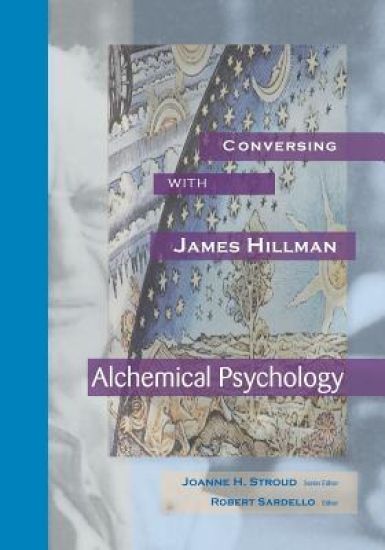
Conversing with James Hillman: Alchemical Psychology
Inaugurated and supported by friends of James Hillman and by scholars of his founding work in archetypal psychology, the James Hillman Symposium is the leading forum for an ongoing discussion of the Uniform Edition, a 11-volume collection of his writings, co-published by the Dallas Institute and Spring Publications. The mission of the conference is to encourage conversations about Hillman's major ideas and concepts in conjunction with psychological and cultural topics as well as pay tribute to his life and career."Hillman makes a study of the transformative processes suggested by the arcane alchemical processes that were adapted in late life by Jung as a basis of understanding depth psychology. Hillman carries this idea forward, arguing that the images and language of alchemy provide a much more valid, less abstract picture of human nature: instead of cold concepts, sensate images. By incorporating the aesthetic approach, alchemy teaches, in Hillman's words, 'with its colors, and minerals, its paraphernalia and enigmatic imagistic instructions . . . an aesthetic psychology.'" --Joanne H. Stroud, Founding Fellow of the Dallas Institute of Humanities and Culture, Director of Institute Publications, and Editor of the Gaston Bachelard Translation Series"It is not the literal return to alchemy that is necessary but a restoration of the alchemical mode of imagining. For in that mode we restore matter to our speech - and that is our aim: the restoration of imaginative matter, not of literal alchemy."--James Hillman, Alchemical Psychology"One of James Hillman's favorite ideas, one of his richest ideas, is psychological polytheism . . . the idea that we are not going toward wholeness; we are going toward a manifestation of our variety . . . having sorted ourselves out into all these elements." --Thomas Moore, 2016 James Hillman SymposiumEach of the James Hillman Symposiums takes for its subject a volume of the Uniform Edition of the Writings of James Hillman. The symposiums encourage participants to deepen their understanding of Hillman's writings by listening to talks given by leading scholars in diverse fields of psychology, art, theater, literature, and film--united by an appreciation of James Hillman's innovations--and by contributing to lively, stimulating discussions.Conversing with James Hillman: Alchemical Psychology Includes works by: James Hillman, Gustavo Barcellos, Scott Becker, Pat Berry, Scott Churchill, Robert Kugelmann, Jean Lall, Stan Marlan, Margot McLean, David Miller, Safron Rossi, Robert Sardello, Michael Sipiora, Dennis Slattery, Joanne H. Stroud, and Gail Thomas.
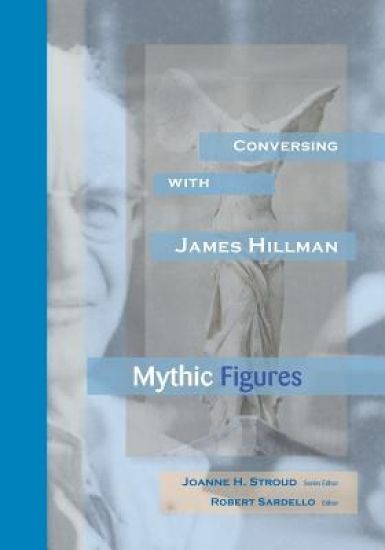
Conversing With James Hillman: Mythic Figures
"Keeping the myths alive in our minds, where their ancient truths can undergird our basic sense of what it means to be a human, is a steadying factor in a time that pleads for guiding compass points. With Hillman filling his valuable role as an inspirer of action to counteract the disturbing Anamnesis, or forgetfulness of past verities, our work is cut out for all of us who were fortunate enough to have known James Hillman and appreciate his pithy and enlivening words of wisdom."--Joanne H. Stroud, Director, James Hillman Symposium"Myths tell a 'just-so' truth. They resonate with ancient implications, the interweavings of plots and characters and locations, worldly and otherworldly, and with extraordinary pathologies and extraordinary miracles. The truth of myth is never single, never simple, never general. . . . Myth speaks the frank truth of the world as it presents itself to our senses, clearly, evidently, directly as a world alive--animated, intentional, intelligible, and at moments, vividly beautiful."--James Hillman, Mythic Figures, 2007Includes works by: James Hillman, Seemee Ali, Gustavo Barcellos, Gustavo Beck, Natalie Cox Herndon, Robert Kugelmann, Jean Hinson Lall, David L. Miller, Robert D. Romanyshyn, Safron Rossi, Robert Sardello, Randolph Severson, Michael P. Sipiora, Glen Slater, Dennis P. Slattery, Joanne H. Stroud, Natasha Stroud, Rodney C. Teague, Gail Thomas.Each of the James Hillman Symposiums takes for its subject a volume of the Uniform Edition of the Writings of James Hillman. This Conversing with James Hillman presents the discussions from the 2017 James Hillman Symposium on Mythic Figures held at The Dallas Institute of Humanities and Culture.
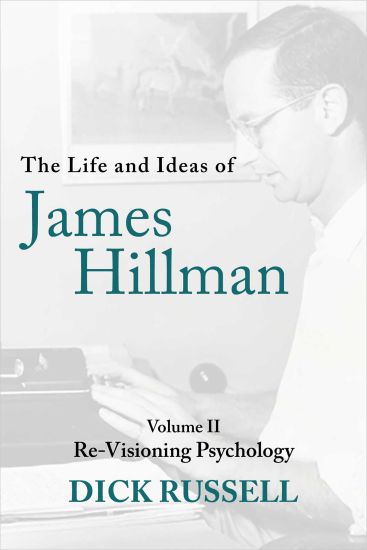
The Life and Ideas of James Hillman: Volume II: Re-Visioning Psychology
James Hillman, who died in 2011 at the age of eighty-five, has been described by poet Robert Bly as "the most lively and original psychologist" of the twentieth century. Based on author Dick Russell's interviews with Hillman and dozens of people who knew him, Volume Two of The Life and Ideas of James Hillman takes up Hillman's mid-life when he set about returning psychology to its Soul-rich roots in Greek mythology and Renaissance esotericism. From his base teaching at Zurich's Jung Institute, we follow Hillman's growing international prominence as a maverick in the field, coinciding with his relationship and eventual marriage to Patricia Berry. They would be instrumental in formulating Archetypal Psychology, along with a group of young compatriots in what became known as Spring House. The new ideas taking shape moved psychology away from the dominant scientific/medical model with its focus on treating the isolated individual, expanding into the fertile realm of culture and the imagination. Amid prodigious writings and lectures, Hillman made mythology and even alchemy relevant to our times. Delivering the prestigious Terry Lectures at Yale and being nominated for a Pulitzer Prize, Hillman returned to America after living primarily in Europe for thirty years. To the surprise of many, he settled in Dallas and helped found an Institute of Humanities and Culture while taking up how to re-imagine city planning. Equally surprising was Hillman's subsequent move to rural Connecticut, where he and Pat Berry resided in a nineteenth-century farmhouse. Starting in the mid-'80s, Hillman became a pioneering teacher in the mythopoetic men's movement alongside Robert Bly and Michael Meade--where deep talk about fathers and sons and male-female relationships offered a new kind of group therapy, a cultural therapy. As Thomas Moore said of Hillman, he possessed a "genius for taking any theme and shedding serious fresh light on it." Along the way, Hillman's insights came to encompass all of the arts, a "poetic basis of mind" that connected him to many of the most influential artists and thinkers of the modern era.
We've Had 100 Yrs Psychotherapy

We've Had 100 Yrs Psychotherapy

James Hillman

HarperSanFrancisco
1993
nidottu
Jarring contemporary notions of psychology and politics, and pushing beyond them to offer the beginnings of new paradigms, this book examines the legacy of psychotherapy. It exposes psychology as an ideology that collaborates with traditional notions of individualism - notions that are no longer tenable. James Hillman is the author of "A Blue Fire", "Interviews", "The Dream and the Underworld", "The Myth of Analysis" and "Re-visioning Psychology". Michael Ventura is the author of "Shadow Dancing in the U.S.A.".
Fragments

Fragments

James Hillman

Penguin Books Ltd
2003
pokkari
Fragments of wisdom from the ancient worldIn the sixth century b.c.-twenty-five hundred years before Einstein--Heraclitus of Ephesus declared that energy is the essence of matter, that everything becomes energy in flux, in relativity. His great book, On Nature, the world's first coherent philosophical treatise and touchstone for Plato, Aristotle, and Marcus Aurelius, has long been lost to history--but its surviving fragments have for thousands of years tantalized our greatest thinkers, from Montaigne to Nietzsche, Heidegger to Jung. Now, acclaimed poet Brooks Haxton presents a powerful free-verse translation of all 130 surviving fragments of the teachings of Heraclitus, with the ancient Greek originals beautifully reproduced en face.For more than seventy years, Penguin has been the leading publisher of classic literature in the English-speaking world. With more than 1,700 titles, Penguin Classics represents a global bookshelf of the best works throughout history and across genres and disciplines. Readers trust the series to provide authoritative texts enhanced by introductions and notes by distinguished scholars and contemporary authors, as well as up-to-date translations by award-winning translators.
A Terrible Love of War

A Terrible Love of War

James Hillman

PENGUIN BOOKS
2005
nidottu
A psychologist and author of The Force of Character examines the origin, needs, and rewards of war, filling the void of why no one understands why war is constant in history by asking such questions as why humans need enemies. Reprint.
The Force of Character

The Force of Character

James Hillman

Ballantine Books Inc.
2000
pokkari
In his powerful bestseller The Soul's Code, James Hillman brilliantly illuminated the central importance of character to our spiritual and emotional lives. Now, in this magnificent new book, Hillman completes his exploration of character with a profound and revolutionary reflection on life's second half. "Character requires the additional years," declares Hillman. "The last years confirm and fulfill character." Far from blunting or dulling the self, the accumulation of experience concentrates the essence of our being, heightening our individual mystery and unique awareness of life. Drawing on his grounding in Jungian psychology, Hillman explains here the archetypes and myths that govern the self's realignment in our final years. The Force of Character follows an enriching journey through the three stages of aging--lasting, the deepening that comes with longevity; leaving, the preparation for departure; and left, the special legacy we each bestow on our survivors. Along the way the book explores the meanings and often hidden virtues of characteristic physical and emotional changes, such as loss of memory, alterations in sleep patterns, and the mysterious upsurge in erotic imagination. Steeped in the wisdom of a lifetime, radiant with Hillman's reading in philosophy, poetry, and sacred texts, charged with a piercing clarity, The Force of Character is a book that will change--and affirm--the lives of all who read it.
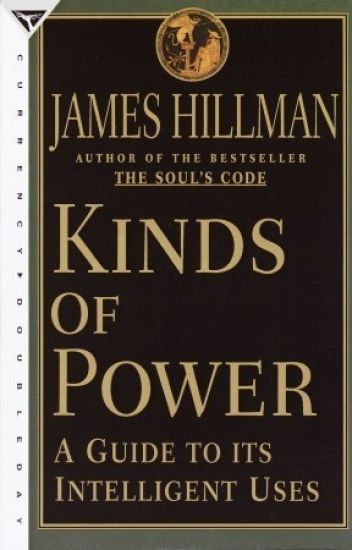
Kinds of Power: A Guide to its Intelligent Uses
In the boldest expose on the nature of power since Machiavelli, celebrated Jungian therapist James Hillman shows how the artful leader uses each of two dozen kinds of power with finesse and subtlety. Power, we often forget, has many faces, many different expressions. "Empowerment," writes best-selling Jungian analyst James Hillman, "comes from understanding the widest spectrum of possibilities for embracing power." If food means only meat and potatoes, your body suffers from your ignorance. When your idea of food expands, so does your strength. So it is with power. "James Hillman," says Robert Bly, "is the most lively and original psychologist we have had in America since William James." In Kinds Of Power, Hillman addresses himself for the first time to a subject of great interest to business people. He gives much needed substance to the subject by showing us a broad experience of power, rooted in the body, the rnind, and the emotions, rather than the customary narrow interpretation that simply equates power with strength. Hillman's "anatomy" of power explores two dozen expressions of power every artful leader must understand and use, including: the language of power, control, influence, resistance, leadership, prestige, authority, exhibitionism, charisma, ambition, reputation, fearsomeness, tyranny, purism, subtle power, growth, and efficiency.
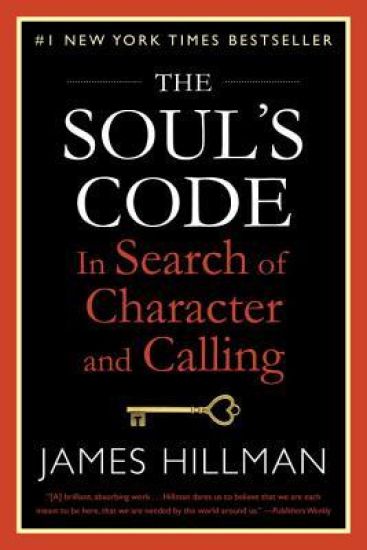
The Soul's Code: In Search of Character and Calling
" An] acute and powerful vision . . . offers a renaissance of humane values."--Thomas Moore, author of Care of the Soul and The Re-Enchantment of Everyday Life Plato called it "daimon," the Romans "genius," the Christians "guardian angel"; today we use such terms as "heart," "spirit," and "soul." While philosophers and psychologists from Plato to Jung have studied and debated the fundamental essence of our individuality, our modern culture refuses to accept that a unique soul guides each of us from birth, shaping the course of our lives. In this extraordinary bestseller, James Hillman presents a brilliant vision of our selves, and an exciting approach to the mystery at the center of every life that asks, "What is it, in my heart, that I must do, be, and have? And why?" Drawing on the biographies of figures such as Ella Fitzgerald and Mohandas K. Gandhi, Hillman argues that character is fate, that there is more to each individual than can be explained by genetics and environment. The result is a reasoned and powerful road map to understanding our true nature and discovering an eye-opening array of choices--from the way we raise our children to our career paths to our social and personal commitments to achieving excellence in our time. Praise for The Soul's Code "Champions a glorious sort of rugged individualism that, with the help of an inner daimon (or guardian angel), can triumph against all odds."--The Washington Post Book World " A] brilliant, absorbing work . . . Hillman dares us to believe that we are each meant to be here, that we are needed by the world around us."--Publishers Weekly
Emotion

Emotion

James Hillman

Routledge
1999
sidottu
This is Volume XIV of thirty-eight in a series on the General Psychology. Originally published in 1960, this study offers A Comprehensive Phenomenology of Theories and their Meanings for Therapy.