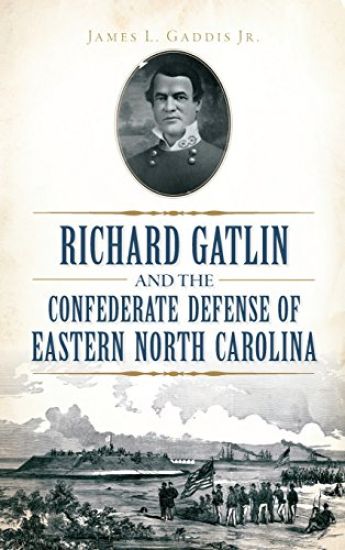
After the Confederate shelling of Fort Sumter in April 1861, North Carolina took steps toward war. Governor John Ellis commandeered Federal forts, raised regiments and enlisted the aid of Mexican War hero and Kinston native Richard C. Gatlin. Under the new Confederacy, Gatlin commanded the Confederate Department of North Carolina as a brigadier general. He was charged with the defense of the Tar Heel State, and his failure to prevent the Union takeover of the coast has been lost in the annals of Civil War history. Join author and historian James L. Gaddis Jr. for an overlooked yet harrowing tale of power, politics, tragedy and war.
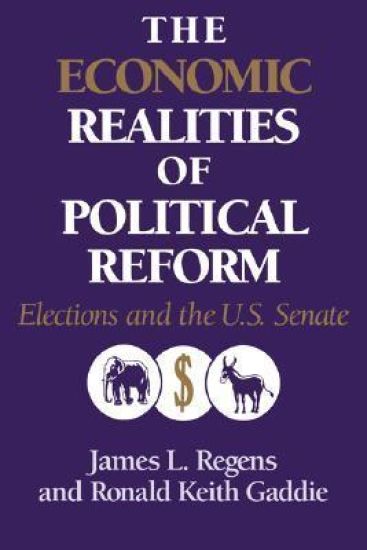
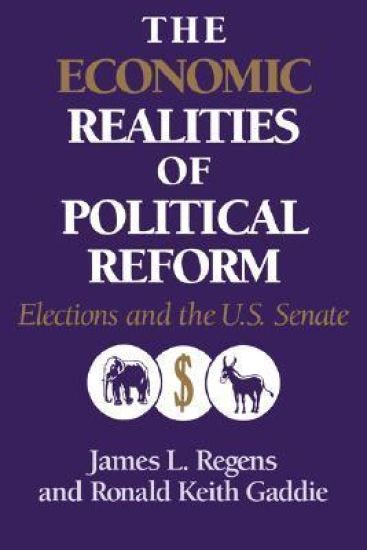
A central political issue in American politics during the 1990s is the need for political campaign reform. The authors examine US Senate elections to determine the role money plays in Senate elections; their analysis indicates that the system of campaign finance resembles a market, with legislators as the recipients of financial largesse based on their institutional positions and political vulnerability. This rent-seeking relationship between economic interests and legislators has transformed the dynamic of Senate elections. The authors assess the potential impact of several electoral reform proposals. Spending limits and public funding proposals, they argue, will not have the impact expected by reform advocates. Term limit and public funding proposals would disrupt the rent-seeking relationship between legislators and economic interests. These proposals also face political and constitutional barriers to implementation.
A central political issue in American politics during the 1990s is the need for political campaign reform. The authors examine US Senate elections to determine the role money plays in Senate elections; their analysis indicates that the system of campaign finance resembles a market, with legislators as the recipients of financial largesse based on their institutional positions and political vulnerability. This rent-seeking relationship between economic interests and legislators has transformed the dynamic of Senate elections. The authors assess the potential impact of several electoral reform proposals. Spending limits and public funding proposals, they argue, will not have the impact expected by reform advocates. Term limit and public funding proposals would disrupt the rent-seeking relationship between legislators and economic interests. These proposals also face political and constitutional barriers to implementation.
James L. Grant has sold dozens of short stories to a variety of magazines for over a decade. Collected here are fourteen tales of dark humor, terrible desire, and weirdness abounding. Includes the previously published stories from the now defunct collection "Digging Up Corpses," such as "Dogs", "Blues Jam", and "It Won't Grow Back", along with four new stories added, including one novella titled "Flocks."
THE writer would bring before the public the narrative of his life while in bondage, which is substantially true in all its details. The painful wrongs inflicted then and now have caused the writer, though many years have passed, to take up the publication of this narrative of himself. There are many incidents and characters described in this narrative personally known to the writer, which make him anxious to put forth some effort, however humble it may be, to ameliorate the condition of his now suffering people, in order that the facts may confirm the truthful saying: "My people will be styled a nation yet, and also claim their nationality." For this they have fought and suffered hundreds of years in servitude and bondage. It is a fact which ought to thrill the heart of every American citizen to see the interest they take in learning; the untiring exertions they make to overcome every obstacle, even death itself to acquire it. It is what God has promised: "To be a God to the faithful and to their seed after them." The writer hopes not to weary your patience in reviewing his narrative, which is fraught with so many exciting scenes. It is the duty of men to occupy places of power and trust, therefore our rulers, above all others, ought to be holy and devoted men .] There are, however, some found in every age of the world who believe in freedom of thought and speech; and many who are untiring in their efforts to secure the future well-being of those entrusted to their care; it affords the most powerful argument to influence the minds of some. It is believed that no one who reads attentively, and reflects seriously, will doubt that the time is near at hand, which is spoken of by God: "Ye shall let my people go free." Now the great revolution seems to me to have come; now is the time for us to act in trying to save that which was lost; in stimulating them to education; and in building homes and schoolhouses for their children, that they may become honorable and respectable citizens of the States to which they have acceded. We want earnest laborers amongst us, for those who are instructing my people are few and far between; and we have been deprived of education by the hand of slavery and servitude, which has been brought upon us by the slave-holder. I feel it is the duty of the people to take up our cause, and instruct wherever they can. Our ignorance, which is often spoken of, and for which we are not to blame, is caused by this ill, slavery; and the whipping post was resorted to if any attempt was made to learn the alphabet. I can say in the fullness of my heart that there is no darkness equal to this, not even the Egyptian darkness which is spoken of by missionaries now laboring in foreign lands. I only pray to hope on, and on, that God may appear in our behalf, and let the sun of civilization and education be extended among my people until it shall reach from sea to sea, and from land to land. Then shall Ethiopia stretch forth her hand unto God and call you blessed. I thank God for what I have seen and experienced so far in regard to the amelioration of our condition as a people. I hardly expect to see the completion of the act of liberty which was commenced by our most earnest friend, Senator Sumner. "See to the Civil Rights Bill; don't let it fail," were among his last words to his associate who stood beside the dying senator. This volume speaks of our earnest desire for more liberty and rights as a free people, and that our children may enjoy that of which we have been deprived. Never was the effectiveness of our Christian instrumentalities in other lands more dependent than now upon the vigorous and progressive development of Christian principles at home. As we are entering upon a new decade our thoughts go back to 1861; and what a period is this to review
This work has been selected by scholars as being culturally important and is part of the knowledge base of civilization as we know it.This work is in the public domain in the United States of America, and possibly other nations. Within the United States, you may freely copy and distribute this work, as no entity (individual or corporate) has a copyright on the body of the work.Scholars believe, and we concur, that this work is important enough to be preserved, reproduced, and made generally available to the public. To ensure a quality reading experience, this work has been proofread and republished using a format that seamlessly blends the original graphical elements with text in an easy-to-read typeface.We appreciate your support of the preservation process, and thank you for being an important part of keeping this knowledge alive and relevant.







![Threshold Signals, Edited by James L. Lawson [and] George E. Uhlenbeck [under the Supervision of the] Office of Scientific Research and Development, N](/covers/9781014142375.jpg)
![Threshold Signals, Edited by James L. Lawson [and] George E. Uhlenbeck [under the Supervision of the] Office of Scientific Research and Development, N](/covers/9781014889171.jpg)