

Kirjahaku
Etsi kirjoja tekijän nimen, kirjan nimen tai ISBN:n perusteella.
1000 tulosta hakusanalla James L. Rogers

With unlimited archival access and a journalist's attention to detail, James L. Rogers updates and expands his 1965 publication to bring the university's history into the next century. The founder of the Texas Normal College, Joshua C. Chilton, declared in 1890 the institution's aim ""to become leaders in the education of the young men and women of Texas, fitting them to creditably fill the most important positions in business and professional circles."" By 1965 the eighth president, J. C. Matthews, presided over an institution granting doctorates in the sciences, mathematics, humanities, social sciences, teacher education, business administration, and the fine arts. In the last thirty-five years the institution has grown to become the University of North Texas System under the leadership of Chancellor Alfred Hurley and President Norval Pohl, with campuses in Dallas and Fort Worth. It now stands as the leading university of the Dallas/Fort Worth Metroplex. With more than eighty photos of people and events on campus, The Story of North Texas provides the definitive history of this institution and is an inspiration to its alumni and friends.
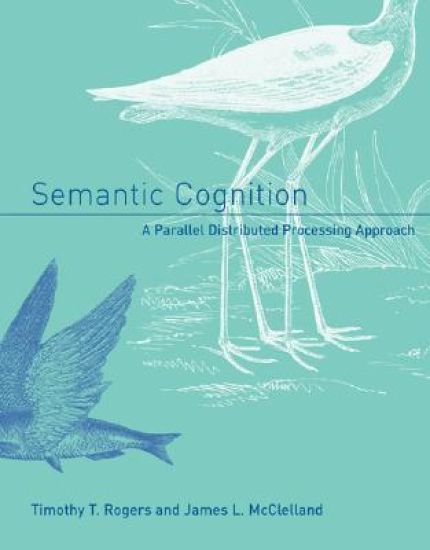
This groundbreaking monograph offers a mechanistic theory of the representation and use of semantic knowledge, integrating the strengths and overcoming many of the weaknesses of hierarchical, categorization-based approaches, similarity-based approaches, and the approach often called "theory theory." Building on earlier models by Geoffrey Hinton in the 1980s and David Rumelhart in the early 1990s, the authors propose that performance in semantic tasks arises through the propagation of graded signals in a system of interconnected processing units. The representations used in performing these tasks are patterns of activation across units, governed by weighted connections among them. Semantic knowledge is acquired through the gradual adjustment of the strengths of these connections in the course of day-to-day experience.The authors show how a simple computational model proposed by Rumelhart exhibits a progressive differentiation of conceptual knowledge, paralleling aspects of cognitive development seen in the work of Frank Keil and Jean Mandler. The authors extend the model to address aspects of conceptual knowledge acquisition in infancy, disintegration of conceptual knowledge in dementia, "basic-level" effects and their interaction with expertise, and many findings introduced to support the idea that semantic cognition is guided by naive, domain-specific theories.

Interprétation Économique de l'Histoire: Cours Professé À Oxford En 1887-88 (Éd.1892)
James Edwin Thorold Rogers
Hachette Livre - BNF
2012
pokkari

A History of Agriculture and Prices in England
Rogers James E. Thorold; Rogers Arthur G. L.
Cambridge University Press
2011
pokkari
Since early times, agriculture has been pivotal to England's economy. This is the two-part seventh in a magisterial seven-volume, eight-piece compilation by the economist James E. Thorold Rogers (1823–90), which represents the most complete record of produce costs in England between the thirteenth and eighteenth centuries. Drawing on a variety of sources including college archives and the Public Record Office, Rogers documents the fluctuating prices of commodities such as livestock, wheat, hay, wool, textiles and labour in a time of great economic change, when the growing economy of the early middle ages was shaken by famine and the Black Death, and then gradually recovered towards the Agrarian Revolution. First published in 1902 (and edited by Rogers' son), Part 1 presents data from 1703 to 1793, showing the prices of a range of products across the country; Part 2 consists of further documentary information collected by Rogers for the work.

The Industrial and Commercial History of England
James E. T. Rogers; Arthur G. L. Rogers
Hansebooks
2021
nidottu

Wind Energy Explained
James F. Manwell; Jon G. McGowan; Anthony L. Rogers
John Wiley Sons Inc
2009
sidottu
Wind energy’s bestselling textbook- fully revised. This must-have second edition includes up-to-date data, diagrams, illustrations and thorough new material on: the fundamentals of wind turbine aerodynamics;wind turbine testing and modelling;wind turbine design standards;offshore wind energy;special purpose applications, such as energy storage and fuel production. Fifty additional homework problems and a new appendix on data processing make this comprehensive edition perfect for engineering students. This book offers a complete examination of one of the most promising sources of renewable energy and is a great introduction to this cross-disciplinary field for practising engineers. “provides a wealth of information and is an excellent reference book for people interested in the subject of wind energy.” (IEEE Power & Energy Magazine, November/December 2003) “deserves a place in the library of every university and college where renewable energy is taught.” (The International Journal of Electrical Engineering Education, Vol.41, No.2 April 2004) “a very comprehensive and well-organized treatment of the current status of wind power.” (Choice, Vol. 40, No. 4, December 2002)

The Industrial and Commercial History of England
Arthur G. L. Rogers; James E. T. Rogers
Hansebooks
2020
nidottu
Diversity Training That Generates Real Change
James O. Rodgers; Laura L. Kangas
Berrett-Koehler Publishers
2022
sidottu
This complete guide to effective, transformative diversity training provides an answer to the superficial, check-the-box DEI efforts that are undermining the entire field. DEI work is getting a bad reputation. But that's because it's not being done right, say veteran diversity consultants James O. Rodgers and Laura Kangas. Too many organizations are treating diversity training as a quick-hit, low-cost, check-the-box activity. Effective diversity training involves behavioral change based on adult learning theory. It is rigorous, deeply personal, experience based, and, if done well, life changing. Rodgers and Kangas offer a complete guide, from design to implementation to results. They show how to determine what specific, tangible outcomes an organization wants before it startslink diversity training to overall organizational strategyhelp all participants forge an individual, emotional connection to the trainingidentify what skills a facilitator needs--the right facilitator makes all the differencecreate memorable learning experiences, not simply educational programs The authors' goal is nothing less than to spark a worldwide revolution of informed practitioners, employees, and business leaders who will demand diversity training be given the same time, resources, and attention as any other critical enterprise initiative. Reading group discussion guide available in book.
Diversity Training That Generates Real Change
James O Rodgers; Laura L Kangas
Readhowyouwant
2022
pokkari
Plough Quarterly No. 18 - The Art of Community
Scott Beauchamp; Roger Scruton; Kermani Navid; Fadi Mikhail; James Baldwin; Dorothy L. Sayers; Susannah Black; John Berger; John Carlin; Eberhard Arnold; Sarah Ruden; Maureen Swinger; Emily Hallock
Plough Publishing House
2018
pokkari
Can beauty save the world? These days criticism of art--whether visual, musical, or literary--is often marked by a suspicion of beauty. What happened to the belief that the creativity of the artist reflects the creativity of the Maker of heaven and earth, and that art can therefore be a channel for divine truth? Anyone who has joined with others to sing Bach’s Saint Matthew Passion or stood before a painting by Raphael or Chagall can attest to this. At such moments, art binds people together. This issue of Plough focuses on art that leads to such community: through theater, painting, music, and the objects and architecture of everyday life. And while art fosters community, building community is itself a work of creativity. Also in this issue: original poetry by Cozine Welch Jr.; reviews of new books by Eliza Griswold, Alissa Quart, Eugene Vodolazkin, and Nathan Englander; and art by Denis Brown, JR, Valérie Jardin, Isaiah King, Isaiah Tanenbaum, George Makary, Oriol Malet, Alex Nwokolo, Ashik and Jenelle Mohan, Raphael, Aaron Douglas, Winslow Homer, Vincent van Gogh, Wassily Kandinsky, and Jason Landsel. Plough Quarterly features stories, ideas, and culture for people eager to put their faith into action. Each issue brings you in-depth articles, interviews, poetry, book reviews, and art to help you put Jesus’ message into practice and find common cause with others.

Using the MMPI–2 in Forensic Assessment
James N. Butcher; Giselle A. Hass; Roger L. Greene; Linda D. Nelson
American Psychological Association
2015
sidottu
This practical guide explains how forensic psychologists can successfully use the MMPI-2 to evaluate clients in various forensic contexts and present results to attorneys and judges. The Minnesota Multiphasic Personality Inventory-2 (MMPI-2) is one of the most widely researched and used assessment tools in psychology. Forensic psychologists often rely on it to evaluate clients involved in civil and criminal cases. Because the test results can have a significant influence on court decisions, psychologists need to understand how to make full use of the MMPI-2 in forensic settings. Building on his popular series of MMPI-2 books, James N. Butcher and his coauthors present this guide that is based on decades of research and personal experience. Following a brief overview of the MMPI-2 and its various scales, the authors further explore its applications in various forensic settings, including personal injury and workers amp rsquo compensation claims, immigration relief and deportation cases, and criminal investigations. Clear, practical guidelines bolstered by illustrative case examples will help psychologists: Understand legal and cultural factors that may influence the assessment process Evaluate neuropsychological issues, such as brain injury Employ computerized interpretations and Present results in testimony and written reports

American Legislative Leaders in the West, 1911-1994
Charles F. Ritter; James Roger Sharp; Nancy Weatherly Sharp; Jon L. Wakelyn
Greenwood Press
1997
sidottu
The first of four volumes comprising a biographical dictionary of state house speakers from 1911 to 1994, this book covers speakers from Alaska, Arizona, California, Colorado, Hawaii, Idaho, Montana, Nevada, New Mexico, Oregon, Utah, Washington, and Wyoming. Entries provide basic biographical and career information on more than 400 speakers. The book opens with an insightful analytical introduction and includes valuable statistical appendixes based on an exhaustive database.Complementing Charles R. Ritter and Jon L. Wakelyn's book ^IAmerican Legislative Leaders, 1850-1910^R (1989), this book covers those who have served as state speakers in the West since 1910. Forthcoming volumes will cover state house speakers in the South, the Midwest, and the Northeast.

American Legislative Leaders in the Midwest, 1911-1994
Charles F. Ritter; James Roger Sharp; Nancy Weatherly Sharp; Jon L. Wakelyn
Greenwood Press
1997
sidottu
The second of four volumes comprising a biographical dictionary of state house speakers from 1911 to 1994, this book covers speakers from Illinois, Indiana, Iowa, Kansas, Michigan, Minnesota, Missouri, Nebraska, North Dakota, Ohio, South Dakota, and Wisconsin. Entries provide basic biographical and career information on more than 1,400 speakers. The book opens with an analytical introduction and includes useful statistical appendixes. The four volumes, covering state speakers in the West, Midwest, Northeast, and South, are designed to complement Charles R. Ritter's and Jon L. Wakelyn's book American Legislative Leaders, 1850-1910 (1989).
The Scientists
Naomi Pasachoff; Jay Pasachoff; Robert Iliffe; Frank A.J.L. James; Jordi Cat; Patrick Moore; Martin Rudwick; Laura Dassow Walls; Roger McCoy; Michael Hunter; Jean-Pierre Poirier; Alan Rocke; Nathan Brooks; Georgina Ferry; Virendra Singh; Frank Close; Andrew Whitaker; Robert Paradowski
Thames Hudson Ltd
2012
sidottu
This book tells the remarkable lives of the pioneers of science – from Galileo and Newton, Faraday and Darwin, Pasteur and Marie Curie, to Einstein, Freud, Turing, and Crick and Watson. A series of seventy articles, written by an international team of distinguished scientists, historians of science and science writers, provides an unrivalled account of the lives and personalities behind the greatest scientific breakthroughs of all time. Organized thematically, starting at the ‘Universe’, and moving smaller through the ‘Earth’ and ‘Molecules and Matter’ to ‘Inside the Atom’, with the final two sections looking at ‘Life’ and ‘Body and Mind’, it covers all the major scientific disciplines, including astronomy, biology, biochemistry, chemistry, computing, ecology, geology, medicine, neurology, physics and psychology, as well as mathematics. The Scientists will intrigue budding scientists, those fascinated by the lives of great individuals, and anyone curious to know how over the centuries we came to understand the physical world around us and inside us.

The Ecology and Management of Wetlands
Donal D. Hook; W. H. McKee Jr; H. K. Smith; James Gregory; V. G. Burrell Jr; M. Richard DeVoe; R. E. Sojka; Stephen Gilbert; Roger Banks; L. H. Stolzy; Chris Brooks; Thomas D. Matthews; T. H. Shear
Springer-Verlag New York Inc.
2012
nidottu
This book contains the proceedings of a symposium held at the College of Charleston, Charleston, South Carolina, USA, 16-20 June 1986. The seed for this symposium arose from a group of physiologists , soU scientists and biochemists that met in Leningrad, USSR in July 1975 at the 12th Botanical Conference in a Session organized by Professor B.B. Vartepetian. This group and others later conspired to contribute to a book entitled Plant Life in Anaerobic Environments (eds. D. D. Hook and R. M. M. Crawford, Ann Arbor Science, 1978). Several contributors to the book suggested in 1983 that a broad-scoped symposium on wetlands would be useful (a) in facilitating communication among the diverse research groups involved in wetlands research (b) in bringing researchers and managers together and (c) in presenting a com prehensive and balanced coverage on the status of ecology ami management of wetlands from a global perspective. With this encouragement, the senior editor organized a Plan ning Committee that encompassed expertise from many disciplines of wetland scientists and managers. This Committee, with input from their colleagues around the world, organized a symposium that addressed almost every aspect of wetland ecology and management.

James L. Haven & Co.'s Illustrated Catalogue And Price List Of Hardware And Implements
Hutson Street Press
2025
sidottu

James L. Haven & Co.'s Illustrated Catalogue And Price List Of Hardware And Implements
Hutson Street Press
2025
pokkari

James L. Ridgill Et UX., Appellants, V. Reston Homeowners Association. U.S. Supreme Court Transcript of Record with Supporting Pleadings
Michael S Horwatt; James Lee Ridgill
Gale Ecco, U.S. Supreme Court Records
2011
pokkari