Kirjojen hintavertailu. Mukana 11 342 296 kirjaa ja 12 kauppaa.

Kirjahaku

Etsi kirjoja tekijän nimen, kirjan nimen tai ISBN:n perusteella.

1000 tulosta hakusanalla James Laughlin; Thomas Merton

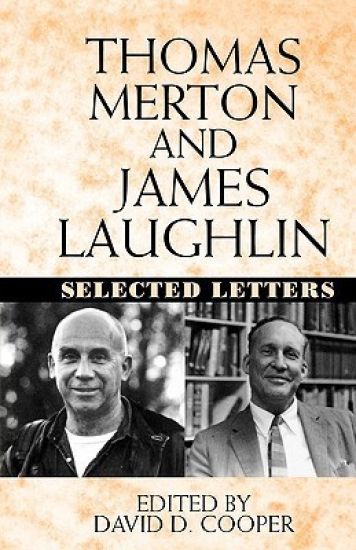
Thomas Merton and James Laughlin

Thomas Merton and James Laughlin

James Laughlin; Thomas Merton

WW NORTON CO
1997
nidottu
Thomas Merton may have seemed an unlikely candidate for a best-selling author. Cloistered in a remote Kentucky monastery, Merton struggled as a young man to reconcile the contemplative life he sought as a monk and his very public passion for writing. Publisher James Laughlin saw Merton's talent and played the muse, encouraging him with the poems, essays, and diaries of other writers and publishing nearly everything Merton sent in return. Ironically, the very society Merton rejected upon entering the monastery embraced his work, bringing him publishing success only dreamed of by more eager authors. Soon Merton discovered he had a podium, a voice, and a responsibility that weighed as heavily on him as his previous quest for silence. Laughlin's encouragement remained constant throughout, as political ally, publishing adviser, and supporting friend. Nearly thirty years of rich correspondence documents this strong literary and personal relationship and traces the remarkable development of Merton's vision: from an early focus on matters internal and religious, to a tremendous world view encompassing issues of race, politics, war, and the spiritual decay of modern society.
The Love Poems of James Laughlin

The Love Poems of James Laughlin

James Laughlin

New Directions Publishing Corporation
1998
nidottu
As a poet, the late James Laughlin (1914-1997) was perhaps best known for his love lyrics. Marjorie Perloff has written, "Who else . . . writes such bittersweet, ironic, rueful, erotic, toughminded, witty love poems, poems that run the gamut from ecstasy to loss?" Andrei Codrescu wrote, "Under deep cover as Godfather of Modernism, James Laughlin has secretly raised and made himself into the Poetry Chieftain of Sane Eros, the Catullus of fin-de-siecle America." This small paperback edition of his finest love poems is a perfect memorial to one of the twentieth century's most important men of letters.
The Collected Poems of James Laughlin

The Collected Poems of James Laughlin

James Laughlin

New Directions Publishing Corporation
2014
sidottu
Published in his centenary year, The Collected Poems of James Laughlin encompasses in one majestic volume all of the poetry (with the exception of his verse memoirs, Byways) written by the publisher-poet. Witty, technically brilliant, slyly satiric and heartbreakingly poignant about the vagaries of love, Laughlin charted his own poetic course for over six decades prompting astonishment and joy in those fellow poets who had discovered his unique genius. As Charles Simic enthused, “The secret is out, the publisher of Williams and Pound is himself a great lyric poet.” Compiled and edited by Peter Glassgold, Laughlin’s chosen poetry editor for the last two decades, The Collected Poems of James Laughlin includes more than 1250 poems from the early lyrics written in Laughlin’s signature “typewriter” metric, to the “long-line” poems of his later years, to the playful antics of his dopplegänger Hiram Handspring, to the trenchant commentary of the five-line pentastichs that occupied his last days. Despite all the awards and accolades that James Laughlin received for his publishing achievements and service to literature, the honor that pleased him most was his election to the American Academy of Arts and Letters (1996)—as a poet.
James Laughlin, New Directions Press, and the Remaking of Ezra Pound

James Laughlin, New Directions Press, and the Remaking of Ezra Pound

Gregory Barnhisel

University of Massachusetts Press
2005
sidottu
Although James Laughlin (1914-1997) came from one of Pittsburgh's leading steel-making families, his passions were literary rather than industrial - he wanted to be a poet. Laughlin was a freshman at Harvard when he traveled to Rapallo, Italy, in 1933 to meet Ezra Pound (1885-1972), and he returned the following year to enroll in the poet's ""Ezuversity."" Pound dismissed Laughlin's poetic talents, advising the wealthy young man to make himself a publisher. Laughlin did just that, founding New Directions Press in 1936. For much of the 1930s, Laughlin and Pound were friends, business associates, collaborators, student and teacher, and even at times son and surrogate father. But Laughlin's investment in Pound - and their friendship - was severely tested by Pound's wartime propaganda broadcasts for Italian state radio, his capture and abortive trial for treason, and his thirteen-year stay as a mental patient in St. Elizabeths Hospital. Following this scandal and disgrace, the reading public no longer wanted to buy Pound's books, and the critical establishment dismissed him as a Fascist crank. Laughlin and New Directions responded by marketing Pound in such a way as to convince consumers that the poet's importance needed to be judged solely on aesthetic grounds, and that his political beliefs were irrelevant to his accomplishments as a pioneering literary artist. With Pound's encouragement, and despite the poet's oft-expressed opposition to the mixture of commerce and art, Laughlin used such marketing tools as advertising, the cultivation of friendly critics, and the development of the trade paperback to enhance Pound's reputation. Drawing on a wide range of sources - including interviews with Laughlin and other New Directions staffers and unpublished materials from numerous literary archives - Gregory Barnhisel tells the story of the personal and professional relationship between one of the twentieth century's most controversial writers and his loyal and innovative American publisher - a relationship that eventually helped remake literary history and continues to shape our understanding of modernism itself.
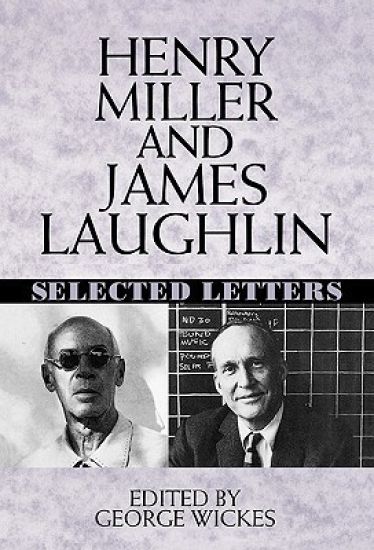
Henry Miller and James Laughlin

Henry Miller and James Laughlin

Laughlin James; Henry Miller; Wickes George

WW NORTON CO
1996
sidottu
Ever mercurial in temperament, an idealist who struggled financially to meet his material needs, Henry Miller for decades relied on his publisher James Laughlin's generosity and expert editorial advice. Although Miller's letters decried the conservatism of American book publishing and were often suspicious in tone, Miller nevertheless admired and trusted Laughlin with intimate details about his work and his personal life. The resulting correspondence, spanning from 1935 to 1979, shortly before Miller's death on June 7, 1980, is a remarkable, uncensored record of the ideas and intentions behind many of the author's most provocative literary endeavors.
Delmore Schwartz and James Laughlin

Delmore Schwartz and James Laughlin

Delmore Schwartz; James Laughlin

WW Norton Co
1993
sidottu
Delmore Schwartz was the golden boy of the American literary scene until his untimeley death in 1966, alone and destitute. James Laughlin was the founder of New Directions, publisher and editor of the Modernists. This collection chronicles a correspondence that began with Schwartz's first unsolicited submission to Laughlin in 1937 and continued throughout the friendship that lasted until the poet's death. The relationship that developed between them was both literary, steeped in their own work and the work of their contemporaries, and personal: gifted storytellers, they delighted each other with factual and fictional observations. The two remained friends and colleagues until the mental illness that eventually claimed him, began to destroy Schwartz's ability to trust even those closest to him.
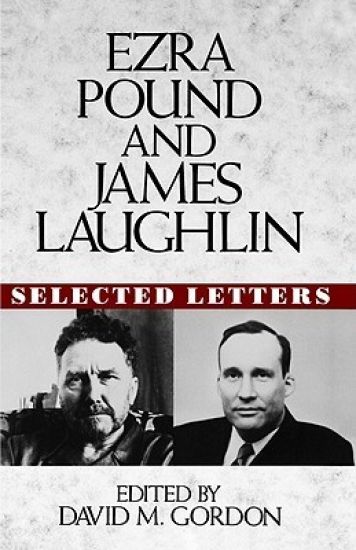
Ezra Pound and James Laughlin

Ezra Pound and James Laughlin

Ezra Pound; James Laughlin

WW Norton Co
1994
sidottu
Even before establishing "New Directions", James Laughlin had met and studied with Ezra Pound. These selected letters capture the spirit of their growing relationship from pupil and teacher to publisher and author. Pound's correspondence summons up the inner man and the literary figure. Literature, music, friends and politics fill his pages.
Guy Davenport and James Laughlin: Selected Letters

Guy Davenport and James Laughlin: Selected Letters

Guy Davenport; James Laughlin

WW Norton Co
2007
sidottu
This volume features selections from the New Directions founder's correspondence with Guy Davenport, the polymath artist and author of The Geography of the Imagination. More than simply detailing an author/publisher relationship, these letters depict two fine minds educating and supporting each other in the service of literature.
New Directions 21

New Directions 21

James Laughlin

New Directions Publishing Corporation
1969
sidottu
Translations of substantial works by three important European poets–Erik Lindegren (Sweden), Cesare Pavese (Italy) and Roberto Sanesi (Italy)–are among the highlights of this 1969 New Directions Annual. Also, there appear works by other well known poets such as William Bronk, Lawrence Ferlinghetti, Anselm Hollo (England), W. S. Merwin, Edouard Roditi, and Mark Strand. Emmett Jarrett, whose long poem, Design for the City of Man: A Vision, is an exciting discovery. The prose section includes Thomas Merton’s satire on Negro segregation, Plessy vs. Ferguson: Theme and Variations, and a group of stories by Sanford Chernoff, Marvin Cohen, James B. Hall, James Purdy, Mia Raffel and Margaret Randall, which illustrate the rich diversity, both in technique and subject matter, of the short story form from the late sixties. There is also, in translation from the Flemish, the work of an important but too-little-known precursor of the modern movement, Paul van Ostaijen’s Ika Loch’s Brothel. Trim Bissel: THE REUNION Besmilr Brigham: SONGS FROM THE THIRTEENTH MASK William Bronk: SIX POEMS Sanford Chernoff: NOT MY ANIMAL Marvin Cohen: LOVE BY PROXY OF SOLITUDE Lawrence Ferlinghetti: THE THIRD WORLD Mitchell Goodman: EIGHT POEMS James B. Hall: TRIUMPH OF THE OMOPHAGISTS Walter Hamady: PLUM-FOOT POEMS Anselm Hollo: THE COHERENCES Emmet Jarret: DESIGN: A VISION Erik Lindegren: THE MAN WITHOUT A WAY Thomas Merton: PLESSY VS. FERGUSON: THEME AND VARIATION W. S. Mervin: TWO POEMS Paul van Ostaijen: IKA LOCH’S BROTHEL Cesare Pavese: DEATH WILL COME AND WILL HAVE YOUR EYES James Purdy: MR. EVENING Mia Raffel: SNAILSFEET Margaret Randall: THE IMPOSSIBLE FILM STRIP OR, HISTORY OF MARRIAGE Edouard Roditi: MEDITATION ON BOOKS Roberto Sanesi: INFORMATION REPORT Mark Strand: THE WAY IT IS
New Directions 22

New Directions 22

James Laughlin

New Directions Publishing Corporation
1970
sidottu
The contents, lively and varied as always, of this year’s New Directions Annual, the twenty-second in the series which began in 1936, range from the topical, in an impressive new poem by Ferlinghetti on The Enigma of Ho Chi Minh’s Funeral, to one of the important source texts of the modern literary movement, a translation by David Harris of Gottfried Benn’s “play of ideas,” The Voice behind the Curtain. Once again, the Annual is international: Stephen Stepanchev has translated a group of poems by the Yugoslavian poet Vasko Popa; Samuel Grolmes and Yumiko Tsumura present the Japanese poet Ryuichi Tamura; Dennis Silk (Israel) blends parody and fantasy in the prose “journey,” Montefiore; there is a scene from the play Sunday They’ll Make Me a Saint by the Greek-American writer Demetrius Toteras; and from Britain we have Stuart Montgomery’s verse sequence, Circe, a section of photographs of the concrete poetry of Ian Hamilton Finlay (Scotland) and a group of drawings by the poet Charles Tomlinson. Three of the young American poets in ND22 are active in the Black movement: Ed Roberson, Quincy Troupe and Al Young. Richard Meyers is a promising discovery, and we welcome Robert Lowry again with a fine poem. Of exceptional interest this year are the stories of Paul Breslow, Carol Emshwiller, Paul Friedman, James B. Hall and Mark Jay Mirsky.
The Man in the Wall

The Man in the Wall

James Laughlin

New Directions Publishing Corporation
1993
sidottu
James Laughlin has been called the American Catullus. Like that most Greek of ancient Latin poets, he elevated his everyday subjects with wit and clarity of language. Love and hate, death and aging, politics, literature, travel, the horrors of war––Laughlin’s muse spoke of all these things with a fresh directness that make his poems both timeless and contemporary. The founder of New Directions, Laughlin’s efforts as publisher and poet had been to prolong and extend the old poetic traditions. Poetry for him was, in Gertrude Stein’s phrase, a “continuous present” in all times and cultures. Laughlin developed his distinctive tight metrics with the advice of William Carlos Williams. A longer, comical line is found in the recent poems of Laughlin’s cheeky doppelganger, Hiram Handspring.
The Man in the Wall

The Man in the Wall

James Laughlin

New Directions Publishing Corporation
1993
nidottu
James Laughlin has been called the American Catullus. Like that most Greek of ancient Latin poets, he elevated his everyday subjects with wit and clarity of language. Love and hate, death and aging, politics, literature, travel, the horrors of war––Laughlin’s muse spoke of all these things with a fresh directness that make his poems both timeless and contemporary. The founder of New Directions, Laughlin’s efforts as publisher and poet had been to prolong and extend the old poetic traditions. Poetry for him was, in Gertrude Stein’s phrase, a “continuous present” in all times and cultures. Laughlin developed his distinctive tight metrics with the advice of William Carlos Williams. A longer, comical line is found in the recent poems of Laughlin’s cheeky doppelganger, Hiram Handspring.
The Secret Room

The Secret Room

James Laughlin

NEW DIRECTIONS PUBLISHING CORPORATION
1997
nidottu
James Laughlin, poet and publisher, is known in Italy as Il Catullo americano, the American Catullus. Like the Latin poet whom Laughlin has long called his master, the subject at the heart of his work remains "love/...& the lack of love, /which is what makes evil," but seen now from the wry, often poignant perspective of old age. In his newest collection, The Secret Room, he has gathered nearly 150 poems that address his mature theme in a variety of ways. The philosophical lyrics of "Looking Inward" and the satirical jabs and invectives of "Epigrams and Comic Verses" employ short-line forms, including Laughlin's signature "typewriter metric," originally devised with the advice of William Carlos Williams. "Byways" continues his autobiographical work-in-progress, in a three-stress line borrowed from Kenneth Rexroth. And with "39 Pentastichs," Laughlin introduces a five-line stanza in a natural voice cadence suited to casual observations.
Byways

Byways

James Laughlin

New Directions Publishing Corporation
2005
sidottu
The long-awaited memoirs of New Directions' founder. James Laughlin, the late founder and publisher of New Directions, was also a poet of elegance and distinction. At his death in 1997 at the age of eighty-three, he left unfinished his long autobiographical poem, Byways. It is no exaggeration to say that his publishing house, which he began in 1936 while still an undergraduate at Harvard, changed the way Americans read and write serious literature. Yet the man who published some of the greatest writers of the twentieth century remained resistant for most of his life to the memoiristic impulse. In the end he found his autobiographical voice by adopting the swift-moving line of Kenneth Rexroth's booklength philosophical poem, The Dragon and the Unicorn (1952). Byways weaves together family history (the Laughlins were wealthy Pittsburgh steel magnates), the poet's early memories and travels in Europe and America with his playboy father, his years at Harvard, first meetings with Pound, the beginning of his publishing venture, his reminiscences of close friendships with writers including W.C. Williams, Thomas Merton, and Kenneth Rexroth, his postwar work in Europe and Asia with the Ford Foundation as publisher of its international literary magazine, Perspectives, and not least, his many early loves.
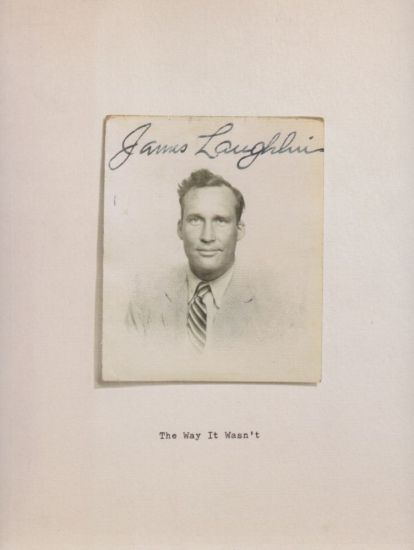
The Way It Wasn't

The Way It Wasn't

James Laughlin

New Directions Publishing Corporation
2007
nidottu
James Laughlin—poet, ladies' man, heir to a steel fortune, and the founder of New Directions—was still at work on his autobiography when he died at 83. He left behind personal files crammed with memories and memorabilia: in "M" he is taking Marianne Moore to Yankee games (outings captured here in charming snapshots) to discuss "arcane mammals," and in "N" nearly plunging off a mountain, hunting butterflies with Nabokov ("Volya was a doll in a very severe upper-crust Russian way"). With an accent on humor, The Way It Wasn't is a scrapbook loaded with ephemera—letters and memories, clippings and photographs. This richly illustrated album glitters like a magpie's nest, if a magpie could have known Tennessee Williams, W.C. Williams, Merton, Miller, Stein, and Pound. In "C": "I wish that nice Jean Cocteau were still around. He took me to lunch at the Grand Véfours in the Palais-Royal and explained all about flying saucers. He understood mechanical things. He would advise me." In "P": "There was not much 'gracious living' in Pittsburgh, where at one house, the butler passed chewing gum on a silver salver after coffee." And: "The world is full of a large number of irritating people." In "H" there's Lillian Hellman: "What a raspy character. When I knocked at her door to try to borrow one of her books (hoping to butter her up) she only opened her door four inches and said words to the effect: 'Fuck off, you rapist.'" Marketing in "M": "I think it's important to get the 'troubadours' into the title. That's a 'buy-me' word." In "G": "Olga asked Allen Ginsberg if he was also buying Pound Conference T-shirts for his grandchildren. She was most lovable throughout." In "L": "Wyndham Lewis wrote 'Why don't you stop New Directions, your books are crap.'" And we find love in "L": "Cicero noted that an old love pinches like a crab." But in The Way It Wasn't James Laughlin's love of the crazy world and his crazier authors does not pinch a bit: it glows with wit and enlarges our feeling for the late great twentieth century.
The Way It Wasn't

The Way It Wasn't

James Laughlin

New Directions Publishing Corporation
2007
sidottu
James Laughlin—poet, ladies' man, heir to a steel fortune, and the founder of New Directions—was still at work on his autobiography when he died at 83. He left behind personal files crammed with memories and memorabilia: in "M" he is taking Marianne Moore to Yankee games (outings captured here in charming snapshots) to discuss "arcane mammals," and in "N" nearly plunging off a mountain, hunting butterflies with Nabokov ("Volya was a doll in a very severe upper-crust Russian way"). With an accent on humor, The Way It Wasn't is a scrapbook loaded with ephemera—letters and memories, clippings and photographs. This richly illustrated album glitters like a magpie's nest, if a magpie could have known Tennessee Williams, W.C. Williams, Merton, Miller, Stein, and Pound. In "C": "I wish that nice Jean Cocteau were still around. He took me to lunch at the Grand Véfours in the Palais-Royal and explained all about flying saucers. He understood mechanical things. He would advise me." In "P": "There was not much 'gracious living' in Pittsburgh, where at one house, the butler passed chewing gum on a silver salver after coffee." And: "The world is full of a large number of irritating people." In "H" there's Lillian Hellman: "What a raspy character. When I knocked at her door to try to borrow one of her books (hoping to butter her up) she only opened her door four inches and said words to the effect: 'Fuck off, you rapist.'" Marketing in "M": "I think it's important to get the 'troubadours' into the title. That's a 'buy-me' word." In "G": "Olga asked Allen Ginsberg if he was also buying Pound Conference T-shirts for his grandchildren. She was most lovable throughout." In "L": "Wyndham Lewis wrote 'Why don't you stop New Directions, your books are crap.'" And we find love in "L": "Cicero noted that an old love pinches like a crab." But in The Way It Wasn't James Laughlin's love of the crazy world and his crazier authors does not pinch a bit: it glows with wit and enlarges our feeling for the late great twentieth century.
The Luck of Friendship

The Luck of Friendship

James Laughlin; Tennessee Williams

WW Norton Co
2018
sidottu
A friendship struck in 1942 would last for forty-one years through critical acclaim and rejection, commercial success and failure, manic highs, bouts of depression, and serious and not-so-serious liaisons. Tennessee Williams’s and James Laughlin’s letters provide a window into the literary history of the mid-twentieth century.