Kirjojen hintavertailu. Mukana 11 244 527 kirjaa ja 12 kauppaa.

Kirjahaku

Etsi kirjoja tekijän nimen, kirjan nimen tai ISBN:n perusteella.

1000 tulosta hakusanalla James M. Lang

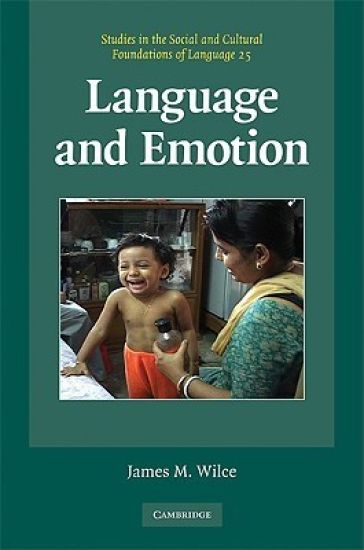
Language and Emotion

Language and Emotion

James M. Wilce

Cambridge University Press
2009
sidottu
Language is a means we use to communicate feelings; we also reflect emotionally on the language we and others use. James Wilce analyses the signals people use to express emotion, looking at the social, cultural and political functions of emotional language around the world. His book demonstrates that speaking, feeling, reflecting, and identifying are interrelated processes and shows how desire or shame are attached to language. Drawing on nearly one hundred ethnographic case studies, it demonstrates the cultural diversity, historical emergence, and political significance of emotional language. Wilce brings together insights from linguistics and anthropology to survey an extremely broad range of genres, cultural concepts, and social functions of emotional expression.
Language, Hermeneutic, and History

Language, Hermeneutic, and History

James M Robinson

Cascade Books
2008
sidottu
James M. Robinson, together with John B. Cobb, published a series of three volumes entitled New Frontiers in Theology: The Later Heidegger and Theology (1963), The New Hermeneutic (1964), and Theology as History (1967). Here they introduced the new directions that Continental theology was taking after the break caused by the Nazi period and World War II. In each volume it was Robinson's assignment to write an extensive introduction of the new direction: "The German Discussion of the Later Heidegger," "Hermeneutic since Barth," and "Revelation as Word and as History." Then others contributed essays. These three seminar introductions are here brought together in a single volume, which thus is the basic tool for getting into the Continental theology of the second half of the twentieth century.
Language, Hermeneutic, and History

Language, Hermeneutic, and History

James M Robinson

Wipf Stock Publishers
2008
pokkari
Description: James M. Robinson, together with John B. Cobb, published a series of three volumes entitled New Frontiers in Theology: The Later Heidegger and Theology (1963), The New Hermeneutic (1964), and Theology as History (1967). Here they introduced the new directions that Continental theology was taking after the break caused by the Nazi period and World War II. In each volume it was Robinson's assignment to write an extensive introduction of the new direction: ""The German Discussion of the Later Heidegger,"" ""Hermeneutic since Barth,"" and ""Revelation as Word and as History."" Then others contributed essays. These three seminar introductions are here brought together in a single volume, which thus is the basic tool for getting into the Continental theology of the second half of the twentieth century. Endorsements: ""Robinson's keen and subtle mind is in full display here, both in his almost encyclopedic grasp of the broader theological issues as well as in his remarkably detailed knowledge of the thought of the German theologians featured in these essays. This book is must reading for those interested in the development of German theology in the latter half of the twentieth century."" --Paul J. Achtemeier, Union Theological Seminary, Emeritus ""The New Frontier Series had a particular meaning for the time the volumes were published. We live today at a very different time. But in each volume there was one long essay of enduring value, a detailed and insightful study of the history of the Continental theology out of which the theological developments of the 1960s came. Nowhere else has the theology of this period been so thoroughly explained. This volume brings these essays together."" --John B. Cobb Jr., cofounder of the Center for Process Studies About the Contributor(s): James M. Robinson did his doctorate under Karl Barth in Basel, Switzerland (1952). He taught again and again as Visiting Professor at Continental universities: G ttingen (1959), Z rich (1960, 1962), Strasbourg (1970-71), T bingen (1986), Geneva (1992), and Bamberg (1997). As an expert on Continental theology, he experienced the shift from the prewar debate of the Confessing Church to the postwar focus on demythologizing (Rudolf Bultmann), language (the later Heidegger), the new hermeneutic (Ernst Fuchs and Gerhard Ebeling), and neo-conservatism (Wolfhart Pannenberg).
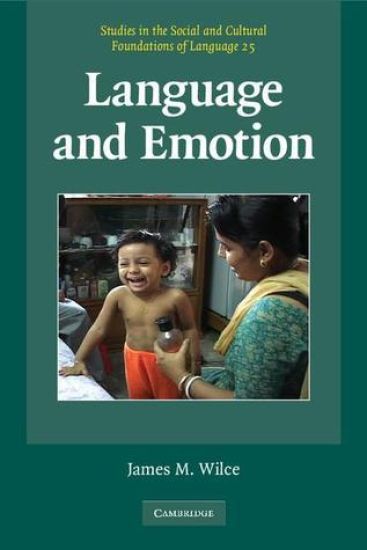
Language and Emotion

Language and Emotion

Wilce James M.

Cambridge University Press
2009
pokkari
Language is a means we use to communicate feelings; we also reflect emotionally on the language we and others use. James Wilce analyses the signals people use to express emotion, looking at the social, cultural and political functions of emotional language around the world. His book demonstrates that speaking, feeling, reflecting, and identifying are interrelated processes and shows how desire or shame are attached to language. Drawing on nearly one hundred ethnographic case studies, it demonstrates the cultural diversity, historical emergence, and political significance of emotional language. Wilce brings together insights from linguistics and anthropology to survey an extremely broad range of genres, cultural concepts, and social functions of emotional expression.
Acquired Language Disorders

Acquired Language Disorders

Evelyn R. Klein; James M. Mancinelli

Plural Publishing Inc
2019
nidottu
Acquired Language Disorders: A Case-Based Approach, Third Edition, is a practical, easy-to-follow, informative guide for students and clinicians. The authors present each case from an impairment-based perspective with practical application to improving activities of daily living, as well as a social interactive perspective to create a wholistic picture of each case. For people with aphasia, clinicians are encouraged to consider not only language but also executive functions, attention, memory, and visuospatial skills. Information in the text coordinates the assessment process to a treatment plan informed by the Aphasia: Framework for Outcome Measurement (A-FROM) model, an expansion from the World Health Organization (WHO) International Classification of Functioning, Disability and Health (ICF). This edition begins with a review of the basics of brain-behavior relationships and pertinent medical terminology for treating individuals who have a neurological impairment. Each disorder is then introduced in a case-based format that includes a case scenario with a photo, functional analysis of the patient, critical thinking/learning activities, a diagnostic profile, the new Target Assessment Snapshot, treatment considerations, and a Venn diagram of the A-FROM Model with patient goals for each case. Special features include "Test Your Knowledge" sections based on 10 patient scenarios along with an answer key, a Quick Reference Diagnostic Chart for ALDs, and a Functional Communication Connections Worksheet for treatment planning purposes. New to the Third Edition: The 15 clinical cases include new photos along with the Target Assessment Snapshot depicting level of severity for expression, comprehension, reading, and writing and areas of cognitive impairment. A new case includes a bilingual person with aphasia. All chapters have been updated with relevant research. An A-FROM model graphic for each patient's treatment goals is included. There is a new Assessment Summary Sheet to help the clinician with the development of a diagnostic profile. The chapter on assessment is updated and new assessments are added, including the Assessment of Living with Aphasia (ALA) and the Repeatable Battery for the Assessment of Neuropsychological Status (R-BANS), the Progressive Aphasia Severity Scale (PASS), and more. Chapter 10 includes more than 25 treatment approaches and therapeutic programs. The chapter on assessment and service delivery for people with ALD includes discussions of the ICF and the A-FROM Model The PowerPoint lecture slides to augment the text are now accessible on a PluralPlus companion website instead of a CD.
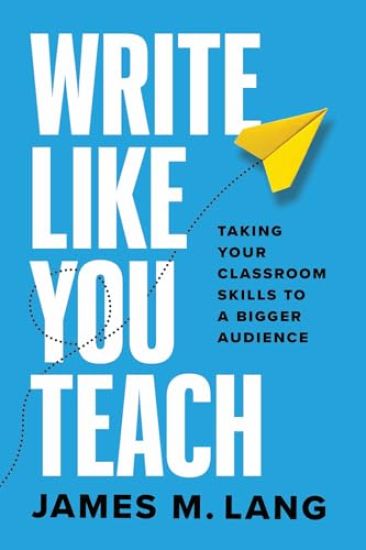
Write Like You Teach

Write Like You Teach

James M. Lang

THE UNIVERSITY OF CHICAGO PRESS
2025
sidottu
This engaging guide offers practical advice to teachers on how to utilize their existing classroom skills to become more effective public writers. After years spent cultivating their expertise and passion for a subject, scholars are uniquely positioned to write great books. Yet, accustomed to writing for an audience of their peers, many scholars find it challenging to adapt their writing to a style that is accessible and engaging to the general public. James M. Lang argues that academics are regularly called on to pitch their research to a general audience: their undergraduates. If only there were a way to translate the skills they use in the classroom into their writing. . . . In Write Like You Teach, Lang—a veteran writer and teacher—distills the elements of good classroom teaching into guidelines for writing for a general audience. He encourages authors to pay attention to how their readers learn and to embrace exploration, experimentation, and creativity in their writing. Lang asks his readers to consider the questions that all great teachers ask themselves: How will I get the attention of my students? How do I make them curious about the subject? What stories or examples will illustrate the more difficult concepts or theories in the course? When will I pause in the class and give students a break from hard thinking? What will I do at the end of the class to remind students about my key messages and leave them wanting to know more?Write Like You Teach includes examples from successful writers and useful anecdotes from Lang’s own classroom and writing career. Indeed, Lang takes his own advice to heart: like a good teacher, he varies the form of each chapter, making sure to introduce some surprises to keep the reader engaged. Each chapter ends with writing prompts to help readers practice their newly acquired skills, and an appendix provides additional advice on publishing and promoting one’s work. Teachers who follow Lang’s suggestions will find new ways to connect with their readers—and like any good student, they will never approach writing the same way again.
Write Like You Teach

Write Like You Teach

James M. Lang

THE UNIVERSITY OF CHICAGO PRESS
2025
nidottu
This engaging guide offers practical advice to teachers on how to utilize their existing classroom skills to become more effective public writers. After years spent cultivating their expertise and passion for a subject, scholars are uniquely positioned to write great books. Yet, accustomed to writing for an audience of their peers, many scholars find it challenging to adapt their writing to a style that is accessible and engaging to the general public. James M. Lang argues that academics are regularly called on to pitch their research to a general audience: their undergraduates. If only there were a way to translate the skills they use in the classroom into their writing. . . . In Write Like You Teach, Lang—a veteran writer and teacher—distills the elements of good classroom teaching into guidelines for writing for a general audience. He encourages authors to pay attention to how their readers learn and to embrace exploration, experimentation, and creativity in their writing. Lang asks his readers to consider the questions that all great teachers ask themselves: How will I get the attention of my students? How do I make them curious about the subject? What stories or examples will illustrate the more difficult concepts or theories in the course? When will I pause in the class and give students a break from hard thinking? What will I do at the end of the class to remind students about my key messages and leave them wanting to know more?Write Like You Teach includes examples from successful writers and useful anecdotes from Lang’s own classroom and writing career. Indeed, Lang takes his own advice to heart: like a good teacher, he varies the form of each chapter, making sure to introduce some surprises to keep the reader engaged. Each chapter ends with writing prompts to help readers practice their newly acquired skills, and an appendix provides additional advice on publishing and promoting one’s work. Teachers who follow Lang’s suggestions will find new ways to connect with their readers—and like any good student, they will never approach writing the same way again.
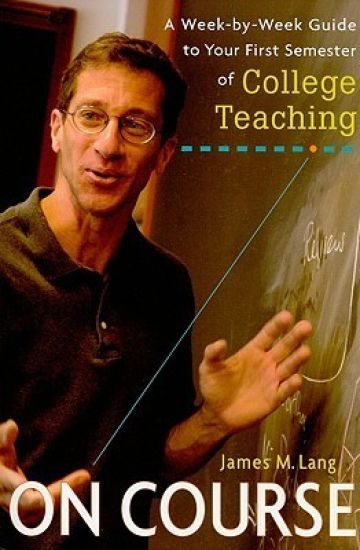
On Course

On Course

James M. Lang

Harvard University Press
2010
nidottu
You go into teaching with high hopes: to inspire students, to motivate them to learn, to help them love your subject. Then you find yourself facing a crowd of expectant faces on the first day of the first semester, and you think “Now what do I do?” Practical and lively, On Course is full of experience-tested, research-based advice for graduate students and new teaching faculty. It provides a range of innovative and traditional strategies that work well without requiring extensive preparation or long grading sessions when you’re trying to meet your own demanding research and service requirements. What do you put on the syllabus? How do you balance lectures with group assignments or discussions—and how do you get a dialogue going when the students won’t participate? What grading system is fairest and most efficient for your class? Should you post lecture notes on a website? How do you prevent cheating, and what do you do if it occurs? How can you help the student with serious personal problems without becoming overly involved? And what do you do about the student who won’t turn off his cell phone? Packed with anecdotes and concrete suggestions, this book will keep both inexperienced and veteran teachers on course as they navigate the calms and storms of classroom life.
Cheating Lessons

Cheating Lessons

James M. Lang

Harvard University Press
2013
sidottu
Nearly three-quarters of college students cheat during their undergraduate careers, a startling number attributed variously to the laziness of today’s students, their lack of a moral compass, or the demands of a hypercompetitive society. For James Lang, cultural or sociological explanations like these are red herrings. His provocative new research indicates that students often cheat because their learning environments give them ample incentives to try—and that strategies which make cheating less worthwhile also improve student learning. Cheating Lessons is a practical guide to tackling academic dishonesty at its roots.Drawing on an array of findings from cognitive theory, Lang analyzes the specific, often hidden features of course design and daily classroom practice that create opportunities for cheating. Courses that set the stakes of performance very high, that rely on single assessment mechanisms like multiple-choice tests, that have arbitrary grading criteria: these are the kinds of conditions that breed cheating. Lang seeks to empower teachers to create more effective learning environments that foster intrinsic motivation, promote mastery, and instill the sense of self-efficacy that students need for deep learning.Although cheating is a persistent problem, the prognosis is not dire. The good news is that strategies which reduce cheating also improve student performance overall. Instructors who learn to curb academic dishonesty will have done more than solve a course management problem—they will have become better educators all around.
Life on the Tenure Track

Life on the Tenure Track

James M. Lang

Johns Hopkins University Press
2005
sidottu
In this fast-paced and lively account, Jim Lang asks-and mostly answers-the questions that confront every new faculty member as well as those who dream of becoming new faculty members: Will my students like me? Will my teaching schedule allow me time to do research and write? Do I really want to spend the rest of my life in this profession? Is anyone awake in the backrow? Lang narrates the story of his first year on the tenure track with wit and wisdom, detailing his moments of confusion, frustration, and even elation-in the classroom, at his writing desk, during his office hours, in departmental meetings-as well as his insights into the lives and working conditions of faculty in higher education today. Engaging and accessible, Life on the Tenure Track will delight and enlighten faculty, graduate students, and administrators alike.
Life on the Tenure Track

Life on the Tenure Track

James M. Lang

Johns Hopkins University Press
2005
pokkari
In this fast-paced and lively account, Jim Lang asks-and mostly answers-the questions that confront every new faculty member as well as those who dream of becoming new faculty members: Will my students like me? Will my teaching schedule allow me time to do research and write? Do I really want to spend the rest of my life in this profession? Is anyone awake in the backrow? Lang narrates the story of his first year on the tenure track with wit and wisdom, detailing his moments of confusion, frustration, and even elation-in the classroom, at his writing desk, during his office hours, in departmental meetings-as well as his insights into the lives and working conditions of faculty in higher education today. Engaging and accessible, Life on the Tenure Track will delight and enlighten faculty, graduate students, and administrators alike.
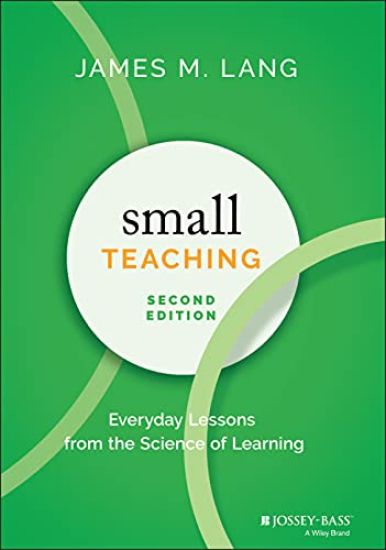
Small Teaching

Small Teaching

James M. Lang

Jossey-Bass Inc.,U.S.
2021
sidottu
A freshly updated edition featuring research-based teaching techniques that faculty in any discipline can easily implement Research into how we learn can help facilitate better student learning—if we know how to apply it. Small Teaching fills the gap in higher education literature between the primary research in cognitive theory and the classroom environment. In this book, James Lang presents a strategy for improving student learning with a series of small but powerful changes that make a big difference-many of which can be put into practice in a single class period. These are simple interventions that can be integrated into pre-existing techniques, along with clear descriptions of how to do so. Inside, you’ll find brief classroom or online learning activities, one-time interventions, and small modifications in course design or student communication. These small tweaks will bring your classroom into alignment with the latest evidence in cognitive research. Each chapter introduces a basic concept in cognitive research that has implications for classroom teaching, explains the rationale for offering it within a specific time period in a typical class, and then provides concrete examples of how this intervention has been used or could be used by faculty in a variety of disciplines. The second edition features revised and updated content including a newly authored preface, new examples and techniques, updated research, and updated resources. How can you make small tweaks to your teaching to bring the latest cognitive science into the classroom? How can you help students become good at retrieving knowledge from memory? How does making predictions now help us learn in the future? How can you build community in the classroom? Higher education faculty and administrators, as well as K-12 teachers and teacher trainers, will love the easy-to-implement, evidence-based techniques in Small Teaching.
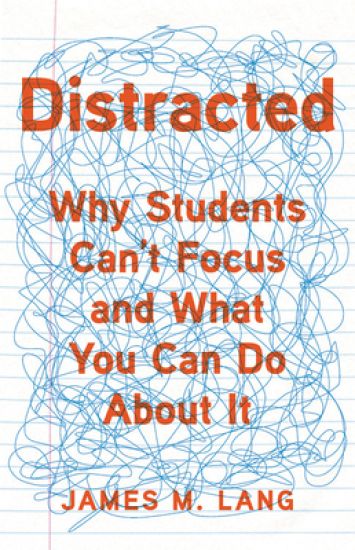
Distracted

Distracted

James M. Lang

Basic Books
2020
sidottu
A decade ago, James Lang banned cell phones in his classroom. Frustrated by how easily they could sidetrack his students, Lang sought out a distraction-free environment, hoping it would help his students pay attention to his lessons. But after just a few years, Lang gave in. Not only was his no-cellphones policy ineffective (even his best students ignored it), he realized that he, like many of his fellow teachers, was missing an important point. The problem isn't phones. It's our antiquated notions of the brain. In Distracted, Lang makes the case for a new way of thinking about how to teach young minds based on the emerging neuroscience of attention.Although we have long prized the ability to focus, the most natural way of thinking is distraction. Our brains are designed to continually scan our environment, looking for new information, occasionally wandering off in different directions in search of new insights. This is not to say that iPhones are not good at distracting us, but that what they represent is in principle nothing new, because sustained periods of intense focus are not what humans are good at. Of course, we still do need to pay attention to learn. The problem is that we think of learning as a matter of managing distraction, when we should instead think of it as actively cultivating attention. This starts with letting go of technology bans, which are little more than a fig leaf applied to the objective difficulty of paying attention. But it involves more active ways of rethinking classroom conventions too. For example, rather than structuring lessons as 45 or 60-minute blocks of lecturing, teachers could segment their classes into a series of smaller lessons, with regular shifts in focus, appealing to the brain's interest in novelty. Simple changes can drastically improve students' performance, and in Distracted, Lang takes readers on a sprawling tour of how some of America's best teachers are improving student performance using concepts such as modular classrooms, flow states, and student-directed learning. Together, these insights offer a new way of thinking about how to not only more effectively teach a lesson plan, but to teach students the most important lesson of all: how to learn.
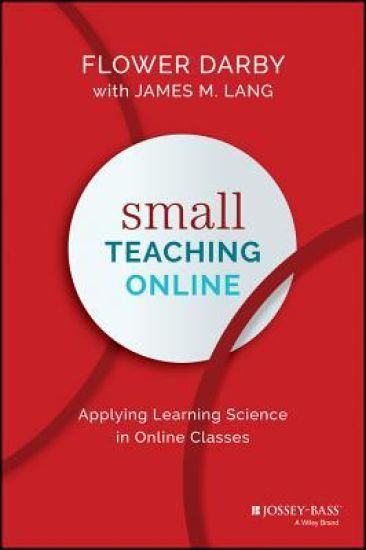
Small Teaching Online

Small Teaching Online

Flower Darby; James M. Lang

Jossey-Bass Inc.,U.S.
2019
nidottu
Find out how to apply learning science in online classesThe concept of small teaching is simple: small and strategic changes have enormous power to improve student learning. Instructors face unique and specific challenges when teaching an online course. This book offers small teaching strategies that will positively impact the online classroom. This book outlines practical and feasible applications of theoretical principles to help your online students learn. It includes current best practices around educational technologies, strategies to build community and collaboration, and minor changes you can make in your online teaching practice, small but impactful adjustments that result in significant learning gains. - Explains how you can support your online students - Helps your students find success in this non-traditional learning environment - Covers online and blended learning - Addresses specific challenges that online instructors face in higher education Small Teaching Online presents research-based teaching techniques from an online instructional design expert and the bestselling author of Small Teaching.
Small Teaching Online

Small Teaching Online

Flower Darby; James M. Lang

Jossey-Bass Inc.,U.S.
2019
sidottu
Find out how to apply learning science in online classes The concept of small teaching is simple: small and strategic changes have enormous power to improve student learning. Instructors face unique and specific challenges when teaching an online course. This book offers small teaching strategies that will positively impact the online classroom. This book outlines practical and feasible applications of theoretical principles to help your online students learn. It includes current best practices around educational technologies, strategies to build community and collaboration, and minor changes you can make in your online teaching practice, small but impactful adjustments that result in significant learning gains. Explains how you can support your online studentsHelps your students find success in this non-traditional learning environmentCovers online and blended learningAddresses specific challenges that online instructors face in higher education Small Teaching Online presents research-based teaching techniques from an online instructional design expert and the bestselling author of Small Teaching.
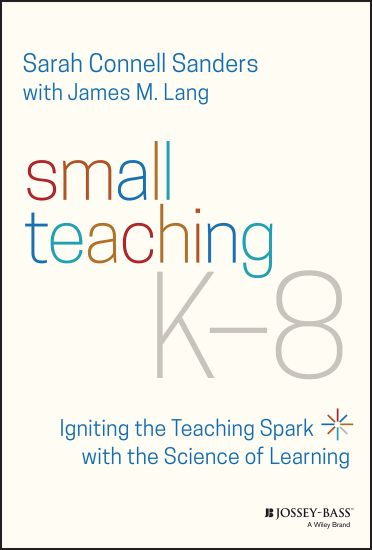
Small Teaching K-8

Small Teaching K-8

Sarah Connell Sanders; James M. Lang

JOHN WILEY SONS INC
2022
nidottu
Cognitive science research-based teaching techniques any educator can implement in their K-8 classroom In Small Teaching K-8, a team of veteran educators bridges the gap between cognitive theory and the K-8 classroom environment, applying the same foundational research found in author James Lang’s bestselling Small Teaching: Everyday Lessons from the Science of Learning to the elementary and middle school setting. Via clear descriptions and step-by-step methods, the book demonstrates how to integrate simple interventions into pre-existing pedagogical techniques to dramatically improve student outcomes. The interventions consist of classroom or online learning activities, one-time additions, or small modifications in course design or communication. Regardless of their form, they all deliver powerful, positive consequences. In this book, readers will also find: Foundational concepts from up-to-date cognitive research that has implications for classroom teaching and the rationales for using them in a K-8 classroomConcrete examples of how interventions have been used by faculty in various disciplinesDirections on the specific timing of each intervention, backed by evidence-based reasons An essential resource for K-8 educators seeking ways to improve their efficacy in the classroom, Small Teaching K-8 offers teachers intuitive and actionable advice on helping students absorb and retain knowledge for the long-term.