Kirjojen hintavertailu. Mukana 11 244 527 kirjaa ja 12 kauppaa.

Kirjahaku

Etsi kirjoja tekijän nimen, kirjan nimen tai ISBN:n perusteella.

1000 tulosta hakusanalla James M. Lee

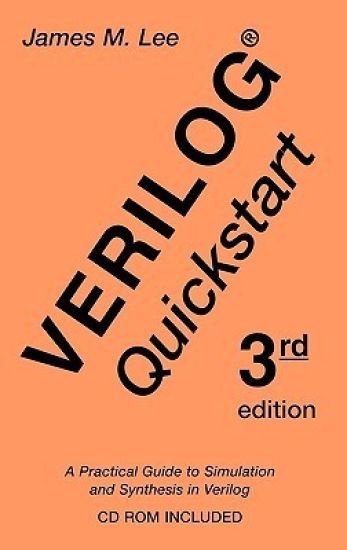
Verilog® Quickstart

Verilog® Quickstart

James M. Lee

Springer
2002
sidottu
From a review of the Second Edition 'If you are new to the field and want to know what "all this Verilog stuff is about," you've found the golden goose. The text here is straight forward, complete, and example rich -mega-multi-kudos to the author James Lee. Though not as detailed as the Verilog reference guides from Cadence, it likewise doesn't suffer from the excessive abstractness those make you wade through. This is a quick and easy read, and will serve as a desktop reference for as long as Verilog lives. Best testimonial: I'm buying my fourth and fifth copies tonight (I've loaned out/lost two of my others).' Zach Coombes, AMD CD-rom is not included.
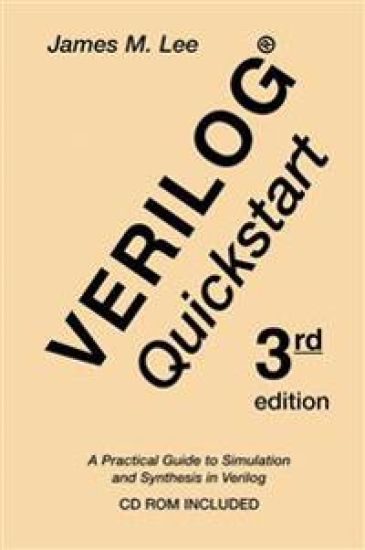
Verilog Quickstart

Verilog Quickstart

James M. Lee

Kluwer Academic Publishers
1997
sidottu
A basic, practical, introductory textbook for professionals and students, this text explains how a designer can be more effective through the use of the Verilog hardware description language to simulate and document a design. By understanding simulation, a designer can simulate a design to see if a design works before it is built. This gives the designer an opportunity to try different ideas. Documentation allows a designer to maintain and reuse a design more easily. Verilog's intrinsic hierarchical modularity enables the designer to easily reuse portions of the design as `intellectual property' or `macro-cells'. Some of the formal Verilog syntax are presented here, along with definitions and practical uses. This book does not oversimplify the Verilog language nor does it emphasize theory. However, the book has over 100 examples that are used to illustrate aspects of the language. In the later chapters the focus is on working with modelling style and explaining why and when one would use different elements of the language, and there is a chapter on state machine modelling. There is also a chapter on test benches and testing strategy as well as a chapter on debugging.
Verilog® Quickstart

Verilog® Quickstart

James M. Lee

Springer-Verlag New York Inc.
2013
nidottu
Welcome to the world of Verilog! Once you read this book, you will join the ranks of the many successful engineers who use Verilog. I have been using Verilog since 1986 and teaching Verilog since 1987. I have seen many different Verilog courses and many approaches to learning Verilog. This book generally follows the outline of the Verilog class that I teach at the University of California, Santa Cruz, Extension. This book does not take a "cookie-cutter" approach to learning Verilog, nor is it a completely theoretical book. Instead, what we will do is go through some of the formal Verilog syntax and definitions, and then show practical uses. Once we cover most of the constructs of the language, we will look at how style affects the constructs you choose while modeling your design. This is not a complete and exhaustive reference on Verilog. If you want a Verilog reference, I suggest one of the Open Verilog International (OVI) reference manuals.
Verilog® Quickstart

Verilog® Quickstart

James M. Lee

Springer-Verlag New York Inc.
2013
nidottu
From a review of the Second Edition 'If you are new to the field and want to know what "all this Verilog stuff is about," you've found the golden goose. The text here is straight forward, complete, and example rich -mega-multi-kudos to the author James Lee. Though not as detailed as the Verilog reference guides from Cadence, it likewise doesn't suffer from the excessive abstractness those make you wade through. This is a quick and easy read, and will serve as a desktop reference for as long as Verilog lives. Best testimonial: I'm buying my fourth and fifth copies tonight (I've loaned out/lost two of my others).' Zach Coombes, AMD
The Limits of Party

The Limits of Party

James M. Curry; Frances E. Lee

University of Chicago Press
2020
sidottu
To many observers, Congress has become a deeply partisan institution where ideologically-distinct political parties do little more than engage in legislative trench warfare. A zero-sum, winner-take-all approach to congressional politics has replaced the bipartisan comity of past eras. If the parties cannot get everything they want in national policymaking, then they prefer gridlock and stalemate to compromise. Or, at least, that is the conventional wisdom. In The Limits of Party, James M. Curry and Frances E. Lee challenge this conventional wisdom. By constructing legislative histories of congressional majority parties’ attempts to enact their policy agendas in every congress since the 1980s and by drawing on interviews with Washington insiders, the authors analyze the successes and failures of congressional parties to enact their legislative agendas. ? Their conclusions will surprise many congressional observers: Even in our time of intense party polarization, bipartisanship remains the key to legislative success on Capitol Hill. Congressional majority parties today are neither more nor less successful at enacting their partisan agendas. They are not more likely to ram though partisan laws or become mired in stalemate. Rather, the parties continue to build bipartisan coalitions for their legislative priorities and typically compromise on their original visions for legislation in order to achieve legislative success.
The Limits of Party

The Limits of Party

James M. Curry; Frances E. Lee

University of Chicago Press
2020
nidottu
To many observers, Congress has become a deeply partisan institution where ideologically-distinct political parties do little more than engage in legislative trench warfare. A zero-sum, winner-take-all approach to congressional politics has replaced the bipartisan comity of past eras. If the parties cannot get everything they want in national policymaking, then they prefer gridlock and stalemate to compromise. Or, at least, that is the conventional wisdom. In The Limits of Party, James M. Curry and Frances E. Lee challenge this conventional wisdom. By constructing legislative histories of congressional majority parties’ attempts to enact their policy agendas in every congress since the 1980s and by drawing on interviews with Washington insiders, the authors analyze the successes and failures of congressional parties to enact their legislative agendas. ? Their conclusions will surprise many congressional observers: Even in our time of intense party polarization, bipartisanship remains the key to legislative success on Capitol Hill. Congressional majority parties today are neither more nor less successful at enacting their partisan agendas. They are not more likely to ram though partisan laws or become mired in stalemate. Rather, the parties continue to build bipartisan coalitions for their legislative priorities and typically compromise on their original visions for legislation in order to achieve legislative success.
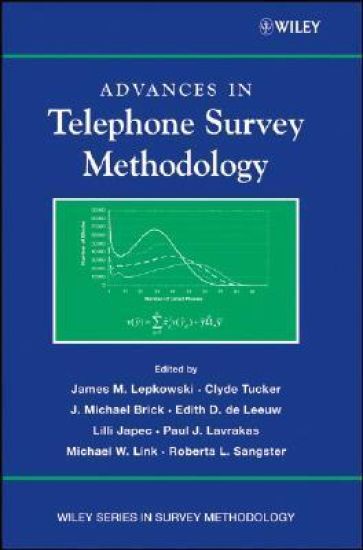
Advances in Telephone Survey Methodology

Advances in Telephone Survey Methodology

James M. Lepkowski; N. Clyde Tucker; J. Michael Brick; Edith D. de Leeuw; Lilli Japec; Paul J. Lavrakas; Michael W. Link; Roberta L. Sangster

John Wiley Sons Inc
2007
nidottu
A complete and comprehensive collaboration providing insight on future approaches to telephone survey methodology Over the past fifteen years, advances in technology have transformed the field of survey methodology, from how interviews are conducted to the management and analysis of compiled data. Advances in Telephone Survey Methodology is an all—encompassing and authoritative resource that presents a theoretical, methodological, and statistical treatment of current practices while also establishing a discussion on how state—of—the—art developments in telecommunications have and will continue to revolutionize the telephone survey process. Seventy—five prominent international researchers and practitioners from government, academic, and private sectors have collaborated on this pioneering volume to discuss basic survey techniques and introduce the future directions of the telephone survey. Concepts and findings are organized in four parts—sampling and estimation, data collection, operations, and nonresponse—equipping the reader with the needed practical applications to approach issues such as choice of target population, sample design, questionnaire construction, interviewing training, and measurement error. The book also introduces important topics that have been overlooked in previous literature, including: The impact of mobile telephones on telephone surveys and the rising presence of mobile—only households worldwide The design and construction of questionnaires using Computer Assisted Telephone Interviewing (CATI) software The emerging use of wireless communication and Voice over Internet Protocol (VoIP) versus the telephone Methods for measuring and improving interviewer performance and productivity Privacy, confidentiality, and respondent burden as main factors in telephone survey nonresponse Procedures for the adjustment of nonresponse in telephone surveys In—depth reviews of the literature presented along with a full bibliography, assembled from references throughout the world Advances in Telephone Survey Methodology is an indispensable reference for survey researchers and practitioners in almost any discipline involving research methods such as sociology, social psychology, survey methodology, and statistics. This book also serves as an excellent text for courses and seminars on survey methods at the undergraduate and graduate levels.
The Poetry of the American Civil War

The Poetry of the American Civil War

Lee (EDT) Steinmetz; James M. (FRW) Lundberg

Michigan State University Press
2012
pokkari
Deeply affecting and diverse in perspective, "The Poetry of the American Civil War "is the first comprehensive volume to focus entirely on poetry written and published during the Civil War. Of the nearly one thousand books of poetry published in the 1860s, some two hundred addressed the war in some way, and these collectively present a textured portrait of life during the conflict. The poets represented here hail from the North and the South, and at times mirror each other uncannily. Among them are housewives, doctors, preachers, bankers, journalists, and teachers. Their verse reflects the day-to-day reality of war, death, and destruction, and it contemplates questions of faith, slavery, society, patriotism, and politics. This is an essential volume for poetry lovers, historians, and Civil War enthusiasts alike.
Banking and Financial Deepening in Brazil

Banking and Financial Deepening in Brazil

Francis A. Lees; Roberto Teixeira da Costa; James M. Botts; Rubens Penha Cysne

Palgrave Macmillan
1990
nidottu
The authors deal with economic policy and the financial development of Brazil. It also presents a description of the financial system that was created in Brazil. The book covers developments in the financial markets, giving emphasis to the programs of debt conversion and privatization.
Natures Past

Natures Past

Peluso Nancy Lee; McNeill J.; Acheson James M.; Steinberg T.; Perdue P.; Hoffman R.; Zimmer O.; Howe N.; McCann John T.; Sivaramakrishnan K.

The University of Michigan Press
2006
sidottu
At the beginning of the twenty-first century environmental change is a pressing public issue, and not just in the rich countries of the northern hemisphere. "Natures Past" seeks to lend some historical depth to current debates about modifications of ecological processes and systems, and also to explore the global dimensions of the dynamic. The ten essays in "Natures Past" bridge the chasm between orthodox environmental history and other novel approaches to understanding the place of human communities in past biophysical environments. Discussions of malaria-bearing mosquitoes, Maine lobster fishing, Bornean durian husbandry, and American lawn mowing, among other things, suggest how ecology, culture, and market interact to change the fate, and the value, of nature in each context. This collection, comprised of contributions by anthropologists, foresters, historians, and literature specialists, shows that long before the twentieth century humans caused, worried about, and endured changes in the natural world they inhabited. "Natures Past" thus creates better, more nuanced, richer, and more complex understandings of the longstanding dialectic between people and their environments, and introduces to readers the wealth of perspectives and insights that a careful consideration of past interactions between people and their natural environments makes possible.
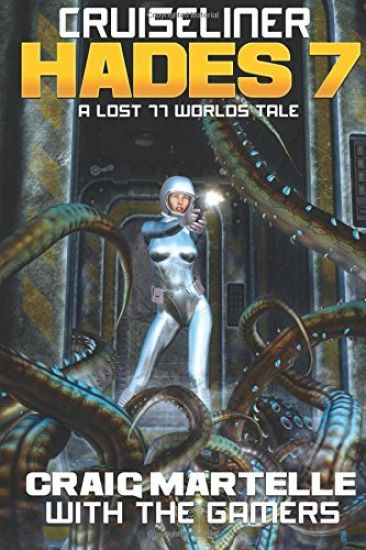
Cruiseliner Hades 7: A Lost 77 Worlds Tale

Cruiseliner Hades 7: A Lost 77 Worlds Tale

Guy Martelle; Stephen A. Lee; James M. Ward

Createspace Independent Publishing Platform
2018
nidottu
Technology made people afraid. Their future uncertain and their past fading, they struggled, some to embrace their new world, but others fought the changes. Join this story of eight adventurers who come to the Ruins of Juneau to set things right. A Ranger, a bear-like beast, a military man, and five others stepped off a cargo ship. Juneau lay before them. What do they do? This is a science fiction story, first and foremost, so read and enjoy. It is based on how the players brought their characters to life. It is written in my usual style. Cruiseliner Hades 7 was inspired by Stephen A. Lee and James M. Ward, designers of the Lost 77 Worlds role-playing game. They wrote the basic set and then expanded the rules to include adding a large assortment of scenarios. Rise of Juneau is the adventure that I wrote for my friends, but as the final scenario in a 12-city quest, we needed to bring it to fruition on a positive note, hence the role-playing emphasized over door-kicking and monster bashing. This is a fictionalized account of the game that I ran at GaryCon X - the premier RPG event, held in honor of Gary Gygax, the creator of Dungeons & Dragons.
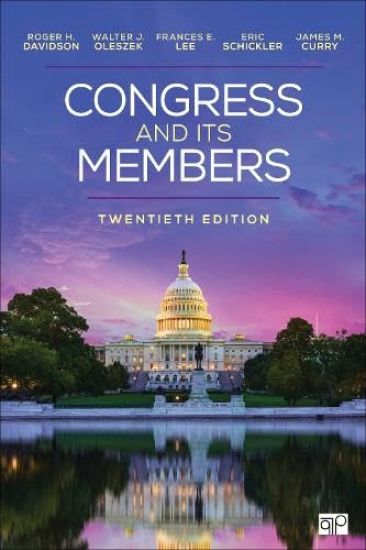
Congress and Its Members

Congress and Its Members

Roger H. Davidson; Walter J. Oleszek; Frances E. Lee; Eric Schickler; James M. Curry

Sage Publications Inc Ebooks
2026
nidottu
Now in its 20th Edition, Congress and Its Members offers comprehensive and current coverage of the U.S. Congress and the legislative process by examining the tension between Congress as a lawmaking institution and as a collection of politicians constantly seeking?re-election.
Hello, I'm James: Emmy's Story, Part 11

Hello, I'm James: Emmy's Story, Part 11

Kenneth Lee McGee

Kenneth L. McGee
2018
nidottu
While rinsing the breakfast dishes, Emmy answered the landline thinking it would be her best friend, Kristen Randolph.Since her hands were wet, she put the phone on speaker mode."Hey, Krissy, I'm almost finished with the dishes.We'll be over in ten minutes.""Uh... is this Emily Colasanti?" A deep male voice asked."Oh, sorry. You're not Kristen," Emmy said. "I thought you were my friend, but, yes, I'm Emmy. Who are you?""Hello, I'm James." He paused and took a deep breath. "You may not believe this, but I'm your brother."A sudden change in the leadership at her church leavesEmmy in tears. She records a new CD, goes on a fall tour, where an old friend joins her for a weekwhich leads to an issue between her and Kenny."Emmy, I need to tell you something. I need to confess,"Kenny said as a bolt of lightning flashed and thunder boomed."We have to talk about our future." He held out his arms.Emmy bit her lip. She took a step forward but then stopped. "Oh, Kenny." She closed her eyes. "I don't know if we have a future,"She whispered as she turned away.The "Emmy's Story" series begins when Emmy isfour-years-old and quickly progresses to focuson her teen years and beyond. In this book, "Hello, I'm James: Emmy's Story, Part 11,"Emmy meets an unexpected family member, tours withher new band, faces changes at her churchand struggles with her relationship with Kenny.