Kirjojen hintavertailu. Mukana 11 342 296 kirjaa ja 12 kauppaa.

Kirjahaku

Etsi kirjoja tekijän nimen, kirjan nimen tai ISBN:n perusteella.

1000 tulosta hakusanalla James M. Magrini

Social Efficiency and Instrumentalism in Education
Distinct among contemporary philosophical studies focused on education, this book engages the history of phenomenological thought as it moves from philosophy proper (the European phenomenological-hermeneutic tradition) through curriculum studies. It thus presents the "best of both worlds" for the reader; there is a "play" or movement from philosophy proper to educational philosophy and then back again in order to locate and explicate what is intimated, suggested, and in some cases, left "unsaid" by educational philosophers. This amounts to a work on education-philosophy that elucidates, through various permutations within the unique foci of each essay, the general phenomenological theme of the fundamental ontology of the human being as primordial learner. Reflecting his experience as scholar, teacher, and perennial learner, the author suggests how research in phenomenology might prove beneficial to the enhancement of both the theoretical and practical aspects of education; readers are invited to envision education as far more than merely a means by which to organize an effective learning experience in which knowledge is assimilated and skill sets are efficiently imparted, but rather as a holistic and integrated process in which knowing, acting, and valuing are original ways of Being-in-the-world.
New Approaches to Curriculum as Phenomenological Text
The scholarship of New Directions in Curriculum as Phenomenological Text manifests through close readings and interpretations of curriculum theorists and Continental philosophers, presented in the form of 'speculative philosophical essays,' an important form of curriculum thinking-writing all but lost to the general contemporary field of research.
Social Efficiency and Instrumentalism in Education
Distinct among contemporary philosophical studies focused on education, this book engages the history of phenomenological thought as it moves from philosophy proper (the European phenomenological-hermeneutic tradition) through curriculum studies. It thus presents the "best of both worlds" for the reader; there is a "play" or movement from philosophy proper to educational philosophy and then back again in order to locate and explicate what is intimated, suggested, and in some cases, left "unsaid" by educational philosophers. This amounts to a work on education-philosophy that elucidates, through various permutations within the unique foci of each essay, the general phenomenological theme of the fundamental ontology of the human being as primordial learner. Reflecting his experience as scholar, teacher, and perennial learner, the author suggests how research in phenomenology might prove beneficial to the enhancement of both the theoretical and practical aspects of education; readers are invited to envision education as far more than merely a means by which to organize an effective learning experience in which knowledge is assimilated and skill sets are efficiently imparted, but rather as a holistic and integrated process in which knowing, acting, and valuing are original ways of Being-in-the-world.
Reconceptualizing Plato’s Socrates at the Limit of Education
Bridging the gap between interpretations of "Third Way" Platonic scholarship and "phenomenological-ontological" scholarship, this book argues for a unique ontological-hermeneutic interpretation of Plato and Plato’s Socrates. Reconceptualizing Plato’s Socrates at the Limit of Education offers a re-reading of Plato and Plato’s Socrates in terms of interpreting the practice of education as care for the soul through the conceptual lenses of phenomenology, philosophical hermeneutics, and ontological inquiry. Magrini contrasts his re-reading with the views of Plato and Plato’s Socrates that dominate contemporary education, which, for the most part, emerge through the rigid and reductive categorization of Plato as both a "realist" and "idealist" in philosophical foundations texts (teacher education programs). This view also presents what he terms the questionable "Socrates-as-teacher" model, which grounds such contemporary educational movements as the Paideia Project, which claims to incorporate, through a "scripted-curriculum" with "Socratic lesson plans," the so-called "Socratic Method" into the Common Core State Standards Curriculum as a "technical" skill that can be taught and learned as part of the students’ "critical thinking" skills. After a careful reading incorporating what might be termed a "Third Way" of reading Plato and Plato’s Socrates, following scholars from the Continental tradition, Magrini concludes that a so-called "Socratic education" would be nearly impossible to achieve and enact in the current educational milieu of standardization or neo-Taylorism (Social Efficiency). However, despite this, he argues in the affirmative that there is much educators can and must learn from this "non-doctrinal" re-reading and re-characterization of Plato and Plato’s Socrates.
Reconceptualizing Plato’s Socrates at the Limit of Education
Bridging the gap between interpretations of "Third Way" Platonic scholarship and "phenomenological-ontological" scholarship, this book argues for a unique ontological-hermeneutic interpretation of Plato and Plato’s Socrates. Reconceptualizing Plato’s Socrates at the Limit of Education offers a re-reading of Plato and Plato’s Socrates in terms of interpreting the practice of education as care for the soul through the conceptual lenses of phenomenology, philosophical hermeneutics, and ontological inquiry. Magrini contrasts his re-reading with the views of Plato and Plato’s Socrates that dominate contemporary education, which, for the most part, emerge through the rigid and reductive categorization of Plato as both a "realist" and "idealist" in philosophical foundations texts (teacher education programs). This view also presents what he terms the questionable "Socrates-as-teacher" model, which grounds such contemporary educational movements as the Paideia Project, which claims to incorporate, through a "scripted-curriculum" with "Socratic lesson plans," the so-called "Socratic Method" into the Common Core State Standards Curriculum as a "technical" skill that can be taught and learned as part of the students’ "critical thinking" skills. After a careful reading incorporating what might be termed a "Third Way" of reading Plato and Plato’s Socrates, following scholars from the Continental tradition, Magrini concludes that a so-called "Socratic education" would be nearly impossible to achieve and enact in the current educational milieu of standardization or neo-Taylorism (Social Efficiency). However, despite this, he argues in the affirmative that there is much educators can and must learn from this "non-doctrinal" re-reading and re-characterization of Plato and Plato’s Socrates.
Politics of the Soul in the Alcibiades

Politics of the Soul in the Alcibiades

James M. Magrini

Peter Lang Publishing Inc
2021
sidottu
Politics of the Soul in the Alcibiades is an important book that develops an interpretation of the essence of the political (politics of the soul) as elucidated through the analysis of Socrates’ practice of “self-cultivation” or care for the soul. In the process, it also confronts the issue of the problematic relationship between philosopher and statesman that is present to Plato’s dialogues. The analysis contributes the following to ongoing scholarship: (1) It offers a detailed and critical discussion of the neglected and ofttimes maligned dialogue the Alcibiades; (2) It contributes to the reinterpretation of the traditional view of the Socratic method arguing for elenchus as an expression and instantiation of the normative politics it seeks to define; and (3) In developing a unique account of Socratic participatory democracy, it has the subordinate aim of demonstrating the value of Socratic practice over our own impoverished practice of political discourse. The text is suitable for scholars working in the fields of philosophy, ancient Greek philosophy, and classical studies. It would serve as an excellent secondary text for graduate level courses reading Plato’s dialogues because it contains an extensive and sustained discussion of the Socratic method. In addition to graduate students, it is appropriate for college students pursuing courses in philosophy in their third or fourth year of study. Laypersons who are intellectually curious about philosophy, particularly those interested in Socrates, will be attracted to this text.
Plato’s Socrates, Philosophy and Education

Plato’s Socrates, Philosophy and Education

James M. Magrini

Springer International Publishing AG
2017
nidottu
This book develops for the readers Plato’s Socrates’ non-formalized “philosophical practice” of learning-through-questioning in the company of others. In doing so, the writer confronts Plato’s Socrates, in the words of John Dewey, as the “dramatic, restless, cooperatively inquiring philosopher" of the dialogues, whose view of education and learning is unique: (1) It is focused on actively pursuing a form of philosophical understanding irreducible to truth of a propositional nature, which defies “transfer” from practitioner to pupil; (2) It embraces the perennial “on-the-wayness” of education and learning in that to interrogate the virtues, or the “good life,” through the practice of the dialectic, is to continually renew the quest for a deeper understanding of things by returning to, reevaluating and modifying the questions originally posed regarding the “good life.” Indeed Socratic philosophy is a life of questioning those aspects of existence that are most question-worthy; and (3) Itaccepts that learning is a process guided and structured by dialectic inquiry, and is already immanent within and possible only because of the unfolding of the process itself, i.e., learning is not a goal that somehow stands outside the dialectic as its end product, which indicates erroneously that the method or practice is disposable. For learning occurs only through continued, sustained communal dialogue.
Heidegger on Literature, Poetry, and Education after the "Turn"

Heidegger on Literature, Poetry, and Education after the "Turn"

James M. Magrini; Elias Schwieler

Routledge
2019
nidottu
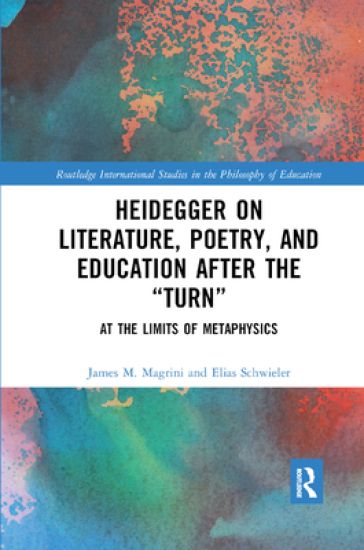
Offering new and original readings of literature, poetry, and education as interpreted through the conceptual lens of Heidegger’s later philosophy of the "Turn", this book helps readers understand Heidegger’s later thought and presents new takes on how to engage the themes that emerged from his later writing. Suggesting novel ways to consider Heidegger’s ideas on literature, poetry, and education, Magrini and Schwieler provide a deep understanding of the "Turn," a topic not often explored in contemporary Heideggerian scholarship. Their inter- and extra-disciplinary postmodern approaches offer a nuanced examination, taking into account Heidegger’s controversial place in history, and filling a gap in educational research.
Heidegger on Literature, Poetry, and Education after the "Turn"

Heidegger on Literature, Poetry, and Education after the "Turn"

James M. Magrini; Elias Schwieler

Routledge
2017
sidottu
Offering new and original readings of literature, poetry, and education as interpreted through the conceptual lens of Heidegger’s later philosophy of the "Turn", this book helps readers understand Heidegger’s later thought and presents new takes on how to engage the themes that emerged from his later writing. Suggesting novel ways to consider Heidegger’s ideas on literature, poetry, and education, Magrini and Schwieler provide a deep understanding of the "Turn," a topic not often explored in contemporary Heideggerian scholarship. Their inter- and extra-disciplinary postmodern approaches offer a nuanced examination, taking into account Heidegger’s controversial place in history, and filling a gap in educational research.
James M. Cain and the American Authors' Authority

James M. Cain and the American Authors' Authority

Richard Fine

University of Texas Press
2013
nidottu
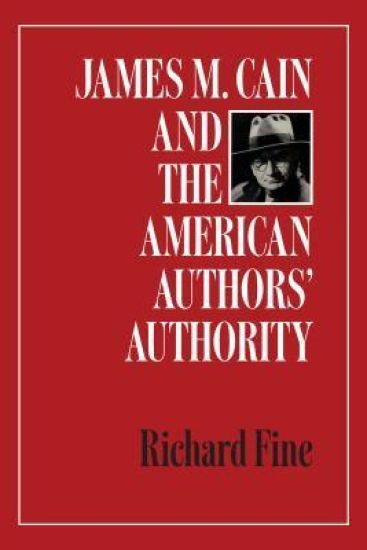
The 1940s offered ever-increasing outlets for writers in book publishing, magazines, radio, film, and the nascent television industry, but the standard rights arrangements often prevented writers from collecting a fair share of the profits made from their work. To remedy this situation, novelist and screenwriter James M. Cain (The Postman Always Rings Twice,Double Indemnity, Mildred Pierce) proposed that all professional writers, including novelists, playwrights, poets, and screenwriters, should organize into a single cartel that would secure a fairer return on their work from publishers and producers. This organization, conceived and rejected within one turbulent year (1946), was the American Authors' Authority (AAA).In this groundbreaking work, Richard Fine traces the history of the AAA within the cultural context of the 1940s. After discussing the profession of authorship as it had developed in England and the United States, Fine describes how the AAA, which was to be a central copyright repository, was designed to improve the bargaining position of writers in the literary marketplace, keep track of all rights and royalty arrangements, protect writers' interests in the courts, and lobby for more favorable copyright and tax legislation.Although simple enough in its design, the AAA proposal ignited a firestorm of controversy, and a major part of Fine's study explores its impact in literary and political circles. Among writers, the AAA exacerbated a split between East and West Coast writers, who disagreed over whether writing should be treated as a money-making business or as an artistic (and poorly paid) calling. Among politicians, a move to unite all writers into a single organization smacked of communism and sowed seeds of distrust that later flowered in the Hollywood blacklists of the McCarthy era.Drawing insights from the fields of American studies, literature, and Cold War history, Fine's book offers a comprehensive picture of the development of the modern American literary marketplace from the professional writer's perspective. It uncovers the effect of national politics on the affairs of writers, thus illuminating the cultural context in which literature is produced and the institutional forces that affect its production.
James M. H. Gregg

James M. H. Gregg

James M H Gregg

iUniverse
2005
pokkari
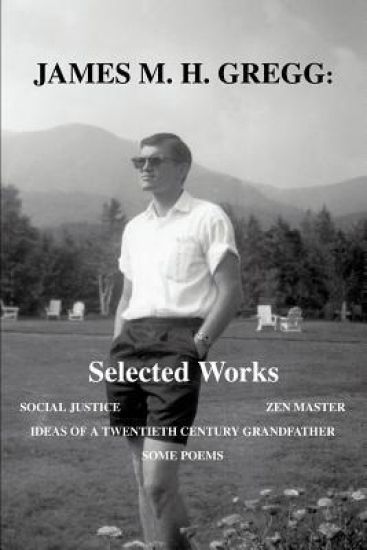
The James M. H. Gregg Selected Works includes four books. Each book was written to inspire future generations to think and act in ways to improve themselves and society. Mr. Gregg's most recent work, Social Justice (A Blueprint), explores a new set of ideas and strategies for moving humans to a higher cultural plane on which all can live to their full potential. In Ideas of a Twentieth Century Grandfather the author reveals to his grandchildren his knowledge and insight that he may not otherwise get a chance to tell them. Zen Master is a dialogue between a Zen Master and students. The students ask him questions about many subjects to include the meaning of life and living, death, the essences of Zen, and peace of mind. Finally, Some Poems is a compilation of poems that the author has written over the years about loving, living, being, and love.
James M. H. Gregg

James M. H. Gregg

James M H Gregg

iUniverse
2005
sidottu
The James M. H. Gregg Selected Works includes four books. Each book was written to inspire future generations to think and act in ways to improve themselves and society. Mr. Gregg's most recent work, Social Justice (A Blueprint), explores a new set of ideas and strategies for moving humans to a higher cultural plane on which all can live to their full potential. In Ideas of a Twentieth Century Grandfather the author reveals to his grandchildren his knowledge and insight that he may not otherwise get a chance to tell them. Zen Master is a dialogue between a Zen Master and students. The students ask him questions about many subjects to include the meaning of life and living, death, the essences of Zen, and peace of mind. Finally, Some Poems is a compilation of poems that the author has written over the years about loving, living, being, and love.
James M. Cain

James M. Cain

David Madden; Kristopher Mecholsky

Scarecrow Press
2011
sidottu
James M. Cain wrote some of the grittiest novels in American literature, including such classics as The Postman Always Rings Twice, Double Indemnity, and Mildred Pierce. James M. Cain: Hard-Boiled Mythmaker is a critical overview of the author's life, work, and legacy. An updated and expanded edition of two of David Madden's scholarly works on Cain, this new book improves upon the previous works by collecting the most essential writing on Cain by Madden into one volume. In addition to melding existing material, this work contains updated and new material, including fresh commentaries on later books, such as Rainbow's End, Cloud Nine, and The Enchanted Isle, as well as later film adaptations, including Butterfly. It also responds to 40 years' worth of criticism on Cain and reevaluates his influence. Providing an overview of all of Cain's fiction, including an analysis of the major themes of his entire literary career, the book also describes Cain's impact on and importance in 20th-century culture, film in particular. In addition to a biographical summary and thematic outline of Cain's nearly 50-year career, Madden and Mecholsky examine how Cain's works explore the nightmare consequences of the persistent American dream. Finally, Madden and Mecholsky consider Cain's technical innovations of the novel and survey the major film adaptations of Cain's novels. With its significant in-depth analysis and a foreword by Edgar-award winning author Max Allan Collins, this volume will be of interest to Cain scholars as well as anyone interested in 20th century American literature and film.
James M. Buchanan

James M. Buchanan

John Meadowcroft

Continuum Publishing Corporation
2011
sidottu
This is volume 17 in the "Major Conservative and Libertarian Thinkers" series. James McGill Buchanan (B. 1919) is an American economist best known for his public choice theory. The founder of a new Virginia school of political economy, he has written extensively on subjects including public finance, macroeconomics, and libertarian theory. Buchanan's theory offered a basis for conservative political endeavors such as a constitutional amendment to balance the federal budget. He was awarded the Nobel Prize in Economics in 1986. "Major Conservative and Libertarian Thinkers" provides comprehensive accounts of the works of seminal conservative thinkers from a variety of periods, disciplines, and traditions - the first series of its kind. Even the selection of thinkers adds another aspect to conservative thinking, including not only theorists but also writers and practitioners. The series comprises twenty volumes, each including an intellectual biography, historical context, critical exposition of the thinker's work, reception and influence, contemporary relevance, bibliography including references to electronic resources, and an index.