Kirjojen hintavertailu. Mukana 12 412 172 kirjaa ja 12 kauppaa.

Kirjahaku

Etsi kirjoja tekijän nimen, kirjan nimen tai ISBN:n perusteella.

1000 tulosta hakusanalla James M. McPherson

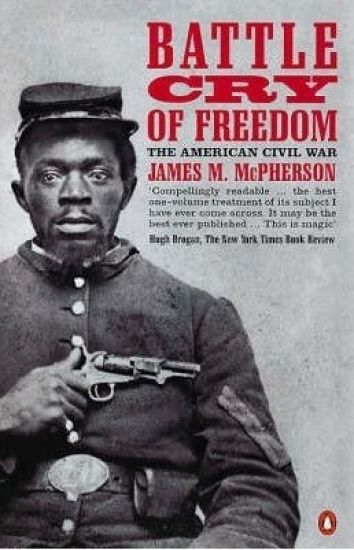
Battle Cry of Freedom

Battle Cry of Freedom

James M. McPherson

Penguin Books Ltd
1990
pokkari
Winner of the Pulitzer Prize for History'Read it. It will open your eyes about race history in America. It will shock you for what it tells you about politics in America today.' Richard Ford'A remarkably wide-ranging synthesis of the history of the 1850s and the Civil War ... that effectively integrates in one volume social, political and military events from the immediate aftermath of the Mexican War through the sectional strife of the 1850s, the secession movement, and the Civil War ... It is a masterful work' New York Review of Books'Compellingly readable ... the best one-volume treatment of its subject I have ever come across. It may be the best ever published ... This is magic' The New York TimesThis book covers one of the most turbulent periods of the USA's history, from the Mexican War in 1848 to the end of the Civil War in 1865. With a broad historical sweep, it traces the heightening sectional conflict of the 1850s: the growing estrangement of the South and its impassioned defence of slavery; the formation of the Republican Party in the North, with its increasing opposition to slavery; and the struggle over territorial expansion, with its accompanying social tensions and economic expansion. The whole panorama of the Civil War is captured in these pages, from the military campaign, which is described with vividness, immediacy, a grasp of strategy and logistics, and a keen awareness of the military leaders and the common soldiers involved, to its political and social aspects.
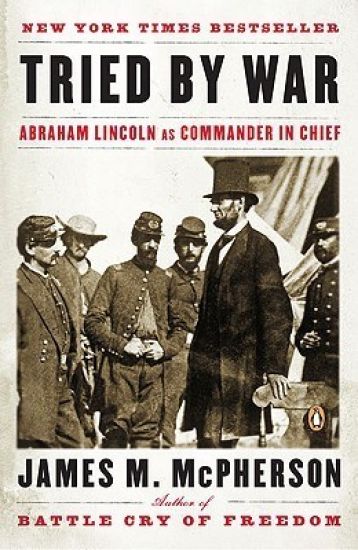
Tried by War

Tried by War

James M. McPherson

The Penguin Press
2009
pokkari
The Pulitzer Prize-winning author reveals how Lincoln won the Civil War and invented the role of commander in chief as we know it As we celebrate the bicentennial of Lincoln's birth, this study by preeminent, bestselling Civil War historian James M. McPherson provides a rare, fresh take on one of the most enigmatic figures in American history. Tried by War offers a revelatory (and timely) portrait of leadership during the greatest crisis our nation has ever endured. Suspenseful and inspiring, this is the story of how Lincoln, with almost no previous military experience before entering the White House, assumed the powers associated with the role of commander in chief, and through his strategic insight and will to fight changed the course of the war and saved the Union.
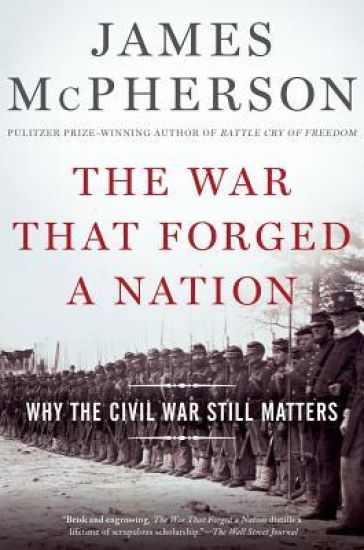
The War That Forged a Nation

The War That Forged a Nation

James M. McPherson

Oxford University Press Inc
2017
nidottu
More than 140 years ago, Mark Twain observed that the Civil War had "uprooted institutions that were centuries old, changed the politics of a people, transformed the social life of half the country, and wrought so profoundly upon the entire national character that the influence cannot be measured short of two or three generations." In fact, five generations have passed, and Americans are still trying to measure the influence of the immense fratricidal conflict that nearly tore the nation apart. In The War that Forged a Nation, Pulitzer Prize-winning historian James M. McPherson considers why the Civil War remains so deeply embedded in our national psyche and identity. The drama and tragedy of the war, from its scope and size--an estimated death toll of 750,000, far more than the rest of the country's wars combined--to the nearly mythical individuals involved--Abraham Lincoln, Robert E. Lee, Stonewall Jackson--help explain why the Civil War remains a topic of interest. But the legacy of the war extends far beyond historical interest or scholarly attention. Here, McPherson draws upon his work over the past fifty years to illuminate the war's continuing resonance across many dimensions of American life. Touching upon themes that include the war's causes and consequences; the naval war; slavery and its abolition; and Lincoln as commander in chief, McPherson ultimately proves the impossibility of understanding the issues of our own time unless we first understand their roots in the era of the Civil War. From racial inequality and conflict between the North and South to questions of state sovereignty or the role of government in social change--these issues, McPherson shows, are as salient and controversial today as they were in the 1860s. Thoughtful, provocative, and authoritative, The War that Forged a Nation looks anew at the reasons America's civil war has remained a subject of intense interest for the past century and a half, affirms the enduring relevance of the conflict for America today.
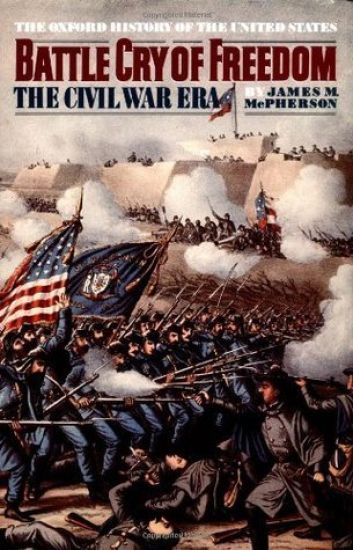
Battle Cry of Freedom

Battle Cry of Freedom

James M. McPherson

Oxford University Press Inc
1988
sidottu
This book covers one of the most turbulent periods of the USA's history, from the Mexican War in 1848 to the end of the Civil War in 1865. With a broad historical sweep, it traces the heightening sectional conflict of the 1850s: the growing estrangement of the South and its impassioned defence of slavery; the formation of the Republican Party in the North, with its increasing opposition to slavery; and the struggle over territorial expansion, with its accompanying social tensions and economic expansion. The whole panorama of the Civil War is captured in these pages, from the military campaign, which is described with vividness, immediacy, a grasp of strategy and logistics, and a keen awareness of the military leaders and the common soldiers involved, to its political and social aspects.
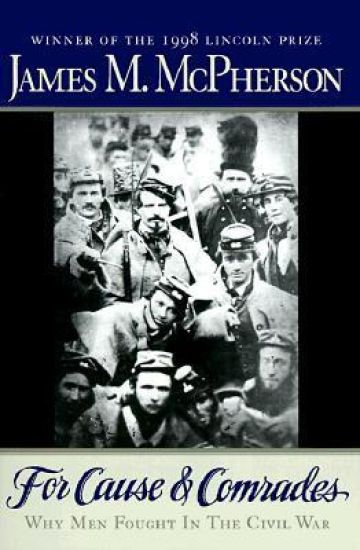
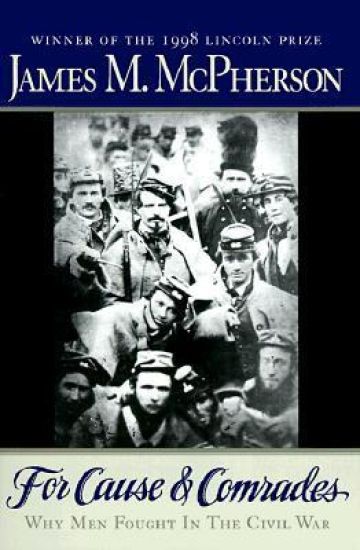
For Cause and Comrades

For Cause and Comrades

James M. McPherson

Oxford University Press Inc
1997
sidottu
General John A. Wickham, commander of the famous 101st Airborne Division in the 1970s and subsequently Army Chief of Staff, once visited Antietam battlefield. Gazing at Bloody Lane where, in 1862, several Union assaults were brutally repulsed before they finally broke through, he marveled, `You couldn't get American soldiers today to make an attack like that.' Why did those men risk certain death, over and over again, through countless bloody battles and four long, awful years ? Why did the conventional wisdom -- that soldiers become increasingly cynical and disillusioned as war progresses -- not hold true in the Civil War? It is to this question -- why did they fight -- that James McPherson, America's preeminient Civil War historian, now turns his attention. He shows that, contrary to what many scholars believe, the soldiers of the Civil War remained powerfully convinced of the ideals for which they fought throughout the conflict. Motivated by duty and honor, and often by religious faith, these men wrote frequently of their firm belief in the cause for which they fought: the principles of liberty, freedom, justice, and patriotism. Soldiers on both sides harkened back to the Founding Fathers, and the ideals of the American Revolution. They fought to defend their country, either the Union -- `the best Government ever made' -- or the Confederate states, where their very homes and families were under siege. And they fought to defend their honor and manhood. `I should not lik to go home with the name of a couhard,' one Massachusetts private wrote, and another private from Ohio said, `My wife would sooner hear of my death than my disgrace.' Even after three years of bloody battles, more than half of the Union soldiers reenlisted voluntarily. `While duty calls me here and my country demands my services I should be willing to make the sacrifice,' one man wrote to his protesting parents. And another soldier said simply, `I still love my country.' McPherson draws on more than 25,000 letters and nearly 250 private diaries from men on both sides. Civil War soldiers were among the most literate soldiers in history, and most of them wrote home frequently, as it was the only way for them to keep in touch with homes that many of them had left for the first time in their lives. Significantly, their letters were also uncensored by military authorities, and are uniquely frank in their criticism and detailed in their reports of marches and battles, relations between officers and men, political debates, and morale. For Cause and Comrades lets these soldiers tell their own stories in their own words to create an account that is both deeply moving and far truer than most books on war. Battle Cry of Freedom, McPherson's Pulitzer Prize-winning account of the Civil War, was a national bestseller that Hugh Brogan, in The New York Times, called `history writing of the highest order.' For Cause and Comrades deserves similar accolades, as McPherson's masterful prose and the soldiers' own words combine to create both an important book on an often overlooked aspect of our bloody Civil War, and a powerfully moving account of the men who fought it.
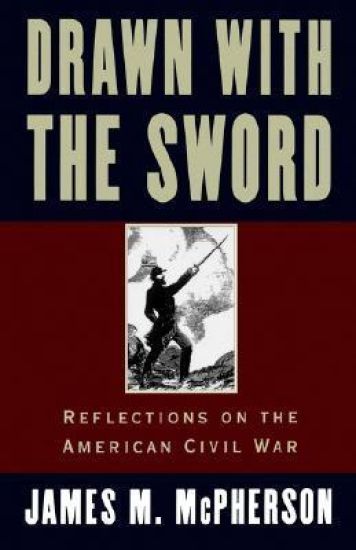
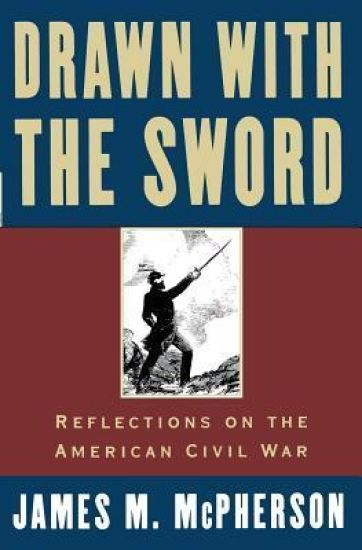
Drawn with the Sword

Drawn with the Sword

James M. McPherson

Oxford University Press Inc
1996
sidottu
This series of essays reveal McPherson's profound knowedge of the Civil War and of the controversies among historians that have existed about aspects of it. He is eminently fair in stating the opposing arguments in each of these controversies, but his own measured opinions are always clearly stated and are invariably persuasive.
Drawn with the Sword

Drawn with the Sword

James M. McPherson

Oxford University Press Inc
1998
nidottu
James M. McPherson is acclaimed as one of the finest historians writing today and a preeminent commentator on the Civil War. Battle Cry of Freedom, his Pulitzer Prize-winning account of that conflict, was a national bestseller that Hugh Brogan, in The New York Times, called "history writing of the highest order." Now, in Drawn With the Sword, McPherson offers a series of thoughtful and engaging essays on some of the most enduring questions of the Civil War, written in the masterful prose that has become his trademark.Filled with fresh interpretations, puncturing old myths and challenging new ones, Drawn With the Sword explores such questions as why the North won and why the South lost (emphasizing the role of contingency in the Northern victory), whether Southern or Northern aggression began the war, and who really freed the slaves, Abraham Lincoln or the slaves themselves. McPherson offers memorable portraits of the great leaders who people the landscape of the Civil War: Ulysses S. Grant, struggling to write his memoirs with the same courage and determination that marked his successes on the battlefield; Robert E. Lee, a brilliant general and a true gentleman, yet still a product of his time and place; and Abraham Lincoln, the leader and orator whose mythical figure still looms large over our cultural landscape. And McPherson discusses often-ignored issues such as the development of the Civil War into a modern "total war" against both soldiers and civilians, and the international impact of the American Civil War in advancing the cause of republicanism and democracy in countries from Brazil and Cuba to France and England. Of special interest is the final essay, entitled "What's the Matter With History?", a trenchant critique of the field of history today, which McPherson describes here as "more and more about less and less." He writes that professional historians have abandoned narrative history written for the greater audience of educated general readers in favor of impenetrable tomes on minor historical details which serve only to edify other academics, thus leaving the historical education of the general public to films and television programs such as Glory and Ken Burns's PBS documentary The Civil War.Each essay in Drawn With the Sword reveals McPherson's own profound knowledge of the Civil War and of the controversies among historians, presenting all sides in clear and lucid prose and concluding with his own measured and eloquent opinions. Readers will rejoice that McPherson has once again proven by example that history can be both accurate and interesting, informative and well-written. Mark Twain wrote that the Civil War "wrought so profoundly upon the entire national character that the influence cannot be measured short of two or three generations." In Drawn With the Sword, McPherson gracefully and brilliantly illuminates this momentous conflict.
For Cause and Comrades

For Cause and Comrades

James M. McPherson

Oxford University Press Inc
1998
nidottu
James M. McPherson is acclaimed as one of the finest historians writing today and a preeminent commentator on the Civil War. Battle Cry of Freedom, his Pulitzer Prize-winning account of that conflict, was a national bestseller that Hugh Brogan, in The New York Times, called `history writing of the highest order.' Now, McPherson has brilliantly recreated the war and battle experience of that war from the point of view of the soldiers themselves, drawing on at least 25,000 letters written by over 1000 soldiers, both Union and Confederate. He shows that, contrary to what many scholars believe, these men remained highly motivated and idealistic about the cause for which they fought, regardless of the obstacles and deprivation that they faced.
Crossroads of Freedom

Crossroads of Freedom

James M. McPherson

Oxford University Press Inc
2002
sidottu
The Battle of Antietam was the bloodiest day in American history, and the turning point of the whole Civil War. At the point where Confederate troops invaded Maryland, poised to take Washington, the morale of the Union was at an all time low. It had suffered a series of defeats, it seemed that foreign governments were on the verge of recognizing the Confederacy and legitimizing its cause, and the Emancipation Proclamation had been shelved indefinitely. McPherson argues that the Union victory at Antietam sharply reversed all this, and gave the Union a new raison d'être in the form of Emancipation. McPherson combines a compelling narrative of the battle itself with a clear analysis of the political situation surrounding it. The final chapters discuss the aftermath of the battle, and its reputation as a pivotal moment in American history.
The Illustrated Battle Cry of Freedom

The Illustrated Battle Cry of Freedom

James M. Mcpherson

Oxford University Press Inc
2003
sidottu
Winner of the 1988 Pulitzer Prize for History and a New York Times Bestseller, Battle Cry of Freedom is universally recognized as the definitive account of the Civil War. It was hailed in The New York Times as "historical writing of the highest order." The Washington Post called it "the finest single volume on the war and its background." And The Los Angeles Times wrote that "of the 50,000 books written on the Civil War, it is the finest compression of that national paroxysm ever fitted between two covers." Now available in a splendid new edition is The Illustrated Battle Cry of Freedom. Boasting some seven hundred pictures, including a hundred and fifty color images and twenty-four full-color maps, here is the ultimate gift book for everyone interested in American history. McPherson has selected all the illustrations, including rare contemporary photographs, period cartoons, etchings, woodcuts, and paintings, carefully choosing those that best illuminate the narrative. More important, he has written extensive captions (some 35,000 words in all, virtually a book in themselves), many of which offer genuinely new information and interpretations that significantly enhance the text. The text itself, streamlined by McPherson, remains a fast-paced narrative that brilliantly captures two decades of contentious American history, from the Mexican War to Lee's surrender at Appomattox. The reader will find a truly masterful chronicle of the war itself--the battles, the strategic maneuvering on both sides, the politics, and the personalities--as well as McPherson's thoughtful commentary on such matters as the slavery expansion issue in the 1850s, the origins of the Republican Party, the causes of secession, internal dissent and anti-war opposition in the North and the South, and the reasons for the Union's victory. A must-have purchase for the legions of Civil War buffs, The Illustrated Battle Cry of Freedom is both a spectacularly beautiful volume and the definitive account of the most important conflict in our nation's history.
Battle Cry of Freedom

Battle Cry of Freedom

James M. McPherson

Oxford University Press Inc
2005
nidottu
Now featuring a new Afterword by the author, this handy paperback edition of the Pulitzer Prize-winning Battle Cry of Freedom is without question the definitive one-volume history of the Civil War. James McPherson's fast-paced narrative fully integrates the political, social, and military events that crowded the two decades from the outbreak of one war in Mexico to the ending of another at Appomattox. Packed with drama and analytical insight, the book vividly recounts the momentous episodes that preceded the Civil War including the Dred Scott decision, the Lincoln-Douglas debates, John Brown's raid on Harper's Ferry. From there it moves into a masterful chronicle of the war itself--the battles, the strategic maneuvering by each side, the politics, and the personalities. Particularly notable are McPherson's new views on such matters as the slavery expansion issue in the 1850s, the origins of the Republican Party, the causes of secession, internal dissent and anti-war opposition in the North and the South, and the reasons for the Union's victory. The book's title refers to the sentiments that informed both the Northern and Southern views of the conflict. The South seceded in the name of that freedom of self-determination and self-government for which their fathers had fought in 1776, while the North stood fast in defense of the Union founded by those fathers as the bulwark of American liberty. Eventually, the North had to grapple with the underlying cause of the war, slavery, and adopt a policy of emancipation as a second war aim. This "new birth of freedom," as Lincoln called it, constitutes the proudest legacy of America's bloodiest conflict. This authoritative volume makes sense of that vast and confusing "second American Revolution" we call the Civil War, a war that transformed a nation and expanded our heritage of liberty.
Crossroads of Freedom: Antietam

Crossroads of Freedom: Antietam

James M. McPherson

Oxford University Press
2004
nidottu
The Battle of Antietam, fought on September 17, 1862, was the bloodiest single day in American history, with more than 6,000 soldiers killed--four times the number lost on D-Day, and twice the number killed in the September 11th terrorist attacks. In Crossroads of Freedom, America's most eminent Civil War historian, James M. McPherson, paints a masterful account of this pivotal battle, the events that led up to it, and its aftermath. As McPherson shows, by September 1862 the survival of the United States was in doubt. The Union had suffered a string of defeats, and Robert E. Lee's army was in Maryland, poised to threaten Washington. The British government was openly talking of recognizing the Confederacy and brokering a peace between North and South. Northern armies and voters were demoralized. And Lincoln had shelved his proposed edict of emancipation months before, waiting for a victory that had not come--that some thought would never come. Both Confederate and Union troops knew the war was at a crossroads, that they were marching toward a decisive battle. It came along the ridges and in the woods and cornfields between Antietam Creek and the Potomac River. Valor, misjudgment, and astonishing coincidence all played a role in the outcome. McPherson vividly describes a day of savage fighting in locales that became forever famous--The Cornfield, the Dunkard Church, the West Woods, and Bloody Lane. Lee's battered army escaped to fight another day, but Antietam was a critical victory for the Union. It restored morale in the North and kept Lincoln's party in control of Congress. It crushed Confederate hopes of British intervention. And it freed Lincoln to deliver the Emancipation Proclamation, which instantly changed the character of the war. McPherson brilliantly weaves these strands of diplomatic, political, and military history into a compact, swift-moving narrative that shows why America's bloodiest day is, indeed, a turning point in our history.
This Mighty Scourge

This Mighty Scourge

James M. McPherson

Oxford University Press Inc
2007
sidottu
A new collection of incisive, thought-provoking essays by the Pulitzer Prize-winning author of Battle Cry of Freedom offers a fresh perspective on diverse facets of the Civil War, with profiles of such figures as Harriet Tubman and Jesse James, analyses of Confederate and Union military strategy, and studies on such topics as presidential power, the myths and realities of the Confederacy, and more.
Abraham Lincoln

Abraham Lincoln

James M. McPherson

Oxford University Press Inc
2009
sidottu
The first short biography of the sixteenth president by America's preeminent Civil War historian, Abraham Lincoln follows the son of Thomas Lincoln and Nancy Hanks from their Kentucky farm to the Illinois legislature, and finally the nation's capitol. February of 2009 marks the bicentennial of his birth and this book will be a compact, concise history of a man with big ideals and an even larger legacy. James McPherson, our country's foremost historian of the Civil War, authors this attractively packaged book on Lincoln for an audience that would prefer a brief treament rather than David Herbert Donald's 720-page opus, or Michael Burlingame's forthcoming multi-volume work.
This Mighty Scourge

This Mighty Scourge

James M. McPherson

Oxford University Press Inc
2009
nidottu
The author of the Pulitzer Prize-winning Battle Cry of Freedom and the New York Times bestsellers Crossroads of Freedom and Tried by War, among many other award-winning books, James M. McPherson is America's preeminent Civil War historian. In this collection of provocative and illuminating essays, McPherson offers fresh insight into many of the enduring questions about one of the defining moments in our nation's history. McPherson sheds light on topics large and small, from the average soldier's avid love of newspapers to the postwar creation of the mystique of a Lost Cause in the South. Readers will find insightful pieces on such intriguing figures as Harriet Tubman, John Brown, Jesse James, and William Tecumseh Sherman, and on such vital issues as Confederate military strategy, the failure of peace negotiations to end the war, and the realities and myths of the Confederacy. This Mighty Scourge includes several never-before-published essays--pieces on General Robert E. Lee's goals in the Gettysburg campaign, on Lincoln and Grant in the Vicksburg campaign, and on Lincoln as Commander-in-Chief. All of the essays have been updated and revised to give the volume greater thematic coherence and continuity, so that it can be read in sequence as an interpretive history of the war and its meaning for America and the world. Combining the finest scholarship with luminous prose, and packed with new information and fresh ideas, this book brings together the most recent thinking by the nation's leading authority on the Civil War.
The War That Forged a Nation

The War That Forged a Nation

James M. McPherson

Oxford University Press Inc
2015
sidottu
More than 140 years ago, Mark Twain observed that the Civil War had "uprooted institutions that were centuries old, changed the politics of a people, transformed the social life of half the country, and wrought so profoundly upon the entire national character that the influence cannot be measured short of two or three generations." In fact, five generations have passed, and Americans are still trying to measure the influence of the immense fratricidal conflict that nearly tore the nation apart. In The War that Forged a Nation, Pulitzer Prize-winning historian James M. McPherson considers why the Civil War remains so deeply embedded in our national psyche and identity. The drama and tragedy of the war, from its scope and size--an estimated death toll of 750,000, far more than the rest of the country's wars combined--to the nearly mythical individuals involved--Abraham Lincoln, Robert E. Lee, Stonewall Jackson--help explain why the Civil War remains a topic of interest. But the legacy of the war extends far beyond historical interest or scholarly attention. Here, McPherson draws upon his work over the past fifty years to illuminate the war's continuing resonance across many dimensions of American life. Touching upon themes that include the war's causes and consequences; the naval war; slavery and its abolition; and Lincoln as commander in chief, McPherson ultimately proves the impossibility of understanding the issues of our own time unless we first understand their roots in the era of the Civil War. From racial inequality and conflict between the North and South to questions of state sovereignty or the role of government in social change--these issues, McPherson shows, are as salient and controversial today as they were in the 1860s. Thoughtful, provocative, and authoritative, The War that Forged a Nation looks anew at the reasons America's civil war has remained a subject of intense interest for the past century and a half, and affirms the enduring relevance of the conflict for America today.
What They Fought for 1861-1865

What They Fought for 1861-1865

James M. McPherson

ANCHOR BOOKS
1995
nidottu
From the Pulitzer Prize-winning author of Battle Cry of Freedom--an impressive scholarly tour de force and a lively, highly accessible account of the sentiments of both Northern and Southern soldiers during the national trauma of the Civil War. In Battle Cry Of Freedom, James M. McPherson presented a fascinating, concise general history of the defining American conflict. With What They Fought For, he focuses his considerable talents on what motivated the individual soldier to fight. In an exceptional and highly original Civil War analysis, McPherson draws on the letters and diaries of nearly one thousand Union and Confederate soldiers, giving voice to the very men who risked their lives in the conflict. His conclusion that most of them felt a keen sense of patriotic and ideological commitment counters the prevailing belief that Civil War soldiers had little or no idea of what they were fighting for. In their letters home and their diaries--neither of which were subject to censorship--these men were able to comment, in writing, on a wide variety of issues connected with their war experience. Their insights show how deeply felt and strongly held their convictions were and reveal far more careful thought on the ideological issues of the war than has previously been thought to be true. Living only eighty years after the signing of the Declaration of Independence, Civil War soldiers felt the legacy and responsibility entrusted to them by the Founding Fathers to preserve fragile democracy--be it through secession or union--as something worth dying for. In What They Fought For, McPherson takes individual voices and places them in the great and terrible choir of a country divided against itself.
The Abolitionist Legacy

The Abolitionist Legacy

James M. McPherson

Princeton University Press
1976
pokkari
Building on arguments presented in The Struggle for Equality, James McPherson shows that many abolitionists did not retreat from Reconstruction, as historical accounts frequently lead us to believe, but instead vigorously continued the battle for black rights long after the Civil War. Tracing the activities of nearly 300 abolitionists and their descendants, he reveals that some played a crucial role in the establishment of schools and colleges for southern blacks, while others formed the vanguard of liberals who founded the NAACP in 1910. The author's examination of the complex and unhappy fate of Reconstruction clarifies the uneasy partnership of northern and southern white liberals after 1870, the tensions between black activists and white neo-abolitionists, the evolution of resistance to racist ideologies, and the origins of the NAACP.
The Struggle for Equality

The Struggle for Equality

James M. McPherson

Princeton University Press
2014
pokkari
Originally published in 1964, The Struggle for Equality presents an incisive and vivid look at the abolitionist movement and the legal basis it provided to the civil rights movement of the 1960s. Pulitzer Prize-winning historian James McPherson explores the role played by rights activists during and after the Civil War, and their evolution from despised fanatics into influential spokespersons for the radical wing of the Republican Party. Asserting that it was not the abolitionists who failed to instill principles of equality, but rather the American people who refused to follow their leadership, McPherson raises questions about the obstacles that have long hindered American reform movements. This new Princeton Classics edition marks the fiftieth anniversary of the book's initial publication and includes a new preface by the author.