Kirjahaku
Etsi kirjoja tekijän nimen, kirjan nimen tai ISBN:n perusteella.
1000 tulosta hakusanalla James N Comas
For nearly twenty-five years, English studies has been focused on two terms: politics and ethics. However, the institutional emergence, development, and relationship of these two concepts have yet to be examined. ""Between Politics and Ethics: Toward a Vocative History of English Studies"" traces the development of politics and ethics in contemporary English studies, questions the current political orientation of the discipline, and proposes a rethinking of the history of English studies based on a ""vocative"" dimension of writing - the idea that writers form a virtual community by ""calling to"" and listening to other writers. In a series of interrelated discussions, James Comas examines the historical trends leading to recent confusion regarding ethics and its relation to the politics of English studies. Through close, rhetorical readings of texts by Judith Butler, Stephen Greenblatt, Edward Said, and others, Comas argues that this confusion is largely the result of a ""political turn"" that resists theorizing itself. In addition, he argues that work on ethics by Wayne Booth, Geoffrey Harpham, and J. Hillis Miller reflects an uneasy dialectic between the ethics and politics of reading and writing. In response to this discord, Comas turns to the theories of Emmanuel Levinas and Maurice Blanchot, as well as to the examples of Georges Bataille and Kenneth Burke, and proposes a vocative approach to assessing English studies and its history. In doing so, this volume offers a thoughtful reassessment of English studies that affects our understanding of the rhetoric of disciplinary histories.

Advance Policy Questions for James N. Mattis Nominee to be Secretary of Defense
The Senate Armed Services Committee
Createspace Independent Publishing Platform
2017
nidottu
"The Committee meets today to consider the nomination of General James Mattis to be the Secretary of Defense of the United States.Two years ago, the last time you came before this Committee, the idea that we would be meeting again under the present circumstances would have been hard to imagine-most of all by you. But I, for one, could not be happier.All of us recognize the unique, indeed historic, nature of this nomination. General Mattis enjoyed a long and distinguished career in uniform, but current law would bar him from serving as Secretary of Defense for three more years. While I support retaining that law, I also believe that our nation needs General Mattis's service more than ever. So after this hearing, the Committee will meet to consider special legislation to allow General Mattis to serve as Secretary of Defense.If confirmed, General Mattis would have the honor of leading a team of Americans who represent everything that is noble and best in our nation. Our soldiers, sailors, airmen, and marines do everything we ask of them and more. They make us proud every day. Our many defense civil servants also sacrifice day in and day out for our national security, and rarely get the credit they deserve. I am confident that no one appreciates our people and values their sacrifices more than General Mattis."
Carbohydrate Chemistry for Food Scientists, Third Edition, is a complete update of the critically acclaimed authoritative carbohydrate reference for food scientists. The new edition is fully revised, expanded and redesigned as an easy-to-read resource for students and professionals who need to understand this specialized area. The new edition provides practical information on the specific uses of carbohydrates, the functionalities delivered by specific carbohydrates, and the process for choosing carbohydrate ingredients for specific product applications. Readers will learn basic and specific applications of food carbohydrate organic and physical chemistry through clearly explained presentations of mono-, oligo-, and polysaccharides and their chemistry. This new edition includes expanded sections on Maillard browning reaction, dietary fiber, fat mimetics, and polyols, in addition to discussions of physical properties, imparted functionalities, and actual applications. Carbohydrate Chemistry for Food Scientists serves as an invaluable resource on the chemistry of food carbohydrates for advanced undergraduate and graduate students, and a concise, user-friendly, applied reference book for food science professionals.
For nearly 400 years, New England has held an important place in the development of American English, and "New England accents" are very well known in the popular imagination. While other projects have studied various dialect regions of New England, this is the first large-scale academic project since the 1930s to focus specifically on New England English as a whole. In New England English, James N. Stanford presents new variationist sociolinguistic research covering all six New England states, with detailed geographic, acoustic phonetic, and statistical analyses of recently collected data from over 1,600 New Englanders. Stanford and his team of Dartmouth students built this dataset over 8 years of face-to-face fieldwork and online audio recordings and questionnaires. Using acoustic phonetics, computational processing, and dialect maps, the book systematically documents major traditional New England dialect features and their current usage in terms of geography, age, gender, ethnicity, social class, and other factors. This dataset is interpreted in terms of William Labov's outward orientation of the language faculty, dialect levelling, convergence and divergence, and "Hub social geometry." The result is a wide-ranging empirical analysis and theoretical overview of this influential English dialect region.
This is the story of the more than one million Oklahomans, Arkansans, Texans, and Misourians who settled in California during the economically depressed 1930s and the war-boom 1940s. Not just a conventional account of hardship and economic recovery, this is a finely screened cultural exploration that brings to light the migrants' impact on California's political, religious, and recreational institutions.
Fifty years ago, John Steinbeck's now classic novel, The Grapes of Wrath, captured the epic story of an Oklahoma farm family driven west to California by dust storms, drought, and economic hardship. It was a story that generations of Americans have also come to know through Dorothea Lange's unforgettable photos of migrant families struggling to make a living in Depression-torn California. Now in James N. Gregory's pathbreaking American Exodus, there is at last an historical study that moves beyond the fiction and the photographs to uncover the full meaning of these events. American Exodus takes us back to the Dust Bowl migration of the 1930s and the war boom influx of the 1940s to explore the experiences of the more than one million Oklahomans, Arkansans, Texans, and Missourians who sought opportunities in California. Gregory reaches into the migrants' lives to reveal not only their economic trials but also their impact on California's culture and society. He traces the development of an "Okie subculture" that over the years has grown into an essential element in California's cultural landscape. The consequences, however, reach far beyond California. The Dust Bowl migration was part of a larger heartland diaspora that has sent millions of Southerners and rural Midwesterners to the nation's northern and western industrial perimeter. American Exodus is the first book to examine the cultural implications of that massive 20th-century population shift. In this rich account of the experiences and impact of these migrant heartlanders, Gregory fills an important gap in recent American social history.
Conservation and Biology of Small Populations
James N. M. Smith; Lukas F. Keller; Amy B. Marr; Peter Arcese
Oxford University Press Inc
2006
sidottu
This book explores the factors affecting the survival of small populations. As the human impact on Earth expands, populations of many wild species are being squeezed into smaller and smaller habitats. As a consequence, they face an increasing threat of extinction. National and international conservation groups rush to add these populations, species and sub-species to their existing endangered and threatened lists. In nations with strong conservation laws, listing often triggers elaborate plans to rescue declining populations and restore their habitats. The authors review these theoretical ideas, the existing data, and explore the question: how well do small and isolated populations actually perform? Their case study group is the song sparrows of Mandarte Island, British Columbia. This population is small enough and isolated enough so that all individuals can be uniquely marked and their survival and reproduction monitored over many generations. This is one of the strongest long-term ecological studies of a contained vertebrate population, now in its 31st year.
Psychological Assessment in Treatment Planning
James N. Butcher; Julia N. Perry
Oxford University Press Inc
2008
sidottu
The establishment of frank and honest communication is one of the most important early goals of psychotherapy. Indeed, the most prominent challenge in the early stages of treatment is to develop a comfortable relationship that allows disclosure. In this volume, the authors show that objectively interpreted personality measures can be applied in psychotherapeutic assessments to facilitate an understanding of the patient and a thriving treatment program. Successful psychotherapy depends upon an early understanding of the patient's problems and personality and the establishment of attainable treatment goals. The extensive accumulated base of knowledge about personality and its maladjustment has become crucial when making treatment decisions about individuals in psychotherapy, and the field of personality assessment provides both methods and substantive information to support treatment-oriented evaluation. The MMPI has a long tradition of providing personality information about clients in mental health settings since the 1940s. James Butcher participated in the creation of the Minnesota Multiphasic Personality Inventory (MMPI-2) in 1989, which has continued to be one of the most commonly used personality tests in clinical evaluation. Over a thousand studies have been conducted on the effectiveness of the MMPI in treatment related assessments. Here, Butcher and co-author Julia Perry explore the MMPI-2 as well as a new assessment tool, the Butcher Treatment Planning Inventory (BTPI). In using psychological evaluation techniques for treatment planning, many clinicians incorporate information from a broad base of instruments-clinical interview, projective testing, behavioral data, and personal history-and do not rely on data from a single source. Therefore, while this volume focuses on the use of the MMPI-2 and the BTPI in treatment planning, it will provide a context not to the exclusion of other measures.
Modern Latin America
James N. Green; Jennifer Lambe; Peter H. Smith
Oxford University Press
2025
nidottu
Featuring stimulating, anecdotal boxes, Modern Latin America uses case studies to discuss the primary countries and patterns of development in the region over the past 200 years. The authors examine such central themes as the Iberian-New World interaction, racial prejudices and policy, economic strategies, military developments, and U.S. interventionism in Latin America.
As any reader of the Symposium knows, the ancient Greek philosopher Socrates conversed over lavish banquets, kept watch on who was eating too much fish, and imbibed liberally without ever getting drunk. In other words, James Davidson writes, he reflected the culture of ancient Greece in which he lived, a culture of passions and pleasures, of food, drink, and sex before--and in concert with--politics and principles. Athenians, the richest and most powerful of the Greeks, were as skilled at consuming as their playwrights were at devising tragedies. Weaving together Greek texts, critical theory, and witty anecdotes, this compelling and accessible study teaches the reader a great deal, not only about the banquets and temptations of ancient Athens, but also about how to read Greek comedy and history.
America's model of representational government rests on the premise that elected officials respond to the opinions of citizens. This is a myth, however, say James N. Druckman and Lawrence R. Jacobs. In Who Governs?, Druckman and Jacobs combine existing research with novel data from US presidential archives to show that presidents make policy by largely ignoring the views of most citizens in favor of affluent and well-connected political insiders. Presidents treat the public as pliable, priming it to focus on personality traits and often ignoring it on issues that fail to become salient. Melding big debates about democratic theory with existing research on American politics and innovative use of the archives of three modern presidents-Johnson, Nixon, and Reagan-Druckman and Jacobs deploy lively and insightful analysis to show that the conventional model of representative democracy bears little resemblance to the actual practice of American politics. The authors conclude by arguing that polyarchy and the promotion of accelerated citizen mobilization and elite competition can improve democratic responsiveness. An incisive study of American politics and the flaws of representative government, this book will be warmly welcomed by readers interested in US politics, public opinion, democratic theory, and the fecklessness of American leadership and decision-making.
America's model of representational government rests on the premise that elected officials respond to the opinions of citizens. This is a myth, however, say James N. Druckman and Lawrence R. Jacobs. In Who Governs?, Druckman and Jacobs combine existing research with novel data from US presidential archives to show that presidents make policy by largely ignoring the views of most citizens in favor of affluent and well-connected political insiders. Presidents treat the public as pliable, priming it to focus on personality traits and often ignoring it on issues that fail to become salient. Melding big debates about democratic theory with existing research on American politics and innovative use of the archives of three modern presidents - Johnson, Nixon, and Reagan - Druckman and Jacobs deploy lively and insightful analysis to show that the conventional model of representative democracy bears little resemblance to the actual practice of American politics. The authors conclude by arguing that polyarchy and the promotion of accelerated citizen mobilization and elite competition can improve democratic responsiveness. An incisive study of American politics and the flaws of representative government, this book will be warmly welcomed by readers interested in US politics, public opinion, democratic theory, and the fecklessness of American leadership and decision-making.
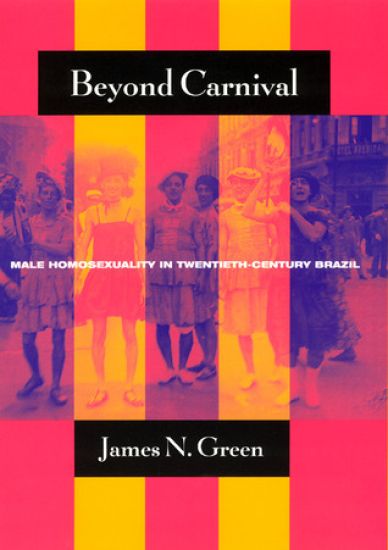
For many foreign observers, Brazil still conjures up a collage of exotic images, ranging from the camp antics of Carmen Miranda to the bronzed girl (or boy) from Ipanema moving sensually over the white sands of Rio's beaches. Among these tropical fantasies is that of the uninhibited and licentious Brazilian homosexual, who expresses uncontrolled sexuality during wild Carnival festivities and is welcomed by a society that accepts fluid sexual identity. However, in this cultural history of male homosexuality in Brazil, James Green shatters these exotic myths and replaces them with a complex picture of the social obstacles that confront Brazilian homosexuals. Ranging from the late-19th century to the rise of a politicized gay and lesbian rights movement in the 1970s, Green's study focuses on male homosexual subcultures in Rio de Janeiro and Sao Paulo. He uncovers the stories of men coping with arrests and street violence, dealing with family restrictions, and resisting both a hostile medical profession and moralizing influences of the Church. Green also describes how these men have created vibrant subcultures with alternative support networks for maintaining romantic and sexual relationships and for surviving in an intolerant social environment. He then goes on to trace how urban parks, plazas, cinemas and beaches are appropriated for same-sex erotic encounters, bringing us into the world of street cruising, male hustlers and cross-dressing prostitutes.
Partisan Hostility and American Democracy
James N. Druckman; Samara Klar; Yanna Krupnikov; Matthew Levendusky; John Barry Ryan
THE UNIVERSITY OF CHICAGO PRESS
2024
sidottu
An unflinching examination of the effects and boundaries of partisan animosity. For generations, experts argued that American politics needed cohesive parties to function effectively. Now many fear that strong partisan views, particularly hostility to the opposing party, are damaging democracy. Is partisanship as dangerous as we fear it is? To provide an answer, this book offers a nuanced evaluation of when and how partisan animosity matters in today’s highly charged, dynamic political environment, drawing on panel data from some of the most tumultuous years in recent American history, 2019 through 2021. The authors show that partisanship powerfully shapes political behaviors, but its effects are conditional, not constant. Instead, it is most powerful when politicians send clear signals and when an issue is unlikely to bring direct personal consequences. In the absence of these conditions, other factors often dominate decision-making. The authors argue that while partisan hostility has degraded US politics—for example, politicizing previously non-political issues and undermining compromise—it is not in itself an existential threat. As their research shows, the future of American democracy depends on how politicians, more than ordinary voters, behave.
Partisan Hostility and American Democracy
James N. Druckman; Samara Klar; Yanna Krupnikov; Matthew Levendusky; John Barry Ryan
THE UNIVERSITY OF CHICAGO PRESS
2024
nidottu
An unflinching examination of the effects and boundaries of partisan animosity. For generations, experts argued that American politics needed cohesive parties to function effectively. Now many fear that strong partisan views, particularly hostility to the opposing party, are damaging democracy. Is partisanship as dangerous as we fear it is? To provide an answer, this book offers a nuanced evaluation of when and how partisan animosity matters in today’s highly charged, dynamic political environment, drawing on panel data from some of the most tumultuous years in recent American history, 2019 through 2021. The authors show that partisanship powerfully shapes political behaviors, but its effects are conditional, not constant. Instead, it is most powerful when politicians send clear signals and when an issue is unlikely to bring direct personal consequences. In the absence of these conditions, other factors often dominate decision-making. The authors argue that while partisan hostility has degraded US politics—for example, politicizing previously non-political issues and undermining compromise—it is not in itself an existential threat. As their research shows, the future of American democracy depends on how politicians, more than ordinary voters, behave.
This engaging double-volume Handbook explores the Henry IV plays as texts for performance as they unfold, moment by moment, on the stage. With scene-by-scene commentary, and including an account of their life on stage, film and in criticism, this guide illuminates two plays that together rank as one of Shakespeare's greatest achievements.
Streitmatter tells the stories of dissident American publications and press movements of the last two centuries, and of the colorful individuals behind them. From publications that fought for the disenfranchised to those that promoted social reform, Voices of Revolution examines the abolitionist and labor press, black power publications of the 1960s, the crusade against the barbarism of lynching, the women's movement, and antiwar journals. Streitmatter also discusses gay and lesbian publications, contemporary on-line journals, and counterculture papers like The Kudzu and The Berkeley Barb that flourished in the 1960s. Voices of Revolution also identifies and discusses some of the distinctive characteristics shared by the genres of the dissident press that rose to prominence -- from the early nineteenth century to the late twentieth century. For far too long, mainstream journalists and even some media scholars have viewed radical, leftist, or progressive periodicals in America as "rags edited by crackpots." However, many of these dissident presses have shaped the way Americans think about social and political issues.
People and Computers the Impacts of Computing on End Users in Organizations
James N. Danziger; Kenneth L. Kraemer
Corps (Computing, Organizations, Policy, and Society) Series
2022
sidottu
How to Write a Damn Good Novel: A Step-By-Step No Nonsense Guide to Dramatic Storytelling
James N. Frey
St. Martin's Press
1987
sidottu
Unlock the Secrets of Storytelling: A Bestselling Author's Guide to Crafting Compelling Fiction Written in a clear, crisp, accessible style, How to Write a Damn Good Novel is perfect for beginners and professional writers alike who need a crash course in the down-to-earth basics of storytelling. While talent and inspiration can't be taught, James N. Frey provides scores of helpful suggestions, sensible rules, and practical principles to help you hone your craft. As an international bestseller, this book will enable all writers to face that intimidating first page, keep them on track when they falter, and help them recognize, analyze, and correct the problems in their own work. Whether you're a student in an MFA program, a self-taught novelist, or a writer looking to improve your skills, this comprehensive guide offers invaluable insights into the art of fiction writing. Improve your storytelling techniques, overcome common writing challenges, and create compelling narratives with How to Write a Damn Good Novel, an essential reference for writers at any stage of their career.